


 menu
After the Coup
10
Evolution of Communal Tensions in Rakhine State after the Coup
Independent researcher
Lecturer, Faculty of Political Science, Ubon Ratchathani University, Thailand
Abstract
The military coup in Myanmar has resulted in democratic backsliding, creating turmoil with nationwide uprisings and resistance, including armed conflict. The Arakan Army (AA), a prominent armed group based in Rakhine State, has not collaborated with the fight for restoring democracy led by the National Unity Government, which was founded by elected members of the 2020 general election. Instead, the AA has been implementing its vision of self-determination—the ‘Way of Rakhita’—by expanding territorial control and installing its own administration system. Rakhine was already trapped in a protracted humanitarian situation with more than 800,000 people in need, mostly Rohingya, within the state alone, and almost 1 million Rohingya refugees in Bangladesh. The term ‘Rohingya’ is contested and highly sensitive in the intercommunal conflict between the Arakanese and Rohingya, who have lost citizenship and fundamental human rights. Employing the concepts of protracted social conflict and territorial autonomy, the findings of this chapter demonstrate that the underlying conditions of the conflict in Rakhine State are far from resolved and could even deteriorate further in spite of improved intercommunal relations.
***
Myanmar faced democratic backsliding after the military coup on 1 February 2021 due to unfounded accusations of electoral fraud (Goodman 2021). Pro-democratic forces and civilians opposed the military coup through nationwide protests and a Civil Disobedience Movement. This national movement against the coup turned to armed resistance following the military’s lethal crackdown on unarmed and largely peaceful protesters. As a consequence of the military’s coup and armed conflict across the country, a humanitarian crisis has occurred with almost 1.1 million people displaced by post-coup violence as of the end of October 2022 (UNHCR 2022). This has added to the difficulty of accessing public goods and services, including healthcare, as a result of the COVID-19 pandemic (ILO 2022). Before the coup, Rakhine State had already been trapped in a protracted humanitarian crisis with more than 800,000 people in need, mostly Rohingya, within the state and almost 1 million Rohingya refugees in Bangladesh (UNOCHA 2021).1
The international and domestic community have expressed serious concern over the political crisis in Rakhine State, making the unresolved issues of the communal conflict between the Arakanese (Rakhine) and Rohingya2 a matter that requires particular and urgent attention. The National Unity Government (NUG), led by elected members of National League for Democracy (NLD), put the Rohingya issue on the agenda in national politics (NUG 2021), but key stakeholders in Rakhine have chosen not to align with the NUG and have ignored the NUG’s efforts to open a dialogue (Kyaw Lynn 2021). The Arakan Army (AA) maintained a temporary ceasefire with the military, called the sit-tat (armed forces) by the Myanmar people, while a leader of the Arakan National Party, the largest party in Rakhine State, joined the State Administrative Council—a body formed by the coup makers (Nyein Nyein 2021). The Arakan National Party was one of the few political parties in Myanmar to recognise the coup d’état; later, following public pressure, the party said that it might end its association with the junta (Myanmar Now 2021b), but it has not done so. Now, a year and a half after the coup, the conflict in Rakhine State has deteriorated significantly with the resumption of fighting between armed forces.
Applying the concepts of protracted social conflict and territorial autonomy, this chapter investigates the post-coup intercommunal situation in Rakhine State, particularly the changes in social tension upon the expansion of territorial control by the AA and the resurgence of Rohingya identity. The larger questions of state persecution and military violence against the Rohingya, and armed conflict between the military and AA, are beyond the scope of this chapter. Instead, the focus is on how the political crisis has impacted intercommunal tensions between the Arakanese and Rohingya communities in Rakhine State. The chapter examines how these communities have responded to the crisis, and the expansion of territorial control by the AA, by looking at changes in the interaction between these two communities. In addition, we include the perspectives of the conflict-affected communities in Rakhine State—particularly the Rohingya and the Arakanese—on the elevation of the Rohingya issue to the national political agenda.
Protracted social conflict and territorial autonomy
The Rakhine conflict is a typical protracted social conflict that is intractable and multifaceted (Kocamis 2019; Ware & Laoutides 2019). A protracted social conflict has multiple causal factors and dynamics in which the goals, actors, targets and intensity are always changing. It is also characterised by a blurred demarcation between internal and external sources and actors (Azar 1985). According to Kriesberg and Dayton (2012), social conflicts are not only an inevitable and essential part of social life but also can be beneficial by challenging existing exploitative structures. At the same time, social conflicts tend to create, reinforce and deepen reciprocal images of deception, making it extremely difficult to resolve them (Azar, Jureidini & McLaurin 1978). Thus, protracted social conflicts always carry a risk of escalating and turning violent at any time. The major characteristic of protractedness (i.e. continuing over a long period) make perceptions harden, diverting them into different narratives and clashes at dangerous levels (Udayakumar 2004).
Protractedness and violence are the key features of intractable conflicts, which are perceived as mostly irresolvable and demanding extensive investment (Bar-Tal 2007). Settlements that are agreed upon and benefit both parties are difficult to achieve, especially when the conflicting parties have unequal power. Therefore, changes in the relationship between the parties are crucial to getting out of the conflict cycle. To have a way out of conflict, the weaker side, in this case the Rohingya, may apply a non-violent coercive approach by drawing outside allies to develop institutional arrangements. The stronger side (i.e. the Arakan community) will be required to acknowledge the grievances suffered by the minority community and set up a robust institution to handle conflict and injustice, as well as establishing control over hardliners from each side (Kriesberg 1993). Protracted conflicts are mostly based on resource sharing, self-determination and identity-related issues (Udayakumar 2004).
Self-determination has become a claim in many ethnically diverse countries in order to protect ethnic interests and identity (Benedikter 2009; Connor 1994; Choudhry 2011). The claim for self-determination may incorporate a wide range of elements, from autonomy to independent statehood, including secession (Choudhry 2011). It is also associated with conflict, the development of ethno-nationalism and the rights of national minorities (Connor 1994; Kymlicka 1995). Kymlicka (1995) defines national minorities as territorially concentrated cultures incorporated into a larger state who historically enjoyed self-government and who consider themselves distinct from the majority and wish to maintain some autonomy to preserve their identity. As Benedikter (2009) notes, ethnic minorities often attempt to enjoy self-determination through territorial autonomy; this can be seen in the actions of the AA.
Background on the conflict in Rakhine State
Many scholars have described the conflict in Rakhine State as multi-causation and multi-level (Burke 2016; Aye Chan 2005; Kipgen 2013; Smith 1995). The conflict is historical and contested and involves disputed claims of ‘indigeneity’, with one group claiming original ethnicity and the right to full and neutral citizenship (Thawnghmung 2016; Ware 2015). Certainly, intercommunal tension is one of the key facets. The colonial legacy, which allowed people to freely cross international borders, also plays a big role, as it provokes Arakanese concerns relating to demographic changes (Aye Chan 2005; Leider 2020). The Advisory Commission on Rakhine State described the situation as a ‘clash of narratives’ in which both Arakanese and Muslims3 try to legitimise political claims by using the historical past, leading to exclusive and irreconcilable demands (ACRS 2017).
The Arakanese narrative focuses on the demographic threat caused by migration, sociocultural exclusion and grievances from the structural conflict under Myanmar’s current political system. Like other ethnic groups in Myanmar, the Arakanese have been struggling in their relationship with the central state and the Bamar majority. At the same time, however, the Arakanese narrative is based on the fear (and pervasive belief) that migration and the higher birth rate of Muslims will result in them becoming a minority within Rakhine State (Burke 2016; ICG 2016; Leider 2020). Aron (2018) and Simbulan (2018) suggest that these grievances and the rise of ethno-nationalism—which mobilises the community as a whole—could be key factors in the conflict dynamic and should be carefully unpacked. The Arakanese assume that they must be protected from mass illegal migration to maintain their influential status. To this end, Rakhine political parties have deployed anti-Muslim chauvinism as part of a wider, but recent, semi-organised social movement, with clear political goals that partly overlap with the Myanmar military elite (van Klinken & Su Mon Thazin Aung 2017).
Since the emergence of the AA, the Arakanese’s dream of reclaiming the sovereignty dismantled by the Bamar Konbuang Dynasty in 1784 has been revived through the ‘Way of Rakhita’ concept, which has self-determination at its core (Ye Min Zaw 2019). As a result, the more territory the AA controls, the louder the call for greater autonomy and self-determination among the Arakanese. The Arakanese community sees self-determination as a matter of earning both the respect they deserve and gaining equality with other groups. They look to attain self-determination via three different paths: armed struggle, electoral politics and the peace process (Clarke, Seng Aung Sein Myint & Zabra Yu Siwa 2019).
The term Rohingya is one of the central issues of the conflict, as it draws attention to the existence of different perspectives. Some of these perspectives hark back to the pre-colonial period, seeing the role of Muslims in the Arakan Kingdom as justification for the presence of Muslims in Rakhine State. However, the Arakanese view the term as not specifically referring to Muslims, but to the people from Rakhine State for whom it was originally coined (Aye Chan 2005). This perspective is important when considering Myanmar’s 1982 citizenship law, which defines citizens as nationals who settled in the territory of the country before 1823 and gives the power to the state to decide whether any ethnic group is national or not (SRUB 1982). The law largely falls short of international standards and customary practice. It was used to exclude the Rohingya from Myanmar citizenship due to their ethno-religious identity (Haque 2014). While Ware and Laoutides (2019) argue that citizenship is not a cause of conflict but a symptom, Nyi Nyi Kyaw (2017) insists that the lack of actual implementation of the laws by successive Myanmar governments deprived the Rohingya of their right to a nationality. Cheesman (2017) points out that the concept of national race, taingyintha, as defined by the state, excluded the Rohingya and that this influenced the majority population to deny the Rohingya identity as part of the society. With their citizenship status rejected legally and constitutionally, the Rohingya have faced statelessness and limited freedom of movement within Myanmar. In addition, being a Muslim minority, the Rohingya have suffered from a widespread anti-Muslim campaign (Thawnghmung 2016). The semi-organised movement targeting Muslims involved multiple actors, including political parties from Rakhine State (van Klinken & Su Mon Thazin Aung 2017), and was strong during Thein Sein’s administration; both hardliners and reformists of the transitional regime were complicit with ongoing communal violence in the country to promote their own political interests (Min Zin 2015).
The Rohingya community was disproportionately affected by the intercommunal conflicts in 2012 in Rakhine State. Until then, apart from partial involvement in communal-level clashes, the Rohingya had remained non-violent. However, when the Arakan Rohingya Salvation Army (ARSA) staged two rounds of attacks against security force posts in Rakhine—against which the sit-tat fiercely retaliated—it dramatically changed the conflict landscape. During the so-called clearance operation by the Myanmar sit-tat, the Rohingya faced the destruction of lives and property and over 700,000 fled into Bangladesh. According to the UN Fact-Finding Mission, the sit-tat’s actions amounted to war crimes, crimes against humanity and genocidal intent (OHCHR 2018). Since 2012, there have been international criticisms of this genocide and calls for the international community to act (Maung Zarni & Cowley 2014; Southwick 2015; Lindblom et al. 2015).
To sum up, grievances from both sides have created a double minority complex in which both the Arakanese and Rohingya fear an existential threat and express their sense of exclusion from Myanmar’s political process. The former fears assimilation from the Bamar and the massive Muslim population of Bangladesh, while the latter is a marginalised and disempowered group (Ware & Laoutides 2019; Burke 2016). Both groups have used armed struggle as part of their campaign, although the scale and scope varies. Competing narratives, which remain unreconciled, pose the risk of further widening the gap between the two communities, increasing the difficulty of finding common ground and making meaningful steps towards overcoming the underlying problems.
Conceptual framework
Based on the underlying definition of a protracted social conflict, we seek to understand the relationship between the two communities by examining the Rohingya’s deprivation of basic needs—which Azar (1990) defines as acceptance, participation and security needs—as well as the claim of autonomy by the Arakanese. To analyse the AA’s efforts to gain territorial control, we apply the four criteria developed by Benedikter (2009) to determine autonomy in the modern world—that is, 1) the rule of law in the state and autonomous entity, 2) the permanent devolution of a minimum of legislative and executive powers, 3) democracy and free elections, and 4) equality of civil rights and general citizenship rights. We also explore the conflict dynamics using Azar’s analytical model of protracted social conflict, paying particular attention to the genesis component (which deals with the precondition of the conflict) and process dynamics (which deal with how each communal actor responds to the conflict) (Azar 1990).
The chapter draws on both documentary research and field research. The documentary research includes analysis of reports and statements by relevant organisations as well as media interviews with stakeholders. The field research includes 10 key informant interviews by purposive sampling with key civil society organisation leaders (n=7), activists (n=2) and a politician (n=1). For the sake of the interviewees’ security, their names have been anonymised throughout. All data collection was undertaken before the resumption of armed conflict between the AA and sit-tat, but we contend that the intercommunal Rohingya–Arakanese dynamics discussed in the chapter remain unaltered.
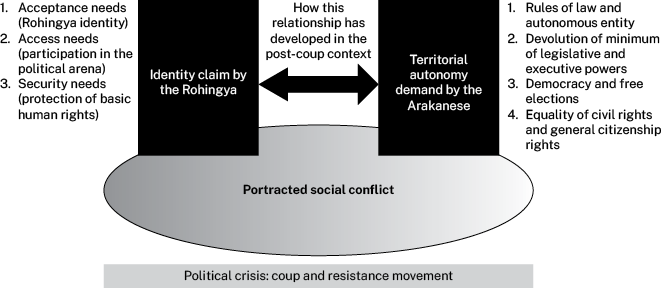
Figure 10.1: The effect of political destruction (military coup) on the protracted social conflict in Rakhine.
Source: Authors’ summary.
Post-coup changes in Rakhine State
The situation in Rakhine State had started to calm down before the Myanmar sit-tat, led by Senior General Min Aung Hlaing, orchestrated the coup on 1 Feb 2021. The AA and the Myanmar sit-tat had agreed on a temporary ceasefire just after the nationwide election held on 8 November 2020 (Myanmar Now 2020). The armed conflict then de-escalated, with no major fighting for a year and a half, during which time the AA increased efforts to install a civil administration as part of the implementation of the Way of Rakhita (Kyaw Hsan Hlaing 2021a). While the rest of Myanmar responded to the coup with widespread protests and a Civil Disobedience Movement, Rakhine State did not see any major resistance, except in some southern townships where a swift anti-coup demonstration occurred (Myanmar Now 2021a). However, Arakanese from Yangon took part in the General Strike Committee of Nationalities—a loose coalition of ethnic groups formed to organise protests. A civil society organisation (CSO) leader in Rakhine State mentioned that the AA did not want those demonstrations to happen in Rakhine, because the people had already faced the hardships of long-term war and conflict (Interview, December 2021).
Several factors help to explain the limited participation of the Arakanese in the nationwide movement against the coup: the joining of the Arakan National Party to the putschists (the State Administration Council); the impact of war over two years; and the high level of trust in the AA leadership, who claim to be taking a unique path. Outstanding grievances over the NLD government’s handling of the conflict in Rakhine State also play a role. Many Arakanese see the Committee Representing the Pyidaungsu Hluttaw—a body formed by elected members of parliament—and the NUG as effectively being the NLD, and many Arakanese view the NLD and the military as being the same Bamar oppressors; consequently, they see the coup as a conflict among the Bamar. A director of a Rakhine-based peace organisation pointed out that the public in Rakhine showed sympathy when people from other parts of the country faced a brutal military crackdown, given their recent memories of the military’s human rights violations in their own state. He also highlighted that since the majority of people were focused on survival issues they were not aware of political developments at a national level, particularly about the National Unity Consultative Council (NUCC)—a broad-based, inclusive platform with the specific aim of bringing together different forces around the federal democracy objective (Interview, December 2021).
Political parties from Rakhine State feel pressured to stand with the people from Rakhine State and face challenges in resisting the military’s coercive measures as a result of its divide and rule approach (Interview, December 2021). According to one respondent, the Arakan League for Democracy openly opposed the military coup but most other parties showed oblique responses. A member of a non-profit organisation monitoring the conflict in Rakhine pointed out that, although the AA has not publicly joined the NUG and the NUCC, it is involved in fighting alongside other allies against the military in other parts of the country; allegedly, the AA is training local People’s Defence Forces (PDF), which have been formed to fight against the military (Interview, December 2021). In addition, local youth in Rakhine State mobilised funds for the victims of Thantlang (BNI 2021), a town set on fire by the military, and there are cases of youths being arrested by the military for allegedly providing funding to the PDF (DMG 2021b, 2021c).
For the Rohingya community, the military coup has meant delaying the repatriation and settlement of refugees who fled to Bangladesh and internally displaced persons (IDPs) within Myanmar. The general Rohingya population from Rakhine State, like the Arakanese, was not fully aware of the political developments in the post-coup situation and, unsurprisingly, was unable to organise any resistance. They cautiously welcomed the NUG’s statement announcing that ‘the Rohingyas are entitled to citizenship by laws that will accord with fundamental human rights, norms and democratic federal principles’ (NUG 2021). In contrast, the Arakanese were upset by the use of the term Rohingya; they accused the NUG of failing to engage in proper consultation (with them) and of political trickery (Interviews with CSO leaders, a youth activist and a political leader, December 2021 – January 2022). A Rohingya youth activist living in an IDP camp in Rakhine said that he fully supported the NUG’s recognition of the Rohingya because of the military’s action that provoked the atrocities they faced in the past, but he was not able to publicly state this (Interview, December 2021). Instead of looking to the NUG and other political developments, many Rohingya prioritise their relationship with the local Arakanese community and the AA.
Both the Arakanese and Rohingya have suffered severely during the violent conflict over the last decade. Armed conflict, access to basic needs, poverty and striving for identity are all associated with the conflict in Rakhine State. Although both communities have long contested their territorial autonomy, the Arakanese and Rohingya still need to interact to fulfil their physical and material needs. After the violent conflict of 2012, trust between the two communities was eroded, inevitably impacting interactions in social and economic activities. The conflict left 800,000 people in need of humanitarian assistance due to displacement and clashes within Rakhine State, while almost 1 million Rohingya fled to Bangladesh (UNOCHA 2021). According to some CSO leaders (Interviews, December 2021), in the post-coup environment, the Rohingya can now travel to cities, such as Sittwe and Mrauk-U, and between villages for basic needs, such as working and accessing medical treatment, but they cannot travel to Myaepone or Kyaukphyu. Proceeding with caution, the Rohingya travel only in the daytime, even though there are no restrictions on travel at night (Interviews, December 2021). Several respondents from CSOs expressed the view that communication and interaction between the two communities on the ground had improved and that the Arakanese welcomed Rohingya people who were travelling and fulfilling their basic needs (Interviews, December 2021). By contrast, the restrictions imposed by the military on the Rohingya limited travel both within Rakhine State as well as outside of it and required the Rohingya to fill out travel approval forms and obtain approval from the township administrative officer prior to any travel (CSO leader, interview, December 2021; DMG 2022; Myo Htun 2021).
Although freedom of movement has improved to a certain degree post-coup, no arrangements have been made for the repatriation of IDPs in the near future. People in IDP camps, both Rohingya and Arakanese, do not envisage returning to their villages. An Arakanese youth activist explained that the main concerns for Arakanese IDPs are the deployment of military troops and the existence of landmines, while Rohingya IDPs are concerned by the lack of durable solutions, such as guarantee of safety and livelihood and the right to return to their places of origin (Interview, December 2021). The resumption of armed conflict between the AA and the military since these interviews were conducted only accentuates the sense of instability of both sets of IDPs. There is no easy solution to the problem of IDPs in Rakhine State; meanwhile, the people in the camps face numerous challenges, including inadequate food.
If we look at intercommunal relations with this background of parallel priorities, we find improvements in relations between the two communities within Rakhine State. Certainly, it is clear that some progress has been made in terms of social relations and that initiatives for social harmony have had some good effects in both communities. Individuals and CSOs from both communities continue to attempt to build trust for peaceful coexistence. In a unique case, a Muslim teacher joined a monastery school in Mrauk-U Township to teach Arakanese students English (DMG 2021a). Similarly, a young Arakanese teacher now teaches Muslim students in primary schools at the Muslim villages in Maungdaw Township (Western News 2022b). In Pauktaw Township, Muslim villagers donated money for the construction and general expenses of a new pagoda (Western News 2022a). Many people have made positive and welcoming comments about these activities on social media. These examples demonstrate that both communities have endeavoured, and are endeavouring, to build mutual trust and peaceful coexistence after years of conflict.
A member of a youth organisation noted that, while some of the opposition to the Rohingya identity has decreased, the word ‘Rohingya’ continues to be problematic for some Rakhine community members who are not ready to accept it due to concerns about the presumed political motives behind it, such as demands for territorial rights and self-determination (Interview, December 2021). The Arakanese assume that most activists and advocates for the Rohingya identity are self-interested and unaware (or uninterested) in the views of community members on the ground (Interview, December 2021). While recognition and acceptance of the Rohingya identity is an important first step in granting the Rohingya meaningful participation in political and economic institutions, currently, the Rohingya prioritise basic material needs for their survival; therefore, they do not claim the identity strongly on the ground, instead accepting the term Muslim for the sake of better cooperation and interaction between the two communities (Interview, December 2021). This does not necessarily mean that they do not want acceptance of their identity. A Rohingya diaspora activist noted that Rohingya people from inside Rakhine State regularly contact activists from around the world to continue fighting for their identity (Interview, January 2022).
Restoration of autonomy in Rakhine State
The conflict in Rakhine cannot be analysed purely on the basis of the interaction between two communities, the Arakanese and the Rohingya, because it involves multi-causal factors and numerous other actors. The actions of the military and the armed conflict, for example, have also had a profound effect. The analysis should also consider the complexity of Myanmar’s politics, and ethnic demands for territorial rights and self-determination. The country officially classified 135 ethnic groups, partitioned into eight major groups and subgroups, but Rohingya was not on the list (Kipgen 2018). The failure to adequately share power and accommodate diversity prompted several ethnic groups to take up arms to fight for territorial rights and self-determination against the Bamar-dominated central government (Kipgen 2018; Breen 2019).
The Arakanese are one such national minority in Myanmar who have demanded territorial rights and self-determination through armed struggle. Rakhine State enjoyed autonomy in the pre-colonial period until its kingdom fell under the Bamar Konbaung Dynasty, following the invasion of King Bodawphya in 1784 (Thawnghmung 2016). The claim of autonomy by the AA links back to the Arakan Kingdom with the strategy of the Way of Rakhita, the goal of which is to restore autonomy and self-determination (Ye Min Zaw 2019). In an interview with a media outlet, the AA chief admitted that the AA’s ultimate goal was an independent Rakhine State (Parvez, Shafiqul Alam & Ashfaque Ronnie 2022).
After agreeing to an unofficial ceasefire with the military, the AA established its governing power through an administration, a judicial system and taxation (Parvez, Shafiqul Alam & Ashfaque Ronnie 2022). Rohingya people are invited to participate in the AA’s administration system, but it is only at the village and ward level (Interviews, December 2021). While the Arakanese and Rohingya rely on the AA’s administration more than the military regime’s (even more so post-coup), there have been complaints and accusations of unfair treatment and power abuses by the authorities against Rohingya people (Interviews, December 2021 – January 2022). Thus, the international community has concerns that the Rohingya will continue to be marginalised if the AA gains full control over the region (Fox 2021).
Fundamental civil and political rights for all group members are essential for establishing self-governance in a modern autonomous system (Benedikter 2009). If the Rohingya are prevented from meaningful and equal participation in the government of the Rakhine State, the challenge of fulfilling their developmental human needs will remain. Although the AA’s plan to fully respond to the Rohingya people is not yet clear, some progress can be seen in the AA’s emerging policy and actions. For example, General Twan Mrat Naing, leader of AA said:
We recognize the human rights and citizen rights of the Rohingyas … It will take time to resolve this problem, especially with the arguments on both sides regarding the ‘Rohingya’ identity of the Rohingya people. (Parvez, Shafiqul Alam & Ashfaque Ronnie 2022)
According to Benedikter (2009), an autonomous territorial unit should be arranged by legal mechanism, domestic or international, in a modern autonomous system—not by territorial control by armed groups. The governance of Rakhine State is currently split between the Myanmar sit-tat and the AA, and is, therefore, highly contested. Nonetheless, since the military coup, both the Arakanese and the Rohingya choose to submit to the AA administration, rather than the military, wherever possible. Consequently, regulations imposed by the military have not been able to be enforced effectively in Rakhine State post-coup.
The NUG has attempted to coordinate with various ethnic armed organisations in the fight against the military, promising to build a genuine federal democracy (NUG n.d.). The AA refused the NUG’s invitation to collaborate in this democratic revolution as they already have their own political agenda. Therefore, the direction of power sharing between the central government and the AA—even if the democratic forces win—cannot be anticipated yet, although the NUG has released a federal charter that would be its roadmap for state-building (NUCC 2021).
Meanwhile, the Arakanese fear that the Rohingya desire separation and territorial rights, and this fear informs the continued deprivation of the Rohingya identity. Though the Rohingya claim that they do not have any plans for separation, there is compelling evidence of a movement for territorial autonomy. For example, the Mujahid armed group, the Rohingya Independence Force (now the Rohingya Patriotic Front), the Rohingya Solidarity Organization and the ARSA have all launched campaigns for self-determination and territorial autonomy over the last seven decades, including armed attacks. Some of these groups still remain active (Thawnghmung 2016; Ware 2015). The ARSA claimed that attacks against the military and police forces in Rakhine State in 2016 were aimed at defending the rights of the Rohingya people (Winchester 2017). These actions caused Rakhine nationalists to become fearful of recognising Rohingya identity. However, most Rohingya do not see the ARSA as representing their interests due its suspected affiliation with the sit-tat (Interview, January 2022).
Rohingya participation in the AA’s administrative process is rare but not unheard of. The Arakanese claim that the AA gives everyone equal opportunity to become village administrators, regardless of ethnic background, and allows Rohingya people to be heads of their village (Interview, December 2021). This marks a sharp break with the central government (Kyaw Hsan Hlaing 2021b) and has helped to earn the trust of the Muslim community (Interview, December 2021). Lack of access to social superstructures, such as political participation and economic access, is one of the preconditions of protracted social conflict. The AA has claimed that it will treat everyone equally in terms of access to its administrative roles and police force, but it is too early to see whether this is the case. Moving forward, the strategies and actions the AA employs to influence the Rohingya community will become a key factor in determining the future dynamics of the protracted conflict.
The AA has been trying to enforce the rule of law, but issues on the ground, such as land disputes, tax collection and unequal treatment of Muslims, continue to make this difficult (Interview, December 2021). A Rohingya activist mentioned that some Rohingya within their community still feel unable to speak out due to fear of reprisal (Interview, December 2021). Such claims are criticised by Arakanese who believe that it is Rohingya from abroad who are making the problem worse by interfering while the two communities are trying to live together. Yet, many complaints about abuses of power and unfair decisions by the AA’s administration for both Rohingya and Arakanese people are evident on social media emanating from within Rakhine State.
Conclusion
The underlying conditions of the protracted social conflict in Rakhine State remain unchallenged and unremediated. The multi-ethnic nature of Myanmar, the deprivation of basic needs—particularly for the Rohingya—and the role of the state, which is returning to a totalitarian regime after the coup in February 2021, combined with the mobilisation of an international diaspora, fulfils all the preconditions of a protracted social conflict. The return to armed conflict in Rakhine State poses further challenges for intercommunal relations. The claim of recognition and entitlements from within the political and social structure of Myanmar for the Rohingya identity was an outcome of collective action from a marginalised community. The clash of narratives on the Rohingya identity is still strong, particularly on the question of recognition as an indigenous people within Myanmar. Although the name is still used with caution, both the Arakanese and the NUG have agreed to the provision of fundamental human rights and citizenship for the Rohingya. It should be noted that, presently, and in accordance with the 1982 citizenship law, which the NUG has flagged it will amend, the most privileged citizenship status in Myanmar is still associated with indigenous ethnicity. Thus, currently, the Rohingya still have unequal status with other ethnic groups, although they can apply for other types of citizenship (e.g. associated or naturalised).
Meanwhile, the Arakanese community is steadily moving towards the claim of territorial autonomy by invoking historical narratives and using military power. The AA has become the leading force of the Arakanese political movement and claims to be building an inclusive Arakan in which the Rohingya will have a place and a role. But the Arakanese are still reluctant to officially recognise the Rohingya identity, citing concerns of separatist actions informed by historical evidence. The construction of identity by both the Rohingya and the Arakanese as a matter of ‘communal actions and strategies’ (which is a characteristic of protracted social conflicts) is an issue that remains unresolved. The former sees themselves as an indigenous ethnic group, while the latter promotes an ‘Arakanese identity’ based on historical grievances. Yet, there are indications that the current conflict may become latent, as both groups are motivated to avoid another round of violence, especially given the longstanding hardships both have suffered since the conflict of 2012.
Social relationships between the two communities have improved due to the conscious effort of both parties. The Rohingya have enjoyed a certain degree of freedom of movement with no antagonism from the Arakanese, although they are still unable to travel freely outside of Rakhine State owing to military-imposed restrictions. The Arakanese and the Rohingya have responded to Myanmar’s political crises in different ways. The former distanced themselves from national politics and claimed they had their own way of working towards autonomy, while the latter covertly supported the NUG’s recognition of the Rohingya identity, being unable to express their support explicitly, particularly within Rakhine State.
Recommendations for the international community
This analysis leads to several implications and recommendations for the international community. First, it highlights the need to engage directly with concerned stakeholders in Rakhine State, mainly the AA from the Arakanese side and representatives of Rohingya communities, both domestic leaders and exiled activists. The trust in the AA by the Arakanese is substantial, and the AA have huge leverage. For the Rohingya, local community leaders have extensive knowledge of on-the-ground situations but are limited in their capacity to speak freely due to safety concerns. Therefore, exiled Rohingya human rights activists should also be consulted. A second recommendation is to empower the civil society groups among the Rohingya communities. Students and youths in the IDP camps are initiating self-help groups and engaging informally with their Arakanese peers. These should be strengthened and supported, and, where possible, educational assistance and scholarships for youth from both communities should be provided.
Beyond this, the international community needs to support Myanmar’s democratic transition. Myanmar is facing unprecedented challenges with democratic backsliding and is at risk of becoming a regional humanitarian catastrophe. The state and the majority group at the national level will continue to play a role and this will affect the situation in Rakhine State. Without addressing the structural issues and political impasse by which military and/or authoritarian regimes continue to control state power, both communities in Rakhine State are very likely to face another round of atrocities. Part of this requires closely monitoring the development of the ultra-nationalist movements that are backed by the military and opportunists. One of the root causes of discrimination against the Rohingya is nationalistic sentiments fuelled by fake news and hate speech. Such sentiments are seemingly still in the undercurrent but they could become overt at any time.
Finally, the international community needs to adhere to the ‘do no harm’ principle and try to reduce Myanmar’s dependence on international aid. The international community is cognisant of the scale of support required for humanitarian reasons, but it must also explicitly understand the risk of creating a situation in which Myanmar becomes dependent on such aid, thereby undermining the capacity of the Myanmar people to build and rebuild their own relationships.
References
ACRS (Advisory Commission on Rakhine State). 2017. ‘Towards a Peaceful, Fair and Prosperous Future for the People of Rakhine: Final Report of the Advisory Commission on Rakhine State’. 24 August. www.kofiannanfoundation.org/mediation-and-crisis-resolution/rakhine-final-report/
Aron, Gabrielle. 2018. ‘Reframing the Crisis in Myanmar’s Rakhine State’. Peace Brief, no. 242. www.jstor.org/stable/resrep20200
Aye Chan. 2005. ‘The Development of a Muslim Enclave in Arakan (Rakhine) State of Burma (Myanmar)’. SOAS Bulletin of Burma Research 3 (2): 396–20.
Azar, Edward E. 1985. ‘Protracted International Conflicts: Ten Propositions’. International Interactions 12 (1): 59–70. doi.org/10.1080/03050628508434647
Azar, Edward E. 1990. The Management of Protracted Social Conflict: Theory and Cases. London: Dartmouth Publishing Company.
Azar, Edward E., Paul Jureidini and Ronald McLaurin. 1978. ‘Protracted Social Conflict: Theory and Practice in the Middle East’. Journal of Palestine Studies 8 (1): 41–60. doi.org/10.2307/2536101
Bar-Tal, Daniel. 2007. ‘Sociopsychological Foundations of Intractable Conflicts’. American Behavioral Scientist 50 (11): 1430–53. doi.org/10.1177/0002764207302462
Benedikter, Thomas. 2009. The World’s Modern Autonomy Systems: Concepts and Experiences of Regional Territorial Autonomy. New Delhi: Anthem Press. webfolder.eurac.edu/EURAC/Publications/Institutes/autonomies/MinRig/Autonomies%20Benedikter%2009%20klein.pdf
BNI (Burma News International). 2021. ‘Arakanese Youths Collect Donations for Fire Victims in Thantlang, Chin State’. 4 November. www.bnionline.net/en/news/arakanese-youths-collect-donations-fire-victims-thantlang-chin-state
Breen, Michael G. 2019. ‘Asymmetry or Equality? Ethnic Nationalities in a Bamar-Dominated State. A Country Study of Constitutional Asymmetry in Myanmar’. In Constitutional Asymmetry in Multinational Federalism, edited by Patricia Popelier and Maja Sahadžić, 341–68. London: Palgrave Macmillan. doi.org/10.1007/978-3-030-11701-6_13
Burke, Adam. 2016. ‘New Political Space, Old Tensions: History, Identity and Violence in Rakhine State, Myanmar’. Contemporary Southeast Asia 38 (2): 258–83. doi.org/10.1355/cs38-2d
Cheesman, Nick. 2017. ‘How in Myanmar “National Races” Came to Surpass Citizenship and Exclude Rohingya’. Journal of Contemporary Asia 47 (3): 461–83. doi.org/10.1080/00472336.2017.1297476
Choudhry, Sujit. 2011. ‘Federalism, Secession & Devolution: From Classical to Post-Conflict Federalism’. In Research Handbook on Comparative Constitutional Law, edited by Tom Ginsburg, 356–84. Cheltenham: Edward Elgar Publishing.
Clarke, Sarah L., Seng Aung Sein Myint and Zabra Yu Siwa. 2019. Re-Examining Ethnic Identity in Myanmar. Siem Reap: Centre for Peace and Conflict Studies. www.centrepeaceconflictstudies.org/wp-content/uploads/Re-Examining-Ethnic-Identity-in-Myanmar.pdf
Connor, Walker. 1994. Ethnonationalism: The Quest for Understanding. Princeton: Princeton University Press. doi.org/10.1515/9780691186962
DMG (Development Media Group). 2021a. ‘“Honesty and Love” Guide Interfaith English Lessons at Monastic School in Mrauk-U’. 23 November. www.dmediag.com/interview/3690-u-aung-khin
DMG (Development Media Group). 2021b. ‘Eight People in Arakan State Arrested for Alleged Anti-Regime Links’. 6 December. www.dmediag.com/news/3749-eight-people-in-arakan-state-arrested
DMG (Development Media Group). 2021c. ‘Students’ Groups Condemn Recent “Acts of Sabotage” in Arakan State’. 24 December. www.dmediag.com/news/3838-%E2%80%98acts-of-sabotage%E2%80%99
DMG (Development Media Group). 2022. ‘Military Tightens Security Checks on Travellers in Some Arakan Townships’. 4 January. www.dmediag.com/news/3873-mts?fbclid=IwAR3aTM7l9JX8OzoYsee3vJUOiGjB-JeijnMczYhrqkKlUhGhZZxykAiCd2s
Fox, Kyra. 2021. Risk of Mass Atrocities against the Rohingya Post-Coup. Washington: United States Holocaust Memorial Museum. earlywarningproject.ushmm.org/storage/resources/1454/The_Risk_of_Mass_Atrocities_against_the_Rohingya_Post-coup.pdf
Goodman, Jack. 2021. ‘Myanmar Coup: Does the Army Have Evidence of Voter Fraud?’ BBC News, 5 February. www.bbc.com/news/55918746
Haque, Md Mahbubul. 2014. ‘1982 Citizenship Law in Burma and the Arbitrary Deprivation of Rohingyas’ Nationality’. South Asian Journal of Policy and Governance 25 (2): 23–40.
ICG (International Crisis Group). 2016. ‘Myanmar: A New Muslim Insurgency in Rakhine State’. 15 December. www.crisisgroup.org/asia/south-east-asia/myanmar/283-myanmar-new-muslim-insurgency-rakhine-state
ILO (International Labour Organization). 2022. ‘Employment in Myanmar in 2021: A Rapid Assessment’. www.ilo.org/yangon/publications/WCMS_835900/lang--en/index.htm
Kipgen, Nehginpao. 2013. ‘Conflict in Rakhine State in Myanmar: Rohingya Muslims’ Conundrum’. Journal of Muslim Minority Affairs 33 (2): 298–310. doi.org/10.1080/13602004.2013.810117
Kipgen, Nehginpao. 2018. ‘The Quest for Federalism in Myanmar’. Strategic Analysis 42 (6): 612–26. doi.org/10.1080/09700161.2018.1557933
Kocamis, H. Methap. 2019. ‘The Rohingya Minority in Burma/Myanmar: A Case of Protracted Social Conflict’. Master’s thesis, Middle East Technical University.
Kriesberg, Louis. 1993. ‘Intractable Conflicts’. Peace Review 5 (4): 417–21. doi.org/10.1080/10402659308425753
Kriesberg, Louis and Bruce W. Dayton. 2012. Constructive Conflicts: From Escalation to Resolution. 4th ed. Lanham: Rowman & Littlefield.
Kyaw Hsan Hlaing. 2021a. ‘After Myanmar’s Military Coup, Arakan Army Accelerates Implementation of the “Way of Rakhita”’. Diplomat, 20 April. thediplomat.com/2021/04/after-myanmars-military-coup-arakan-army-accelerates-implementation-of-the-way-of-rakhita/
Kyaw Hsan Hlaing. 2021b. ‘Arakan Army Seeks to Build “Inclusive” Administration in Rakhine State’. Diplomat, 31 August. thediplomat.com/2021/08/arakan-army-rebels-seek-inclusive-administration-in-rakhine-state/
Kyaw Lynn. 2021. ‘The Arakan Army, Myanmar Military Coup and Politics of Arakan’. Transnational Institute, 10 June. www.tni.org/en/article/the-arakan-army-myanmar-military-coup-and-politics-of-arakan
Kymlicka, W. 1995. Multicultural Citizenship: A Liberal Theory of Minority Rights. Oxford: Clarendon Press. doi.org/10.1093/0198290918.001.0001.002.004
Leider, Jacques P. 2020. ‘Territorial Dispossession and Persecution in North Arakan (Rakhine)’. Torkel Opsahl Academic EPublisher, Policy Brief Series, no. 101: 1942–43.
Lindblom, Alina, Elizabeth Marsh, Tasnim Motala and Katherine Munyan. 2015. ‘Persecution of Rohingya Muslims: Is Genocide Occurring in Myanmar’s Rakhine State?’ October. www.fortifyrights.org/downloads/Yale_Persecution_of_the_Rohingya_October_2015.pdf
Maung Zarni and Alice Cowley. 2014. ‘The Slow-Burning Genocide of Myanmar’s Rohingya’. Pacific Rim Law & Policy Journal 23 (3): 683–754. digitalcommons.law.uw.edu/wilj/vol23/iss3/8
Min Zin. 2015. ‘Anti-Muslim Violence in Burma: Why Now?’ Social Research 82 (2): 375–97. doi.org/10.1353/sor.2015.0024
Myanmar Now. 2020. ‘Arakan Army Meets for Talks with Tatmadaw in Wa Capital’. 14 December. www.myanmar-now.org/en/news/arakan-army-meets-for-talks-with-tatmadaw-in-wa-capital (page discontinued).
Myanmar Now. 2021a. ‘More Anti-Coup Protesters Arrested in Rakhine State’. 18 February. www.myanmar-now.org/en/news/more-anti-coup-protesters-arrested-in-rakhine-state?page=5&width=500&height=500&inline=true (page discontinued).
Myanmar Now. 2021b. ‘ANP Chair Says Party May End Its Association with Junta’. 5 May. www.myanmar-now.org/en/news/anp-chair-says-party-may-end-its-association-with-junta (page discontinued).
Myo Htun. 2021. ‘Rohingya in Buthidaung Hit with Even Tougher Travel Restrictions’. Myanmar Now, 29 November. www.myanmar-now.org/en/news/rohingya-in-buthidaung-hit-with-even-tougher-travel-restrictions (page discontinued).
NUCC (National Unity Consultative Committee). 2021. ‘Federal Democracy Charter Part I, Declaration of Federal Democracy Union’. crphmyanmar.org/wp-content/uploads/2021/04/Federal-Democracy-Charter-English.pdf
NUG (National Unity Government). n.d. ‘About NUG’. Accessed 23 February 2023. gov.nugmyanmar.org/about-nug/
NUG (National Unity Government). 2021. ‘Statement of the National Unity Government of Myanmar on the 4th Anniversary of the Atrocity Crimes Against the Rohingya People in 2017’. 24 August. mofa.nugmyanmar.org/statement-of-the-national-unity-government-of-myanmar-on-the-4th-anniversary-of-the-atrocity-crimes-against-the-rohingya-people-in-2017/
Nyein Nyein. 2021. ‘Anti-NLD Ethnic Politicians Picked by Military Regime for Governing Council’. Irrawaddy, 5 February. www.irrawaddy.com/news/burma/anti-nld-ethnic-politicians-picked-military-regime-governing-council.html
Nyi Nyi Kyaw. 2017. ‘Unpacking the Presumed Statelessness of Rohingyas’. Journal of Immigrant & Refugee Studies 15 (3): 269–86. doi.org/10.1080/15562948.2017.1330981
OHCHR (Office of the High Commissioner for Human Rights). 2018. ‘Myanmar: UN Fact-Finding Mission Releases Its Full Account of Massive Violations by Military in Rakhine, Kachin and Shan States’. Press release. www.ohchr.org/en/press-releases/2018/09/myanmar-un-fact-finding-mission-releases-its-full-account-massive-violations?LangID=E&NewsID=23575
Parvez, Altaf, Shafiqul Alam and Ashfaque Ronnie. 2022. ‘We Recognise the Human Rights and Citizen Rights of the Rohingyas. Interview: Arakan Army Chief Twan Mrat Naing’. Prothomalo, English edition, 2 January. en.prothomalo.com/opinion/interview/we-recognise-the-human-rights-and-citizen-rights-of-the-rohingyas
Simbulan, Karen. 2018. When Perceptions Define Reality: Implications and Challenges after the August 2017 Crisis in Rakhine State. Yangon: RAFT Myanmar.
Smith, Martin. 1995. ‘The Muslim “Rohingya” of Burma’. Conference paper, Burma Centrum Nederland, Amsterdam. www.burmalibrary.org/docs24/Martin_Smith-1995-12-11-The_Muslim_%27Rohingyas%27_of_Burma.pdf
Southwick, Katherine. 2015. ‘Preventing Mass Atrocities against the Stateless Rohingya in Myanmar: A Call for Solutions’. Journal of International Affairs 68 (2).
SRUB (Socialist Republic of the Union of Burma). 1982. Burma Citizenship Law. 15 October. www.refworld.org/docid/3ae6b4f71b.html
Thawnghmung, Ardeth M. 2016. ‘The Politics of Indigeneity in Myanmar: Competing Narratives in Rakhine State’. Asian Ethnicity 17 (4): 527–47. doi.org/10.1080/14631369.2016.1179096
Udayakumar, S. P. 2004. ‘Reflections: Futures of Protracted Conflicts’. Futures 36: 379–84. doi.org/10.1016/S0016-3287(03)00161-7
UNHCR (United Nations High Commissioner for Refugees). 2022. ‘Myanmar UNHCR Displacement Overview 31 Oct 2022’. data.unhcr.org/en/documents/details/96546
UNOCHA (United Nations Office for the Coordination of Humanitarian Affairs). 2021. ‘Myanmar: 2021 Humanitarian Needs Overview’. January. reliefweb.int/report/myanmar/myanmar-2021-humanitarian-needs-overview-january-2021
van Klinken, Gerry and Su Mon Thazin Aung. 2017. ‘The Contentious Politics of Anti-Muslim Scapegoating in Myanmar’. Journal of Contemporary Asia 47 (3): 353–75. doi.org/10.1080/00472336.2017.1293133
Ware, Anthony. 2015. ‘Secessionist Aspects to the Buddhist-Muslim Conflict in Rakhine State, Myanmar’. In Territorial Separatism in Global Politics: Causes, Outcomes and Resolution, edited by Damien Kingsbury and Costas Laoutides, 165–80. London: Routledge.
Ware, Anthony and Costas Laoutides. 2019. ‘Myanmar’s “Rohingya” Conflict: Misconceptions and Complexity’. Asian Affairs 50 (1): 60–79. doi.org/10.1080/03068374.2019.1567102
Western News. 2022a. ‘Pauktaw Tha Mie Win Zaydi Ah Thwet Muslim Layy Ywar Mha Ngwe Kyat 24 Thein Kyaw Hlu Dan’ [‘Four Muslim Villages Donate 24 lakh to Pautktaw Historical Pagoda’]. Facebook, 8 January. www.facebook.com/westernnewsagency/posts/443088924164284
Western News. 2022b. ‘Muslim Kyaung Tharr Twae Yae Mee Eain Shin Rakhine Kyaung Sayama Layy’ [‘“The Lady with the Lamp”—A Lady Teacher for the Muslim Student’]. Video, Facebook. 9 January. www.facebook.com/watch/?v=330476328931276
Winchester, Mike. 2017. ‘Birth of an Ethnic Insurgency in Myanmar’. Asia Times, 28 August. asiatimes.com/2017/08/birth-ethnic-insurgency-myanmar/
Ye Min Zaw. 2019. ‘What Does the Arakan Army Bring to Rakhine State?’ Irrawaddy, 11 January. www.irrawaddy.com/opinion/guest-column/arakan-army-bring-rakhine-state.html
1 The resumption of fighting between the Arakan Army and the military in late July 2022 has significantly worsened the situation, leading to severe casualties. This occurred after the fieldwork was completed for this chapter.
2 In this chapter, we use ‘Rohingya’ for non-Kaman Muslims, which is a self-identified name; ‘Arakanese’ for the Rakhine Buddhists, which is their historical name; and ‘Rakhine State’ to refer to present-day Rakhine State under the Union of Myanmar. Note that most non-Rohingya interviewees used the term ‘Muslim’ to refer to the Rohingya.
3 The original report says ‘Muslims from Rakhine State’.
Previous Next



