


 menu
Struggle, Reform, Boom and Bust
Annex A: Political tables and figures
Table A1: PNG prime ministers, 1975–2024
|
Name |
Term of office |
Party |
||
|---|---|---|---|---|
|
Took office (reason) |
Left office |
Time in office |
||
|
Michael Somare |
16 September 1975 (Independence) |
11 March 1980 |
4.48 years |
Pangu Pati |
|
Julius Chan |
11 March 1980 (Vote of no confidence) |
2 August 1982 |
2.39 years |
People’s Progress Party |
|
Michael Somare |
2 August 1982 (General election) |
21 November 1985 |
3.3 years |
Pangu Pati |
|
Paias Wingti |
21 November 1985 (Vote of no confidence) |
4 July 1988 |
2.62 years |
People’s Democratic Movement |
|
Rabbie Namaliu |
4 July 1988 (Vote of no confidence) |
17 July 1992 |
4.04 years |
Pangu Pati |
|
Paias Wingti |
17 July 1992 (General election) |
30 August 1994 |
2.12 years |
People’s Democratic Movement |
|
Julius Chan1 |
30 August 1994 (Resignation of previous prime minister) |
22 July 1997 |
2.71 years |
People’s Progress Party |
|
Bill Skate |
22 July 1997 (General election) |
14 July 1999 |
1.98 years |
People’s National Congress |
|
Mekere Morauta |
14 July 1999 (Resignation of previous prime minister) |
5 August 2002 |
3.06 years |
People’s Democratic Movement |
|
Michael Somare |
5 August 2002 (General election) |
4 April 20112 |
8.40 years |
National Alliance Party |
|
Peter O’Neill |
2 August 2011 (Parliament declared prime minister’s position to be vacant as Somare in long-term hospital stay; this was disputed by the courts, but O’Neill won the 2012 elections) |
29 May 2019 |
7.82 years |
People’s National Congress |
|
James Marape |
30 May 2019 (Resignation of previous prime minister) |
Incumbent |
Still in office as of end of 2024 |
Pangu Pati |
Source: Authors’ research.
Table A2: Trends in Papua New Guinea elections, 1977–2022
|
Year |
Average number of candidates per seat |
Mean winner vote shares |
Percentage of incumbents returned |
Percentage of independents competing |
Party with most seats (% seats) |
Number of females elected |
|---|---|---|---|---|---|---|
|
1977 |
8 |
35% |
39% |
No data |
28% |
3 |
|
1982 |
10 |
31% |
52% |
41% |
47% |
1 |
|
1987 |
14 |
26% |
52% |
67% |
24% |
0 |
|
1992 |
15 |
23% |
46% |
74% |
18% |
0 |
|
1997 |
22 |
20% |
51% |
73% |
15% |
2 |
|
2002 |
26 |
20% |
26% |
43% |
17% |
1 |
|
2007 |
25 |
33% |
46% |
No data |
25% |
1 |
|
2012 |
31 |
32% |
44% |
64% |
24% |
3 |
|
2017 |
30 |
34% |
49% |
57% |
26% |
0 |
|
2022 |
31 |
Unknown |
62% |
No data |
33% |
2 |
Notes: From 2007 onwards, limited preferential voting has been used, which has pushed up the mean winner voter share. There were 109 seats until the 2012 elections, and then 111 until the 2022 elections, and then 118.
Source: Wood (2017), Laveil (2021), Saffu (1988), Howes, Kabuni et al. (2022).
|
Name |
Period in parliament |
Party |
|---|---|---|
|
Nahau Rooney |
1977–87 |
Pangu/People’s Democratic Movement/Independent |
|
Waliyato Clowes |
1977–82 |
United Party/National Party/Papua Besena/Papuan Alliance |
|
Josephine Abaijah |
1972–82, 1997–2002 |
Papua Besena |
|
Dame Carol Kidu |
1997–2012 |
Independent |
|
Delilah Gore |
2012–17 |
Triumph Heritage Empowerment/People’s National Congress |
|
Loujaya Kouza |
2012–17 |
Triumph Heritage Empowerment |
|
Julie Soso |
2012–17 |
Triumph Heritage Empowerment/People’s National Congress |
|
Kessy Sewang |
2022– |
People’s First Party/People’s Transformation Party |
|
Rufina Peter |
2022– |
People’s National Congress |
|
Francesca Semoso |
2023– |
Pangu |
Source: Development Policy Centre (n.d.).
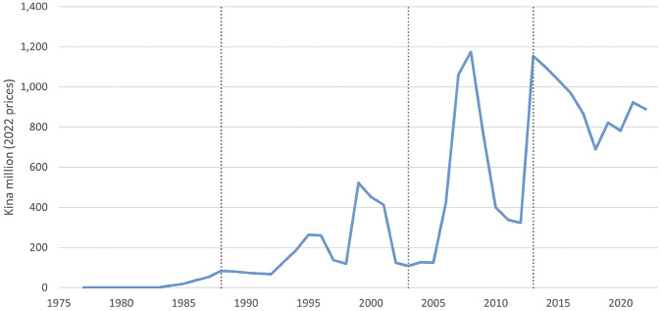
Figure A1: Constituency funding (adjusted for inflation), 1977–2022
Notes: Figures are actuals. Only district (open) MP funding included (such as the District Support Improvement Program).
Source: PNG Economic Database.
The provision of funding to be spent under the direction of MPs goes back to the eighties, increased in the nineties, and really took off in the boom years of the noughties. Due to fiscal constraints, it fell somewhat over the tens.
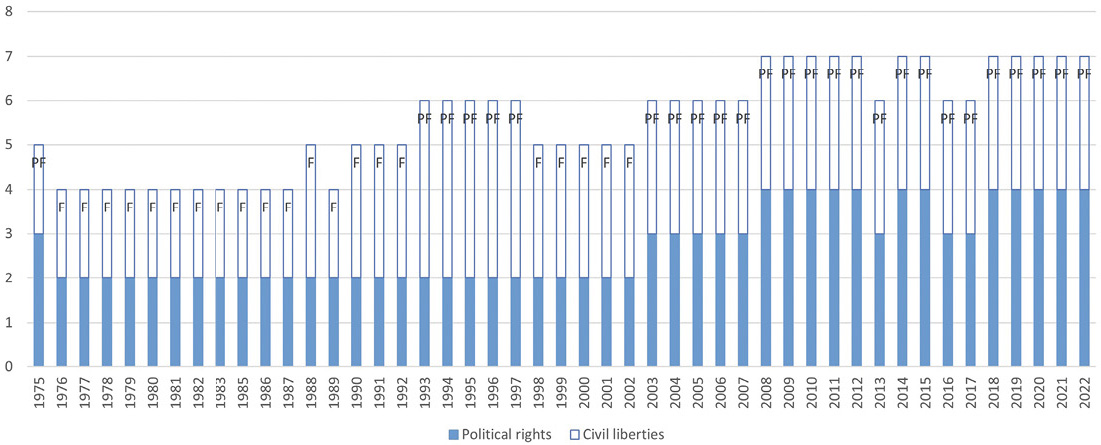
Figure A2: Freedom House ratings for PNG, 1975–2022
Notes: Both political rights and civil liberties are rated on a scale of 1–7 (where 1 is the highest). Based on both scores, countries are rated as free (F), partly free (PF) or not free. PNG was rated as free from independence to 1992 and then again from 1998 to 2002. Since 2002, as well as between 1993 and 1997, it has been rated as ‘partly free’. The decline in rating is due to, first, a higher (worse) civil liberties score, and, then, a worse political rights score. V-Dem (the Varieties of Democracy Project) permanently downgraded PNG from an electoral democracy to a partial democracy (‘electoral autocracy’) in 2007.
Source: Freedom House (n.d.).
1 Julius Chan stood down between 27 March and 2 June 1997 during the Sandline inquiry, during which time John Giheno was acting prime minister.
2 Sam Abal was acting PM from 12 December 2010 to 17 January 2011 while Somare was facing Leadership Tribunal charges (7.2.3), and then again from 4 April 2011 due to the latter’s ill-health.
Previous Next



