


 menu
Struggle, Reform, Boom and Bust
12
Institutional underpinnings
[It will help to have] honest, competent leaders, but leadership alone is not sufficient. Lying at the root of the problem is the breakdown of the structure, systems and processes of government. As a result, good leaders are imprisoned by this fractured, corrupt system. Unless steps are taken to repair and reform the system and processes of government, to rebuild the capacity of the public sector, good leaders will achieve and change little.
—Former prime minister Mekere Morauta (2012a)
12.1 Introduction
Most of the existing analysis of economic outcomes in PNG has been directed to the assessment of economic policy, as the previous chapter was. Policy settings are important for growth but ignoring broader issues of governance is unhelpful. In their analysis of the forestry sector, Daniel and Sims (1986, 76) drew attention to the tendency of the government to enter into agreement with ‘inexperienced companies’, but left that odd preference unexplained, rather than linking it to corruption as it surely was.
Likewise, the analysis of the previous chapter takes us some way in explaining PNG’s economic performance but leaves many questions unanswered. Why has the quality of macroeconomic policy deteriorated since independence? Why did the reforms of the nineties not give a more sustained boost to growth? To dig deeper, we need a more institutional analysis.
The idea that explanations for economic growth performance should be sought in the sphere of institutions is by now accepted wisdom. In 1983, one economist concluded his survey of growth in developing countries with the remark that ‘the single most important explanatory variable’ that explains the difference between faster and slower growing countries is ‘political organisation and the administrative competence of government’ (Reynolds 1983, 975). Since then, many economists have elaborated on this theme.
‘Institutions’ is not an easy word to define. An institution need not be an organisation, but to say, as some do, that institutions are just the rules of the game is to give too broad a definition, one that would encompass cultural and social explanations of economic outcomes as well. Institutions clearly include political arrangements; they include the way in which the rule of law is exercised, and the degree to which security is provided to citizens and their property; and they include basic economic arrangements, such as the degree to which a country relies on markets or central planning. We dealt with the last in the previous chapter. Our focus in this chapter is on the former two: the interaction between PNG politics and development, and the interaction with insecurity.
We start by summarising our findings so far in relation to institutions. We then go in search of theories that link these findings to economic performance. Thus armed, we set forth our institutional explanation of PNG’s growth and development performance.
12.2 Post-independence institutional trends
Each of the preceding four parts of this book provided an account of key institutional developments in the relevant period (3.2, 5.2, 7.2 and 9.2). In this section, we bring together and summarise our various findings under the headings of politics, government effectiveness, and law and order. We also turn to survey data to understand the importance of institutional constraints on growth in PNG.
12.2.1 Hyper-politics
Five defining characteristics of PNG politics have become prominent.
First, there is the ‘progressive primacy of politics in post-colonial PNG’ (Dinnen 1998, 58), as becoming a member of parliament has come to be seen as ‘the fastest road to wealth, power and influence’ (Ketan 2000, 245). Democracy suited PNG. Over time, extraordinarily large numbers have come to stand for national elections; leaders in all other fields have wanted to become politicians. Seeking power through elections has become not only more popular but also more legitimate over time. In a country in which no group is large enough to mount a serious claim to national power by methods other than the ballot box, success at elections has become universally accepted as the main way in which power should be obtained and challenged.
Second, and contributing to the primacy of politics, the business and the political classes have merged into a ‘politician-businessman ruling class’ (Hegarty and King 1998, 356). Politicians and their parties have entered business to offset the costs of campaigning, to secure political success and in pursuit of wealth. Businessmen—and a few businesswomen—have entered politics in pursuit of power.
Third, politics is both clientelist and precarious. Elections are decided on local issues and networks, and often involve competition and conflict between different local groups. Kabuni et al. (2022) note that, according to the relevant international index for it, PNG is the fifth most clientelist polity in the world. But being a local patron is not easy. Politicians have struggled to be re-elected: normally only about half are.
Fourth, there has emerged since 1978 a constant jostling for power among MPs, who have sought not only to represent their electorate but to rise up the political ladder, to become a minister and, if possible, prime minister. To make such efforts, unconstrained by party allegiances or ideological differences, has come to be regarded as a normal part of any MP’s role.1 This has resulted in frequent attempts to hold votes of no confidence and change the prime minister. These efforts have been less successful this century than last, but they have been no less vigorously pursued.
Fifth, election quality has fallen over time and, in some parts of the country, elections have become increasingly violent (5.2.1 and 9.2.1). Local groups use extra-parliamentary means to achieve their goals, in particular, threats of violence to extract compensation (5.2.5).
Various labels have been attached to PNG politics by political scientists: Wood (2018) describes PNG politics as clientelist, Steeves (1996) as ‘unbounded’ and May (2003a) as ‘disorderly’. Fraenkel (2014) writes that Melanesian politics is ‘incessantly fleeting, precarious and contested’. One useful summary label might be ‘hyper-political’: politics in PNG is hyper (very) local, popular, intense and insecure.
PNG’s culture of hyper-politics has been broadly supportive of political regime stability, somewhat supportive of democracy and barely supportive of development. While PNG politics has been, at different times, more or less stable—as measured by prime ministerial tenure, more in the seventies, noughties and tens, and less in the eighties and nineties—its regime stability has been second to none, at least at the national level. A political regime (form of government) lasts on average for only one or two decades in a developing country (Cox, North and Weingast 2019). Even if we include rich countries, a democracy only lasts for just over 20 years on average (Knutsen and Nygard 2015). But such is the buy-in to it that PNG’s political system has lasted half a century (since home rule in 1972), with only very minor changes. Every now and then a major political reform is mooted, such as a shift to a presidential system or the introduction of a second house of parliament. But no major national shift has happened to date. If one does, it will be through an orderly system of constitutional reform. Notwithstanding, or perhaps as illustrated by, the Sandline affair (5.2.1), unconstitutional change such as a coup or a move to one-party rule or comprehensive state capture by one faction of the elite is highly unlikely. There is too much commitment by the elite to the current system, and other power sources are too fragmented to make a grab for power, for example through the army (Mietzner and Farrelly 2013).
The qualifications to this verdict of regime stability are all at the sub-national level: major changes have taken place with respect to the way provinces, districts and local areas are governed, and, of course, there is the conflict and secessionist push in Bougainville. That said, PNG’s national regime stability is striking, and, among the slow growers of the world, unique (Table 10.13).
Turning to the impact of hyper-politics on democracy, PNG has been rated by international indices for about the last two decades as a partial rather than a full democracy (Figure A2) because of the many problems with its elections. Politicians are committed to the idea that MPs should be elected and should decide on who governs the country, but not necessarily to all the rules of democracy.2
Apart from the positive effect of supporting regime stability, hyper-politics has been bad for economic development. Politicians have developed short time horizons and have been distracted from matters of state and a focus on the public interest by constant power struggles and their extensive business interests (3.2.1). The poor quality of elections surely reduces the quality of MPs elected, as those more likely to cheat are more likely to win. MPs are barely constrained by the national interest. At best, MPs need to show local results to be re-elected, but even that link appears weak. Once elected, they do their own thing. Prime ministers cannot impose much discipline or ministers may defect to the opposition, taking backbenchers with them. Votes of no confidence are regarded as a matter solely for MPs not for citizens.3 In combination with the fact that prime ministerial incumbents are now highly likely to be returned at election time (7.2.1), this means that voters are effectively disenfranchised when it comes to deciding who will lead the country. More broadly, the system, as it has evolved, without strong parties, means that voters are unable to punish ineffective governments or reward effective ones, let alone vote for particular policies.
12.2.2 Government effectiveness
Shortly after independence PNG was adjudged to have ‘an effective set of institutions for economic and financial management’ (World Bank 1978, 5). However, by the nineties, PNG was diagnosed as a weak state (Hegarty 1989; May [1997] 2001b). Now it consistently features in both the World Bank’s and the Asian Development Bank’s lists of fragile states.4 ‘Weak’ is a better word than ‘fragile’, since the latter means prone to collapse, and PNG’s state seems much more stable than that. A weak state is one that is unable to act in a united and coherent way to implement national policies, whether good or bad. There are no cases of weak states supporting growth for a sustained period of time. Rather, as the World Bank’s Commission on Growth and Development (2008, 26) put it, sustained rapid growth needs ‘committed, credible and capable governments’. PNG’s weak state also helps to explain its inability to contain the uprising in Bougainville and to enforce the rules of electoral democracy.
Some object to describing the PNG state as weak on nationalistic grounds (McKenna, Morona and Samgay 2021), but many domestic critics and citizens support this label. Martin (2015, 230) writes, on the basis of his extensive fieldwork, of ‘the widespread, if not universal feeling that was expressed to me around the Gazelle Peninsula [in East New Britain] that the Papua New Guinea state had indeed been a failure’, commenting also that ‘most of the expressions of failure come from grassroots villagers, whereas as most of the claims of partial success or justification for failure come from political elites’.
Others object to ‘weakness’ as a label on the grounds of over-simplification (Nelson 2006). It is indeed difficult to summarise so complex an institution as PNG’s government:
with its individuals and institutions of combative vigour; its many predatory [and, it should be added, at least some well-intentioned] elected and career officers; its inefficiencies and indifference to written and unwritten laws … a government of several hierarchies and shifting alliances. (Nelson 2007a, 13)
But try we must, and ‘weak’ seems like an apt summary.
International indices of governance, for what they are worth, support the claim that government effectiveness has fallen in PNG over time. The Worldwide Governance Indicators government effectiveness measure is available from 1996. Between that year and 2022, PNG’s percentile ranking fell from the 44th percentile of countries (from the bottom) to the 22nd (Figure 12.1). The broadly steady rankings between 2005 and 2015 probably reflect the boom effect: the economy doing better made people think government was more effective.5
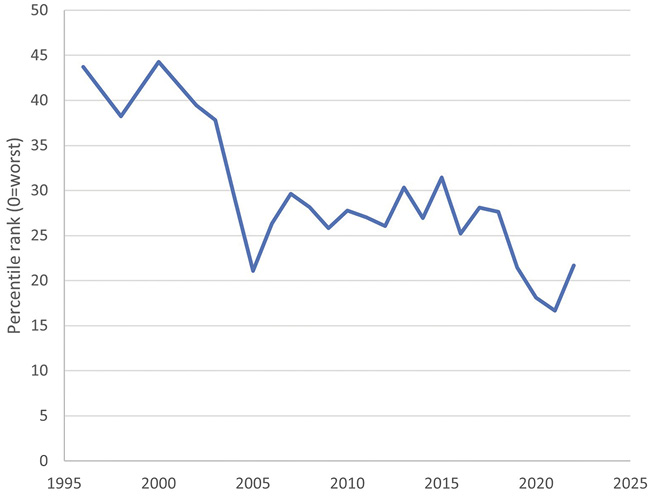
Figure 12.1: PNG’s ranking on the Worldwide Governance Indicators effective government index, 1996–2022
Note: Biannual data till 2002.
Source: World Bank Group (n.d.-c).
A measured assessment would note that the reach of the PNG state has always been limited (Nelson 2009) and that there are some bright spots. The Morauta financial sector reforms (5.1.3) gave an enduring boost to the governance of the financial sector. But the overall direction of governance travel has been negative.
State weakness manifests itself in the public service, with an ‘inability of many government departments and agencies to carry out basic functions’ (Nelson 2006, 17), whether due to a lack of incentives, confusion, inertia or infighting. Both the public service and state-owned enterprises suffer from the lack of a strong development orientation emanating from the country’s hyper-politics, and no technocracy has emerged strong enough to ensure such an orientation. The public sector was stymied early on by rapid localisation and then by austerity, and, as early as 1990, was ‘perhaps the greatest recipient of criticism in PNG’ (Turner 1990, 124). Since then its effectiveness has been undermined by the creation of new agencies without adequate defunding of the old, by the uncertainty around changing patterns of decentralisation, and by the inability of the political and bureaucratic classes to work together constructively.
Judicial independence and integrity have been largely maintained and many look to the judiciary as a bulwark against chaos. And, indeed, the judiciary does play a vital dispute-settlement role, especially for the political class. The courts also provide a useful constraint on power (Kama 2024). Since, given the lack of fixed party divisions, it is often not difficult to obtain the two-thirds parliamentary majority needed for constitutional change, politicians control the constitution except to the extent that the courts rule that constitutional changes are inconsistent with other parts of the original constitution. All this contributes substantially to regime stability. The downside is that PNG has become one of the most litigious countries in the world (9.2.2). This is costly, and slows down change, whether positive or negative, and development.
Despite the measures put in place to control it, corruption has worsened over time. The business interests of politicians have doubtless been a major contributor to this, as has the perception that corruption is a risk worth taking. PNG is now ranked 128th out of 180 countries on the Transparency Index (TI) corruption perception index. The extent to which corruption is a constraint on development is debated. Some, including many businesses (Figure 12.2), see it as one of PNG’s main problems. Others note that corruption in PNG differs little from levels seen in Asia, and yet Asia has done so much better: Bangladesh, for example, actually sits below PNG on the TI index, and yet has a much stronger development record.
An obvious inference from the above observation is that the key difference between PNG and Asia is not corruption, but state weakness. And yet it may also be the case that corruption may matter more in PNG because the state matters more, especially given resource dependency. Corruption may also be more damaging in PNG more because it is so uncoordinated (Olson 1993). Corruption also contributes to the low level of trust and high transaction costs that now permeate government. Politicians are not trusted to hire bureaucratic leaders in the national interest; therefore, cumbersome and restrictive procedures have been put in place to constrain hiring and firing practices (5.2.2). Politicians and departments are not trusted to spend their budgets with probity, so the central bank requires commercial banks to check whether proper procedures have been followed before releasing funds, and a central body has been established to run all procurement, resulting in enormous delays (9.2.3).
Decentralisation and regional autonomy are unfinished business for PNG. Shortly after independence, the country embarked on a radical plan of decentralisation involving the creation of elected provincial assemblies to which extensive powers were given. But in the nineties, these were abandoned and provincial powers were given instead to national MPs, mainly provincial ones, to exercise in their provinces. In the noughties, there was an emphasis on fiscal decentralisation, with the increases in funds going both to provinces and to districts. The latter increases were the largest and were under the control of district (as against provincial) MPs. In the fourth and final period, there was a lot of debate but no resolution on the future of decentralisation in PNG. It is impossible to predict with confidence either the future of decentralisation in general or of the status of Bougainville in particular. The lack of a settled sub-national distribution of power is a clear constraint on state effectiveness.
12.2.3 Law and order
Law and order, or the lack of it, has been a pressing problem for PNG for most of its independent years. In 1979, tribal violence led to a state of emergency being declared in the Highlands, and, in 1985, urban crime to a state of emergency for Port Moresby. In his 1991 book, noted commentator Sean Dorney nominated law and order as the biggest problem PNG would face in the coming decade, and he was right. All forms of violence seemed to worsen over the nineties. Levantis (2000b, 1), who undertook pioneering research in this field, talked of PNG’s ‘crime catastrophe’, calling it PNG’s ‘most serious social and economic problem’ and writing of ‘its profound consequences for the legitimacy and integrity of property rights and personal rights’. Globally, PNG is rated as a bottom-20 country when it comes to the state’s monopoly on the use of force (Table 10.14).
Incidents of tribal violence have increased and they have become more deadly due to the spread of weapons, criminal gangs and self-styled warlords in some provinces. Urban crime may have plateaued in PNG’s bigger cities, but at a very high level by global standards (Levantis 2000b), and it may still be increasing in smaller towns. Claims for compensation or other payments backed by threats of violence are common. Violence against women is at very high levels by global standards—though at least is now gaining more attention—and sorcery-related violence seems to be spreading (11.8).
It is often commented that PNG has very few police by international standards. ‘At 1:1,145, the current police-to-population ratio is significantly lower than the UN recommended level of 1:450’ (Walton and Dinnen 2022, 93). But are more police the answer? In 2004, the then police minister said that ‘the greatest fear that our people have is not the criminals but it’s the police’ (Denoon 2005, 178). In 2020, the new occupant of the same position admitted to a ‘rampant culture of police ill-discipline and brutality’ (Doherty 2020).
Lack of employment contributes to PNG’s crime problem, but criminality is the resort not only of the powerless and the marginalised, but also of the powerful and the well connected, both in government and in the private sector (RNZ 2015a; Walton and Dinnen 2022). Marxist criminologist Kristian Lasslett has done more than anyone to investigate the criminal end of political elite behaviour in PNG. His conclusion is that:
Formally speaking, Papua New Guinea boasts an impressive range of laws, regulatory mechanisms, institutional structures and policies, which have been designed to … balance economic growth, social need and environmental management. However, behind this formal edifice is an informal regime … typified by clientelism, corruption and fraud—which has permeated key institutions. (Lasslett 2018, 57)
In summary, ‘law and order challenges in Papua New Guinea are intractable. Levels of crime and violence are high and are a major obstacle to economic development’ (Haywood-Jones 2016).
12.2.4 The importance of institutional constraints
It is difficult to tease out the importance of various institutional and policy constraints on PNG’s investment climate, but some insight can be gained by looking at the five-yearly surveys of businesses carried out by the PNG think tank the Institute of National Affairs, in collaboration with the ADB, in 2002, 2007, 2012 and 2017. One hundred and eighty-seven firms were surveyed in 2017, 136 in 2012 (Holden, Barker and Goie 2017), 243 in 2007 and a similar number in 2002 (ADB and INA 2008, 1). The surveys cover both large and small businesses, and ask them about constraints to their success or, put differently, their views on the investment climate. Figure 12.2 shows the top 10 constraints, rated on a 6-point scale, where a higher score indicates a bigger constraint.6 The 10 variables are ordered by their average score, and the data labels show the rankings among the 10. On average, the top three constraints are institutional: law and order, corruption and political uncertainty. The next three relate to infrastructure: transport, electricity and telecoms. Of the remaining bottom four, one is skills shortages and the other three relate to macroeconomic policy: the exchange rate, inflation and interest rates.
Exchange rates—really, foreign exchange shortages (see Footnote 6)—were rated as the top concern in 2017 (and in other surveys in other years around that time, see Figure 8.4): economic policy does matter. But overall, by this admittedly imperfect measure of the importance of institutional settings, the ones that matter are the ones that we have focused on in this book, and they matter more than economic policies.
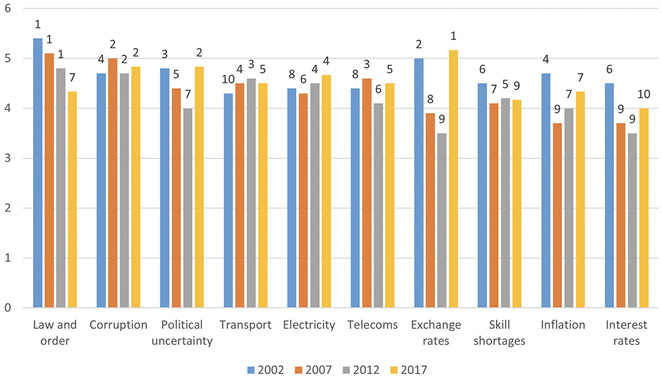
Figure 12.2: Constraints to business, 2002–17
Notes: Data labels are rankings (with 1 the worst); columns are scores out of 6 (with a higher number indicating a more acute constraint). The variables are ordered by their average ranking over the four surveys.
Source: ADB and INA (2008), INA (2013), Holden, Barker and Goie (2017).
It is striking that the top constraint in three out of the four surveys is law and order. It was also ranked the top concern by a considerable margin in 1982 (3.2.5) and 1996 (5.2.5) surveys of businesses, though these surveys had a different format and cannot easily be compared with the more recent ones. Given that law and order was the top-ranked concern of businesses for at least three decades (1982–2012), it is encouraging that the figure shows that the problem is becoming less serious and was no longer the top-ranked constraint by 2017. This may mean that crime has stabilised or even reduced, that businesses have learnt to live with crime and pay for protection, and/or that other problems have got worse.
A recent study of the attitudes of PNG citizens (urban and rural) showed that law and order was also their top concern (Baptiste et al. 2022). When the residents of five villages were asked to identify two ‘problems for PNG’ (not from a menu), the only two responses nominated by at least half the respondents were ‘stealing’ and ‘fights’ (Baptiste et al. 2022, Figure 4.4).
12.3 Growth determinants
There is an extensive global literature on the deep determinants of growth (Rodrik 2003). Institutional explanations of growth stress the importance of politics and security. These are our main interest, but we begin with a brief examination of other explanations—geographical, international, cultural and social—for growth in PNG, or the lack of it.
12.3.1 Geographical, international, cultural and social factors
A country’s geography is clearly important for its growth (Diamond 1997). PNG neighbours the poorest part of Indonesia (eastern Indonesia) and was one of the last regions in the world to be colonised. Both facts suggest it lacks a locational advantage. PNG’s topography is unforgiving, with its many islands hard to integrate, and its mountainous terrain prone to landslides and home to many remote and separate communities. Large parts of the country are malarial. While some of PNG’s land is very fertile, much is mountainous or swampy and therefore unsuitable for agriculture. Allen, Bourke and Gibson (2005, 202) write that:
Less than 1 per cent of the total land area is classified as ‘very high quality land’ and almost 60 per cent is classified as ‘low’ or ‘very low’ quality land. Poor quality land is higher, steeper, has higher rainfall, floods more often, is cloudier and has less fertile soils than better quality land.
At the same time, some aspects of PNG’s geography are more favourable for development, including its rich resource base of minerals, petroleum, timber and fish.
International factors are also relevant. Shortly after independence, dependency theorists started blaming international capital for the country’s woes (Mortimer, Kenneth and Amarshi 1979), a zero-sum critique of globalisation that was criticised at the time (Garnaut 1980; Gupta 1992) and is hard to take seriously four decades on given how well many countries have done precisely by integrating themselves into the global economy (Commission on Growth and Development 2008).7
Aspects of Australia’s colonial management are a more legitimate target for criticism, particularly the low levels of education and high levels of economic regulation it left behind (Daniel and Sims 1986). Australia’s White Australia policy kept Papua New Guineans in PNG, leading to a high level of isolation.8 Papua New Guineans were never welcome in Australia. When the White Australia policy was abandoned over the 1960s and 1970s, it was replaced by a skilled migration regime that was equally successful at keeping Papua New Guineans at home. According to the latest census, Papua New Guineans are only Australia’s 82nd-largest ethnic group. The lack of access to Australia helps explain why PNG’s share of remittances in GDP is one of the lowest in the world, and why there is so little migration out of the country, to the detriment of its human capital and the free flow of ideas.
In relation to PNG’s colonial heritage, one might also complain that the artificial boundaries drawn by PNG’s first colonial powers—England and Germany—are at the root of the unresolved issue of Bougainville’s status within PNG (Denoon 2000), and all the conflict and destruction that part of PNG has seen since independence (5.2.4).9
Some blame foreign aid for making PNG’s problems worse, arguing that, because aid flows ‘bias the economy against the private sector, they undercut employment and growth and lead to corruption’ (Hughes 2003, 1). High levels of foreign aid in the early years of independence may have pushed up costs. And it is certainly true that aid has sometimes been unhelpful—for example, contributing to an excessive reliance on corporate plans and workshops—but it is hard to see it as a fundamental negative. Multilateral and some bilateral donors supported the reforms of the nineties (5.1.4), and some individual aid projects have been beneficial. More generally though, the PNG case casts serious doubt on the argument that aid can significantly change a country’s development trajectory, whether for better or worse.
Some aspects of PNG culture seem conducive to development, such as a high level of entrepreneurialism. Finney’s (1973, x–xi) research led him to emphasise ‘how readily New Guineans accept economic innovations’ and to argue ‘that traditional values and institutions were positive assets rather than liabilities in the adoption of cash cropping and commerce’.10
Others cultural aspects seem less favourable for development, such as beliefs in sorcery; 11 preferences for consumption, distribution and communal activity over work, accumulation and commercial enterprise;12 and pressures to put traditional obligations to kin above modern obligations to state law (Ekeh 1975; May 1997). PNG cultural traditions have likely contributed to its hyper-politics and insecurity (12.4). Allen (1983, 215) makes the very interesting remark that the concept of subversion had no place in traditional PNG culture. By this he presumably meant that regime change was never a goal; rather, all the focus was on who would hold or take power within the existing regime. This may help to explain why the population seems so tolerant of its political leaders, and why mass protests are very rare. The low esteem in which women are held—with high levels of polygamy, and violence against women widely accepted—is a drag on development and results in continuing rapid population growth. Most fundamentally, perhaps, the country has had to confront and adapt to markets and modernity in a very short time span. Prior to colonisation, Melanesian society was characterised by ‘the absence of specialised trading and intermediary functions’ (Conroy 2023, 34). Even the most developed of PNG’s pre-colonial markets—those of the Tolai in what is now East New Britain—‘were only comparable with the least advanced rural markets in pre-colonial West Africa’ (Conroy 2023, 46).
Turning to social factors, ethnolinguistic fragmentation has been shown to be a constraint on development internationally, and PNG’s level is world leading (1.2.1). Easterly and Levine (1997, 1241) explain Africa’s ‘growth tragedy’ by reference to ethnic diversity, arguing that ‘interest group polarization leads to rent-seeking behaviour and reduces the consensus for public goods’. Consistent with this international analysis, many reference PNG’s traditional social structures—its strong micro-societies, as Bizhan and Gorea (2022) refer to them. Traditional affiliations remain strong, though, as Nelson (2006, 6) has written:
there is less consciousness of the radical changes that have been taking place in traditional systems. Some continue to serve their communities well, but in many villages when people regret the breakdown in law and order they are talking of the failure of the system that thirty years ago ensured law and order for most of the people for most of the time.13
While cultural and social factors are clearly important, both for better and for worse, some want to go further and make them the primary explanation of PNG’s failure to develop more quickly. May (2003b, 154; 2022, 71), has argued that PNG suffers from ‘a poorly developed sense of national identity’ and that citizens therefore ‘see the state as the source of things’, something to plunder rather than contribute to. Such claims are hard to assess. One survey of university students in fact shows a high degree of nationalist sentiment (Feeny, Leach and Scambary 2012). And, while many in PNG clearly do see the state as a source of benefits,14 it is rational to want to get more from government, and hardly something specific to Papua New Guinea.
Political scientist Francis Fukuyama, who has written specifically on PNG, gives primacy to social factors, writing, in accordance with the arguments of Migdal (1988), that:
The sources of state weakness in Papua New Guinea lie in the country’s social structure and culture. The extreme ethnolinguistic fragmentation of the country is noted by every observer of PNG, and is obviously the root cause of the failure to generate strong collective action at a national level. It is not just that the society is fragmented; the underlying social groups are very strong and cohesive compared to traditional social structures in other developing societies. The acid of modernization that has dissolved traditional social structures and driven millions of people to from countryside to cities or abroad in much of Latin America and Africa is much less evident in PNG. (Fukuyama 2007, 9)
Fukuyama is correct that PNG has a weak state and that this is deeply damaging for the country’s development prospects. But recall that PNG did not go to independence with a weak state. Why the PNG state has become weak needs to be explained. To do so, we need to engage with institutional theories of development. The next two subsections introduce critical concepts and arguments that are built upon in the rest of the chapter.
12.3.2 Political theories of development
Acemoglu and Robinson (2012, 430) foreground political factors in explaining economic outcomes. They cast their argument in terms of extractive and inclusive institutions, and contend that growth cannot be sustained indefinitely under politically extractive institutions, which they define as those that ‘concentrate power in the hands of the few’. Perhaps PNG’s political institutions are, despite being semi-democratic, extractive, but Acemoglu and Robinson’s theory predicts high growth under such a set up for some period before it runs out of steam. After all, economic growth should be in the interest of the elite; it is only when countries approach high-income levels that, the authors argue, non-inclusive political set-ups become unstable and unable to support the churning and innovation that economic growth requires at higher levels of development. That does not match the PNG case, where growth has been low from the start. More recent work by Acemoglu and Robinson (2019) explains state weakness in terms of the elite’s fear of social mobilisation that state strength and therefore development could give rise to, but this presupposes a unity of purpose among the elite that certainly does not fit the PNG case.
A more helpful approach for PNG references political settlements or elite bargains. The World Bank (2017) World Development Report categorised elite bargains into two sorts: rules-based, which were good for development, and deals-based, which were not. PNG evidence provides little support for this theory. Its political settlement is rules-based. There are clear and well-respected—even if only partially democratic—rules for assuming, retaining and transferring political power. These rules have ensured regime stability and, for most of the time, have prevented violence from getting out of hand—that is, degenerating into coups or civil war. This in turn has helped prevent state, and economic, collapse. However, PNG politics has not otherwise been supportive of economic growth (3.2.1). Not all rules-based bargains are equally good for development.
Dercon (2022) takes an altogether different approach to elite bargain theory. He neglects entirely whether the bargain is rules-based or not, emphasising instead the importance of the elite coming together, agreeing to set aside their differences and promote development—that is, making a development bargain. Clearly no such development bargain has been able to take hold in PNG, and we need to explain why.
12.3.3 Insecurity
Institutional explanations for growth have often and long emphasised the importance of law and order or security for development. Adam Smith (1762, 5) wrote that:
The first and chief design of every system of government is to maintain justice: to prevent the members of society from encroaching on one another’s property, or seizing what is not their own. The design here is to give each one the secure and peaceable possession of his own property.
Providing security for property rights was one of the few institutional reforms to make it into the Washington Consensus’s 10-point policy recipe (Williamson 1990). The extensive discussion of the need for and attempts at land reform in this book suggest these are salient references for PNG.15
Security is not only about land. Also important is the security of produce and, even more so, of the person. Rodrik (2003, 10) has argued that ‘institutions that provide dependable property rights, manage conflict, maintain law and order, and align economic incentives with social costs and benefits are the foundation of long-term growth’. PNG has had variable success in aligning economic incentives with social costs and benefits, but has not been able to build institutions that fulfil the first three security-related tasks that Rodrik says are foundational for growth.
There is also the link between violence and the quality of governance more broadly. Indeed, the ‘limited access order’ theoretical framework of North, Wallis and Weingast (2010) puts the inability of the state to exercise a monopoly over the use of violence at the heart of their explanation of poor governance. The more the state lacks a monopoly of violence, the more important the capacity for violence is as a source of non-state power, and the more likely the state, rather than providing a level playing field for all or ‘open access’ as the authors put it, will be dominated by those with such a capacity.
12.4 An institutional explanation
To summarise the preceding two subsections, an institutional explanation of PNG’s growth performance should explain why its politics has not been supportive of development and examine the detrimental impact of insecurity on development. In this section, we link PNG’s hyper-politics and its insecurity to its weak but stable state and low growth.
We begin with political factors. As Kölln (2015, 593) puts it, ‘parties save politics from becoming a dispersed and even possibly a contradictory set of actions’. In PNG, because of weak parties, politics is dispersed and contradictory. Going further, we have argued that politics in PNG is characterised not only by clientelism, but also by other characteristics, such as the strong pull of politics, a merging of the business and political classes, and a constant, precarious and sometimes violent struggle for power, and have called this bundle of characteristics ‘hyper-politics’ (12.2.1). The result, we have argued, is a political elite that is only lightly constrained by the interests of the disempowered masses, and that often acts on the basis of short-term, local and private interests, rather than pursuing long-term, national, broad-based development.
Hyper-politics has weakened the state. It has done this by preventing the formation of a development bargain, or a coalition around the sustained pursuit of long-term national objectives, such as strengthening the state. The priority given instead to short-term, local and private issues has become reflected in the way the state operates, and undermined its capacity to take tough policy decisions and act in the national interest.
Former prime minister Peter O’Neill has been quoted as saying that Papua New Guinea ‘has too much politics and not enough good government’ (Ives 2004, 92). One can go further and say that PNG has not enough good government because it has too much politics.
Given the damage that politics does to PNG’s economic performance, it is natural to talk about the PNG elite in critical terms. It has been described as predatory (Namorong 2014), and kleptocratic (Garnaut 2000), and there is certainly a poor alignment of interests between the elite and the masses. Founding prime minister Somare himself commented in 1988 that:
This country is not pulling together in the desired direction … The political leadership is headed in one direction—towards reaping wealth and status for themselves—while the masses are stuck with the problems of increased crime, unemployment, urban drift and sub-standard health and education services. (cited in Hegarty 1989, 11)16
But as critical as one might want to be about the elite, we should also recognise that it is itself trapped by the weak state it has helped to create. This is the meaning of the quotation from Mekere Morauta with which this chapter began. There are good leaders in PNG. But even those who want to pursue national goals find that they cannot as a result of state weakness, and that they cannot fix the state. This, in turn, makes them take their national responsibilities less seriously, inducing a greater focus on other priorities, such as local and business interests and the pursuit of power. Thus, a weak state is not only the product of PNG’s hyper-politics but also a cause. The disempowerment of the ordinary Papua New Guinean is both the direct (due to predatory behaviour) and indirect (via the weak state) outcome of the country’s hyper-politics.
PNG’s hyper-politics is an important part but not the whole story of PNG’s development difficulties. Another institutional constraint on development that is important in the PNG context is insecurity (12.3.3). This has two aspects: the poor law and order situation, and the insecurity of property rights.
The severity of the former as a constraint on development is self-evident, starting with the fact the poor law and order is itself a form of under-development—an intrinsic bad. A lack of physical security impinges on the daily life of ordinary people, especially women. PNG’s law and order situation has been rated by business as their top-ranked constraint for most of the post-independence period (12.2.3).
Turning to the latter, the importance of insecure property rights has long been recognised as an important constraint to growth in PNG. Land in PNG is expensive, difficult to access and/or insecure for a range of commercial activities and livelihoods (11.6). Household surveys indicate that land is by far the leading cause of disputes in rural areas, and, even though its lead is less, in urban areas (NSO n.d., Table 8.1). Not long after independence, Trebilcock (1983, 228) wrote that:
unless some break-through can be achieved in customary land law reform, existing land tenure arrangements will continue to constitute perhaps the major brake on the economic development of Papua New Guinea.
Land policy reforms have been attempted, but the task is complex. It is not surprising that such reforms have failed to deliver the institutional prize of secure property rights (11.6).
One cause of insecurity in PNG is a weak state. As things stand, the police contribute to as well as deter violence. A more capable state would bring greater clarity to competing customary ownership claims and greater protection to property rights. But insecurity also weakens the state by making it more difficult for the state to fulfil its fundamental function of acquiring—or enabling to be acquired—land for development, and, more generally, by stripping it of its monopoly of violence.
Insecurity and hyper-politics reinforce each other. Indeed they overlap: with violent electoral competition the norm in some parts of the country, with politicians often violating the law for private ends and with local groups making threats to extract resources from the state backed by violence (Strathern 1993). The insertion of violence into the political process further marginalises policies from the political process and makes politics more about the distribution of resources between different local groups. It normalises, and is normalised by, insecurity.
It is not just that growth is low, but that it is increasingly resource dependent (Figure B3). The various constraints to broad-based growth—hyper-politics, insecurity, a weak state—are less constraining of big, ring-fenced resource projects. While positive impacts of resource growth are evident in PNG, there are also negative feedbacks. An increasingly resource-dependent economy is one in which a weak state becomes ever more important as a distributor of economic rents,17 and perhaps weaker as it is distracted from, or reluctant to take on, other policy challenges. It is also one that is even more prone to conflict. Growing resource dependency is another force that increases the importance of traditional groupings and rent-seeking to the detriment of development. Specifically, it has, to return to sources used earlier, helped to make landowners PNG’s ‘most powerful pressure group’ (Saffu 1998f, 486) and given rise to the dominant belief that ‘customary groups of landowners are the basic building blocks of national society’ (Filer 2014, 82). All of this has made land reform more difficult, and claims for compensation more likely, and not only in the resource sector. This subset of feedback loops constitutes Papua New Guinea’s institutional resource curse (Murshed 2018).
Another set of feedback loops is from low growth and resource dependency to hyper-politics and violence. Low growth boosts the relative importance of the state and of traditional groupings, and thus of politics, broadly defined, as a source of economic opportunity. Low growth also reinforces the social status quo, whereas more rapid growth would shake things up and perhaps give rise to new, larger-scale social formations from which stronger political parties could arise (Wood 2023). On low growth leading to violence,18 in 1962, Australian academic and leading PNG adviser John Crawford wrote of the dire consequences of a premature reduction in Australian aid. Perhaps Australian aid was cut too quickly, but today his remarks can be read as prescient with regard to the consequences of low growth more generally:19
Capital for investment would be insufficient, necessary imports could not be financed, and even the present limited medical and educational services would be curtailed. In these circumstances there would be a marked reversion to tribalism and fragmentation of Papua New Guinea society. Lacking, however, would be the relative stability of the old self-subsistence order—for the taste for change has now been cultivated. Disorder would be the ruling state of affairs. (Crawford 1962, 65)
It would be a gross exaggeration to say that disorder is the ruling state of affairs in Papua New Guinea, but less of one to say that insecurity is.
Finally, why, given these negative forces, has the PNG state not collapsed? Why is growth still positive? The tenuous grip any ruling party or faction has on power prevents complete state capture, and thus reduces the risk of conflict and collapse. The inability of any one group to dominate by seizing power has ensured a commitment by the elite to the rules of the game, which induces regime stability (12.2.1), which in turn provides a basis for investor confidence and helps to contain violence. The many different directions in which the state is pulled by the many who exercise power means that the state is both stable and weak.
Figure 12.3 provides a summary of our argument, which is that PNG’s hyper-politics and insecurity both lead to and are reinforced by a weak but stable state and low and increasingly resource-dependent growth. We can call it a hyper-political, insecurity trap.
The figure, and this section, is far from a complete explanation of the deep determinants of PNG’s economic performance, but may be useful in showing how factors stressed by the institutional scholars of growth—politics and insecurity—have influenced development outcomes in the country.
For a full explanation, one would need to integrate the relevant geographical, international, social and cultural factors (12.3.1). That would be a formidable task, though these links are no doubt important: politics and low growth enhance the salience of ethnicity, for example. For our purposes, however, it is sufficient to be reassured that the characteristics we focus on, namely hyper-politics and insecurity, are not themselves completely explicable in terms of low growth and a weak state but are at least partly due to other factors. This is a low bar to jump. The country’s extreme ethnic fragmentation, as well as the emphasis on achieving status and prestige in Melanesian culture (Conroy 1982, 83), has surely contributed to PNG’s hyper-politics.20 Group ownership of land would make the management of property rights difficult no matter how capable the state. And ‘violent conflict has a strong cultural basis in PNG, as the use of violence is seen as a legitimate means of expressing grievances’ (Lakhani and Willman 2014a, 3).21
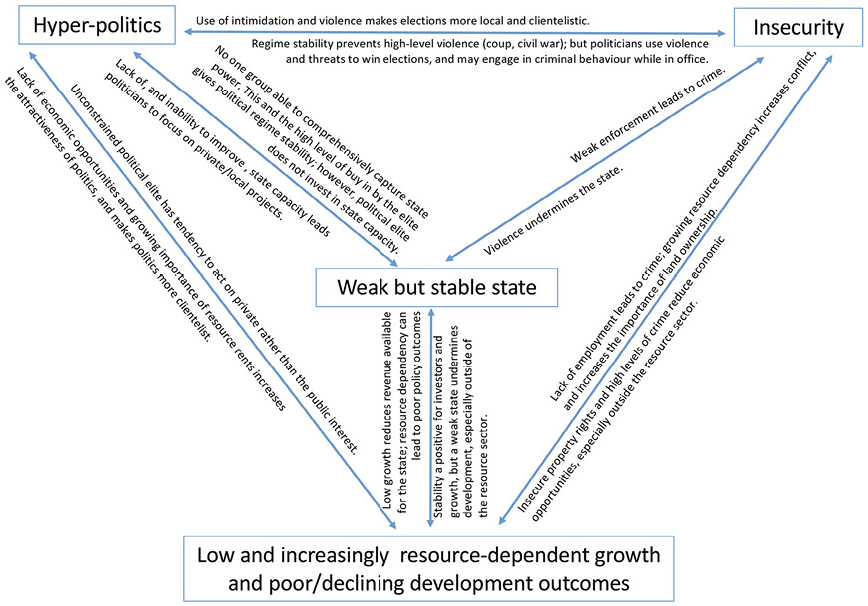
Figure 12.3: A political economy model of PNG—the hyper-political, insecurity trap
Source: Authors.
12.5 Final reflections
We have argued in this concluding chapter that PNG is in a trap, in which hyper-politics and insecurity combine to produce, and are reinforced by, a weak but stable state, and low and increasingly resource-dependent growth. While the picture painted is not an optimistic one, traps are not for ever. Today’s prosperous democracies with their strong political parties were, in the nineteenth century, clientelist (Shefter 1973; Stokes et al. 2013). Over an even longer period, the countries of Western Europe have escaped a centuries-long conflict trap.
Traps can be escaped given enough time, but how? Our institutional model is illuminating, but it does not give rise to concrete recommendations. If it is difficult to confidently recommend economic policy reforms (11.9), it is impossible to do so in relation to institutional ones. Those that have been proposed and tried have often disappointed, for example, the political reforms of the nineties (5.2.1). May (2001a, 16) says that development in PNG would require ‘a fundamental shift in patterns of political behaviour’. Advice to secure property rights and reduce crime would be equally generic. Papua New Guinea will have to find its own institutional way forward.
Rather than ending with any recommendations, we conclude with five general reflections on what writing this history has taught us, and what the future might hold.
First, the reduction in academic material on PNG’s economy over time is striking. There is more material on the pre-independence than on the independence period, and more on the early pre-independence period than the late. This volume is itself a partial corrective to this unfortunate trend, but there is much more to be researched and written about.
Second, while much can be learnt from PNG’s history, much can also be learnt from international comparisons. Yes, PNG is unusual, unique in some ways. It is the world’s most ethnolinguistically diverse country and the most rural, as well as one of the most resource dependent. But while every economy is different, there is also much PNG shares in its history with other countries. The rise and fall of the Washington Consensus, the difficult period of the eighties and the boom of the noughties, the adoption of foreign exchange rationing, clientelism—these are all international phenomena. We have tried to use these comparisons in our history, but much more could be done to understand PNG’s economy and its challenges in an international context.
Third, development in PNG is much more difficult than it was at first, and is still, often understood to be. Recall Michael Somare’s words at independence, quoted at the start of Chapter 2, that it would be up to PNG to decide how much development it wanted, and the assumption of the influential Faber Report at independence of annual growth in excess of 7–9 per cent (3.1.1). The reality has been very different, but in many ways the optimism remains. Vision 2050, published in 2009, articulated the aim of placing PNG among the 50 countries with highest Human Development Index (HDI) by 2050. In 2010, PNG was placed 159th out of 189 countries on the HDI index: as of 2021, it is 156th (UNDP Human Development Reports n.d.).
In 2008, the then deputy prime minister expressed his aspiration that PNG could become the ‘richest black nation’ in the world (Temu 2010, 110). Non-resource GDP per capita—our best measure of living standards—was only 12 per cent higher in 2019 than in 2008, but that did not stop the current prime minister doubling down on that earlier commitment. James Marape said when he took power in 2019 that he wanted PNG to be the ‘richest black Christian nation’ on earth by 2030 (Laveil 2019b).
Business media websites, international banks and development partners reinforce this excessive optimism or boosterism. During the boom, PNG was referred to as a ‘Pacific tiger economy’ (Callick 2012); it clearly was no such thing. During the bust, Business Advantage PNG said that hosting APEC in 2018 would transform the country (McQuillan 2017b); it did not.
The reality is that development in PNG has got more difficult since independence, not easier. Barriers to growth have increased more than they have been reduced. Optimism and hope are important, but not helpful if disconnected from reality.
Fourth, the prophets of collapse have also not seen their predictions vindicated. On the left, Marxist scholars Thompson and MacWilliam (1992, 193–4) argued in the early nineties that the ‘collapse of the social formation … was probable’ in the short term.22 On the right, Windybank and Manning (2003, summary) argued a decade later that the PNG government was on the brink of ‘collapse’.23 This pessimism has been as misplaced as the optimism of PNG’s boosters. Independent PNG ‘has shown a remarkable capacity for surviving crises’ (Ketan 2000, 321). This undermines the credibility of predictions of general collapse, such as the outbreak of a civil war or a coup or a mass exodus. The pessimists also underestimate what our model stresses: the high level of buy-in to the PNG state by the political class, and the stability that this delivers (12.2.1). Precisely because the PNG state is one in which ‘power is diffused’ it is also one that ‘continues to function … despite many “grabs at the wheel”’ (Hegarty 1989, 14). This is why ‘the PNG state is far from collapsing’ (Ketan 2000, 322).
That collapse is not imminent does not mean that it will never be a risk in the future. Moreover, not collapsing is not the same as progress, and, in fact, is consistent with regress. While economic growth has been slow rather than negative, many indicators of living standards place PNG at or close to the global bottom (Table 10.14). Government effectiveness is in decline (Figure 12.1). A recent survey of University of Papua New Guinea students found that an overwhelming majority thought the country was heading in the wrong direction (Samof and Howes 2024).
Fifth, in assessing the country’s prospects too much weight is still given to the country’s resource potential. As recently as 2020, the IMF (2020, 1) wrote that ‘Papua New Guinea’s longer-term outlook remains positive, largely reflecting the likelihood of major resource sector projects’. There are a number of reasons why this is misleading (11.4). First, these projects are ever more complex and controversial and are less likely to, and take longer to, come to fruition. Second, existing resource projects are depleted over time, and there are a limited number of potential new projects. As shown in the introductory chapter, PNG’s non-renewable resource endowments are just not large enough on a per capita basis—one-sixteenth the size of Australia’s, for example (Figure 1.4)—to be transformational. Third, more resource projects mean a stronger resource curse, both economic (11.9) and institutional (12.4). And converting resource revenue into development is a difficult task for a weak state. Fourth, PNG has experienced reasonable resource sector growth since independence (Table 10.5), yet overall growth has been slow. Manning (1999, 15) commented that ‘Papua New Guinea … enjoyed an unprecedented flow of riches from mineral and petroleum finds during the 1990s’. It did not help much then, and there is no guarantee or even likelihood that it will in the future. If more resource sector projects were the answer, PNG’s problems would have been solved. PNG’s long-term outlook depends on the quality of its policies and above all its institutions, rather than on the resource projects it is able to negotiate.
Beyond these general points, divining what the future holds for PNG is a task we leave for others. The nation is young and has embarked on a long journey. Whatever happens, the next half century in Papua New Guinea’s post-independence economic history will surely be as difficult to predict and as interesting as the first.
1 When deputy prime minister Sam Basil tried to bring down James Marape’s government at the end of 2020 (shortly after it had passed the protected 18-month period), he told one newspaper, after he failed, and had been given back his deputy prime minister position: ‘This is all political. We are simply doing our job.’ Marape graciously responded. ‘These sorts of things happen. Every party leader when the opportunity (to become) PM presents itself, has the right to make a bid for it. It didn’t happen (this time) and the next best available option is deputy and it’s still vacant’ (Tarawa 2020).
2 The more positive conclusion of Reilly (2000) that PNG’s extreme ethnic fragmentation supports its democratic set-up needs to be qualified thus some two decades on.
3 Iambakey Okuk, reflecting on one of the many votes of no confidence he supported, said: ‘The voters have no rights at the moment. Once elected, the MP must decide what is best for his career’ (cited in Denoon 2005, 184).
4 PNG escaped from these lists during its boom years, but in hindsight was being rewarded for good economic times rather than an improvement in state capability.
5 Teskey et al. (2021, 15) make the contrary argument that ‘governance in PNG over the long-term is improving, yet at a very slow rate’. Their first year is 2004, before the boom was evident, and at the end of a period of despair in PNG’s national life. This may influence their conclusion.
6 The 2017 survey uses a 4-point scale and is rescaled. In 2017, ‘foreign exchange access’ was asked about separately from ‘exchange rates’. The latter was the third-ranked constraint, the former the top. In the figure, the former is used for the 2017 rating and score.
7 The most economically successful countries, the Commission on Growth and Development (2008, 21) argued, ‘have fully exploited the world economy’.
8 The difficulties Papuans and New Guineans had travelling to Australia was a common source of criticism during colonial times (Kiki 1968, 178–9).
9 ‘Geographically and ethnically it [Bougainville] belongs with the British Solomon Islands Protectorate rather than with New Guinea’ (Woolford 1976, 29). One friction between Bougainville and the rest of PNG has related to skin colour. Bougainvilleans (like many in Solomon Islands) are black-skinned, and often refer to other Papua New Guineans as ‘red skins’. Bougainville is also physically much closer to Solomon Islands than the rest of PNG. Early agitation around the political status of Bougainville canvassed the option that it should be part of Solomon Islands rather than PNG (Denoon 2000, 172, 178). See also Regan and Griffin (2005).
10 Finney’s research was of Goroka. He writes: ‘The motivation necessary for economic growth was present in the traditional setting, but the economic factors were missing until contact with the outside world supplied the cash crops, technology, monetary system, and marketing channels that made it possible for the Gorokans to earn money and start their own enterprises’ (Finney 1973, 22). See Epstein (1968) for a similar analysis of the Tolai of East New Britain.
11 Of a group of landowners, the Mari, whose land is used for the Ramu sugar project (2.2.2), it has been written that ‘a sizeable number of Mari, perhaps all, still believe that to accumulate is to evoke jealousy: they are convinced that to rise above the rest attracts the attention of sorcerers. Thus, although virtually all Mari see development as a good thing, and virtually all agree that solid, permanent-material houses are an important aspect of development, few people are willing or able to build such houses’ (Errington and Gewertz 2004, 190).
12 This relates back to subsistence affluence. In the words of the Black Harvest filmmaker about the Western Highlands people he got to know well: ‘While they might lack material possessions, the Ganiga were by and large economically self-sufficient: their houses were built out of local bush materials, their food gardens—tended primarily by women—supplied most of their daily needs. Consequently, they were able to put most of their energy into themselves—personal and clan relations and so on—rather than into economic production in the Western sense’ (Connolly 2005, 80). See also Kiki (1968, 77).
13 Reilly (2004) claimed to find a negative link between ethnic fragmentation and development at the provincial level in PNG.
14 The anecdote that concludes Chapter 3 is consistent with this argument (3.3). So is the fact that, after Somare was deposed as prime minister by O’Neill in 2011, he sued the state and in 2015 won PGK2 million in an out-of-court settlement (Cochrane 2015), money that would otherwise have been available for government programs.
15 In this book, land reform has been discussed under the heading of economic policy; however, any system of property rights constitutes an institution, so we could have equally presented the topic under the ‘politics and governance’ heading.
16 On the very Papua New Guinean fear of urban drift, see Section 11.8.
17 ‘Lack of alternative sources of comparable wealth have contributed directly to the centrality of the state as the single most important controller of resources in modern PNG’ (Dinnen 1998, 58).
18 See also Levantis (2000a) who argues that the high wages going into independence encouraged rural–urban migration and then, when insufficient jobs eventuated, crime.
19 A micro confirmation to this macro prediction can be found in Zimmer-Tamakoshi (1997).
20 Views on the extent of the influence of culture on PNG politics are, in fact, divided. Wood (2016) provides a survey and argues convincingly for an intermediate position. Ketan (2000) gives the most instructive and fascinating account from the Mt Hagen area of how traditional arenas of competition and cooperation have been incorporated into modern politics.
21 In his memoir, one of PNG’s first politicians, Albert Maori Kiki (1968), wrote about the precolonial ‘state of perpetual war’ (18) and preoccupation with violent payback (5, 15).
22 The two authors had some disagreements, and this view was one put forward by Thompson.
23 For other instances of PNG crisis-mongering, see the references in Standish (1999, footnote 4).
Previous Next



