


 menu
Rethinking Histories of Indonesia
1
Rethinking histories of Indonesia: A decolonial approach
Sadiah Boonstra, Bronwyn Anne Beech Jones, Katharine McGregor, Ken M.P. Setiawan and Abdul Wahid
I beg of you do not think of colonialism in the classic form which we of Indonesia, and our brothers in different parts of Asia and Africa, knew. Colonialism has also its modern dress, in the form of economic control, intellectual control, actual physical control by a small but alien community within a nation. It is a skilful and determined enemy, and it appears in many guises.1
In his opening address at the famous 1955 Bandung Conference, Indonesian president Sukarno laid out the many challenges the people of Asia and Africa confronted in the post–World War II period. Ten years after the declaration of Indonesian independence, Sukarno signalled the continuing struggle to realise full independence across multiple spheres of life. The Bandung Conference and its emphasis on the enduring nature of colonialism are a theme about which many intellectuals, including decolonial thinkers, from across Asia, Africa and, later, South America continued to theorise for decades to come.
In the late 1980s, the sociologist Aníbal Quijano coined a term for the systemic nature of colonialism: the ‘coloniality of power’ or ‘coloniality’ for short.2 Coloniality opened a path into further interrogating the incomplete process of decolonisation. Quijano proposed an analysis that, as María Lugones puts it, ‘provides us with a historical understanding of the inseparability of racialisation and capitalist exploitation as constitutive of the capitalist system of power’.3 This global capitalist, colonial, modern system of power or ‘coloniality of power’ that Quijano describes began in the Americas in the sixteenth century and spread to other parts of the world, including Southeast Asia, where it continues to exist.
Importantly, Quijano makes a distinction between ‘colonialism’ and ‘coloniality’. In Quijano’s conceptualisation, colonialism refers to Western imperial/colonial expansion that ‘laid the foundation for modern/colonial globalisation’ and an economic system we today call capitalism.4 Coloniality, by contrast, refers to the structures of power and control underpinning colonisation that persist to the present. Coloniality can thus be understood as referring to the epistemic, enduring legacies of imperialism, which continue to impact current cultural, social, economic and political systems, including knowledge and its production.5 The concept of coloniality also helps sharpen our understanding of decolonisation. In many cases, the local elites who gained control of the government failed to fully overthrow (or overcome) ‘coloniality’ and continued to replicate what the colonisers did, but in the name of national sovereignty.
The construction of coloniality and the workings of the ‘colonial matrix of power’6 in the Indonesian context run as a red thread through the contributions to this volume. To critically consider coloniality, contributors draw inspiration from the related concept and praxis of decoloniality as outlined by Catherine Walsh and Walter Mignolo.7 Considering that political decolonisation—meaning the formal end of colonial rule—did not entail an end to coloniality, this approach aims to comprehend how Western modes of thought and knowledge systems have been universalised to highlight the plurality of such systems and undo ‘the hierarchical structures of race, gender, heteropatriarchy, and class that continue to control life, knowledge, spirituality, and thought’.8 At the same time, decoloniality means detaching from structures of coloniality and (re-)establishing old and new ways of thinking, languages, ways of life and being in the world that coloniality rejects. This volume is animated by theories of coloniality and decoloniality because of the critical attention they bring to understandings of colonial history. Decoloniality and decolonial thinking seek to highlight the plurality of systems of knowledge and thought and the simultaneous existence of multiple frameworks of knowledge, and of thinking beyond the framework of coloniality.
The central premise of Rethinking Histories of Indonesia: Experiencing, Resisting and Renegotiating Coloniality is that it is time for a critical evaluation of histories of Indonesia extending back to the formal period of colonisation right through to the present using the scholarly lens of coloniality and decoloniality to capture the enduring legacies of and processes that reproduce coloniality. The book therefore aims to lay bare the workings of coloniality and to take the first steps towards undoing it. We have paid careful attention to representing a range of perspectives in this volume. Our chapters have been written by scholars from across the world working in the fields of history, area studies, archive studies, legal studies, artistic practice, literary history, urban history, visual history, sociology, museum studies and anthropology. Of our 16 contributors, nine are Indonesian and 10 are women. We have adopted a collaborative research process of sharing our work, thinking and resources.
Across the book, we consider how colonial categories and related propaganda functioned across a range of fields and sites to justify and reinforce colonial ideology and projects ranging from tax law and the technologies associated with plantations to the operations of colonial ideology within the Dutch military and other parts of the colonial bureaucracy, and an elite Eastern Indonesian family. The chapters dealing with colonial categories and ideologies engage critically with Dutch colonial sources or provide new analyses of Malay and Indonesian-language sources including newspapers, interviews and memoirs that offer alternative windows on to colonial history and local perspectives leading up to and including the Indonesian revolution of 1945–49. Taking up the theme of the ongoing resonance of colonial history in the present, later chapters ask to what extent colonial categories were dismantled or repurposed, and whether there was a shift away from colonial thinking after 1945, in both Indonesia and the Netherlands, as former coloniser, and how we might explain such (dis)continuities. These chapters consider how colonial influences and structures of thought continued to inform fields of cultural production, heritage preservation, urban space and law as well as how Indonesian nationalism reproduces colonial assumptions.
The innovation of this book lies in the fact that it is the first volume to critically analyse the connections, resonances and influences of coloniality across periods of Indonesian history that traditionally have been studied in isolation. For several reasons, explained below, despite the prominence of Indonesians in anticolonial and anti-imperial movements, postcolonial approaches have never really thrived there. We ask why and begin to offer an alternative conceptualisation of Indonesian history through the lens of coloniality.
Anticolonial thinking and the limited influence of postcolonial history in Indonesia
Vijay Prashad offers an excellent summation of ‘the Bandung spirit’ as ‘a refusal of both economic subordination and cultural suppression’.9 While Bandung represented the culmination of sentiments expressed across the centuries by peoples subjected to colonialism, it was not the first nor the only expression of such views. Such resistance dates to at least the Haitian revolution (1791–1804) that successfully challenged slavery and established an independent republic.10 Despite their absence at Bandung, women across Asia and Africa also launched fierce challenges of both colonialism and patriarchal oppression.11 Nor was Bandung the last expression of the Bandung spirit. The conference gave rise to a range of different Asian–African organisations such as the Afro-Asian People’s Solidarity Organisation, the Afro-Asian Journalists’ Association and the Afro-Asian Writers Association, all of which tried to challenge the global hegemony of the West.12 In the 1950s and 1960s, Indonesians were at the centre of these global movements to address ‘social, racial, political and economic justice among the formerly colonised nations’.13
Anticolonial thinkers and leaders from the 1940s to the 1960s, such as Sukarno, Mahatma Gandhi, Kwame Nkrumah and Frantz Fanon, were key sources of inspiration for postcolonial studies. The field can be very broadly characterised by efforts to adopt ‘a particular vantage point from which to apprehend the world’—one that is critical of colonial ideology and systems and of modernity, decolonisation, neo-colonialism, nationalism and teleological thinking.14 Palestinian literary scholar Edward Said foundationally identified how colonial discourses characterised the ‘West’ in opposition to an always deficient non-Western ‘Other’, showing how the links between knowledge, culture and power reproduced colonialism.15
Early postcolonial studies were also propelled by ‘subaltern studies’ that arose from Indian intellectuals who sought to draw attention to the subaltern—the marginalised and forgotten subjects of history.16 Writing histories of subaltern subjects involved finding new ways of reading colonial texts and using alternative sources such as oral history.17 Following Dipesh Chakrabarty, postcolonial history also challenges the idea that Europe is and always has been the centre of world history and the related global inequity that arose from the Eurocentric idea that ‘large sections of the world’s populations are relegated to the imaginary “waiting room” of history where they are told that they are “not yet” ready for rights that are in principle considered universal’.18
Despite the prominent involvement of Indonesians in decolonisation movements, postcolonial history has not been highly influential in Indonesia for several reasons. As identified by Sukarno, the intersection of decolonisation and the Cold War led to the emergence of new forms of coloniality. These influenced how Indonesia was positioned in the global order from its declaration of independence. Here it is crucial to consider what Sabelo Ndlovu-Gatsheni refers to as ‘Cold War coloniality’—a process that led countries of the Global South to become ‘entrapped in a global ideological warfare’ preventing ‘authentic political and economic formulations and creations’.19 This ideological warfare saw competition between universalist and expansionist ideologies emanating from the Soviet Union and the United States.20 These ideologies drove Western powers to work with the Indonesian army to both remove Sukarno and destroy the political left because of the perceived threats they posed to Western capitalism.21 The destruction of the political left and the strength of anticommunism in Indonesia had important ramifications for the slow and limited take-up of postcolonialism in Indonesia. This is not to suggest that the political left was completely aligned with postcolonialism; indeed, postcolonialism also includes major critiques of the teleological dimensions of Marxism, but at the very least the political left shared with postcolonial thought important critiques of structures of power in Indonesian society.
Several Indonesian scholars have to date reflected on why postcolonial approaches are not common in Indonesia. Hilmar Farid, for example, offers some reasons for this.22 First, he connects the neglect of postcolonial perspectives, which are highly alert to ongoing inequalities in structures of power, to the absence for many years in Indonesian scholarship of Marxist or class perspectives. This in turn is a product of the destruction in 1965–68 of the political left and the longstanding taboos around taking up issues related to class due to intense anticommunism.23 Second, at the time postcolonial studies was escalating in the 1980s and 1990s in Indonesia, due to the direction of the New Order government (1966–98), attention focused instead on modernisation, development and authoritarianism.24
Bambang Purwanto notes that there were efforts from as early as the 1950s to write Indonesia-centric versions of history, yet because history was utilised politically for nation-building purposes, there was a tendency to produce ‘ultra nationalist history that leaned more towards rhetoric’, such as the claim by Mohammad Yamin that the roots of the Indonesian flag extended back 6,000 years.25 Writing shortly after the fall of the Suharto regime in 1998, Purwanto highlighted the need for more critical approaches to Indonesian history writing and a move away from a focus on elite political actors to the exclusion of everyday people, which stands in direct contrast to subaltern studies. During the New Order period, there were systematic efforts to use history for the purposes of reinforcing militarist and anticommunist values.26 In the post-Suharto era there have been intense debates about the direction of Indonesian history and many efforts to escape what Mestika Zed refers to as the ‘tyranny of national history’ or highly politicised versions of history.27 This has encompassed new attention particularly to local histories and, to a more limited extent, marginalised historical subjects;28 but on the most sensitive periods of Indonesian history, including the events of 1965 and the revolution, there is continuing pressure from institutions such as the military to not deviate from certain interpretations of these events.29
As explained above, key anticolonial thinkers across Asia and Africa inspired postcolonial thinking, yet postcolonialism also includes critiques of independent states for reproducing assumptions about modernity in nationalist projects. This might include history writing and ongoing potential processes of ‘othering’ groups of people in efforts to define who is included or excluded from a nation. In The Wretched of the Earth, Fanon argues that national consciousness ‘will in any case only be an empty shell, a crude and fragile travesty of what it might have been’.30 Due to the compromises nationalists make, he argued, they also replicated colonial-era thinking and structures of power.31 Building on these insights, this volume reconsiders ‘colonial’ history and interrogates the legacies, as well as the reproduction, of colonial structures of power and colonial ways of thinking.
Recent debates about colonial history and cultural repatriation
In the past decade several controversies about colonial history and how the process of decolonisation is understood and narrated have erupted in the Netherlands, the former colonial power of Indonesia. By contrast there has been less discussion of representations of colonial history in Indonesia so far, but there are signs that this is changing. Recently there have been more vociferous demands, for example, for the return of cultural objects still held in the Netherlands. These debates help highlight the continuing resonance of colonial history and its meanings in the present as well as the persistence of coloniality.
In February 2022, for example, the national museum of the Netherlands, the Rijksmuseum, opened the much talked about exhibition ‘Revolusi! Indonesia Independent’. The exhibition focused on the tumultuous period 1945–49, which followed the Netherlands’ refusal to recognise Indonesia’s declaration of independence and the attempt to recolonise the Indonesian archipelago by force. The curatorial team comprised two curators from the Rijksmuseum, Harm Stevens and Marion Anker, and two Indonesian curators, historian Bonnie Triyana and art historian Amir Sidharta. The content and title of the exhibition and the constitution of the curatorial team indicate that the Rijksmuseum was striving to foreground Indonesian rather than Dutch voices and experiences of the revolution. The Rijksmuseum curators seemed to understand the need to decolonise not only the institution they represented, its collections and its exhibition practices, but also Dutch history at large and, first and foremost, the colonial past.
Despite these important moves to accommodate a more Indonesia-centric interpretation of the ‘revolution’, when the Indonesian curator Triyana announced in a newspaper piece that the Rijksmuseum would not ‘use “bersiap” as a common term to refer to violence during the revolution’32 in the exhibition, this created public controversy, indicating ongoing sensitivities about how the colonial past is recalled in the Netherlands. The term ‘bersiap’ (‘be ready’) is a slogan from prewar boy scouting used by Indonesian youths to warn each other about the enemy or to take action.33 For many Indo-Europeans, however, the term reminds them of the terrible violence directed against them by young Indonesian revolutionaries in September to December 1945.34 There were more than 40,000 victims of the violence in this period, of whom 5,723 (or 12.5 per cent) were Indo-Europeans.35 So, the attacks during this period were not exclusively on Indo-Europeans, although that image persisted in the Netherlands for a long time.36 Triyana’s piece attempted to historicise and contextualise bersiap, arguing that the term cannot be used as a shorthand for all the violence that occurred in this period during which, for example, a social revolution was also under way. He also argued that bersiap has racist undertones because the way it is popularly understood is divorced from the historical context of Dutch colonialism and the collapse of the Japanese Empire and because the perpetrators are presented as ‘primitive, uncivilised Indonesians’.37 The general understanding of bersiap also simplifies the basis on which people were targeted in the violence: rather than race alone, people were often targeted based on perceived loyalty to the Dutch.
Select representatives of the Indo-European community furiously protested Triyana’s article. They felt they were being dismissed as racists and that Triyana obscured the suffering they experienced.38 The Dutch Indies Federation (Federatie Indische Nederlanders), a small media-savvy organisation established in 2017 by third-generation Dutch East Indies people that purports to protect and promote historical legacies and knowledge related to this community, reported Triyana to the police, alleging ‘group insult’ of the Indo-European community and that the museum’s decision was ‘war propaganda coming from Indonesia’.39 Shortly thereafter, the Rijksmuseum reneged on its position, announcing that it would retain the term in the exhibition.40 In response, the Committee of Dutch Debts of Honour (Komite Utang Kehormatan Belanda), a group advocating for redress for colonial violence, lodged a complaint against the Rijksmuseum for ‘group insult against Indonesians’.41
The bersiap controversy raged for several weeks among activists and sections of the East Indies community, indicating that the colonial past is very much part of the present. What these debates exposed is that colonially constructed discourses, categories and hierarchies of race continue to be deeply embedded in the social fabric of Dutch society today. The value some members of the Indo-European community placed on their experiences privileged them over the experiences of ethnic Chinese, Moluccans, communists and others who were similarly targeted. In Chapter 8, Ravando and F.X. Harsono produce important new insights into the scale and patterns of violence against Chinese Indonesians on the island of Java. For Indo-Europeans, recognition of their historical suffering in the former colony is an important source of legitimation and identity.42 This sits alongside historical and ongoing experiences of discrimination and assimilation in the Netherlands.43 This contestation was underpinned by issues of power and control: Who gets to write the past? Whose stories and experiences prevail and whose do not?
Whereas in the Netherlands the bersiap issue was very controversial, in Indonesia, only a few media outlets covered the debate.44 Much of this involved explaining the term bersiap itself, which barely has a place in Indonesian historiography. This reporting also included chronologies of the bersiap discussion in the Netherlands and the reporting of Triyana to the police. The latter resulted in much confusion on social media because netizens were under the false impression that Triyana had been arrested and held by the police. This was framed in social media discussions in colonial and nationalist terms. Memes (see Figures 1.1 and 1.2) depicted Triyana and the bersiap controversy as a case of coloniser–colonised power relations, including Triyana as Indonesian national hero Diponegoro in Raden Saleh’s 1857 painting The Arrest of Pangeran Diponegoro and sitting on the floor before a colonial court (landraad) in a diorama. Figure 1.1 also features the hashtags #Talkingabouthistoryisnotacrime and #Savecuratorialindependence. More serious objections were voiced by prominent historian Anhar Gonggong, who, in response to Triyana’s reporting, urged the Indonesian Government to withdraw its support of the ‘Revolusi!’ exhibition and deny requests to loan objects.45
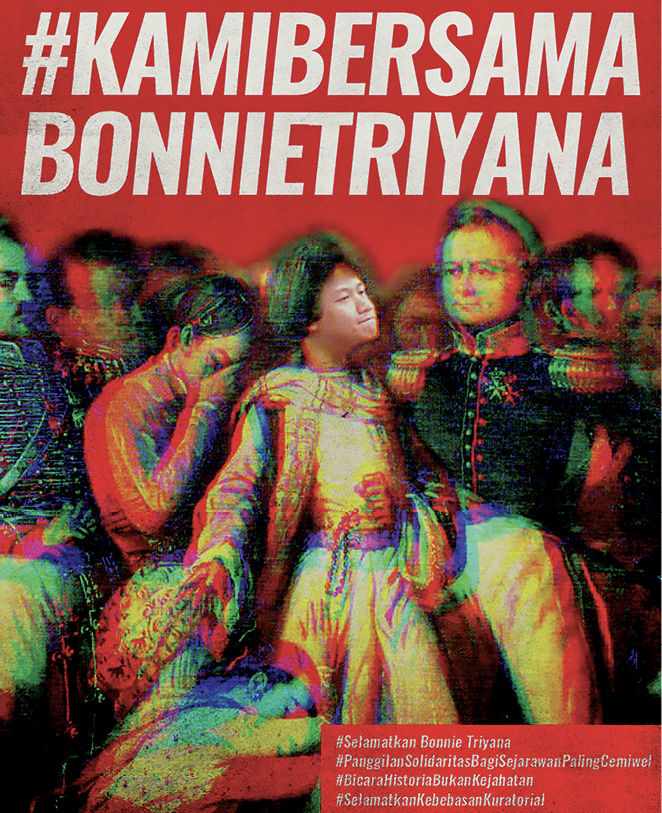
Figure 1.1 Meme with the hashtag #KamiBersamaBonnieTriyana (‘We are with Bonnie Triyana’), 26 January 2022
Photo: Courtesy of Alit Ambara.
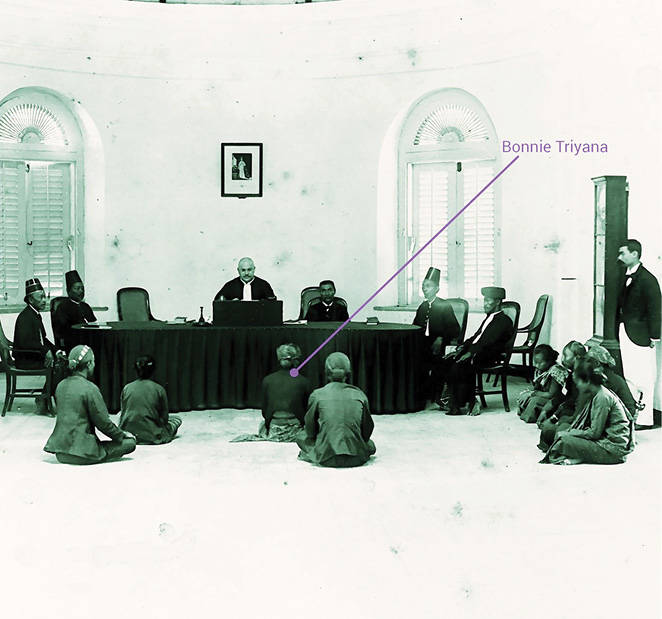
Figure 1.2 Untitled meme, 4 February 2022
Photo: Courtesy of Alit Ambara.
In Indonesia debates related to the ownership and repatriation of cultural objects held in museum collections in the Netherlands have become noticeably more pronounced. In 2019 the Dutch Government returned about 1,500 objects from the Museum Nusantara in Delft and, in 2020, Diponegoro’s keris (ritual dagger).46 In October 2022, I Gusti Agung Wesaka Puja, the chair of the Indonesian Government’s repatriation team, announced a further list of priority objects requested for return at a seminar organised by the Association of Indonesian Museums (Asosiasi Museum Indonesia), which was submitted by Director-General of Culture Hilmar Farid to the Dutch Government in July that year.47 This list included the Pita Maha collection, the reins of Diponegoro’s horse, a Balinese keris from the early twentieth-century Puputan Klungkung, the Hindu-Buddhist Singasari statues, the Lombok royal treasure (pusaka) taken in 1894, regalia from the Luwu Kingdom in South Sulawesi, a Qur’an belonging to Acehnese resistance leader Teuku Umar held at the Dutch National Museum of Ethnology and the Eugène Dubois fossils in the collection of the Naturalis Biodiversity Center in Leiden. The Eugène Dubois collection, comprising 40,000 fossils excavated by Dutch naturalist Eugène Dubois in the late nineteenth century—notably including the skull, molar and thigh bone of Pithecanthropus erectus, famously known as ‘Java Man’—stirred the most commotion.48 In 2023, 472 items—including 355 objects from the Lombok collection looted in 1894, four statues from the thirteenth-century Singasari temple, a keris from Klungkung and 132 pieces identified as the Pita Maha collection—were returned to Indonesia. Dubois’ fossil collection is still under review by the Dutch repatriation committee.
There were differing responses to the public debate. Director of the National Museum of World Cultures (Nationaal Museum van Wereldculturen) Marieke van Bommel stated that the museum would cooperate in the requests for return, whereas the Naturalis Biodiversity Center responded with the utmost reluctance, claiming that the research and museum infrastructure in Indonesia is insufficient to properly care for the fossils.49 The latter response echoed broader contested distinctions between cultural historical objects produced as arts and handicrafts and fossils, with claims that ‘it would not have been found if the Dutchman, Dubois, had not searched for it’50 and that the fossils were ‘not seized or involuntarily handed over’.51 In response, the secretary of the Indonesian Government’s repatriation committee, Bonnie Triyana, underlined the inherent double standards at the heart of these cases in an interview with the Dutch newspaper Trouw, stating:
Someone can say ‘this object belongs in the Netherlands because a Dutchman went to Indonesia, dug in the ground and after a good while searching found a skull’. But that is like if someone travels to another country, finds oil there and says, ‘it is mine, I may use it and sell it’. The fact that you excavated it on someone else’s land does not mean that the object directly belongs to your country.52
These recent discourses form part of a much longer history of demands for repatriation. Two chapters in this volume take us back to early discussions at the 1949 Round Table Conference related to cultural decolonisation more broadly (Chapter 9) and regarding ownership and ongoing colonial categorisations within the partially repatriated archive known as the Djogdja Documenten (Chapter 10).
Colonial categories across and beyond the colony
Throughout this volume, we examine colonial categories and propaganda from multiple angles. We use the concept of colonial categories to signal groupings applied to and used by Indonesians throughout and beyond the formal period of Dutch colonisation, with references also to the British Empire. This includes legal classifications imposed by the Dutch colonial state and their wider effects, as well as less formal categories such as references to the Belanda Hitam (‘Black Dutchmen’) and ‘martial races’. We also seek to capture alternative conceptualisations of identity used by locals, such as the concepts of bangsa (‘race’ or ‘people’) or ‘Malay’. ‘Race’ is a social construct, but this does not diminish its effects. As Patrick Wolfe has argued in relation to colonialism, ‘different racial regimes encode and reproduce the unequal relationships into which Europeans coerced the populations concerned’.53 The racial regime used by the Dutch in the colony of the Netherlands East Indies rested on the 1854 law that crudely classified people for legal purposes as ‘European’, ‘Foreign Oriental’ or ‘Native’. The category ‘Native’ or ‘Inlanders’ referred to most locals and was applied across many spheres of colonial society, particularly in medicine and science.54 Esther Captain argues that the term implied ‘these people were part of the indigenous flora and fauna of the archipelago instead of being human beings’.55 The category ‘Foreign Oriental’ worked to racialise those of Chinese and Arab descent as ‘foreign’ and therefore separate from other Indonesians. The related differential treatment of such people produced a range of harmful assumptions with long-lasting and often violent impacts.
There has been sustained attention on Chinese Indonesians due to their unique and important position throughout history.56 In a survey of the research, Mary Somers Heidhues has identified several key themes. Of most importance for this volume is the pioneering research that took a postcolonial approach rather than state-oriented studies focusing on issues such as citizenship, political representation, violence against Chinese Indonesians, Chinese organisations, religious practices, diverse identities and connections to China.57 One trend Heidhues misses is the increased number of Chinese Indonesian scholars and public intellectuals contributing to academic discourse about their own society and history. This is especially evident since the fall of the New Order in 1998 when many Chinese Indonesian intellectuals and scholars participated in the new ‘democratic atmosphere’ of academic freedom by producing or publishing work in Bahasa Indonesia about various aspects of their ‘own history’. These works reveal insider and ‘popular’ perspectives of the ill-fated position of this community throughout Indonesian history. A prime example of this work is that of Beni G. Setiono.58 In an encyclopedic book, Setiono critically analyses the recurrence of anti-Chinese violence from the eighteenth century to the present, while also analysing the contributions of Chinese Indonesians to the shaping of modern Indonesia.
The Dutch colonial category ‘European’ ostensibly included people of European background, but recent scholarship has highlighted the more complex dimensions of this category. Bart Luttikhuis has argued that being European was measured not so much by ‘whiteness’ as by a multitude of factors, of which class and language competency were also important.59 Through her careful study of elite culture, Susie Protschky has shown that people classified into other groups could achieve ‘European’ status if they demonstrated appropriate mimicry of European traditions.60 Although ethnicity alone did not determine whether someone was ‘European’, all three legal categories reinforced social hierarchies and led to further exploitation.
Across scholarship on colonial categories, a key point of debate has been to what extent race, gender or class determined social hierarchy.61 Gender and class are key axes around which hierarchies of power operated in colonial society. Research into gender has been at the forefront of efforts to interrogate colonial categories. From the 1990s, new histories were written about relationships between women of different classes in colonial society, such as Indonesian domestic workers and Dutch women, and the changing position of Indo-European women.62 These studies, however, tended to focus on Dutch-produced discourses about Indonesian people.
More recently scholars have examined how Indonesians negotiated and resisted the multiple structures of power of the colonial regime by using sources that better capture Indonesian perspectives on class and race. Using the so-called wild publications (batjaan liar) of the 1920s written in low Malay, Hilmar Farid and Razif highlight critiques launched by radical nationalists of racialised classifications.63 Using colonial decrees and accompanying newspaper reportage, Arnout van der Meer identifies Indonesian resistance to the Dutch practice of mobilising colonial feudality.64 From the perspective of the history of medicine, Hans Pols has analysed how trained Indonesian (including Chinese Indonesian) physicians both challenged racism and countered social-Darwinist conceptions of ‘the Javanese’ and ‘Malays’.65 Ayu Saraswati has articulated the various meanings attached to ‘whiteness’ in Indonesia’s history.66 Research on Chinese Indonesians, as noted, has been at the forefront of interrogating the effects of colonial categories.
In researching colonial categories and thinking about how they operated, scholars face several constraints, the first relating to sources. Chapters in this volume dealing with the colonial period use images produced by Dutch colonial agents, state colonial records as well as sources produced by Indonesians and other communities who were the subjects of colonial power. Yet, in trying to analyse how colonial categories worked, we are, as Susie Protschky reminds us, equally constrained by the primary sources we consult and ‘the analytical perspectives that these materials enable (and disable), and the meanings attributed to terms of reference’.67 Throughout this volume, we draw critical attention to colonial naming practices, such as use of the term bersiap, and how these were both replicated and challenged within and beyond the colonial era.
We use a diverse range of visual and written sources from the colonial period that cover not only Dutch, but also Indonesian perspectives. In so doing, we reconsider how these colonial categories and related propaganda operated across a range of fields. These include colonial photographic visualisations of daily life and of colonial warfare designed to reinforce structures of power and thinking related to particular ethnic groups, a taxation system that penalised Chinese Indonesians, an army that built its identity on ideas about ‘martial races’, the exploitative plantation system that was centred on making land and peasants ‘productive’ and ‘modern’ and the reproduction of colonial power within the families of colonial civil servants who were at once included and excluded from the category ‘European’. We focus on how Indonesians experienced, negotiated and resisted these colonial categorisations.
Consistent with the emphasis the concept of decoloniality places on local belief systems, we also examine alternative sources of identity and senses of self that operated within and beyond the boundaries of the colony. As Thongchai Winichakul has so aptly demonstrated, colonial boundaries and colonial maps imposed on people a form of imagined geographical connection.68 But this did not supersede other forms of community based on language and traditions such as the broader community of Malays spread across Sumatra, British Malaya and Dutch/British Ceylon (now Sri Lanka). Using Malay-language newspapers produced by Sumatran women and the Ceylon-based Malay diaspora, we ask how these two communities of people conceptualised, alternatively, the world, the boundaries of their communities, gender, class and ethnicity (see Chapters 3 and 4).
Although the Indonesian revolution is often romanticised as a radical break from the colonial era, the concept of coloniality encourages us to consider how contests related to colonial categories and longstanding justifications of diverse forms of colonial violence spilled over into this struggle.69 Here, we consider what colonial war photography reveals about a range of modes of colonial violence and how the category ‘martial races’ worked within the colonial army (see Chapter 6). We pay careful attention also to how and why one community, Chinese Indonesians, became caught between the republican forces and the Dutch and how members of this community narrated their experiences during and shortly after the revolution (see Chapter 8). Again, centring Indonesian voices, we examine how a member of another more marginalised community, an Eastern Indonesian woman revolutionary, reflects on the extent to which the revolution entailed a dismantling of colonial structures of power (see Chapter 7).
Colonial legacies: The persistence of and attempts to dismantle coloniality
Both former colonising powers and former colonised nations commonly present decolonisation in national histories as a rupture with the past, whether a withdrawal from colonial territory and influence or a moment when indigenous rulers reclaimed power and created a new nation.70 In the context of Indonesia and the Netherlands, this emphasis on political discontinuity marked by significant dates is illustrated by continuing debates about the recognition of the Indonesian declaration of independence on 17 August 1945. For a long time, the Dutch insisted that Indonesia became an independent state after the ‘transfer of sovereignty’ on 27 December 1949. Then Minister of Foreign Affairs Ben Bot made only a minor concession on this debate in 2005 when he stated that ‘the Dutch Cabinet and people liberally accept that Indonesian independence, politically and morally, commenced in fact in 1945’.71 Nonetheless, the statement did not legally recognise the declaration of independence, nor did it refer to the longer period of colonialism.
Over time, the Dutch Government started to pay attention to the violence committed between 1945 and 1949; however, this violence was generally conceived of as exceptional and was not broadly recognised as a key dimension of colonial structures. Dutch Government policy since 1969 had held that, overall, the armed forces behaved correctly in Indonesia and there had been only a limited number of isolated ‘excesses’.72 Activism relating to demands for compensation for colonial violence escalated from about 2011, with demands for redress for executions committed by Dutch forces during the revolution, which led to apologies and compensation.73 Nonetheless, the narrative of excessive violence continued to be reproduced, as illustrated by the apology of the Dutch King Willem-Alexander during his 2020 official visit to Indonesia in which he stated: ‘I express regret and apologise for excessive violence on the part of the Dutch in those years.’74
This stood in contrast to the emerging findings of scholars, commencing with Rémy Limpach’s research, which concluded that violence was more systematic.75 It was in this context that researchers affiliated with the NIOD Institute for War, Holocaust and Genocide Studies at the Royal Netherlands Institute of Southeast Asian and Caribbean Studies and the Netherlands Institute of Military History began a research program called ‘Independence, Decolonisation, Violence and War in Indonesia, 1945–1950’. The four-year project (2017–21) received funding from the Dutch Government and investigated violence committed by all sides during the period 1945–49.76 Following the delayed presentation of the research results in 2023 in a parliamentary debate, the Dutch State recognised the proclamation on 17 August 1945 as a historical fact, but maintained that the statement was made without legal consequences.77
The conclusions of this project, presented just one week after the opening of the ‘Revolusi!’ exhibition at the Rijksmuseum, were that the violence committed by Dutch troops during 1945–49 was indisputably structural and not incidental—a finding that reinforced Limpach’s conclusions and challenged the previously held consensus that Dutch uses of extreme violence were rare ‘excesses’.78 The research team used the term bersiap, but broadened understandings of this to include violence experienced not only by the Indo-Dutch community but also by marginalised communities within the Indonesian archipelago.79
Reactions in the Netherlands to the project were pronounced, with some veterans, for example, condemning what in their view was an unfair assessment of the behaviour of all veterans. Chairman of Veterans Platform, Hans van Griensven, stated that ‘while only a small percentage of the 200,000 men sent there misbehaved, now everyone is labelled a war criminal’.80 In an attempt to mediate this, then Dutch prime minister Mark Rutte apologised to ‘all the Indonesian people’ and to ‘all the Dutch people’ affected by the systemic violence committed during the 1945–49 period.81 Yet, his apology generated mixed reactions in the Netherlands, including some who felt it was insufficient and more extreme nationalist views such as those of Geert Wilders from the far-right Party for Freedom. Via Twitter (now X), Wilders not only questioned the apology, but also requested a similar apology from the Indonesian side for ‘their violence and for bersiap’; he also claimed the Dutch veterans were heroes.82
In Indonesia, by contrast, responses to the apology varied from lukewarm to complete silence from the Indonesian Government. Writer and prominent intellectual Goenawan Mohamad, who grew up during the 1940s, wrote:
I prefer to see Rutte’s apology not as a conscientious policy, but rather a political act or, if you will, a proxy. It is a mea culpa without pathos. After all, his government had no part in the ugly chapter of the Dutch colonial history.83
In arguing that the contemporary Dutch Government has no connection to the actions of governments of the past, Goenawan Mohamad implied a neat, but in our view problematic, separation of colonial history from the present. He importantly acknowledged, however, the structural nature of colonialism and colonial violence by claiming:
Colonialism is an evil institution, built on arrogance and greed, based on an ‘ideology’ that was used to justify treating Indonesians (and many other peoples elsewhere) as less than human, as subhuman slaves. And that is something I can never forgive.84
The research project itself was criticised for overlooking the larger context of colonialism, the research process and the role Indonesians were given. Historian Hilmar Farid, who wrote the epilogue to the Dutch research report, noted that the most fundamental issue underlying the systemic violence of the 1945–49 period remained unaddressed: the fact that both ‘physical and symbolic violence’ were part and parcel of the method of colonial rule for gaining and maintaining power.85 In his view, the colonial wars of the nineteenth century in all parts of the archipelago, the ‘penal sanctions on plantations’ and all kinds of violence and other acts of wrongdoing ‘created a social landscape that became fertile ground for outbreaks of extreme violence in the subsequent periods’.86 He therefore reiterated the need to take a longer view of colonial history to understand the 1945–49 period. Further to this, he critiqued the Dutch-centric approach taken to the research, by which he meant a strong reliance on Dutch archives and the neglect of recent Indonesian historical debates and research such as those featured on the online platforms Historia and Tirto.87 In addition to criticisms of the small number of Indonesian researchers appointed to the team (including one of the authors of this chapter) and the fact they were not given leading roles, there was a misguided suspicion that because the project was funded by the Dutch Government the researchers would not thoroughly interrogate Dutch violence against Indonesians.88
The project, however, prompted some Indonesian academics to reflect on the boundaries of Indonesian history. As historian Sri Margana asks, will a Dutch state-sponsored project finding evidence of Dutch structural violence challenge Indonesian researchers to uncover and acknowledge Indonesian violence towards minorities during the 1945–49 period?89 To date, this has been a highly sensitive issue due to sacralisation of the Indonesian revolution and the tendency towards nationalist framings of history that focus on a binary understanding of conflict between colonisers and the colonised. Margana’s comments point to ongoing challenges in terms of acceptance of more complex narratives of Indonesian history that necessarily challenge simplistic nationalist historiography.
Indonesian commentators also raised the fact that the continued emphasis on the 1945–49 period is problematic because it conceals longer histories of colonialism, meaning that little attention is paid to the power structures that underpinned the violence. As we posit in this volume, (de)colonisation cannot be neatly organised or demarcated by applying certain dates or time frames. Rather, we conceptualise decoloniality more broadly as a process that involves not just ousting colonial power, but also dismantling the long legacies and modes of thinking that permeate almost all aspects of society.90 As such, decolonisation is a multifaceted and complex process, often contradictory and of limited success, especially when new local elites replicate colonial practices in the name of nationalism.91 Colonial structures often remained intact, with inequalities further entrenched, rather than eliminated. In addition, as time went by, some former colonised nations became colonisers themselves.
In the chapters of this book that consider the post-1949 period, we examine and evaluate the challenges of decolonisation today. These include contributions in the field of archives and heritage, including negotiations about access and control. In these chapters, we also interrogate the persistence and legacies of colonial categories such as the spatial organisation of Glodok in Jakarta (Chapter 11). Authors reflect on the extent to which museums in both the Netherlands and Indonesia have ‘progressed’ in terms of decolonisation and how this is pursued. As insightfully identified by Brigitta Isabella (Chapter 13), attempts to decolonise institutions, such as through issuing apologies or staging exhibitions with ‘alternative’ framings, can be regarded as a manifestation of a ‘colonial anxiety that requires the atonement of guilt through the politics of recognition’. Isabella and other authors problematise the extent to which ‘recognition’ can be sought in museums and courts and more equitable and just ways of relating created. The chapters in Part 2 of this book also discuss how legal proceedings and activism attempt to address both colonial injustices of the past and ongoing colonialism in Indonesia today.
Chapter outlines
The book is divided into two parts. Part 1, ‘Colonial Categories Across and Beyond the Colony’, focuses on how Indonesians experienced, negotiated and resisted colonial categorisations from the nineteenth century to the period of the revolution. Part 2 investigates the lasting impacts of colonialism in both Dutch and Indonesian societies up to today, starting from the understanding that decolonisation is a continuing process. Chapter 2 examines how the Dutch State created and reinforced colonial categories and markers of difference across the colony. In Chapter 2, ‘“Oedjan Belasting, the Raining of Taxes”: Coloniality and the Dutch Economic Exploitation of the Chinese’, Abdul Wahid examines how colonial categories and economic exploitation worked hand in hand in the colony. The colonial state used taxation from 1917 to 1942 to squeeze all Indonesians, but especially Chinese Indonesians, due to fears about their rising economic strength. Wahid documents the evolution of and rationale behind the tax system and the deliberate targeting of this group and how Chinese Indonesians navigated and indeed protested these impositions.
Chapters 3 and 4 shift our focus from the colonial state and its agents to consider alternative political and cultural communities and their projection of bases of identity. Ronit Ricci in Chapter 3, ‘Locating Colonial Indonesia in Colonial Ceylon: Geography, Language and Belonging’, moves beyond the formal boundaries of the colony of the Netherlands East Indies to the Malay colonial diaspora in Ceylon, a community at once connected to, but also separated from, Indonesia. Ricci connects British and Dutch colonialism. Through a close reading of the Malay newspaper Wajah Selong, published in Ceylon from 1895 to 1898, Ricci asks how ties with the archipelago and other Malay communities were maintained and how the paper promoted an alternative category of person, the Malay, in this part of the British Empire.
In Chapter 4, ‘“So I Say My Name”: Towards a Decolonial Ethics for Reading Girls’ Worlds in Letters’, Bronwyn Anne Beech Jones provides an analysis of how West Sumatran and Tapanuli elite girls conceptualised the world, their selves and a sense of solidarity. Using letters they published in the newspaper Soenting Melajoe (‘Malay Headdress’) (1912–21) and a translated short story from the agricultural periodical Minangkabau (1918), the chapter considers how, through writing, girls imagined and lay claim to an alternative modern future in which there was greater equality between men and women. She argues that in some ways these ambiguous world views challenged dominant modes of colonial subjectification but, in others, writers also reproduced inequalities, particularly across the classes.
Chapters 5 and 6 focus more closely on class and the reproduction of colonial hierarchy and difference from the late colonial period through to the revolution. Chapter 5, ‘Dealing with Modernities: East Java’s Plantation Society in Colonial Times and the Revolution’, by Grace T. Leksana traces the propaganda around the introduction of plantations and related infrastructure such as roads into East Java in the 1930s and local reactions to this process. Using colonial reports, newspaper coverage and oral history interviews, she reflects on the clashes between colonial concepts of modernity and attempts by plantation owners to transform ‘unproductive land’ into wealth-producing plantations. She charts the reactions of labourers and other community members to new concepts of ownership and increased surveillance as well as violence directed at labourers.
Chapter 6, ‘Rethinking Histories of Military Atrocity, Ethnic Violence and Photography, From the Aceh War to the Indonesian National Revolution’, by Susie Protschky focuses on the photographic records of embedded war photographers. Protschky argues that these sources reveal multiple forms of ‘approved’ colonial violence, including unfree labour and rule by racialised difference in the colonial Royal Netherlands East Indies Army (Koninklijk Nederlandsch-Indisch Leger). She also reflects on racialised discourses about the so-called martial races of Eastern Indonesia and their utility in subjugating ethnic ‘Others’ for the Dutch colonial state.
Chapters 7 and 8 consider how class and race-based hierarchies operated from the late colonial period through to the Indonesian revolution, during which Indonesians experienced racialised violence. Chapter 7, ‘Francisca Fanggidaej: A Decolonial Perspective on Colonial Elites and the Indonesian Revolution’, by Katharine McGregor unpacks Fanggidaej’s observations about growing up in an elite family from an Eastern Indonesian island from the late colonial era through to the revolution. Using Fanggidaej’s 2006 memoir and other ego documents, McGregor analyses how, as a revolutionary and a member of an ethnic group labelled ‘Moluccans’ (often stereotyped as being loyal to the Dutch), Fanggidaej critiqued the elitism and reproduction of colonial hierarchies. How did she conceptualise the revolution and related ongoing forms of coloniality in diplomatic negotiations and agreements?
In Chapter 8, ‘Giving Voice to the Voiceless: “Sin Po” and the Chinese Massacres during the Revolutionary Period’, Ravando and F.X. Harsono use reporting in Sin Po, a newspaper run by members of the Chinese Indonesian community, and mass graves to focus on one legacy of the ‘othering’ of ethnic Chinese. This chapter presents an alternative narration of the Indonesian revolution from the view of a group of people for whom this was a largely terrifying experience. They were caught in the middle between Dutch and republican forces and mistrusted and/or abandoned by both.
The contributions in Part 2 of this volume, ‘Colonial Legacies: the Persistence of and Attempts to Dismantle Coloniality’, examine the enduring legacies of colonialism up to the present in Dutch and Indonesian society, and start from the premise that decolonisation is an ongoing process. Contributors consider what ‘decolonisation’ means in the context of Indonesian history, culture and politics, tracing how decolonisation proceeded after Indonesia proclaimed independence. Key questions include the extent to which colonial categories were dismantled or repurposed, especially across the spheres of culture and heritage, and how they continue to impact the law and even the organisation of urban space. In so doing, the authors reflect on the critical question of whether coloniality has really ended.
Chapters 9 and 10 focus on the restitution of colonial objects and archives and consider how coloniality continues to inform thinking about, and practices of, restitution. Commonly, discussions about restitution foreground the perspectives of former colonisers. In Chapter 9, entitled ‘Beyond the Point of No Return: The Re-Emergence of Indonesian Debates About and Concepts of the Return of Cultural Objects’, Sadiah Boonstra shifts the gaze by considering Indonesian perspectives on debates about the return of cultural objects by examining Indonesian discussions underlying the Draft Cultural Agreement that was formulated during the Dutch–Indonesian Round Table Conference negotiations in 1949. By reconstructing Indonesian discourses of object restitution, Boonstra analyses how Indonesia prioritised the return of cultural objects and their role in the country’s cultural future as imagined in 1949, as well as how this continues to be the basis of contemporary discussions about the restitution of colonial objects.
In Chapter 10, ‘How to Liberate the Colonised Archives? Describing the Djogdja Documenten after Their Return’, Michael Karabinos and Rika Theo consider repatriation of archival collections. They focus on the Djogdja Documenten, records seized during the Second Dutch Military Aggression in Yogyakarta (1948)—a collection that contains records created by Indonesian republican institutions and leaders. Karabinos and Theo examine how coloniality informed the theft of the archives and their classification. They consider how, in the 1970s and 1980s, following the repatriation of the archives to Indonesia, these colonial frameworks persisted, thereby reproducing Dutch perspectives on the Indonesian revolution. They also raise the issue of archives and collections that have still not been returned to Indonesia, including the objects placed on display in the ‘Revolusi!’ exhibition mentioned above.
Chapter 11 considers colonial legacies, particularly in relation to colonial categories, stretching from the colonial period to the early years of independence and post-1998 Indonesia. In ‘The Rise and Fall of Glodok’, Abidin Kusno examines urban space and spatial politics during the colonial period and how this affected the identity formation of Chinese Indonesians over time. Kusno focuses on Glodok, Jakarta’s Chinatown, as the centre of Chinese trading. He then examines how spatiality influenced both colonial and postcolonial ordering of space, as well as the production of Chinese Indonesian identity. Kusno asks how, in the aftermath of anti-Chinese violence in 1998, the identity of Chinese Indonesian traders was influenced by their relationship to Glodok and the extent to which a ‘new’ Chinese Indonesian identity developed.
Chapters 12 and 13 consider coloniality within museums in Indonesia, the Netherlands and Belgium and efforts to undo these colonial structures. In ‘Decolonising a Colonial Fort? The Case of Fort Rotterdam, Makassar’, Ajeng Ayu Arainikasih traces the legacies of space in the colonial Fort Rotterdam, in Makassar. After independence, Fort Rotterdam was turned into a museum and tourist destination. Arainikasih examines the extent to which this fort was decolonised as a postcolonial museum, considering what and whose histories are being depicted and, by extension, who and what were excluded. Arainikasih’s chapter highlights how deeply entangled are colonialism, nationalism and decolonisation in the spaces of museums.
In Chapter 13, ‘After Recognition: Decolonial Re-Affect Outside/Within the Museum’, Brigitta Isabella picks up questions of representation and positionality within museums in the former colonising nations of the Netherlands and Belgium. She examines the efforts of these museums to decolonise their collections by inviting researchers and artists from former colonies to reinterpret the collections, drawing on local knowledge and literature. Isabella argues that these interventions enable audiences to critically engage with the injustices preserved by museums and to articulate self-recognition—an active subjectivity breaking out of a binary of giver–receiver. As such, these endeavours may contribute to knowledge production that forges new, and equal, relationships, yet they also raise deeper questions about the politics of recognition and the affective labour of researchers and artists.
The final two chapters turn their focus to the legacies and persistence of colonial violence. In Chapter 14, ‘Confronting Coloniality Through the Courts? Reconsidering the Rawagede Case’, Ken M.P. Setiawan turns the lens on how Dutch courts have addressed cases of colonial violence. Focusing on the 1947 Rawagede massacre, which was heard in the Civil Court in 2011, and using Dutch and Indonesian media sources, Setiawan argues that the case in fact reproduces dominant historical narratives, in both the Netherlands and Indonesia. Moreover, the court case reflects persistent inequalities between the former coloniser and the colonised.
In Chapter 15, ‘Seeking the Morning Star: Young Papuans and the Ongoing Struggle Against Indonesian Colonialism’, I Ngurah Suryawan investigates contemporary colonialism in Indonesia and forms of resistance by Papuan activists. He traces the beginnings of the Papuan youth movement during the last few decades of the Dutch colonial era and identifies connections in more recent forms of organising. Focusing on the intellectual legacies of the Papuan youth leader Victor Yeimo, Suryawan pays attention to the historical roots of Papuan nationalism, contemporary experiences of colonialism—including those related to violence, arrest, education and settlers—as well as how colonialism might be resisted.
Together, the chapters in Part 2 attend to the various spheres where coloniality endures: culture and heritage, spatial organisation, law and politics. The many areas where the legacies of colonialism persist and take on new forms underline the need for decolonisation to be seen from a broader perspective that is more profound than political disengagement between coloniser and colony alone. Instead, decoloniality requires, first, an awareness and acknowledgement of coloniality and its workings within and across structures of life and knowledge. It is through this process of recognition that the workings of coloniality can be understood and, once a deep understanding is reached, work can begin on undoing its enduring structures.
References
Primary sources
CNN Indonesia. 2022. ‘Anhar Gonggong Desak RI Cabut Partisipasi Pameran Rijksmuseum Belanda [Anhar Gonggong Urges Republic of Indonesia to Withdraw Participation in Dutch Rijksmuseum Exhibition].’ CNN Indonesia, 27 January. www.cnnindonesia.com/nasional/20220127152144-20-752067/anhar-gonggong-desak-ri-cabut-partisipasi-pameran-rijksmuseum-belanda/.
Federatie Indische Nederlanders [Federation of Dutch East Indies] (FIN). 2022. ‘Aangifte tegen Bersiap-ontkenner Triyana [Complaint Filed Against Bersiap Denier Triyana].’ 11 January. FIN. www.federatie-indo.nl/2022/01/11/22-01-11/.
Funnekotter, Bart. 2022. ‘Bersiap Blijft, en het Rijksmuseum is niet Woke [Bersiap Stays and the Rijksmuseum is Not Woke].’ NRC, [Amsterdam], 14 January. www.nrc.nl/nieuws/2022/01/14/bersiap-blijft-en-het-rijksmuseum-is-niet-woke-a4079333.
Holman, Theodor. 2022. ‘Zo Verhul je de genocide [This is How You Disguise Genocide].’ Het Parool, [Amsterdam], 12 January.
Johari, Hendri. 2020. ‘Kisah Petumpur Cilik dalam Revolusi Indonesia [The Story of An Everyman Fighter in the Indonesian Revolution].’ Historia, [Jakarta], 20 November. historia.id/militer/articles/kisah-petempur-cilik-dalam-revolusi-indonesia-6kkk1.
Johari, Hendri. 2021. ‘Tionghoa Prianganan Pusaran Revolusi [Chinese Prianganans in the Maelstrom of the Revolution].’ Historia, [Jakarta], 13 February. historia.id/militer/articles/tionghoa-priangan-dalam-pusaran-revolusi-vVWNk/page/1.
Muryanto, Bambang. 2015. ‘RI Offered Return of Historical Objects from Delft Museum.’ Jakarta Post, 19 October. www.thejakartapost.com/news/2015/10/19/ri-offered-return-historical-objects-delft-museum.html.
Nederlandse Omroep Stichting [Dutch Broadcasting Foundation] (NOS). 2022. ‘Woede over Niet Gebruiken van Term “Bersiap” op Indonesië-expositie [Anger Over Not Using the Term “Bersiap” at Indonesia Exhibition].’ NOS Nieuws [Dutch Broadcasting Foundation News], 12 January. nos.nl/artikel/2412770-woede-over-niet-gebruiken-van-term-bersiap-op-indonesie-expositie.
Noordhollands Dagblad. 2022. ‘Aangifte tegen Rijksmuseum om gebruik term “bersiap” [Complaint Against Rijksmuseum for Use of Term “Bersiap”].’ Noordhollands Dagblad, [Alkmaar, Netherlands], 22 January. www.noordhollandsdagblad.nl/cnt/dmf20220121_77416427.
Reuters. 2020. ‘Dutch King Apologises for “Excessive Violence” in Colonial Indonesia.’ Reuters, 10 March. www.reuters.com/article/us-indonesia-netherlands-idUSKBN20X15L.
Rutte, Mark. 2022. ‘1e Reactie van Minister-President Mark Rutte na de Presentatie van het Onderzoeksprogramma “Onafhankelijkheid, Dekolonisatie, Geweld en Oorlog in Indonesië, 1945–1950” [First Reaction of Prime Minister Mark Rutte after the Presentation of the Research Program “Independence, Decolonisation, Violence and War in Indonesia, 1945–50”].’ Speech, 17 February. Government of the Netherlands. www.rijksoverheid.nl/documenten/toespraken/2022/02/17/eerste-reactie-van-minister-president-mark-rutte-onderzoeksprogramma-onafhankelijkheid-dekolonisatie-geweld-en-oorlog-in-indonesie-1945-1950.
Sukarno. 1970. ‘“Let a New Asia and Africa be Born”: Extract from the “Opening Address Given by Sukarno”, 18 April 1955.’ In Indonesian Political Thinking: 1945–1965, edited by Herb Feith and Lance Castles, 458. Ithaca: Cornell University Press.
Triyana, Bonnie. 2022. ‘Schrap de term “Bersiap” want die is Racistisch [Delete the Term “Bersiap” Because it is Racist].’ NRC, [Amsterdam], 10 January 2022. www.nrc.nl/nieuws/2022/01/10/schrap-term-bersiap-voor-periodisering-want-die-is-racistisch-a4077367.
van Leeuwen, Lizzy. 2022. ‘Het Rijksmuseum als Speelbal van Woke [The Rijksmuseum as Plaything of Woke].’ Telegraaf, [Amsterdam], 14 January.
Secondary sources
Abdullah, Taufik. 2012. ‘Kata Pengantar [Introduction].’ In Indonesia dalam Arus Sejarah [Indonesia in the Flow of History], edited by Taufik Abdullah and A.B. Lapian. Jakarta: Ichtiar Baru van Hoeve.
Armstrong, Elisabeth. 2016. ‘Before Bandung: The Anti-Imperialist Women’s Movement in Asia and the Women’s International Democratic Federation.’ Signs 41, no. 2: 305–31. doi.org/10.1086/682921.
Bijl, Paul. 2017. ‘Legal Self-Fashioning in Colonial Indonesia: Human Rights in the Letters of Kartini.’ Indonesia 103: 51–71. doi.org/10.1353/ind.2017.0002.
Bogaerts, Els, and Remco Raben. 2012. ‘Beyond Empire and Nation.’ In Beyond Empire and Nation: The Decolonisation of African and Asian Societies 1930s–1960s, edited by Els Bogaerts and Remco Raben, 7–19. Leiden: KITLV Press. doi.org/10.1163/9789004260443.
Buchheim, Eveline, Satrio Ody Dwicahyo, Fridus Steijlen, and Stephanie Welvaart. 2022. Sporen vol betekenis/Meniti Arti: In gesprek met ‘Getuigen & Tijdgenoten’ over de Indonesische onafhankelijkheidsoorlog/Bertukar Makna bersama ‘Saksi & Rekan Sezaman’ tentang Perang Kemerdekaan Indonesia [Traces Full of Meaning: In Conversation With ‘Witnesses and Contemporaries’ about the Indonesian Independence War]. Amsterdam: Amsterdam University Press.
Bussemaker, Herman. 2005. Bersiap! Opstand in het Paradijs: de Bersiap-periode op Java en Sumatra 1945–1946 [Bersiap! Revolt in Paradise: The Bersiap Period on Java and Sumatra 1945–1946]. Zuthpen: Walburg Pers.
Captain, Esther. 2014. ‘Harmless Identities: Representations of Racial Consciousness among Three Generations Indo-Europeans.’ In Dutch Racism, edited by Philomena Essed and Isabel Hoving, 53–69. Leiden: Brill. doi.org/10.1163/9789401210096_004.
Captain, Esther, and Onno Sinke. 2022. Het Geluid van Geweld Bersiap en de Dynamiek van Geweld Tijdens de eerste Fase van de Indonesische Revolutie, 1945–1946 [Resonance of Violence: Bersiap and the Dynamics of Violence in the First Phase of the Indonesian Revolution, 1945–1946]. Amsterdam: Amsterdam University Press.
Chakrabarty, Dipesh. 2007. Provincializing Europe: Postcolonial Thought and Historical Difference. Princeton: Princeton University Press. doi.org/10.1515/9781400828654.
Clancy-Smith, Julia, and Frances Gouda, eds. 1998. Domesticating the Empire: Race, Gender and Family Life in French and Dutch Colonialism. Charlottesville: University of Virginia Press.
Drieënhuizen, Caroline, and Fenneke Sysling. 2021. ‘Java Man and the Politics of Natural History: An Object Biography.’ Bijdragen tot de Taal-, Land- en Volkenkunde [Journal of the Humanities and Social Sciences of Southeast Asia] 177, nos 2–3: 290–311. doi.org/10.1163/22134379-bja10012.
Fanon, Frantz. 1963. The Wretched of the Earth. Translated by Constance Farrington. New York: Grove Press.
Farid, Hilmar. 2019. ‘Postcolonial Perspectives from Southeast Asia.’ Presentation to Postcolonial Perspectives from the Global South, Goethe-Institut, Jakarta, 24–25 January. www.youtube.com/watch?v=1M53NvufNb4.
Farid, Hilmar. 2022. ‘Dealing with the Legacies of a Violent Past.’ In Beyond the Pale: Dutch Extreme Violence in the Indonesian War of Independence, 1945–1949, by Kon. Inst. v. Taal-, Land- en Volkenkunde (KITLV), Nederlands Instituut voor Militaire Historie (NIMH), and NIOD Inst. v. Oorlogs-, Holocaust- en Genocidestudies, 473–86. Amsterdam: Amsterdam University Press.
Farid, Hilmar, and Razif. 2008. ‘Batjaan Liar in the Dutch East Indies: A Colonial Antipode.’ Postcolonial Studies 11, no. 3: 277–92. doi.org/10.1080/13688790802226694.
Frederick, William H. 2002. ‘Shadows of an Unseen Hand: Some Patterns of Violence in the Indonesian Revolution, 1945–1949.’ In Roots of Violence in Indonesia: Contemporary Violence in Historical Perspective, edited by Freek Colombijn and J. Thomas Lindblad, 143–72. Leiden: Brill. doi.org/10.1163/9789004489561_009.
Frederick, William H. 2014. ‘The Killing of Dutch and Eurasians in Indonesia’s National Revolution (1945–1949): A “Brief Genocide” Reconsidered.’ In Colonial Counterinsurgency and Mass Violence: The Dutch Empire in Indonesia, edited by Bart Luttikhuis and A. Dirk Moses, 133–54. London: Routledge. doi.org/10.4324/9781315767345-7.
Gouda, Frances. 1996. Dutch Culture Overseas: Colonial Practice in the Netherlands Indies, 1900–1942. Amsterdam: Amsterdam University Press.
Hoffmann, Alvina. 2017. ‘Interview—Walter Mignolo/Part 2: Key Concepts.’ E-International Relations, [Bristol, UK], 21 January. www.e-ir.info/2017/01/21/interview-walter-mignolopart-2-key-concepts/.
Houben, Vincent J.H. 1997. ‘A Torn Soul: The Dutch Public Discussion on the Colonial Past in 1995.’ Indonesia 63 (April): 47–66. doi.org/10.2307/3351510.
Knight, G. Roger. 2017. ‘Colonial Knowledge and Subaltern Voices: The Case of an Official Enquiry in Mid-Nineteenth Century Java.’ In Sources and Methods in Histories of Colonialism, edited by Kirsty Reid and Fiona Paisley, 85–99. London: Routledge. doi.org/10.4324/9781315271958-6.
Kon. Inst. v. Taal-, Land- en Volkenkunde [Royal Netherlands Institute of Southeast Asian and Caribbean Studies] (KITLV), Nederlands Instituut voor Militaire Historie [Netherlands Institute for Military History] (NIMH), and NIOD Inst. v. Oorlogs-, Holocaust- en Genocidestudies [NIOD Netherlands Institute for War, Holocaust and Genocide Studies]. 2022. Beyond the Pale: Dutch Extreme Violence in the Indonesian War of Independence, 1945–1949. Amsterdam: Amsterdam University Press. doi.org/10.1515/9789048557172.
Limpach, Rémy. 2016. De Brandende Kampongs van Generaal Spoor [The Burning Kampongs of General Spoor]. Amsterdam: Boom.
Locher-Scholten, Elsbeth. 1998. ‘So Close and Yet So Far: The Ambivalence of Dutch Colonial Rhetoric on Javanese Servants in Indonesia, 1900–1942.’ In Domesticating the Empire: Race, Gender and Family Life in French and Dutch Colonialism, edited by Julia Clancy-Smith and Frances Gouda, 130–53. Charlottesville: University of Virginia Press.
Lugones, María. 2010. ‘Toward a Decolonial Feminism.’ Hypatia 25, no. 4: 742–59. doi.org/10.1111/j.1527-2001.2010.01137.x.
Luttikhuis, Bart. 2013. ‘Beyond Race: Constructions of Europeanness in Late Colonial Legal Practice in the Dutch East Indies.’ European Review of History 20, no. 4: 539–58. doi.org/10.1080/13507486.2013.764845.
Majumdar, Rochona. 2015. ‘Subaltern Studies as a History of Social Movements in India.’ South Asia: Journal of South Asian Studies 38, no. 1: 50–68. doi.org/10.1080/00856401.2014.987338.
Majumdar, Rochona. 2018. ‘Postcolonial History.’ In Debating New Approaches to History, edited by Marek Tamm and Peter Burke, 49–74. London: Bloomsbury Academic. doi.org/10.5040/9781474281959.0007.
Margana, Sri. 2022. ‘Konsekuensi dari Kesimpulan Tim Peneliti Belanda [Consequences of the Conclusions of the Dutch Research Team].’ Historia, [Jakarta], 18 February. www.historia.id/militer/articles/konsekuensi-dari-kesimpulan-tim-peneliti-belanda-vxg3J/page/3.
McGregor, Katharine. 2007. History in Uniform: Military Ideology and the Construction of Indonesia’s Past. Singapore: NUS Press.
McGregor, Katharine. 2012. ‘Indonesian Women, the Women’s International Democratic Federation and the Struggle for Women’s Rights, 1946–1965.’ Indonesia and the Malay World 40, no. 117: 193–208. doi.org/10.1080/13639811.2012.683680.
McGregor, Katharine. 2013. ‘The Cold War, Indonesian Women and the Global Anti-Imperialist Movement, 1946–65.’ In De-Centering Cold War History: Local and Global Change, edited by Jadwiga E. Pieper Mooney and Fabio Lanza, 31–51. London: Routledge.
McGregor, Katharine. 2014. ‘From National Sacrifice to Compensation Claims: Changing Indonesian Representations of the Captain Westerling Massacres in South Sulawesi (1946–47).’ In Colonial Counterinsurgency and Mass Violence: The Dutch Empire in Indonesia, edited by Bart Luttikhuis and Dirk A. Moses, 282–307. London: Routledge. doi.org/10.4324/9781315767345-14.
McGregor, Katharine. 2018. ‘Historical Justice and the Case of the 1965 Killings.’ In Routledge Handbook of Contemporary Indonesia, edited by Robert W. Hefner, 129–39. London: Routledge. doi.org/10.4324/9781315628837-10.
McGregor, Katharine, and Vannessa Hearman. 2017. ‘Challenging the Lifeline of Imperialism: Reassessing Afro-Asian Solidarity and Related Activism in the Decade 1955–1965.’ In Bandung, Global History, and International Law: Critical Pasts and Pending Futures, edited by Luis Eslava, Michael Fakhri, and Vasuki Nesiah, 161–76. Cambridge: Cambridge University Press. doi.org/10.1017/9781316414880.012.
McGregor, Katharine, Jess Melvin, and Annie Pohlman. 2018. ‘New Interpretations of the Causes, Dynamics and Legacies of the Indonesian Genocide.’ In The Indonesian Genocide of 1965: Causes, Dynamics and Legacies, edited by Katharine McGregor, Jess Melvin, and Annie Pohlman, 1–26. London: Palgrave Macmillan. doi.org/10.1007/978-3-319-71455-4_1.
Mignolo, Walter D., and Arturo Escobar, eds. 2010. Globalization and the Decolonial Option. New York: Routledge. doi.org/10.4324/9781315868448.
Mignolo, Walter D., and Catherine E. Walsh. 2018. On Decoloniality: Concepts, Analytics, Praxis. Durham: Duke University Press. doi.org/10.1215/9780822371779.
Mohamad, Goenawan. 2022. ‘Maaf [Sorry].’ TEMPO, [Jakarta], 19 February.
Nationale herdenking 15 augustus 1945 [15 August 1945 Commemoration Foundation]. 2024. Commemorations in the Netherlands. The Hague: Nationale herdenking 15 augustus 1945. 15augustus1945.nl/en/other-commemorations/.
Ndlovu-Gatsheni, Sabelo J. 2019. ‘When Did the Masks of Coloniality Begin to Fall? Decolonial Reflections on the Bandung Spirit of Decolonisation.’ Bandung: Journal of the Global South 6, no. 2: 210–32. doi.org/10.1163/21983534-00602004.
Ndlovu-Gatsheni, Sabelo J. 2020. Decolonization, Development and Knowledge in Africa: Turning Over a New Leaf. London: Routledge. doi.org/10.4324/9781003030423.
Nederlandse Omroep Stichting [Dutch Broadcasting Foundation] (NOS). 2023. ‘Nederland erkent 17 augustus 1945 als onafhankelijkheidsdag Indonesië [The Netherlands Recognises 17 August 1945 as Indonesia’s Independence Day].’ NOS Nieuws [Dutch Broadcasting Foundation News], 14 June. nos.nl/artikel/2478878-nederland-erkent-17-augustus-1945-als-onafhankelijkheidsdag-indonesie.
Parr, Rosalind. 2021. ‘Solving World Problems: The Indian Women’s Movement, Global Governance, and “the Crisis of Empire”, 1933–46.’ Journal of Global History 16, no. 1: 122–40. doi.org/10.1017/S1740022820000169.
Pols, Hans. 2007. ‘Psychological Knowledge in a Colonial Context: Theories on the Nature of the “Native Mind” in the Former Dutch East Indies.’ History of Psychology 10, no. 2: 111–31. doi.org/10.1037/1093-4510.10.2.111.
Pols, Hans. 2018. Nurturing Indonesia: Medicine and Decolonisation in the Dutch East Indies. Cambridge: Cambridge University Press. doi.org/10.1017/9781108341035.
Pondaag, Jeffry, and Francisca Pattipilohy. 2017. ‘Questions about the Dutch Research Project “Decolonisation, Violence and War in Indonesia, 1945–1950”.’ [Open letter], Histori Bersama, 27 November. historibersama.com/questions-about-the-dutch-research-project/.
Prakash, Gyan. 1995. After Colonialism: Imperial Histories and Postcolonial Displacements. Princeton: Princeton University Press. doi.org/10.1515/9781400821440.
Prashad, Vijay. 2007. The Darker Nations: A People’s History of the Third World. New York: New Press.
Protschky, Susie. 2011. ‘Race, Class, and Gender: Debates Over the Character of Social Hierarchies in the Netherlands Indies, Circa 1600–1942.’ Bijdragen tot de Taal-, Land- en Volkenkunde [Journal of the Humanities and Social Sciences of Southeast Asia] 167, no. 4: 543–56. doi.org/10.1163/22134379-90003584.
Protschky, Susie. 2012. ‘Tea Cups, Cameras and Family Life: Picturing Domesticity in Elite European and Javanese Family Photographs from the Netherlands Indies, ca. 1900–42.’ History of Photography 36, no. 1 (February): 44–65. doi.org/10.1080/03087298.2012.636503.
Purwanto, Bambang. 2001. ‘Historisisme Baru dan Kesadaran Dekonstruktif Kajian Kritis terhadap Historiografi Indonesiasentris [A New Historicism and Awareness of Critical Deconstructive Studies for Indonesia-Centric Historiography].’ Humanoria XIII, no. 1: 32–33.
Purwanto, Bambang. 2022. ‘Bersiap, Kutukan Kemerderkaan Indonesia yang Menghantui Belanda [Bersiap, the Curse of Indonesian Independence that Haunts the Netherlands].’ Media Indonesia, 23 August. mediaindonesia.com/opini/516800/bersiap-kutukan-kemerdekaan-indonesia-yang-menghantui-belanda.
Quijano, Aníbal. 2007. ‘Coloniality and Modernity/Rationality.’ Cultural Studies 21, nos 2–3: 168–78. doi.org/10.1080/09502380601164353.
Rele, Anne ter. 2022. ‘Indonesische Roofkunstcommissie Vindt dat Deze Stukken bij het Indonesische Verhaal Horen [Indonesian Stolen Art Committee Believes That These Objects Belong to the Indonesian Story].’ Trouw, [Amsterdam], 18 October. www.trouw.nl/buitenland/indonesische-roofkunstcommissie-vindt-dat-deze-stukken-bij-het-indonesische-verhaal-horen~b61d3841/.
Said, Edward. 1978. Orientalism. London: Penguin.
Said, Edward. 1993. Culture and Imperialism. New York: Knopf.
Saraswati, L. Ayu. 2013. Seeing Beauty, Sensing Race in Transnational Indonesia. Honolulu: University of Hawai`i Press. doi.org/10.21313/hawaii/9780824836641.001.0001.
Scagliola, Stef. 2012. ‘Cleo’s “Unfinished Business”: Coming to Terms with Dutch War Crimes in Indonesia’s War of Independence.’ Journal of Genocide Research 14, nos 3–4: 419–39. doi.org/10.1080/14623528.2012.719374.
Schulte Nordholt, Henk. 2022. ‘Waarom het Woord “Bersiap” Zoveel Woede Oproept [Why the Word “Bersiap” Invokes So Much Anger].’ Trouw, [Amsterdam], 18 January. www.trouw.nl/opinie/waarom-het-woord-bersiap-zoveel-woede-oproept~b8013df3/.
Setiono, Beni G. 2008. Tionghoa Indonesia dalam Pusaran Politik [Chinese Indonesians in the Political Maelstrom]. Jakarta: Transmedia.
Simpson, Bradley R. 2008. Economists with Guns: Authoritarian Development and U.S.–Indonesian Relations, 1960–1968. Stanford: Stanford University Press. doi.org/10.1515/9780804779524.
Somers Heidhues, Mary. 2017. ‘Studying the Chinese in Indonesia: A Long Half-Century.’ Sojourn: Journal of Social Issues in Southeast Asia 32, no. 3: 601–33. doi.org/10.1355/sj32-3c.
Stoler, Ann. 2002. Carnal Knowledge and Imperial Power: Race and the Intimate in Colonial Rule. Berkeley: University of California Press.
Stoler, Ann. 2010. Along the Archival Grain: Epistemic Anxieties and Colonial Common Sense. Princeton: Princeton University Press.
Stoler, Ann, and Karen Strassler. 2000. ‘Castings for the Colonial: Memory Work in “New Order” Java.’ Comparative Studies in Society and History 42, no. 1: 4–48. www.jstor.org/stable/pdf/2696632.pdf.
Stolte, Carolien, and Su Lin Lewis, eds. 2022. The Lives of Cold War Afro-Asianism. Amsterdam: Amsterdam University Press.
Sysling, Fenneke. 2016. Racial Science and Human Diversity in Colonial Indonesia. Singapore: NUS Press. doi.org/10.2307/j.ctv9hj794.
Sysling, Fenneke. 2022. ‘Er is een Lijstje met de Eerste 8 Koloniale Collecties die Indonesië Terugeist van Nederland [There is a List with the First Eight Colonial Collections Claimed by Indonesia from the Netherlands]!’ @fsysling, Twitter [X], 17 October.
Tanamal, Yvette. 2023. ‘Dutch PM Recognises 1945 as Indonesia’s Independence.’ Jakarta Post, 16 June.
Telegraaf. 2022. ‘Rijksmuseum: Toch Aandacht voor Term Bersiap [Rijksmuseum: Still Attention for the Term Bersiap].’ Telegraaf, [Amsterdam], 14 January. www.telegraaf.nl/nieuws/1757408305/rijksmuseum-toch-aandacht-voor-term-bersiap.
The Indo Project. 2022. ‘Bersiap, Decolonization Research and Postcolonial Uproar: A Summary.’ The Indo Project Blog, 26 February. Boston: The Indo Project. theindoproject.org/bersiap-decolonization-postcolonial-uproar/.
Touwen-Bousma, Elly. 2010. Op Zoek Naar Grenzen: Toepassing en Uitvoering van de Wetten voor Oorlogslachtoffers [Looking for Boundaries: Application and Implementation of the Laws for War Victims]. Amsterdam: Boom.
Trouillot, Michel Rolph. 1995. Silencing the Past: Power and the Production of History. Boston: Beacon Press.
van Beurden, Jos. 2021. ‘Returns by the Netherlands to Indonesia in the 2010s and the 1970s.’ In Returning Southeast Asia’s Past: Objects, Museum, and Restitution, edited by Louise Tythacott and Panggah Ardiyansyah, 187–209. Singapore: NUS Press. doi.org/10.2307/j.ctv1r4xctd.13.
van der Mee, Tonny, and Raymond Boere. 2022. ‘“Geschiedvervalsing” of “geen nieuws”? Kenners sterk verdeeld over onderzoek naar dekolonisatie Indonesië [“Fake History” or “No News”? Experts Strongly Divided About Research into the Decolonisation of Indonesia].’ Het Parool, [Amsterdam], 17 February. www.parool.nl/nederland/geschiedvervalsing-of-geen-nieuws-kenners-sterk-verdeeld-over-onderzoek-naar-dekolonisatie-indonesie~b4ade2e3/.
van der Meer, Arnout. 2020. Performing Power: Cultural Hegemony, Identity, and Resistance in Colonial Indonesia. Ithaca: Cornell University Press. www.jstor.org/stable/10.7591/j.ctv1hbf2dd.
van Leeuwen, Lizzy. 2011. ‘Postcolonial Neglect in Holland.’ Inside Indonesia 103 (January–March). www.insideindonesia.org/postcolonial-neglect-in-holland.
van Nuland, Merijn. 2022. ‘Indonesië eist Java-mens en andere topstukken terug van Nederland [Indonesia Demands Java Man and Other Top Pieces Back from the Netherlands].’ Trouw, [Amsterdam], 18 October. www.trouw.nl/binnenland/indonesie-eist-java-mens-en-andere-topstukken-terug-van-nederland~be6860e9/.
Westad, Odd Arne. 2007. The Global Cold War. Cambridge: Cambridge University Press.
Wijaya, Callistasia. 2020. ‘Indonesia–Belanda: Ratusan Ribu Benda Bersejarah Indonesia Dimiliki Belanda akan Segera Dikembalikan [Indonesia–the Netherlands: Hundreds and Thousands of Indonesian Historical Objects in Dutch Hands Will Be Quickly Returned to Indonesia]?’ BBC News Indonesia, 13 March. www.bbc.com/indonesia/indonesia-51749544.
Wilders, Geert. 2022. ‘Waar zijn de Excuses [Where Are the Apologies].’ @geertwilderspvv, Twitter [X], 18 February.
Wills, Esther. 2022. ‘Rijksmuseum Schrapt Bersiap [Rijksmuseum Deletes Bersiap].’ Indies Tijdschrift [Indies Magazine], 13 January. www.indiestijdschrift.nl/3104/0/publications/nieuws-2022/rijksmuseum-schrapt-bersiap [page discontinued].
Winichakul, Thongchai. 1997. Siam Mapped: A History of the Geo-Body of a Nation. Honolulu: University of Hawai`i Press. doi.org/10.1515/9780824841294.
Wolfe, Patrick. 2006. ‘Settler Colonialism and the Elimination of the Native.’ Journal of Genocide Research 8, no. 4: 387–409. doi.org/10.1080/14623520601056240.
Zed, Mestika. 2001. ‘Menggugat Tirani Sejarah Nasional [Contesting the Tyranny of National History].’ Paper presented to Seventh National History Conference, Jakarta, 28–31 October.
Zhou, Taomo. 2019. ‘Global Reporting from the Third World: The Afro-Asian Journalists’ Association, 1963–1974.’ Critical Asian Studies 51, no. 2: 166–97. doi.org/10.1080/14672715.2018.1561200.
Zweers, Louis. 2022. ‘Veel is al in bezit van Indonesië [Much is Already Owned by Indonesia].’ Nederlands Dagblad, [Amersfoort, Netherlands], 8 November.
1 Sukarno, ‘“Let a New Asia and Africa be Born”: Extract from the “Opening Address Given by Sukarno”, 18 April 1955’, in Indonesian Political Thinking: 1945–1965, eds Herb Feith and Lance Castles (Ithaca: Cornell University Press, 1970), 458.
2 Aníbal Quijano, ‘Coloniality and Modernity/Rationality’, Cultural Studies 21, nos 2–3 (2007): 168–78, doi.org/10.1080/09502380601164353, at 171.
3 María Lugones, ‘Toward a Decolonial Feminism’, Hypatia 25, no. 4 (2010): 742–59, doi.org/10.1111/j.1527-2001.2010.01137.x, at 745.
4 Alvina Hoffmann, ‘Interview—Walter Mignolo/Part 2: Key Concepts’, E-International Relations, [Bristol], 21 January 2017, www.e-ir.info/2017/01/21/interview-walter-mignolopart-2-key-concepts/.
5 Quijano, ‘Coloniality and Modernity/Rationality’; Lugones, ‘Toward a Decolonial Feminism’; Walter D. Mignolo and Catherine E. Walsh, On Decoloniality: Concepts, Analytics, Praxis (Durham: Duke University Press, 2018), doi.org/10.1215/9780822371779.
6 Walter Mignolo and Arturo Escobar, eds, Globalization and the Decolonial Option (New York: Routledge, 2010), doi.org/10.4324/9781315868448, 3.
7 Mignolo and Walsh, On Decoloniality.
8 ibid., 17.
9 Vijay Prashad, The Darker Nations: A People’s History of the Third World (New York: New Press, 2007), 46.
10 Michel Rolph Trouillot, Silencing the Past: Power and the Production of History (Boston: Beacon Press, 1995).
11 See, for example, Elisabeth Armstrong, ‘Before Bandung: The Anti-Imperialist Women’s Movement in Asia and the Women’s International Democratic Federation’, Signs 41, no. 2 (2016): 305–31, doi.org/10.1086/682921; Paul Bijl, ‘Legal Self-Fashioning in Colonial Indonesia: Human Rights in the Letters of Kartini’, Indonesia 103 (2017): 51–71, doi.org//10.1353/ind.2017.0002; Katharine McGregor, ‘Indonesian Women, the Women’s International Democratic Federation and the Struggle for “Women’s Rights”, 1946–1965’, Indonesia and the Malay World 40, no. 117 (2012): 193–208, doi.org/10.1080/13639811.2012.683680; Katharine McGregor, ‘The Cold War, Indonesian Women and the Global Anti-Imperialist Movement, 1946–65’, in De-Centering Cold War History: Local and Global Change, eds Jadwiga E. Pieper Mooney and Fabio Lanza (London: Routledge, 2013), 31–51; Rosalind Parr, ‘Solving World Problems: The Indian Women’s Movement, Global Governance, and “the Crisis of Empire”, 1933–46’, Journal of Global History 16, no. 1 (2021): 122–40, doi.org/10.1017/S1740022820000169.
12 Katharine McGregor and Vannessa Hearman, ‘Challenging the Lifeline of Imperialism: Reassessing Afro-Asian Solidarity and Related Activism in the Decade 1955–1965’, in Bandung, Global History, and International Law: Critical Pasts and Pending Futures, eds Luis Eslava, Michael Fakhri and Vasuki Nesiah (Cambridge: Cambridge University Press, 2017), 161–76, doi.org/10.1017/9781316414880.012; Carolien Stolte and Su Lin Lewis, eds, The Lives of Cold War Afro-Asianism (Amsterdam: Amsterdam University Press, 2022).
13 Taomo Zhou, ‘Global Reporting from the Third World: The Afro-Asian Journalists’ Association, 1963–1974’, Critical Asian Studies 51, no. 2 (2019): 166–97, doi.org/10.1080/14672715.2018.1561200, at 167.
14 Rochona Majumdar, ‘Postcolonial History’, in Debating New Approaches to History, eds Marek Tamm and Peter Burke (London: Bloomsbury Academic, 2018), 49–74, doi.org/10.5040/9781474281959.0007, at 70.
15 Edward Said, Orientalism (London: Penguin, 1978); and Edward Said, Culture and Imperialism (New York: Knopf, 1993).
16 Rochona Majumdar, ‘Subaltern Studies as a History of Social Movements in India’, South Asia: Journal of South Asian Studies 38, no. 1 (2015): 50–68, doi.org/10.1080/00856401.2014.987338.
17 See, for example, Ann Stoler, Along the Archival Grain: Epistemic Anxieties and Colonial Common Sense (Princeton: Princeton University Press, 2010); Ann Stoler and Karen Strassler, ‘Castings for the Colonial: Memory Work in “New Order” Java’, Comparative Studies in Society and History 42, no. 1 (2000): 4–48, www.jstor.org/stable/pdf/2696632.pdf; G. Roger Knight, ‘Colonial Knowledge and Subaltern Voices: The Case of an Official Enquiry in Mid-Nineteenth-Century Java’, in Sources and Methods in Histories of Colonialism, eds Kirsty Reid and Fiona Paisley (London: Routledge, 2017), 85–99, doi.org/10.4324/9781315271958-6.
18 Majumdar, ‘Postcolonial History’, 54. For the full argument see Dipesh Chakrabarty, Provincializing Europe: Postcolonial Thought and Historical Difference (Princeton: Princeton University Press, 2007), doi.org/10.1515/9781400828654.
19 Sabelo J. Ndlovu-Gatsheni, ‘When Did the Masks of Coloniality Begin to Fall? Decolonial Reflections on the Bandung Spirit of Decolonisation’, Bandung: Journal of the Global South 6, no. 2 (2019): 210–32, doi.org/10.1163/21983534-00602004, at 214; see also Sabelo J. Ndlovu-Gatsheni, Decolonization, Development and Knowledge in Africa: Turning Over a New Leaf (London: Routledge, 2020), doi.org/10.4324/9781003030423, 46.
20 Odd Arne Westad, The Global Cold War (Cambridge: Cambridge University Press, 2007).
21 Katharine McGregor, Jess Melvin, and Annie Pohlman, ‘New Interpretations of the Causes, Dynamics and Legacies of the Indonesian Genocide’, in The Indonesian Genocide of 1965: Causes, Dynamics and Legacies, eds Katharine McGregor, Jess Melvin, and Annie Pohlman (London: Palgrave Macmillan, 2018), 1–26, doi.org/10.1007/978-3-319-71455-4_1; Bradley R. Simpson, Economists with Guns: Authoritarian Development and U.S.–Indonesian Relations, 1960–1968 (Stanford: Stanford University Press, 2008), doi.org/10.1515/9780804779524.
22 Hilmar Farid, ‘Postcolonial Perspectives from Southeast Asia’, Presentation to Postcolonial Perspectives from the Global South, Goethe-Institut, Jakarta, 24–25 January 2019, www.youtube.com/watch?v=1M53NvufNb4.
23 ibid., 50:55–52:11 mins.
24 ibid., 51:24–52:11 mins.
25 Bambang Purwanto, ‘Historisisme Baru dan Kesadaran Dekonstruktif Kajian Kritis terhadap Historiografi Indonesiasentris [A New Historicism and Awareness of Critical Deconstructive Studies for Indonesia-Centric Historiography]’, Humanoria XIII, no. 10 (2001): 32–33.
26 Katharine McGregor, History in Uniform: Military Ideology and the Construction of Indonesia’s Past (Singapore: NUS Press, 2007).
27 Mestika Zed, ‘Menggugat Tirani Sejarah Nasional [Contesting the Tyranny of National History]’, Paper presented to Seventh National History Conference, Jakarta, 28–31 October 2001.
28 The multi-volume 2012 history Indonesia Dalam Arus Sejarah, for example, included attention to historical subjects such as ulama (Islamic scholars), farmers, fishing communities and students and topics such as the history of gender discourse and education. See Taufik Abdullah, ‘Kata Pengantar [Introduction]’, in Indonesia dalam Arus Sejarah [Indonesia in the Flow of History], eds Taufik Abdullah and A.B. Lapian (Jakarta: Ichtiar Baru van Hoeve, 2012).
29 Take, for example, the reactions of sections of the military, police and religious organisations to efforts to open discussions about the 1965 violence around the fiftieth anniversary of these events, which challenged the official New Order narrative that the killings were justified. See Katharine McGregor, ‘Historical Justice and the Case of the 1965 Killings’, in Routledge Handbook of Contemporary Indonesia, ed. Robert W. Hefner (London: Routledge, 2018), 129–39, doi.org/10.4324/9781315628837-10.
30 Frantz Fanon, The Wretched of the Earth, trans. Constance Farrington (New York: Grove Press, 1963), 148.
31 Gyan Prakash, After Colonialism: Imperial Histories and Postcolonial Displacements (Princeton: Princeton University Press, 1995), doi.org/10.1515/9781400821440.
32 Bonnie Triyana, ‘Schrap de term Bersiap want die is Racistisch [Delete the Term Bersiap Because it is Racist]’, NRC, [Amsterdam], 10 January 2022, www.nrc.nl/nieuws/2022/01/10/schrap-term-bersiap-voor-periodisering-want-die-is-racistisch-a4077367. The debate only escalated once this article in the leading liberal national newspaper the NRC was picked up by more populist Dutch press outlets such as De Telegraaf, which used alarmist language to frame the issue. See, for example, ‘Rijksmuseum: Toch Aandacht voor Term Bersiap [Rijksmuseum: Still Attention for the Term Bersiap]’, De Telegraaf, [Amsterdam], 14 January 2022, www.telegraaf.nl/nieuws/1757408305/rijksmuseum-toch-aandacht-voor-term-bersiap.
33 For a discussion of this term and its use in the Netherlands, see William H. Frederick, ‘Shadows of an Unseen Hand: Some Patterns of Violence in the Indonesian Revolution, 1945–1949’, in Roots of Violence in Indonesia: Contemporary Violence in Historical Perspective, eds Freek Colombijn and J. Thomas Lindblad (Leiden: Brill, 2002), 143–72, doi.org/10.1163/9789004489561_009, at 145.
34 This memory has become ‘institutionalised’ by means of both memoirs and historical studies written mostly by survivors and their families, such as Herman Bussemaker, Bersiap! Opstand in het Paradijs: de Bersiap-periode op Java en Sumatra 1945–1946 [Bersiap! Revolt in Paradise: The Bersiap Period on Java and Sumatra 1945–46] (Zuthpen: Walburg Pers, 2005). Such memories are also reinforced in the annual commemoration on 15 August at the Indies Monument in The Hague. See Nationale Herdenking 15 Augustus 1945 [15 August 1945 Commemoration Foundation], Commemorations in the Netherlands (The Hague: Nationale Herdenking 15 Augustus 1945, 2024), 15augustus1945.nl/en/other-commemorations/). There is also a plan to build a Bersiap monument in The Hague, which is likely to be sponsored and supported by the Indo-European community in the Netherlands. See The Indo Project, ‘Bersiap, Decolonization Research and Postcolonial Uproar: A Summary’, The Indo Project, 26 February (Boston: The Indo Project, 2022), theindoproject.org/bersiap-decolonization-postcolonial-uproar/.
35 Henk Schulte Nordholt, ‘Waarom het Woord “Bersiap” Zoveel Woede Oproept [Why the Word “Bersiap” Invokes So Much Anger]’, Trouw, [Amsterdam], 18 January 2022, www.trouw.nl/opinie/waarom-het-woord-bersiap-zoveel-woede-oproept~b8013df3/; Esther Captain and Onno Sinke, Het Geluid van Geweld Bersiap en de Dynamiek van Geweld Tijdens de Eerste Fase van de Indonesische Revolutie, 1945–1946 [Resonance of Violence: Bersiap and the Dynamics of Violence in the First Phase of the Indonesian Revolution, 1945–1946] (Amsterdam: Amsterdam University Press, 2022), 188.
36 Nordholt, ‘Why the Word Bersiap Invokes So Much Anger’.
37 Further to these observations, leading Indonesian historian Bambang Purwanto notes that ‘the whole framework of historiography about “bersiap” arose from the surrounding context of Dutch efforts to rebuild their colonial power’ and the word continues to be used to ‘erase all the wrongful actions of the Dutch in Indonesia’. Bambang Purwanto, ‘Bersiap, Kutukan Kemerderkaan Indonesia yang Menghantui Belanda [Bersiap, the Curse of Indonesian Independence that Haunts the Netherlands]’, Media Indonesia, 23 August 2022. mediaindonesia.com/opini/516800/bersiap-kutukan-kemerdekaan-indonesia-yang-menghantui-belanda.
38 Esther Wills, ‘Rijksmuseum Schrapt Bersiap [Rijksmuseum Deletes Bersiap]’, Indies Tijdschrift, [Indies Magazine], 13 January 2022; Lizzy van Leeuwen, ‘Het Rijksmuseum als Speelbal van Woke [The Rijksmuseum as Plaything of Woke]’, De Telegraaf, [Amsterdam], 14 January 2022; Theodor Holman, ‘Zo Verhul je de genocide [This Is How You Disguise Genocide]’, Het Parool, [Amsterdam], 12 January 2022. On the violence against this community, see William H. Frederick, ‘The Killing of Dutch and Eurasians in Indonesia’s National Revolution (1945–1949): A “Brief Genocide” Reconsidered’, in Colonial Counterinsurgency and Mass Violence: The Dutch Empire in Indonesia, eds Bart Luttikhuis and A. Dirk Moses (London: Routledge, 2014), 133–54, doi.org/10.4324/9781315767345-7.
39 Federatie Indische Nederlanders [Federation of Dutch East Indies] (FIN), ‘Aangifte tegen Bersiap-ontkenner Triyana [Complaint Filed Against Bersiap Denier Triyana]’ (FIN, 11 January 2022), www.federatie-indo.nl/2022/01/11/22-01-11/; and ‘Woede over Niet Gebruiken van Term “Bersiap” op Indonesië-expositie [Anger Over Not Using the Term “Bersiap” at Indonesia Exhibition]’, NOS Nieuws [Dutch Broadcasting Foundation News], 12 January 2022, nos.nl/artikel/2412770-woede-over-niet-gebruiken-van-term-bersiap-op-indonesie-expositie. Group insult—insulting a group of people or a population group—is a crime under Dutch criminal law.
40 Bart Funnekotter, ‘Bersiap Blijft, en het Rijksmuseum is niet Woke [Bersiap Stays and the Rijksmuseum is Not Woke]’, NRC, [Amsterdam], 14 January 2022, www.nrc.nl/nieuws/2022/01/14/bersiap-blijft-en-het-rijksmuseum-is-niet-woke-a4079333.
41 ‘Aangifte tegen Rijksmuseum om gebruik Term “Bersiap” [Complaint Against Rijksmuseum for Use of Term “Bersiap”]’, Noordhollands Dagblad, [Alkmaar, Netherlands], 22 January 2022, www.noordhollandsdagblad.nl/cnt/dmf20220121_77416427.
42 This includes being identified as victims of suffering during the Japanese occupation; bersiap was also recognised legally through compensation payments paid by the Dutch Government for wartime victims. See Elly Touwen-Bousma, Op Zoek Naar Grenzen: Toepassing en Uitvoering van de Wetten voor Oorlogslachtoffers [Looking for Boundaries: Application and Implementation of the Laws for War Victims] (Amsterdam: Boom, 2010).
43 Esther Captain, ‘Harmless Identities: Representations of Racial Consciousness among Three Generations Indo-Europeans’, in Dutch Racism, eds Philomena Essed and Isabel Hoving (Leiden: Brill, 2014), 53–69, doi.org/10.1163/9789401210096_004.
44 See Eveline Buchheim, Satrio Ody Dwicahyo, Fridus Steijlen, and Stephanie Welvaart, eds, Sporen vol betekenis/Meniti Arti: In gesprek met ‘Getuigen & Tijdgenoten’ over de Indonesische onafhankelijkheidsoorlog/Bertukar Makna bersama ‘Saksi & Rekan Sezaman’ tentang Perang Kemerdekaan Indonesia [Traces Full of Meaning: In Conversation With ‘Witnesses and Contemporaries’ about the Indonesian Independence War] (Amsterdam: Amsterdam University Press, 2022), especially pp. 178–95.
45 ‘Anhar Gonggong Desak RI Cabut Partisipasi Pameran Rijksmuseum Belanda [Anhar Gonggong Urges Republic of Indonesia to Withdraw Participation in Dutch Rijksmuseum Exhibition]’, CNN Indonesia, 27 January 2022, www.cnnindonesia.com/nasional/20220127152144-20-752067/anhar-gonggong-desak-ri-cabut-partisipasi-pameran-rijksmuseum-belanda/.
46 Callistasia Wijaya, ‘Indonesia–Belanda: Ratusan Ribu Benda Bersejarah Indonesia Dimiliki Belanda akan Segera Dikembalikan [Indonesia–the Netherlands: Hundreds of Thousands of Indonesian Historical Objects in Dutch Hands Will Be Quickly Returned to Indonesia]?’, BBC News Indonesia, 13 March 2020, www.bbc.com/indonesia/indonesia-51749544. See also Jos van Beurden, ‘Returns by the Netherlands to Indonesia in the 2010s and the 1970s’, in Returning Southeast Asia’s Past: Objects, Museum, and Restitution, eds Louise Tythacott and Panggah Ardiyansyah (Singapore: NUS Press, 2021), 187–209, doi.org/10.2307/j.ctv1r4xctd.13.
47 Fenneke Sysling, ‘Er is een Lijstje met de Eerste 8 Koloniale Collecties die Indonesië terugeist van Nederland [There is a List with the First 8 Colonial Collections Claimed by Indonesia from the Netherlands]!’, @fsysling, Twitter [X], 17 October 2022.
48 Merijn van Nuland, ‘Indonesië eist Java-mens en Andere Topstukken terug van Nederland [Indonesia Demands Java Man and Other Top Pieces Back from the Netherlands]’, Trouw, [Amsterdam], 18 October 2022, www.trouw.nl/binnenland/indonesie-eist-java-mens-en-andere-topstukken-terug-van-nederland~be6860e9/.
49 ibid.
50 As quoted in ibid. For more on this, see Caroline Drieënhuizen and Fenneke Sysling, ‘Java Man and the Politics of Natural History: An Object Biography’, Bijdragen tot de Taal-, Land- en Volkenkunde [Journal of the Humanities and Social Sciences of Southeast Asia] 177, nos 2–3 (2021): 290–311, doi.org/10.1163/22134379-bja10012, at 293.
51 Louis Zweers, ‘Veel is al in bezit van Indonesië [Much is Already Owned by Indonesia]’, Nederlands Dagblad, [Amersfoort], 8 November 2022.
52 As quoted in van Nuland, ‘Indonesia Demands Java Man’.
53 Patrick Wolfe, ‘Settler Colonialism and the Elimination of the Native’, Journal of Genocide Research 8, no. 4 (2006): 387–409, doi.org/10.1080/14623520601056240, at 387.
54 See Hans Pols, ‘Psychological Knowledge in a Colonial Context: Theories on the Nature of the “Native Mind” in the Former Dutch East Indies’, History of Psychology 10, no. 2 (May 2007): 111–31, doi.org/10.1037/1093-4510.10.2.111; Fenneke Sysling, Racial Science and Human Diversity in Colonial Indonesia (Singapore: NUS Press, 2016), doi.org/10.2307/j.ctv9hj794.
55 Captain, ‘Harmless Identities’, 55.
56 We choose to use the term Chinese Indonesians when referring to modern periods of Indonesian history because we consider this the most inclusive term, which includes recognition of the fact that Indonesians of Chinese descent are foremost also Indonesian.
57 Mary Somers Heidhues, ‘Studying the Chinese in Indonesia: A Long Half-Century’, Sojourn: Journal of Social Issues in Southeast Asia 32, no. 3 (2017): 601–33, doi.org/10.1355/sj32-3c.
58 Beni G. Setiono, Tionghoa Indonesia dalam Pusaran Politik [Chinese Indonesians in the Political Maelstrom] (Jakarta: Transmedia, 2008).
59 Bart Luttikhuis, ‘Beyond Race: Constructions of “Europeanness” in Late-Colonial Legal Practice in the Dutch East Indies’, European Review of History 20, no. 4 (2013): 539–58, doi.org/10.1080/13507486.2013.764845.
60 Susie Protschky, ‘Teacups, Cameras and Family Life: Picturing Domesticity in Elite European and Javanese Family Photographs from the Netherlands Indies, ca. 1900–42’, History of Photography 36, no. 1 (2012): 44–65, doi.org/10.1080/03087298.2012.636503.
61 Susie Protschky, ‘Race, Class, and Gender: Debates Over the Character of Social Hierarchies in the Netherlands Indies, Circa 1600–1942’, Bijdragen tot de Taal-, Land- en Volkenkunde [Journal of the Humanities and Social Sciences of Southeast Asia] 167, no. 4 (2011): 543–56, doi.org/10.1163/22134379-90003584.
62 Julia Clancy-Smith and Frances Gouda, eds, Domesticating the Empire: Race, Gender and Family Life in French and Dutch Colonialism (Charlottesville: University of Virginia Press, 1998); Ann Stoler, Carnal Knowledge and Imperial Power: Race and the Intimate in Colonial Rule (Berkeley: University of California Press, 2002); Frances Gouda, Dutch Culture Overseas: Colonial Practice in the Netherlands Indies, 1900–1942 (Amsterdam: Amsterdam University Press, 1996); Elsbeth Locher-Scholten, ‘So Close and Yet So Far: The Ambivalence of Dutch Colonial Rhetoric on Javanese Servants in Indonesia, 1900–1942’, in Domesticating the Empire: Race, Gender and Family Life in French and Dutch Colonialism, eds Julia Clancy-Smith and Frances Gouda (Charlottesville: University of Virginia Press, 1998), 130–53.
63 Hilmar Farid and Razif, ‘Batjaan Liar in the Dutch East Indies: A Colonial Antipode’, Postcolonial Studies 11, no. 3 (2008): 277–92, doi.org/10.1080/13688790802226694.
64 Arnout van der Meer, Performing Power: Cultural Hegemony, Identity, and Resistance in Colonial Indonesia (Ithaca: Cornell University Press, 2020), www.jstor.org/stable/10.7591/j.ctv1hbf2dd.
65 Hans Pols, Nurturing Indonesia: Medicine and Decolonisation in the Dutch East Indies (Cambridge: Cambridge University Press, 2018), doi.org/10.1017/9781108341035, especially pp. 71–92, 93–115.
66 L. Ayu Saraswati, Seeing Beauty, Sensing Race in Transnational Indonesia (Honolulu: University of Hawai`i Press, 2013), doi.org/10.21313/hawaii/9780824836641.001.0001.
67 Protschky, ‘Race, Class and Gender’, 550.
68 Thongchai Winichakul, Siam Mapped: A History of the Geo-Body of a Nation (Honolulu: University of Hawai`i Press, 1997), doi.org/10.1515/9780824841294.
69 This is a theme that artists, writers and filmmakers have also explored from as early as the 1940s. See, for example, the work of painters such as Agus and Otto Djaya, S. Sudjojono, Basuki Abdullah, Henk Ngantung, Hendra Gunawan, Affandi and Trubus Soedarsono; writers Pramoedya Ananta Toer and Chairil Anwar; composer Ismail Marzuki; and filmmaker Usmar Ismail.
70 Els Bogaerts and Remco Raben, ‘Beyond Empire and Nation’, in Beyond Empire and Nation: The Decolonisation of African and Asian Societies 1930s–1960s, eds Els Bogaerts and Remco Raben (Leiden: KITLV Press, 2012), 7–19, doi.org/10.1163/9789004260443, at 13.
71 Lizzy van Leeuwen, ‘Postcolonial Neglect in Holland’, Inside Indonesia 103 (January–March 2011), www.insideindonesia.org/postcolonial-neglect-in-holland.
72 Vincent J.H. Houben, ‘A Torn Soul: The Dutch Public Discussion on the Colonial Past in 1995’, Indonesia 63 (April 1997): 47–66, doi.org/10.2307/3351510.
73 On two prominent cases and related activism, see Stef Scagliola, ‘Cleo’s “Unfinished Business”: Coming to Terms with Dutch War Crimes in Indonesia’s War of Independence’, Journal of Genocide Research 14, nos 3–4 (2012): 419–39, doi.org/10.1080/14623528.2012.719374; Katharine McGregor, ‘From National Sacrifice to Compensation Claims: Changing Indonesian Representations of the Westerling Massacres in South Sulawesi, 1946–47’, in Colonial Counterinsurgency and Mass Violence: The Dutch Empire in Indonesia, eds Bart Luttikhuis and Dirk A. Moses (London: Routledge, 2014), 282–307, doi.org/10.4324/9781315767345-14; Rémy Limpach, De Brandende Kampongs van Generaal Spoor [The Burning Kampongs of General Spoor] (Amsterdam: Boom, 2016).
74 [Emphasis added.] ‘Dutch King Apologises for “Excessive Violence” in Colonial Indonesia’, Reuters, 10 March 2020, www.reuters.com/article/us-indonesia-netherlands-idUSKBN20X15L.
75 Limpach, The Burning Kampongs of General Spoor.
76 The results of the research project are available for public access at: www.aup.nl/en/series/onafhankelijkheid-dekolonisatie-geweld-en-oorlog-in-indonesie-1945-1950.
77 Yvette Tanamal, ‘Dutch PM Recognises 1945 as Indonesia’s Independence’, Jakarta Post, 16 June 2023. The transcript of the parliamentary debate can be found online at: www.tweedekamer.nl/downloads/document?id=2023D33139. For the reaction to this, see NOS Nieuws, ‘Nederland erkent 17 augustus 1945 als onafhankelijkheidsdag Indonesië [The Netherlands Recognises 17 August 1945 as Indonesia’s Independence Day]’, NOS Nieuws [Dutch Broadcasting Foundation News], 14 June 2023, nos.nl/artikel/2478878-nederland-erkent-17-augustus-1945-als-onafhankelijkheidsdag-indonesie.
78 For a summary of the project’s findings, see the volume Kon. Inst. v. Taal-, Land- en Volkenkunde [Royal Netherlands Institute of Southeast Asian and Caribbean Studies] (KITLV), Nederlands Instituut voor Militaire Historie [Netherlands Institute for Military History] (NIMH), and NIOD Inst. v. Oorlogs-, Holocaust- en Genocidestudies [NIOD Netherlands Institute for War, Holocaust and Genocide Studies], Beyond the Pale: Dutch Extreme Violence in the Indonesian War of Independence, 1945–1949 (Amsterdam: Amsterdam University Press, 2022), doi.org/10.1515/9789048557172. The prior consensus was based on government-sponsored research and the 1969 report known in the Netherlands as the Excessennota or ‘Memorandum of Excesses’.
79 Captain and Sinke, Resonance of Violence.
80 Tonny van der Mee and Raymond Boere, ‘“Geschiedvervalsing” of “geen nieuws”? Kenners sterk verdeeld over onderzoek naar dekolonisatie Indonesië [“Fake History” or “No News”? Experts Strongly Divided About Research into the Decolonisation of Indonesia]’, Het Parool, [Amsterdam], 17 February 2022, www.parool.nl/nederland/geschiedvervalsing-of-geen-nieuws-kenners-sterk-verdeeld-over-onderzoek-naar-dekolonisatie-indonesie~b4ade2e3/.
81 Rijksoverheid, ‘1e Reactie van Minister-President Mark Rutte na de Presentatie van het Onderzoeksprogramma “Onafhankelijkheid, Dekolonisatie, Geweld en Oorlog in Indonesië, 1945–1950” [First Reaction of Prime Minister Mark Rutte after the Presentation of the Research Program “Independence, Decolonisation, Violence and War in Indonesia, 1945–1950”], Speech, 17 February 2022, Government of the Netherlands, www.rijksoverheid.nl/documenten/toespraken/2022/02/17/eerste-reactie-van-minister-president-mark-rutte-onderzoeksprogramma-onafhankelijkheid-dekolonisatie-geweld-en-oorlog-in-indonesie-1945-1950.
82 Geert Wilders, ‘Waar zijn de Excuses [Where Are the Apologies]’, @geertwilderspvv, Twitter [X], 18 February 2022.
83 Goenawan Mohamad, ‘Maaf [Sorry]’, TEMPO, [Jakarta], 19 February 2022.
84 ibid.
85 Hilmar Farid, ‘Dealing with the Legacies of a Violent Past’, in Beyond the Pale: Dutch Extreme Violence in the Indonesian War of Independence, 1945–1949, by Kon. Inst. v. Taal-, Land- en Volkenkunde (KITLV), Nederlands Instituut voor Militaire Historie (NIMH), and NIOD Inst. v. Oorlogs-, Holocaust- en Genocidestudies (Amsterdam: Amsterdam University Press, 2022), 473–86, at 481.
86 ibid., 481.
87 ibid., 477. This includes discussion of topics such as the revolution and children and the complex position of Chinese Indonesians in the revolution. See Hendri Johari, ‘Tionghoa Prianganan Pusaran Revolusi [Chinese Prianganans in the Maelstrom of the Revolution]’, Historia, [Jakarta], 13 February 2021, historia.id/militer/articles/tionghoa-priangan-dalam-pusaran-revolusi-vVWNk/page/1; and Hendri Johari, ‘Kisah Petumpur Cilik dalam Revolusi Indonesia [The Story of An Everyman Fighter in the Indonesian Revolution]’, Historia, [Jakarta], 20 November 2020, historia.id/militer/articles/kisah-petempur-cilik-dalam-revolusi-indonesia-6kkk1.
88 Jeffry Pondaag and Francisca Pattipilohy, ‘Questions about the Dutch Research Project “Decolonisation, Violence and War in Indonesia, 1945–1950”’, [Open letter], Histori Bersama, 27 November 2017, historibersama.com/questions-about-the-dutch-research-project/.
89 Sri Margana, ‘Konsekuensi dari Kesimpulan Tim Peneliti Belanda [Consequences of the Conclusions of the Dutch Research Team]’, Historia, [Jakarta], 18 February 2022, historia.id/militer/articles/konsekuensi-dari-kesimpulan-tim-peneliti-belanda-vxg3J/page/3.
90 Mignolo and Walsh, On Decoloniality; Quijano, ‘Coloniality and Modernity/Rationality’.
91 Hoffmann, ‘Interview’.
Previous Next



