


 menu
Rethinking Histories of Indonesia
8
Giving voice to the voiceless: ‘Sin Po’ and the Chinese massacres during the revolutionary period
Between 2009 and 2019, F.X. Harsono, one of the authors of this chapter, performed pilgrimages to various cemeteries in Java to locate the mass graves of Chinese victims of violence during the Indonesian war of independence (1945–49).1 Harsono’s curiosity about this topic was sparked during his childhood. As a primary school student, he often flipped through an album belonging to his father that contained more than 60 photographs of the exhumed remains of Chinese victims from several villages in Blitar, East Java. It is highly likely that these people perished at the hands of Indonesian militia during the Second Dutch Military Aggression (19 December 1948 – 5 January 1949).2 Harsono’s father, Oh Hok Tjoe, was appointed by the Blitar branch of Chung Hua Tsung Hui (CHTH, the Federation of Chinese Organisations in Indonesia) to photograph the exhumation event (see Figure 8.1).3 Although the massacre occurred between December 1948 and January 1949, the process of exhuming the remains could not begin until mid-1951 when CHTH considered the situation safe.

Figure 8.1 Photograph of the exhumation of Chinese remains in Karangbendo, Ponggok and Blitar, taken in 1951 by Harsono’s father, Oh Hok Tjoe
Source: F.X. Harsono’s collection.
On 26 April 1951, the Committee for Exhuming Chinese Corpses (Panitia Penggalian Jenazah Tionghoa) was established in Blitar. This committee endeavoured to collect information and map the locations of Chinese mass graves, which were scattered on the outskirts of the city of Blitar. The location of these graves indicates that most of the executions occurred in areas under the authority of pro-republican militias, whose operations were outside the supervision of the official republican army or Dutch soldiers.4 The exhumation process was conducted in multiple phases across areas near Blitar, including in Karangbendo, Jajar and Sanankulon. Over eight months, the committee exhumed 191 bodies from multiple graves. Of these victims, half were men, more than 70 were women and the remainder were children.5
Subsequently, all the exhumed remains were placed at Jalan Garum 1 before being put in a coffin measuring 5 x 2 x 2.5 metres. On 9 December 1951, representatives from the Government of the Republic of Indonesia, the Indonesian Communist Party (Partai Komunis Indonesia), the Indonesian Women’s Association (Persatuan Wanita Republik Indonesia) and others attended a reburial procession at Karangsari, Mbamban. As a sign of mourning, Chinese merchants in Blitar also briefly suspended their business activities.6
The anti-Chinese violence that occurred at Blitar was one of several violent crimes against ethnic Chinese Indonesians during the Indonesian war of independence (1945–49). From his research and pilgrimages throughout Java, Harsono has pinpointed several other locations of Chinese mass graves across the island of Java, such as in Nganjuk, Pare, Tulungagung, Kediri, Purwokerto, Wonosobo, Muntilan, Yogyakarta and Banjar.
This chapter argues that the existence of the Chinese mass graves is essential for reconstructing narratives of anti-Chinese violence that have generally been silenced or forgotten in popular and scholarly accounts of the history of the Indonesian war of independence.7 We argue that these sites are a crucial missing link to identifying and understanding the roots of violence against ethnic Chinese communities, who frequently have become prime targets amid political crises. Without intending to reopen these painful old wounds for Chinese Indonesian communities, we chose this topic so that we could gain a better understanding of the nature of anti-Chinese violence and how Dutch colonialism contributed to hostilities between Chinese and Indonesian groups, which culminated during the war.
In this chapter, we ask, why were ethnic Chinese often targeted by the succession of violent atrocities during the period? To what extent did Dutch colonialism contribute to this sequence of atrocities? How do Chinese mass graves convey information about these atrocities? To address these questions, we primarily rely on information about Chinese mass graves scattered over Central and East Java as well as reports from the newspaper Sin Po (1910–65).8 In contrast to pro-republican newspapers that often portrayed the ethnic Chinese at that time as Dutch collaborators, Sin Po provides a counter-narrative from the perspective of the victims of targeted violence. Alongside these sources, the search for Chinese mass graves that Harsono has been conducting for many years has also led him to meet people who either witnessed the violence or were themselves victims and these perspectives have contributed to this chapter, as well as Harsono’s broader study. This chapter also draws on several other key primary sources and archives from the Dutch Algemeene Secretarie (General Secretariat),9 which are crucial to develop a broader understanding of anti-Chinese violence during the period.
The Indonesian war of independence: Sharper friction
The Indonesian war of independence is often remembered as a moment of unified struggle in Indonesian history, but it was also the darkest period for minority groups, particularly Indo-Europeans and Chinese. According to historian Sartono Kartodirdjo, the crisis of the war and high levels of political tension at the beginning of this period contributed to the emergence of countless frictions and divisions between groups. At the same time, the new Indonesian State, due to various shortcomings at the time, was unable to assure the safety of its people, and this resulted in minority groups commonly being made scapegoats and targets of the economic and political crises.10 In addition to these fissures during the decolonisation process, the war of independence was also characterised by social and political conflict between classes.11 Leo Suryadinata has argued that modern anti-Chinese movements in Indonesia arose during the revolutionary period. He particularly emphasises that, although the ‘indigenous’ population now ruled the government, the economic factors that had constituted the core of previous conflicts persisted.12
To identify the historical roots of violence and discriminatory sentiments against the ethnic Chinese, it is critical that we trace antecedent cases of colonial classification and division. After the 1740 Chinese massacre in Batavia, the Dutch East India Company (Vereenigde Oostindische Compagnie, VOC) government realised how precarious could be collaboration between the Chinese and ethnic groups classified as ‘indigenous’ (Bumiputera). After the massacre, the Chinese were required to reside in a specific area (wijk) that became known as ‘Pecinan’ (Chinatown).13 They were not permitted to leave the wijk without a valid travel permit (pas). In this way, the mobility of the Chinese community was restricted.14 This policy of segregation implemented in Batavia also served as a model for subsequent Dutch colonies in other areas.
Segregation was first legally regulated and implemented in 1818, based on regeeringsreglement (‘government regulations’).15 The term Vreemde Oosterlingen (‘Foreign Orientals’) was coined to classify Chinese, Arab and Indian communities. As a result of this regulation, colonial society became more and more divided. Inhabitants were classified not only by ethnicity (European or non-European), but also by religion (Christian or non-Christian).16 These discriminatory laws also led to division between each ethnic group, particularly between the Chinese and the Bumiputera. The ethnic Chinese were undeniably crucial to the Dutch colonial economy. They obtained numerous economic privileges, including opium concessions, pawnshops, toll gates and the like.17 However, the collapse of the revenue-farming system at the end of the nineteenth century, followed by the implementation of the ‘Ethical Policy’ by the Dutch colonial government in 1901, ended the Chinese economic monopoly that had lasted for centuries.18
Systems of classification further complicated the position of the ethnic Chinese in colonial Indonesian society. The Dutch colonial government officially recognised and classified the Japanese as European in 1899, which was regarded as an insult to the ethnic Chinese, who were classified as Bumiputera. In the eyes of the law, they were equivalent to the Bumiputera category despite being subject to a variety of taxes similar to those applying to Europeans in their daily lives.19 In essence, following this classification, the Chinese no longer served as a buffer between the rulers and the ruled. They were merely ordinary subjects without significant privileges.20
The end of Dutch colonialism with the Japanese invasion of the Indonesian archipelago in 1942 did not necessarily bring an end to the sentiments shared by the two groups. In fact, the Japanese military government took advantage of these hostilities by enacting discriminatory policies that exacerbated tensions between ethnic Chinese and Indonesians. Along with the European population, the Chinese community comprised the lowest strata of the population structure during the occupation. The Chinese community was also subjected to the strict implementation of the re-Sinification process, which mandated the daily use of the Chinese language. In addition, they were permitted to attend only Chinese schools, even though most no longer spoke their ancestral language.21 The social divide between the Chinese and Indonesian populations was further widened by these discriminatory regulations. During this period, prejudices against Chinese as ‘foreigners’ (orang asing), ‘outsiders’ (orang luar) and ‘immigrants’ (pendatang) intensified.
Tjamboek Berdoeri (Kwee Thiam Tjing) referred to the three and a half years of Japanese occupation as the ‘crazy era’ (zaman gendeng-gendengan) and regarded this period as a major contributor to the outbreak of violence against ethnic Chinese during the Indonesian war of independence.22 A series of atrocities in Indonesia began following the Japanese capitulation to the Allies on 15 August 1945, which created a power vacuum. Countless incidents of atrocities erupted in regions abandoned by the Dutch and the local pangreh pradja (colonial aristocratic bureaucrats). In addition to robbery, arson and the widespread destruction of property, there were also cases of forced circumcision perpetrated against ethnic Chinese in Tangerang, Bekasi and Pekalongan, as well as in various regions of South Sumatra and East Java. Just a few days before the proclamation of Indonesian independence, it was estimated that the Chinese community had sustained losses of up to $100 million.23
After Sukarno and Mohammad Hatta proclaimed the independence of Indonesia on 17 August 1945, the situation of the Chinese population did not immediately improve. Japan, which was tasked with maintaining security and order in Indonesia until the arrival of Allied forces, was unable to prevent attacks by youth groups (pemuda) and other armed militias.24 Numerous criminal acts, including kidnappings, enforced disappearances, shootings, robberies and even assassinations, occurred nearly every day. Mary Somers Heidhues described how areas of Java and Sumatra became ‘stateless societies’ (masyarakat tanpa negara) in which youths and paramilitary groups assaulted anyone they suspected to be an enemy spy or Dutch informant.25
Most of the Chinese population lacked the capacity and resources to defend themselves against violent assaults, making them convenient scapegoats and easy targets. As the majority were merchants, Chinese Indonesians were frequently victims of robbery and racketeering, which often led to other atrocities. According to Victor Purcell, incidents typically started with the looting of one or two Chinese houses in an area. When there was no resistance or the authorities prevented it, locals then joined the assault. In the absence of social control, these robberies frequently led to sexual violence and homicide.26
Historian Robert Cribb describes the early years of Indonesian independence as a period of bersiap (‘be ready’), which was marked by the outbreak of violence against minority groups, such as the Chinese, Indo-Europeans and Ambonese, who were accused of being enemy spies.27 Despite the fact that a significant number of the Chinese population was subjected to violence during this period, the number of casualties was not as high as in European and Indo-European communities.28 However, as 1946 began, violent incidents against European groups subsided. In contrast, the situation for the Chinese community was becoming increasingly uncertain. On 4 April 1946, the republican government resolved to relocate the capital of the republic to Yogyakarta because it could no longer defend Jakarta.29 This situation deteriorated after the Netherlands East Indies Civil Administration (NICA) released a new currency. The Chinese traders caught conducting transactions with this new money were easily accused of being Dutch collaborators or ‘NICA’s dogs’. Conversely, the Dutch harboured suspicions that the Chinese were aiding the Indonesians, resulting in frequent intimidation from both sides.30
Even though most of the Chinese population initially supported Indonesian independence, the violence they experienced and witnessed at the beginning of the war made many sceptical about the future of the new Indonesian State. As a result, many became dependent on the assistance of the Allies and/or Dutch for their survival. One solution was to flee to Allied territory, where they believed their families and businesses would be safer, but this had consequences. The pro-republican militia viewed relocation as treasonous and they frequently used this as an excuse to persecute Chinese people.31 In June 1946, the massacre of Chinese in Tangerang was the culmination of anti-Chinese violence that had occurred during the war. More than 700 Chinese, including 200 women and children, were killed by the Laskar Rakyat (‘People’s Warriors’) militia, a further 200 were proclaimed missing, between 40 and 50 villages were destroyed and 1,200 homes were ransacked or burned.32
Even though president Sukarno and several other Indonesian republican officials vehemently condemned this atrocity, the situation for the Chinese did not immediately improve. Militias and pro-republican youth continued to target Chinese citizens with violence. Hundreds of Chinese civilians were intimidated, robbed and murdered in Bekasi, as well as Bagansiapiapi in Riau and Padang in West Sumatra.33 This resurgence of violence was followed by the First and Second Dutch Military Aggressions, which resulted in the death of thousands of Chinese civilians.34
The First Dutch Military Aggression
On Sunday, 20 July 1947, at 11 pm, under the pretext of restoring ‘security and order’, the Dutch military initiated ‘Operatie Product’ (‘Operation Product’), a major military invasion of republican areas. In Indonesia, this became known as Agresi Militer Belanda (‘Dutch Military Aggression’) or ‘Clash I’, while the Dutch referred to their action as a ‘politionele actie’ (‘police action’).
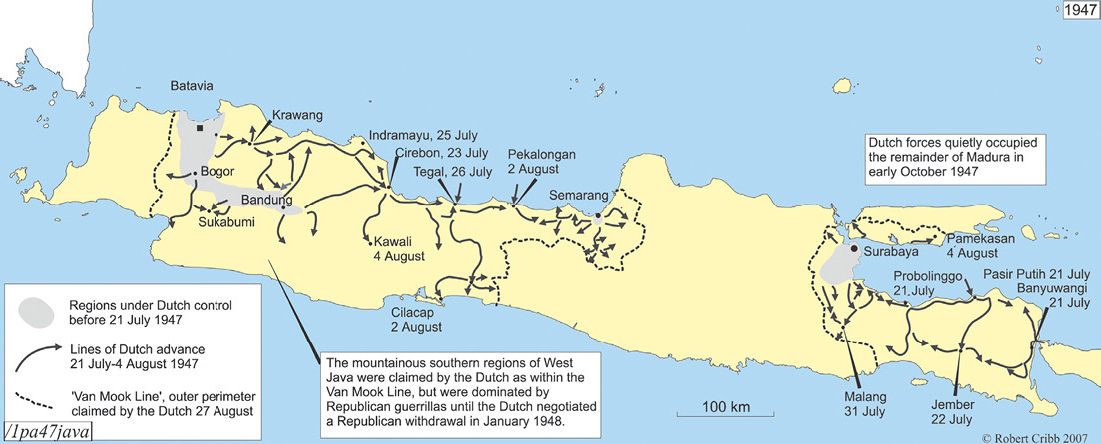
Map 8.1 Map of the First Dutch Military Aggression in Java, July–August 1947
Source: Robert Cribb, Digital Atlas of Indonesian History (Copenhagen: NIAS Press, 2010). Reproduced with permission.
The primary objective of the attack was to capture and demolish all republican strategic infrastructure to regain control of resource-rich regions in Java and Sumatra. The next day, the Dutch army and marines began to invade republican territory. The Dutch Government used this military invasion as a pretext to isolate the republic in the eyes of the international community for abandoning the Chinese and failing to suppress the influence of the Indonesian Communist Party. This invasion was successful in shrinking the republican territory to Java and Sumatra.35
As soon as Dutch forces entered republican territory, republican forces and their auxiliaries employed a scorched-earth strategy. The objective was to hinder the advance of the Dutch and dismantle everything that could benefit it, such as factories, mills and rubber plantations. From the experiences of the Chinese in Surabaya, Bandung, Tangerang and Palembang, it was well known that whenever the Dutch advanced into the interior of the republic, Chinese safety would be in peril.36 Thus, the newspaper Sin Po referred to these tactics as nothing more than the burning and destruction of Chinese property, which were typically accompanied by looting, arson and extortion.37
Sin Po feared that the scorched-earth strategy would lead to the massacre of Chinese civilians. This concern was significantly shaped by the fact that previous battles between Dutch and republican troops had resulted in the loss of hundreds of Chinese lives and the demolition of thousands of Chinese properties.38Sin Po’s prediction proved to be valid. The military aggression resulted in a loss of power and control in several areas, which enabled armed militias to assault the Chinese inhabitants.39
Even though these incidents appeared to have occurred coincidentally, various reports indicate that the violence was meticulously planned and involved multiple parties, such as paramilitary groups, local religious leaders and the Indonesian military. Sin Po suspected that the Dutch were also negligent in protecting Chinese communities during the countless anti-Chinese incidents that occurred mostly in Java and Sumatra. Despite having sufficient soldiers and armaments to prevent such incidents, Dutch forces would only emerge as ‘heroes’ or ‘liberators’ when there were already many casualties. According to Sin Po, the objective of permitting violence before intervening was to tarnish the image of the Indonesian republic in the eyes of the international community and convince the League of Nations that the republic was incapable of governing and protecting its own people.40
During the First Dutch Military Aggression, Malang in East Java was among the regions that sustained the most damage. On 22 July 1947, a series of robberies and violent acts erupted on the outskirts of the city, which swiftly expanded into the downtown area. In Kayutangan and Kota Lama, Chinese and European residences and businesses were looted and destroyed by mobs who were strongly suspected of having been provoked by the Laskar Hizbullah (‘Army of God’). The following week, arson attacks against government buildings and enterprises began. Even the CHTH’s Malang building was not spared from this violent assault.41
Based on the accounts of several eyewitnesses published in Sin Po, up to 30 Chinese residents of Kotalama were gathered at the militia headquarters in the Mergosono area under the pretence of being ‘secured’ (diamankan). The order was issued by Prawiro, the local militia leader, who had accused the Chinese of being Dutch informants. However, before their arrival, they were detained in a meat-grinding factory at Gadang. The victims were subsequently tortured, mutilated and burned. Identification and autopsy procedures performed by the Chinese Red Cross and CHTH Malang confirmed the victims had been subjected to extreme violence before their deaths.42
The situation remained volatile in Malang for several weeks. As soon as things began to improve following the acceptance of a ceasefire proposal from the Security Council of the League of Nations on 17 August 1947, CHTH Malang ordered the exhumation of the victims who had been hastily buried in Mergosono and its surrounds. All these victims were later reburied en masse in a large hole at the Kutobedah cemetery, following the instruction of the CHTH Malang leader, Liem Bian Sioe. In his speech, Liem begged the Chinese not to hold grudges against the Indonesians.43 Based on a preliminary report issued by CHTH Malang, at least 25 Chinese in the city and its surroundings were victims of this violence, of whom 20 were massacred in Kutobedah and Buring. However, the real number of casualties was likely much higher, as hundreds of victims remained missing. Meanwhile, the total material losses were very difficult to estimate. In the Singosari area alone, for instance, losses due to property damage there were estimated at ƒ7 million.44
Various pro-republican militia groups also utilised similar patterns to perform anti-Chinese violence in other areas, targeting businesses, property and lives. In Krawang and Cikampek (both in West Java), for instance, on the evening of 21 July 1947, the local militia assembled all Chinese residents on the football field before looting and burning their dwellings. The Chinese were falsely accused of being Dutch collaborators—an accusation that was never proven in a court of law. Many people believed these allegations were fabricated to justify the heinous crimes. In other regions of West Java, such as Rengasdengklok, Cibadak, Jatiwangi and Sukabumi, hundreds of Chinese-owned factories, rice mills and homes were also targeted by locals. Chinese communities strongly suspected that youths and local religious leaders provoked the assaults on Chinese-owned property, which they perceived as a symbol of ‘foreign’ capitalism. In comparison with Dutch-owned properties, Chinese Indonesian properties typically lacked security, making them more vulnerable. While the local CHTH reported no casualties despite the deplorable conditions in these areas, the loss of property was estimated to be worth millions of guilders.45
Several areas of Cirebon, also in West Java, such as Jatitujuh and Cilimus, witnessed a far more perilous situation and killings following the Dutch reoccupation on 23 July 1947. At that time, CHTH Cirebon reported that the Chinese population was generally safe. However, a few days later, the situation became tense after the Dutch withdrew some of their troops and refocused their security measures on only a few areas, including Losari, Kadipaten and Sumedang. This power vacuum was abused by militias and locals to launch attacks against the powerless Chinese. According to CHTH reports, 36 of the 616 Chinese residents of Jatitujuh were executed by local militia, which was likely Laskar Hizbullah. This number did not include the 12 victims who were declared missing.
In Jatitujuh, according to several eyewitness testimonies, men and women were separated after being driven into the forest near Kedung Maung. The women were sexually assaulted in groups and their belongings were seized. The men were instructed to form a line before being stabbed or shot to death. According to a report issued by CHTH Jakarta, at least eight women were also executed in Jatitujuh, indicating that the executions were carried out without regard for gender. The youngest victim was one year old and the oldest was 60.
In Cilimus, about 20 kilometres from the city of Cirebon, similarly extreme violence was carried out. It was reported that of a total Chinese population of 820 people, more than 50 were brutally executed by the Laskar Hizbullah paramilitary group in collaboration with the Indonesian army and several other militias. As well as the 50 confirmed dead, 21 victims remained missing, 14 were severely wounded and three people were reportedly circumcised against their will. Circumcision signified that they had been forcefully converted to Islam, which was one of the conditions for avoiding execution. This illustrates how vulnerable the Chinese position was as they were targeted not only due to their physical differences but also because of their religion. In a matter of days, anti-Chinese violence continued to spread to various areas of Cirebon, including Rajagaluh, Babakan, Maja and Parapatan, causing a mass exodus of Chinese residents from the city.46
At the end of 1947, CHTH Jakarta tried to compile a report of the violence suffered by the Chinese during the war, particularly after the First Dutch Military Aggression. The report was subsequently submitted to Dr Ching-lin Hsia, the representative of the Chinese Delegation to the League of Nations, with the intention of attracting international attention to the issue of violence against Chinese people. The CHTH also urged the League of Nations to take a more proactive role in resolving issues between the Netherlands and Indonesia. In its 31-page English-language report, the CHTH divided the acts of violence into seven categories: extortion (pemerasan), plundering (penjarahan), destruction of property (penghancuran properti), deprivation of freedom (perampasan kemerdekaan), kidnapping (penculikan), rape (pemerkosaan) and massacres (pembantaian).47 The pattern of anti-Chinese violence that occurred during the First Dutch Military Aggression met at least one of these criteria.
The interim report of the CHTH stated that, between 21 July and 21 August 1947, 293 Chinese residents were murdered, 6,453 were declared missing and 912 Chinese-owned homes and businesses were destroyed. The incidents of anti-Chinese violence discussed above are only a few of the many during this period. Sin Po and the CHTH also documented widespread atrocities in some Central and East Java regencies, including Bumiayu, Tegal, Pekalongan, Purwokerto, Banyumas, Purbalingga, Gombong, Salatiga, Karanganyar, Lumajang and Jember.48 As conditions progressively improved, many Chinese decided to return home—unaware that a few months later, with the commencement of the Second Dutch Military Aggression, they would face an even more dire situation.
The Second Dutch Military Aggression
After the cessation of the First Dutch Military Aggression, the situation in Indonesia did not significantly improve. Between April and June 1948, the United Nations (successor to the League of Nations) exerted pressure on the Dutch Government to negotiate with the Republic of Indonesia so that both parties would stop violating the ceasefire and settle disputes over plantations and market commodities in the custody of republican and irregular insurgent movements. A stalemate ensued, paving the way for ‘Operatie Kraai’ (‘Operation Crow’) on 19 December 1948, which lasted until 15 January 1949. In this brief period, the Dutch were able to invade Yogyakarta, Solo, Parakan, Secang and Wonosobo, as well as other significant republican territories.49
Yogyakarta, the temporary Indonesian capital, was effectively captured by the Dutch. All significant republican-held cities in Java and Sumatra were conquered by the Dutch in just under two weeks. Meanwhile, Sukarno, Hatta and six other republican ministers were arrested and exiled to Bangka Island, off the coast of Sumatra. Republican forces, however, declined to surrender and instead fought a guerilla war under the command of General Sudirman.
Several weeks before the outbreak of the war, Sin Po had predicted that unsuccessful negotiations between the Netherlands and Indonesia in Kaliurang, Yogyakarta, would ignite another crisis. The paper used what had occurred during the First Dutch Military Aggression to illustrate how a stalemate could result in a bloody war. Even though the Dutch always claimed that their ‘police actions’ were intended to eradicate criminals and restore peace and order in Java and Sumatra, Sin Po persisted in viewing them as invasive military actions. The paper also predicted that if another battle were to occur, the Chinese would be victimised again.50
Sin Po’s prediction proved to be accurate. On 19 December 1948, the Netherlands launched the Second Dutch Military Aggression. To prevent the Dutch from seizing strategic facilities, republican soldiers and militias employed a scorched-earth strategy in multiple locations. Sin Po describes the atmosphere as extremely tense, akin to ‘returning to the kempeitai [Japanese military police] era’ (kombali ka djeman kempeitai).51 The circulation of various forms of propaganda, such as slogans like ‘The Netherlands go, the Chinese suffer’ (Landa loengo, Tjina tjiloko) and ‘The Netherlands withdraw, the Chinese are devastated’ (Landa moendoer, Tjina hantjoer), made the situation even tenser.52
It cannot be denied that the fall of Yogyakarta as the capital of the Republic of Indonesia ignited a series of atrocities in urban areas and on the outskirts of the city. Sin Po reported how armed gangs were caught in the act of ransacking and burning Chinese houses in Gondomanan—acts that quickly spread to Sosrowijayan, Kemetiran, Jogonegaran, Gandekan and Pajeksan.53 The scorched-earth action was followed by a series of massacres in multiple districts in Yogyakarta. The identities of several victims were recorded, such as The Soo Hwa from Wonosari, who was slain alongside two other Chinese in Cepor Village, which is close to Kalasan. Similarly, five Chinese people in Prambanan were murdered by armed gangs. Sin Po also recorded the identities of five Chinese whose fate is uncertain: Liem Khing Liem (Ngampilan), Sie Tjing Hian, Liem Ing Sing (Wirobrajan), Lie Gee Oe and his son, (Pathuk). It is highly likely that they were killed.
Sie Joe Ging, one of the Chinese adolescents who survived the massacre in Groso Village, described the chronology of the atrocities to Sin Po. On 24 December 1948, Police Commander Soediman gathered all Chinese residents of the village of Kedaton Plered, 12 kilometres from Yogyakarta, on one of the village’s soccer fields. Soediman then demanded their house keys, vowing to safeguard their belongings. However, the opposite occurred: their homes were looted, and all the residents were transported to Groso Village, 2 kilometres away. A total of 29 Chinese were confined there, along with six members of a Swiss family and an Indo-Dutch individual. On their arrival, they were rounded up, taken to the edge of a cliff on a mountain and executed at close range. Oey Ging Tjwan, Sie Kiem Tjing, M.J. Thomas (who was Indo-Dutch) and R.O. Long (from the Swiss family) were among the casualties who could be identified.54
Nganjuk, East Java, was one of the regions that experienced the most severe anti-Chinese violence during the Second Dutch Military Aggression. A day after the Groso Village violence, on 25 December 1948, at approximately 1 pm, Laskar Hizbullah troops in Wirojayeng rounded up and detained as many as 70 Chinese people. On 31 December, they were transported to Karangseneh Village, then Ngujung and finally Rejoso. They were then taken to a forest in the vicinity of Jetis, along with hundreds of other refugees from Nganjuk, Gondang, Lengkong and Berbek who were en route to Rejoso. Up to 800 were then confined to a single building and fired on with machine guns from the perimeter. According to Sin Po, only five individuals survived the massacre.55 According to the testimony of an eyewitness published in the newspaper, between 700 and 800 Chinese residents of Nganjuk and Waujung were gathered in one building in Ngluyu by Laskar Hizbullah. Only 67 individuals were documented as having escaped the massacre.56
Comparable patterns of violence occurred in other locations in Central Java—for instance, in the Wonosobo region. There, 70 Chinese residents of the Sapuran district were taken to Bakalan Village in Banyumudal on 21 December 1948, for no evident reason. All their belongings were confiscated and their homes were burned down. Oey Tjie Hiang, the commander of CHTH Wonosobo, who attempted to negotiate with the kidnappers, was executed by a Laskar Hizbullah soldier. At the same time, as many as 700 Chinese residents of Kertek were abducted by Laskar Hizbullah and transported to Kalikajar Village, where 79 were executed on suspicion of spying for Dutch soldiers. Fortunately, most of the remainder were eventually rescued by republican Siliwangi soldiers.57
Based on these examples, we can conclude that the pattern of violence experienced by the Chinese during this period was comparable with that of the First Dutch Military Aggression. The perpetrators of the violence were strongly suspected of belonging to the same pro-republican militias, such as Laskar Rakyat, Laskar Hizbullah and Barisan Pelopor, whose actions were frequently supported by both the Indonesian military and agitated mobs of residents. In addition to the locations listed above, anti-Chinese atrocities also occurred in Sukoharjo, Magelang, Tulungagung, Pare, Ponorogo and other places, indicating the massive scale of anti-Chinese sentiment during the war.
Sin Po cited a report from CHTH Yogyakarta that suggested that up to 1,025 Chinese people were executed during the Second Dutch Military Aggression. While 115 were gravely injured, 9,050 were reported missing and 31,497 others were forced to evacuate to safer locations.58 It should be noted that Sin Po emphasised that these numbers were preliminary and the real number of victims was likely to be significantly higher. Neither the CHTH nor the Government of the Republic of Indonesia has ever disclosed the official victim statistics, even though their mass graves still exist.
A committee to exhume Chinese mass graves
In early 1950, just a few weeks after the Dutch recognised Indonesian sovereignty, the central CHTH association in Jakarta instructed all its branches in Java and Sumatra to exhume the mass graves of Chinese people who were killed during the First and Second Dutch Military Aggressions. The exhumation of the victims’ bodies began with the formation of the Committee for Relocating the Graves of Chinese Victims (Panitia Pemindahan Makam Korban Tionghoa) in various regions. By using the testimonies of residents and reports from victims’ families, this committee tried to pinpoint the locations of the mass graves, which were usually far from the city centre.
The CHTH in Magelang, Central Java, was most likely the first to exhume and rebury remains. This reburial was carried out in two stages. The first step occurred at the end of March 1950 at Blabak, Magelang. According to the accounts of several eyewitnesses, the bodies of victims were found in the vicinity of Muntilan and Magelang. Most were bound and naked, which implies that they had been subjected to extreme violence before they were executed. Fifty-two corpses were then buried in an unmarked mass grave. At the same time, CHTH Magelang extended the search for bodies to other areas, such as Pucang, Pakis, Rejosari and Tegalrejo. This proved successful, as an additional 90 corpses were discovered and later reburied in a mass grave in Blabak on 26 May 1950.59
Meanwhile, in Nganjuk, East Java, CHTH Nganjuk, with the assistance of locals, from 26 December 1950, mapped dozens of Chinese mass graves, including at Gondang-Gowar (two graves, 40 victims), Wedekan (three graves, 50 victims), Bingungan (one grave, 17 victims), Ngangkatan (one grave, one victim), Sumberkepuh (eight graves, 16 victims), Sambong (12 graves, 30 victims), Jambe (three graves, 43 victims), Ngrongot (one grave, 22 victims), Kelurahan (one grave, nine victims), Desa Ketandan (one grave, two victims), Logawe (one grave, four victims) and a grave containing nine victims in a place identified by the newspaper only as a ‘subdistrict’ (kelurahan)—likely a proofreading error. Just like in Magelang, most of the corpses had been buried carelessly and were in horrendous conditions, which showed that they had been subjected to severe torture before being executed.60
The Committee for Relocating the Graves of the Chinese Victims in Nganjuk was established to manage the funeral arrangements for the victims. It coordinated fundraising and organised the victims’ funeral procession. On 26 August 1951, a funeral procession for the victims was conducted at a Chinese cemetery in Manyung Village. More than 600 corpses were reburied in a single pit. The search for victims continued, and CHTH Nganjuk discovered dozens of additional bodies from Senggowar, Gondang, Lengkong, Cabean Village, Sambong Village (Warujayeng) and other villages. These were then buried alongside hundreds of others in the same hole.61 Figure 8.3 shows this mass grave in Manyung, Nganjuk, where more than 700 Chinese were buried together. The two marble reliefs on the left bear the names of the victims in Indonesian, while the marble on the right is written in Chinese.
Meanwhile, in Wonosobo in 1951, after the violence ceased, CHTH Wonosobo established a group called the Corpse Excavation Committee (Panitia Penggalian Majat) to exhume the victims’ bodies. Ten corpses were discovered in Bojong Village (Kepel), all of which belonged to Tio Eng Tiauw’s family. Meanwhile, the group also found 18 victims in Lempuyang Village (Kalikajar); all 16 victims in Sapuran were relatives of Ong Mo An. On 14 January 1951, a funeral was conducted in Jelegang, Pagerkukuh, and was preceded by a prayer at the CHTH Wonosobo building. The funeral for 154 people, whose remains were put in 25 coffins, was attended by more than 1,000 people.62 Tombstones from this mass grave (see Figure 8.4) list the names and ages of the victims at the time of their execution. The youngest victim listed on the tombstones is a one-year-old baby named Tjie Tjing Nio, who was executed in Sapuran alongside his parents.

Figure 8.2 An announcement in Sin Po made by CHTH Nganjuk on 26 August 1951 regarding the reburial of Chinese victims in Manyung Village
Source: Sin Po, 18 August 1951.
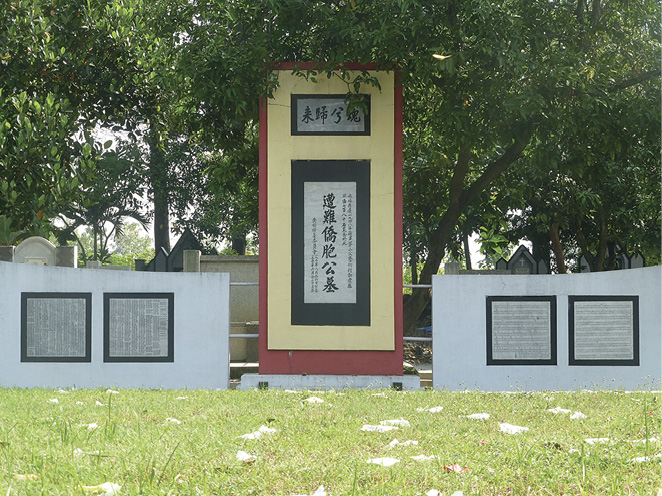
Figure 8.3 A Chinese mass grave in Manyung, Nganjuk
Source: Ravando.

Figure 8.4 Inscribed tombstones from the Chinese mass grave in Bojong Village, Wonosobo
Source: Ravando.
In most areas, exhumations could only be carried out within a few years of the executions. On 30 September 1951, for instance, a reburial ceremony was conducted for the bodies of approximately 170 Chinese who had been slaughtered in Maja during the First Dutch Military Aggression. They were buried in a mass grave in Bandung’s Cikadut cemetery at the initiative of Hua Chiao Lien Ho Hui, one of the largest Chinese organisations in West Java.63 The tombstones on this mass grave, however, indicate the date 1 December 1952. Thus, it was highly probable that another reburial process was carried out after the discovery of new bodies.
It is also highly probable that the Chinese mass grave in Yogyakarta is the only one that contains victims from other ethnic groups. On 2 August 1953, the victims of the Yogyakarta atrocity were reburied in a mass pit in Pingit. In addition to dozens of Chinese victims, there were reburials of the aforementioned Indo-Dutch man, M.J. Thomas, and the Swiss R.O. Long and his wife and children. As a marker for the grave, a monument bearing the names of the victims stands tall.

Figure 8.5 A notice in Sin Po announcing the reburial of the bodies of the Chinese massacred in Maja
Source: Sin Po, 25 September 1951.

Figure 8.6 The mass grave of Chinese massacre victims in Maja
Source: Sugiri Kustedja.

Figure 8.7 The Yogyakarta Chinese mass grave in the Pingit area, Bumijo
Source: F.X. Harsono.
After the 1965 tragedy and the rise of the Suharto regime, this grave visiting tradition stopped. All Chinese institutions were shut by force, and the Chinese language and characters were also deemed ‘threatening’ (berbahaya) and were thus prohibited. Such discriminatory state regulations were tightened by also prohibiting the practice of Chinese customs and beliefs. Members of the Chinese community were compelled to assimilate by adopting Indonesian names.64
The Chinese community was terrified by this tumultuous political atmosphere. During this period, they no longer had the courage to make pilgrimages to the mass graves from the revolutionary period, which had been an annual occurrence. Visits were resumed, however, after the collapse of the Suharto regime in 1998. The families of the Wonosobo victims, for instance, gather every year to clean the grave collectively and console one another. This gathering typically occurs on Ching Ming (‘Tomb-Sweeping Day’), which is the time when all Chinese graves are cleaned.

Figure 8.8 The vandalised Chinese mass grave in Grogolan Village, Pekalongan
Source: F.X. Harsono.
In addition to the mass graves we have already discussed, Harsono has located Chinese mass graves in Caruban (69 victims), Purwokerto (78 victims), Tulungagung (73 victims), Pare (68 victims) and Kediri (300 victims). However, there are still many mass graves of Chinese individuals the location of which remains unknown. In the name of ‘development’ (pembangunan), some of these graves have been destroyed or vandalised irreparably. In Grogolan Village (Pekalongan), for instance, not only is the grave covered with bushes, but also it has been vandalised and the tombstone stolen, making it difficult to identify. The absence of a plaque also conceals the fact that the site is a Chinese mass grave.
A similar situation occurred in Malang, where to the time of writing, we have not been able to locate the mass graves that existed in the Kutobedah area. In 1951, it was reported that eight individuals had vandalised this mass grave, even removing the headstone and additional marble from it.65 Rumours circulated that this mass grave had been destroyed by building projects and the remains relocated to Sentong, Lawang. Our investigation of the area was fruitless.
Conclusion
This chapter has demonstrated that Chinese mass graves are more than just a final resting place for victims; they also serve as an integral component of the local landscape. Rather than being merely a pile of stones, these mass graves are a crucial starting point for unearthing and reconstructing information about the violence against ethnic Chinese during the Indonesian war of independence—a period that has always been glorified as a conflict between the Dutch and Indonesia, with little effort to elaborate on the various atrocities committed against minority groups such as the Chinese, Indo-Europeans and Ambonese.
The process of exhumation and reburial of the remains of Chinese victims, which was carried out in various areas throughout the 1950s, was crucial to the project of reconstructing what occurred, as it became an indirect source for deconstructing, rethinking and identifying the root causes of discrimination against ethnic Chinese in Indonesia. Moreover, by revisiting the roots of discrimination against ethnic Chinese during the colonial period, we learn that prejudice against this group was a recurring phenomenon, and the end of Dutch colonialism did not instantaneously eradicate this sentiment. Powerful actors have used these embedded anti-Chinese sentiments for their own interests, particularly during moments of political crisis.
This study has revealed that the Indonesian war of independence was marked not only by discrimination, but also by the inability of the governing authorities to protect vulnerable minority groups, impunity and forgetfulness about the series of violent atrocities during that period. After the transfer of sovereignty from the Netherlands to the Republic of Indonesia on 27 December 1949, the government of the republic never attempted to resolve the animosity between militia, Chinese Indonesians and their neighbours of other ethnicities. Most of the perpetrators of this violence were never brought to justice. It was believed that some occupied strategic positions within the post-independence government. The hostility between ethnic groups was allowed to fester, becoming a ticking time bomb that could detonate at any moment.
References
Primary sources
Central Intelligence Agency (CIA). 1950. ‘Indonesian Newspapers.’ General CIA Records, CIA-RDP79T01049A000200020010-3, Publication date: 27 April 1950, Document release date: 4 January 2000. Langley: Central Intelligence Agency.
De Nieuwsgier. 1951. ‘Niets Meer Heilig [Nothing Is Sacred Anymore].’ De Nieuwsgier [The Curious], [Jakarta], 14 March.
De Vrije Pers. 1951. ‘Graven Geschonden [Graves Violated].’ De Vrije Pers [The Free Press], 12 March.
Kwee, Kek Beng. 1948. Doea Poeloe Lima Tahon Sebagi Wartawan [Twenty-Five Years as a Journalist]. Jakarta: Kuo.
Kwee, Tek Hoay. 1937. ‘Atsal Moelanja Timboel Pergerakan Tionghoa jang Modern di Indonesia [The Origins of the Modern Chinese Movement in Indonesia].’ Moestika Romans, February.
Memorandum Outlining Acts of Violence and Inhumanity Perpetrated by Indonesian Bands on Innocent Chinese Before and After the Dutch Police Action was Enforced on July 21, 1947. 1947. Jakarta: Zhonghua Zong Hui.
Netherlands Forces Intelligence Service/Central Military Intelligence Service (NEFIS/CMI). 1942–49. ‘Moorden door de TNI Troepen Gepleegd op Chinese Ingezetenen te Malang [Murders Committed by TNI Troops on Chinese Residents in Malang].’ NEFIS/CMI [Netherlands Forces Intelligence Service/Central Military Intelligence Service], 1942–1949, Inv. no. 02022. The Hague: Archief van het Ministerie van Buitenlandse Zaken [Archives of the Ministry of Foreign Affairs].
NEFIS/CMI. 1942–49. ‘Verklaring [Declaration].’ NEFIS/CMI [Netherlands Forces Intelligence Service/Central Military Intelligence Service], 1942–1949, Inv. no. 02022. The Hague: Archief van het Ministerie van Buitenlandse Zaken [Archives of the Ministry of Foreign Affairs].
Sin Po. 1923. ‘Memake Doea Timbangan [Using Two Scales].’ Sin Po: Oost-Java Editie [East Java edition], 23 January.
Sin Po. 1923. ‘Diborgol [Handcuffed].’ Sin Po, [East Java edition], 25 January.
Sin Po. 1924. ‘Apa Sebab Tida Dibekoek [Why Was It Not Prevented]?’ Sin Po, [West Java edition], 12 July.
Sin Po. 1945. ‘Koendjoengan pada Medan Pertempoeran Soerabaja (I) [Visit to the Surabaya Battlefield (I)].’ Sin Po, [Jakarta], 3 December.
Sin Po. 1945. ‘Koendjoengan pada Medan Pertempoeran Soerabaja (II) [Visit to the Surabaya Battlefield (II)].’ Sin Po, [Jakarta], 4 December.
Sin Po. 1946. ‘Pendoedoekan Bandoeng Selatan Soeda Seleseh Dilakoeken: Karoegian Sanget Besar Dari Pendoedoek Tionghoa [The Occupation of South Bandoeng Has Been Completed: Huge Losses for the Chinese Residents].’ Sin Po, [Jakarta], 27 March.
Sin Po. 1946. ‘Hoakiauw di Sumatra [Chinese in Sumatra].’ Sin Po, [Jakarta], 22 April.
Sin Po. 1946. ‘Banjak Orang Tionghoa dari Padang Mengoengsi ka Laen Tempat Lantaran Keadahan Semingkin Genting [Many Chinese from Padang Fled to Other Places Due to Increasing Tension].’ Sin Po, [Jakarta], 16 August.
Sin Po. 1946. ‘Indonesia Kaja Partij [Indonesia is Rich with Political Parties].’ Sin Po, [Jakarta], 25 September.
Sin Po. 1946. ‘Kasengsarahan dan Kamelaratan di Bagan Siapi-Api [Suffering and Hardship in Bagansiapiapi].’ Sin Po, [Jakarta], 8 November.
Sin Po. 1947. ‘Pembakaran, Perampokan dan Pemboenoean di Lawang [Arson, Robbery and Murder in Lawang].’ Sin Po, [Jakarta], 26 July.
Sin Po. 1947. ‘Merdeka [Freedom].’ Sin Po, [Jakarta], 29 July.
Sin Po. 1947. ‘Pembakaran dan Perampokan di Singosari [Arson and Robbery in Singosari].’ Sin Po, [Jakarta], 31 July.
Sin Po. 1947. ‘Malang Sasoeda Dibikin Antjoer [Malang After Being Destroyed].’ Sin Po, [Jakarta], 6 August.
Sin Po. 1947. ‘Boemiajoe Mendjadi Boemiangoes [Bumiayu Becomes Scorched Earth].’ Sin Po, [Jakarta], 21 August.
Sin Po. 1947. ‘Kakedjeman Terhadap Bangsa Tionghoa [Cruelty Towards the Chinese People].’ Sin Po, [Jakarta], 25 August.
Sin Po. 1947. ‘36 Hari Dalem Sarangnja Kaoem Extremist [Thirty-Six Days in the Extremists’ Nest].’ Sin Po, [Jakarta], 5 September.
Sin Po. 1947. ‘23 Orang Tionghoa Disembeleh di Soerdjo dan Bawang [Twenty-Three Chinese Slaughtered in Surjo and Bawang].’ Sin Po, [Jakarta], 15 September.
Sin Po. 1947. ‘Korban Pemboenoehan, Pembakaran dan Perampokan dari Hoakiauw di Indramajoe [Victims of Murder, Arson and Robbery of Chinese in Indramajoe].’ Sin Po, [Jakarta], 19 September.
Sin Po. 1947. ‘1178 Kiaopao Kita jang Ditoeloeng [1,178 Fellow Chinese People Assisted].’ Sin Po, [Jakarta], 19 November.
Sin Po. 1948. ‘Kandasnja Pembitjarahan [Negotiations Fail].’ Sin Po, [Jakarta], 9 December.
Sin Po. 1948. ‘Solo, Tjepoe dan Laen-Laen Djato [Solo, Cepu and Other Areas Fall].’ Sin Po, [Jakarta], 22 December.
Sin Po. 1949. ‘Pendoedoek Tionghoa di Kertek Diboenoeh [Chinese Residents in Kertek Killed]!’ Sin Po, [Jakarta], 11 January.
Sin Po. 1949. ‘Pemboenoehan Besar-Besaran di Redjoso [Mass Murder in Rejoso].’ Sin Po, [Jakarta], 25 January.
Sin Po. 1949. ‘Pemboenoehan Setjara Besar-Besaran di Desa Groso [Mass Murder in the Groso Village].’ Sin Po, [Jakarta], 1 February.
Sin Po. 1949. ‘Ratoesan Pendoedoek Tionghoa Dikoempoel dan Dibakar [Hundreds of Chinese Residents Are Rounded Up and Burnt].’ Sin Po, [Jakarta], 1 February.
Sin Po. 1949. ‘Hoakiauw di Daerah Pendoedoekan Baroe [Chinese in New Settlement Area].’ Sin Po, [Jakarta], 12 February.
Sin Po. 1949. ‘Kombali ka Djeman Kenpeitai [Return to the Kempeitai Era].’ Sin Po, [Jakarta], 21 February.
Sin Po. 1949. ‘Kegelisahan Dalem Masjarakat Tionghoa Memoentjak [Anxiety in the Chinese Community is Peaking].’ Sin Po, [Jakarta], 21 October.
Sin Po. 1949. ‘Wonogiri dan Patjitan [Wonogiri and Pacitan].’ Sin Po, [Jakarta], 21 October.
Sin Po. 1949. ‘Sesoedah Dirampok, Diboenoeh [After Being Robbed, Killed].’ Sin Po, [Jakarta], 15 November.
Sin Po. 1950. ‘Pemakaman Tongpao Korban-Korban Blabak [Burial of Chinese Compatriots in Blabak].’ Sin Po, [Jakarta], 6 April.
Sin Po. 1950. ‘Pemakaman Kembali Korban-Korban Tionghoa [Reburial of Chinese Victims].’ Sin Po, [Jakarta], 20 May.
Sin Po. 1950. ‘Korban2 Clash Kedua Di Daerah Wonosobo [Victims of the Second Clash in the Wonosobo Area].’ Sin Po, [Jakarta], 30 December.
Sin Po. 1951. ‘Untuk Penguburan Korban2 Tionghoa di Ngandjuk [For the Burial of Chinese Victims in Nganjuk].’ Sin Po, [Jakarta], 10 January.
Sin Po. 1951. ‘Penguburan Djenasah Korban2 Clash II [Burial of Victims of the Second Clash].’ Sin Po, [Jakarta], 27 January.
Sin Po. 1951. ‘Penguburan Kembali Djenazah Tionghoa [Reburial of Chinese Corpses].’ Sin Po, [Jakarta], 11 August.
Sin Po. 1951. ‘Pemakaman Djinazah Korban2 Tionghoa di Ngandjuk [Burial of Chinese Victims in Nganjuk].’ Sin Po, [Jakarta], 13 August.
Sin Po. 1951. ‘Pemberitahuan [Announcement].’ Sin Po, [Jakarta], 25 September.
Sin Po. 1951. ‘Pemakaman Djenazah Korban2 Tionghoa di Blitar [Burial of Chinese Victims in Blitar].’ Sin Po, [Jakarta], 3 December.
Sin Po. 1951. ‘Pemakaman Kembali Para Korban Tionghoa di Blitar [Reburial of Chinese Victims in Blitar].’ Sin Po, [Jakarta], 13 December.
Staatsblad van Nederlandsch-Indie [Official Gazette of the Netherlands Indies]. 1919. No. 622.
Star Weekly. [Jakarta]. 9 June 1946.
Secondary sources
Anderson, Benedict. 1998. The Spectre of Comparison: Nationalism, Southeast Asia and the World. London: Verso.
Berdoeri, Tjamboek [Kwee Thiam Tjing]. 2004. Indonesia dalem Api dan Bara [Indonesia in Flames and Embers]. Jakarta: Elkasa.
Bouwsma, Elly-Touwen, and Petra Groen. 1996. Tussen Banzai en Bersiap: De Afwikkeling van de Tweede Wereldoorlog in Nederlands-Indië [Between Banzai and Bersiap: The Settlement of the Second World War in the Netherlands Indies]. The Hague: SDU Publishers.
Bussemaker, Herman. 2005. Bersiap! Opstand in het Paradijs: de Bersiap-periode op Java en Sumatra 1945–1946 [Bersiap! Revolt in Paradise: The Bersiap Period on Java and Sumatra 1945–1946]. Zuthpen: Walburg Pers.
Butcher, John, and Howard Dick, eds. 1993. The Rise and Fall of Revenue Farming: Business Elites and the Emergence of the Modern State in Southeast Asia. London: Macmillan. doi.org/10.1007/978-1-349-22877-5.
Captain, Esther, and Onno Sinke. 2022. Het Geluid van Geweld: Bersiap en de Dynamiek van Geweld tijdens de Eerste Fase van de Indonesische Revolutie, 1945–1946 [The Sound of Violence: Bersiap and Dynamics of Violence during the First Phase of the Indonesian Revolution, 1945–1946]. Amsterdam: Amsterdam University Press.
Cribb, Robert. 1991. Gangsters and Revolutionaries: The Jakarta People’s Militia and the Indonesian Revolution, 1945–1949. Sydney: ASAA.
Cribb, Robert. 2000. Historical Atlas of Indonesia. Copenhagen: NIAS Press. doi.org/10.4324/9780203824610.
Cribb, Robert. 2008. ‘The Brief Genocide of Eurasians in Indonesia, 1945/46.’ In Empire, Colony, Genocide: Conquest, Occupation and Subaltern Resistance in World History, edited by Dirk Moses, 424–39. New York: Berghahn Books. doi.org/10.1515/9781782382140-019.
Cribb, Robert. 2010. Digital Atlas of Indonesian History. Copenhagen: NIAS Press.
Heidhues, Mary Somers. 2012. ‘Anti-Chinese Violence in Java during the Indonesian Revolution, 1945–49.’ Journal of Genocide Research 14, nos 3–4: 381–401. doi.org/10.1080/14623528.2012.719371.
Kahin, George McTurnan. 2003. Nationalism and Revolution in Indonesia. Ithaca: Southeast Asia Program Publications, Cornell University.
Kartodirdjo, Sartono. 1981. ‘Wajah Revolusi Indonesia Dipandang dari Perspektivisme Struktural [The Nature of the Revolution from a Structural Perspective].’ Prisma X, no. 8 (August): 3–13.
Kwartanada, Didi. 1997. ‘Kolaborasi dan Resinifikasi: Komunitas Cina Kota Yogyakarta pada Jaman Jepang, 1942–1945 [Collaboration and Re-Sinification: The Chinese Community of Yogyakarta during the Japanese Era, 1942–45].’ Undergraduate thesis, Universitas Gadjah Mada, Yogyakarta.
Lohanda, Mona. 1996. The Kapitan Cina of Batavia, 1837–1942: A History of Chinese Establishment in Colonial Society. Jakarta: Djambatan.
Lohanda, Mona. 2002. Growing Pains: The Chinese and the Dutch in Colonial Java, 1890–1942. Jakarta: Yayasan Cipta Loka Caraka.
Pratiwi, Geza Surya. 2022. ‘Kekerasan Terhadap Golongan Tionghoa pada Masa Revolusi di Malang, 1945–1949 [Violence Against the Chinese during the Revolution in Malang, 1945–49].’ Lembaran Sejarah [History Gazette] 18, no. 1: 78–94. doi.org/10.22146/lembaran-sejarah.80455.
Purcell, Victor. 1966. The Chinese in Southeast Asia. Oxford: Oxford University Press.
Ravando. 2014. ‘Now is the Time to Kill All Chinese: Social Revolution and the Massacre of Chinese in Tangerang, 1945–1946.’ Master’s thesis, Leiden University, Netherlands.
Scheltema, Johann-Friedrich. 1903. De Opiumpolitiek der Regeering en de Vrijheid der Drukpers in Nederlandsch-Indie [The Opium Policy of the Government and Freedom of the Press in the Netherlands Indies]. The Hague: W.P. van Stockum en Zoon.
Soejatno, and Benedict Anderson. 1974. ‘Revolution and Social Tensions in Surakarta 1945–1950.’ Indonesia, no. 17 (April): 99–111. doi.org/10.2307/3350775.
Suryadinata, Leo. 1976. ‘Indonesian Policies Toward the Chinese Minority Under the New Order.’ Asian Survey 16, no. 8: 770–87. doi.org/10.2307/2643578.
Suryadinata, Leo. 2005. ‘Anti-Chinese Actions in Southeast Asia: In Search of Causes and Solutions.’ In Violent Internal Conflicts in Asia Pacific: Histories, Political Economies and Policies, edited by Dewi Fortuna Anwar, 151–62. Jakarta: Yayasan Obor Indonesia.
Twang Peck Yang. 1998. The Chinese Business Elite in Indonesia and the Transition to Independence, 1940–1950. Kuala Lumpur: Oxford University Press.
van Delden, Mary C. 1989. Bersiap in Bandoeng: Een Onderzoek naar Geweld in de Periode van 17 Augustus 1945 tot 24 Maart 1946 [Bersiap in Bandung: Research into Violence in the Period from 17 August 1945 to 24 March 1946]. Kockengen: van Delden.
Vickers, Adrian. 2005. A History of Modern Indonesia. Cambridge: Cambridge University Press. doi.org/10.1017/CBO9780511801020.
Williams, Lea E. 1961. ‘The Ethical Program and the Chinese of Indonesia.’ Journal of Southeast Asian History 2, no. 2: 35–42.
Zhou, Taomo. 2019. Migration in the Time of Revolution: China, Indonesia, and the Cold War. Ithaca: Cornell University Press. doi.org/10.1515/9781501739941.
1 This period is also widely known as the Indonesian national revolution (Revolusi Nasional Indonesia).
2 The First Dutch Military Aggression (‘Operatie Product’) began on 21 July 1947 and concluded on 5 August 1947, whereas the Second Dutch Military Aggression (‘Operatie Kraai’) began on 19 December 1948 and ended in January 1949.
3 Harsono’s father, Oh Hok Tjoe, who subsequently changed his name to Hendro Subagio, was a photographer in Blitar. In the 1950s, he owned the Atom Photo Studio, the most popular photo studio in town at that time. In 1951, together with the CHTH, Hendro helped document the number of victims, contact the victims’ family members and ensure that the victims were properly buried.
4 During the war of independence, various regions in Indonesia, particularly in Java, were divided into two territories: one controlled by the Dutch and one by the Republic of Indonesia. Many areas were also under the control of Indonesian paramilitary forces and local youths due to the inability of the armies of both sides to control all their territory. See Robert Cribb, Gangsters and Revolutionaries: The Jakarta People’s Militia and the Indonesian Revolution, 1945–1949 (Sydney: ASAA, 1991).
5 This number does not include the 10 additional victims that were reported missing after this exhumation. ‘Pemakaman Djenazah Korban2 Tionghoa di Blitar [Burial of Chinese Victims in Blitar]’, Sin Po, [Jakarta], 3 December 1951.
6 ‘Pemakaman Kembali Para Korban Tionghoa di Blitar [Reburial of Chinese Victims in Blitar]’, Sin Po, [Jakarta], 13 December 1951.
7 A few scholars have examined this violence in detail, such as Mary Somers, Taomo Zhou and Geza Surya Pratiwi. Their research, however, focused on the violent events and barely touched on their aftermath. Thus, the exhumation and reburial processes are barely mentioned in these texts. See Mary Somers Heidhues, ‘Anti-Chinese Violence in Java during the Indonesian Revolution, 1945–49’, Journal of Genocide Research 14, nos 3–4 (2012): 381–401, doi.org/10.1080/14623528.2012.719371; Taomo Zhou, Migration in the Time of Revolution: China, Indonesia, and the Cold War (Ithaca: Cornell University Press, 2019), doi.org/10.1515/9781501739941; Geza Surya Pratiwi, ‘Kekerasan Terhadap Golongan Tionghoa pada Masa Revolusi di Malang, 1945–1949 [Violence Against the Chinese during the Revolution in Malang, 1945–1949]’, Lembaran Sejarah [History Gazette] 18, no. 1 (2022): 78–94, doi.org/10.22146/lembaran-sejarah.80455.
8 Sin Po was the largest Chinese publication during the war for independence, with a combined circulation of 30,253 copies for its Indonesian and Chinese editions as of early 1949. This newspaper was founded on 1 October 1910 by Lauw Giok Lan and Yoe Sin Gie, who adhered to Chinese nationalism but were very sympathetic to the Indonesian independence movement. Sin Po, whose publication was banned during the Japanese occupation, was reborn on 25 October 1945, amid turmoil. The paper often criticised the Government of the Republic of Indonesia because of the wartime violence against the Chinese. Due to its political stance, Sin Po became a prime target for pro-republican periodicals such as Merdeka (‘Independence’) and Soeloeh Merdeka (‘Torch of Independence’). See Central Intelligence Agency (CIA), ‘Indonesian Newspapers’, General CIA Records, CIA-RDP79T01049A000200020010-3, Publication date: 27 April 1950, Document release date: 4 January 2000 (Langley: Central Intelligence Agency).
9 These documents originated from the confidential archives of the General Secretariat of the Netherlands Indies Government and the Cabinet of the Governor-General.
10 Sartono Kartodirdjo, ‘Wajah Revolusi Indonesia Dipandang dari Perspektivisme Struktural [The Nature of the Revolution from a Structural Perspective]’, Prisma X, no. 8 (August 1981): 3–13, at 3.
11 Soejatno and Benedict Anderson, ‘Revolution and Social Tensions in Surakarta 1945–1950’, Indonesia, no. 17 (April 1974): 99–111, doi.org/10.2307/3350775, at 104.
12 Leo Suryadinata, ‘Anti-Chinese Actions in Southeast Asia: In Search of Causes and Solutions’, in Violent Internal Conflicts in Asia Pacific: Histories, Political Economies and Policies, ed. Dewi Fortuna Anwar (Jakarta: Yayasan Obor Indonesia, 2005), 151–62, at 155.
13 See also Kusno’s Chapter 11 in this volume.
14 Benedict Anderson, The Spectre of Comparison: Nationalism, Southeast Asia and the World (London: Verso, 1998), 13–14.
15 See Staatsblad van Nederlandsch-Indie [Official Gazette of the Netherlands Indies], no. 622 (1919).
16 Mona Lohanda, Growing Pains: The Chinese and the Dutch in Colonial Java, 1890–1942 (Jakarta: Yayasan Cipta Loka Caraka, 2002), 78–79.
17 Mona Lohanda, The Kapitan Cina of Batavia, 1837–1942: A History of Chinese Establishment in Colonial Society (Jakarta: Djambatan, 1996), 179; John Butcher and Howard Dick, eds, The Rise and Fall of Revenue Farming: Business Elites and the Emergence of the Modern State in Southeast Asia (London: Macmillan, 1993), doi.org/10.1007/978-1-349-22877-5.
18 The prime objective of ethical policies was to improve the living conditions of the Bumiputera by fostering native awakening through advancements in the education, irrigation and transmigration sectors. In practice, however, this policy often alienated the Chinese. See Lea E. Williams, ‘The Ethical Program and the Chinese of Indonesia’, Journal of Southeast Asian History 2, no. 2 (1961): 35–42, at 35–36.
19 After their status was equated with that of Europeans, a Japanese prisoner had the right to be tried by the Dutch colonial court known as the Raad van Justitie (Higher Court). Meanwhile, Bumiputera and Chinese communities were dealt with in a Landraad (Native Court) hearing. According to Sin Po, the treatment received in the two courts significantly differed because the prosecutors and justices used ‘two scales’ (doea timbangan). In a similar case, a person might be released by the Raad van Justitie, but it was highly probable that they would be imprisoned by the Landraad. See ‘Memake Doea Timbangan [Using Two Scales]’, Sin Po: Oost-Java Editie [East Java edition], 23 January 1923; ‘Diborgol [Handcuffed]’, Sin Po: Oost-Java Editie [East Java edition], 25 January 1923; ‘Apa Sebab Tida Dibekoek [Why Was It Not Prevented]?’, Sin Po: West-Java Editie [West Java edition], 12 July 1924.
20 Kwee Tek Hoay, ‘Atsal Moelanja Timboel Pergerakan Tionghoa jang Modern di Indonesia [The Origins of the Modern Chinese Movement in Indonesia]’, Moestika Romans (February 1937), 58; Johann-Friedrich Scheltema, De Opiumpolitiek der Regeering en de Vrijheid der Drukpers in Nederlandsch-Indie [The Opium Policy of the Government and Freedom of the Press in the Netherlands Indies] (The Hague: W.P. van Stockum en Zoon, 1903), 9.
21 Didi Kwartanada, ‘Kolaborasi dan Resinifikasi: Komunitas Cina Kota Yogyakarta pada Jaman Jepang, 1942–1945 [Collaboration and Re-Sinification: The Chinese Community of Yogyakarta during the Japanese Era, 1942–1945] (Undergraduate thesis, Universitas Gadjah Mada, Yogyakarta, 1997).
22 Tjamboek Berdoeri [Kwee Thiam Tjing], Indonesia dalem Api dan Bara [Indonesia in Flames and Embers] (Jakarta: Elkasa, 2004), 261.
23 Twang Peck Yang, The Chinese Business Elite in Indonesia and the Transition to Independence, 1940–1950 (Kuala Lumpur: Oxford University Press, 1998), 71.
24 The early stages of the Indonesian war of independence were marked by the emergence of various militia groups across Indonesia. At least 17 militias declared war on behalf of the Republic of Indonesia, including Laskar Hizbullah, Sabilillah, Laskar Rakjat, Partai Rakjat Djelata and the Barisan Banteng Hitam (‘Black Bull Front’). According to Sin Po, these groups had their own armies and frequently operated independently without official command from the Indonesian republican army. They often perpetrated atrocities against Chinese citizens and other civilians. Consequently, their legitimacy was frequently disregarded by the Government of the Republic of Indonesia. Sin Po had warned the republican government to maintain control over these militias once the war began. The newspaper also predicted an increase in the kidnapping and murder of civilians, along with their increasingly uncontrolled movements. See ‘Indonesia Kaja Partij [Indonesia is Rich with Political Parties]’, Sin Po, [Jakarta], 25 September 1946; Cribb, Gangsters and Revolutionaries.
25 Heidhues, ‘Anti-Chinese Violence in Java during the Indonesian Revolution’.
26 Victor Purcell, The Chinese in Southeast Asia (Oxford: Oxford University Press, 1966), 472.
27 For a discussion of recent controversy about this term in the Netherlands, see Chapter 1 in this volume; Robert Cribb, ‘The Brief Genocide of Eurasians in Indonesia, 1945/46’, in Empire, Colony, Genocide: Conquest, Occupation and Subaltern Resistance in World History, ed. Dirk Moses (New York: Berghahn Books, 2008), 424–39, doi.org/10.1515/9781782382140-019.
28 For more information related to the bersiap period, see Esther Captain and Onno Sinke, Het Geluid van Geweld: Bersiap en de Dynamiek van Geweld tijdens de Eerste Fase van de Indonesische Revolutie, 1945–1946 [The Sound of Violence: Bersiap and Dynamics of Violence during the First Phase of the Indonesian Revolution, 1945–1946] (Amsterdam: Amsterdam University Press, 2022); Herman Bussemaker, Bersiap! Opstand in het paradijs. De Bersiap-periode op Java en Sumatra 1945–1946 [Bersiap! Revolt in Paradise: The Bersiap Period on Java and Sumatra 1945–1946] (Zutphen: Walburg Pers, 2005); Elly-Touwen Bouwsma and Petra Groen, Tussen Banzai en Bersiap: De Afwikkeling van de Tweede Wereldoorlog in Nederlands-Indië [Between Banzai and Bersiap: The Settlement of the Second World War in the Netherlands Indies] (The Hague: SDU Publishers, 1996); Mary C. van Delden, Bersiap in Bandoeng: Een Onderzoek naar Geweld in de Periode van 17 Augustus 1945 tot 24 Maart 1946 [Bersiap in Bandung: Research into Violence in the Period from 17 August 1945 to 24 March 1946] (Kockengen: van Delden, 1989).
29 Adrian Vickers, A History of Modern Indonesia (Cambridge: Cambridge University Press, 2005), doi.org/10.1017/CBO9780511801020, 99.
30 Purcell, The Chinese in Southeast Asia, 157.
31 ‘Hoakiauw di Sumatra [Chinese in Sumatra]’, Sin Po, [Jakarta], 22 April 1946.
32 Star Weekly, [Jakarta], 9 June 1946. See also Ravando, ‘Now is the Time to Kill All Chinese: Social Revolution and the Massacre of Chinese in Tangerang, 1945–1946’ (Master’s thesis, Leiden University, Netherlands, 2014).
33 See, for instance, ‘Banjak Orang Tionghoa dari Padang Mengoengsi ka Laen Tempat Lantaran Keadahan Semingkin Genting [Many Chinese from Padang Fled to Other Places Due to Increasing Tension]’, Sin Po, [Jakarta], 16 August 1946; ‘Kasengsarahan dan Kamelaratan di Bagan Siapi-Api [Suffering and Hardship in Bagansiapiapi]’, Sin Po, [Jakarta], 8 November 1946.
34 The term ‘Politionele Actie’ (‘Police Action’) is commonly used in Dutch historiography to refer to these events. The Dutch considered Indonesia’s proclamation of independence illegitimate, so police action was required to eliminate extremist elements and restore order.
35 George McTurnan Kahin, Nationalism and Revolution in Indonesia (Ithaca: Southeast Asia Program Publications, Cornell University, 2003), 27.
36 Memorandum Outlining Acts of Violence and Inhumanity Perpetrated by Indonesian Bands on Innocent Chinese Before and After the Dutch Police Action was Enforced on July 21, 1947 (Jakarta: Zhonghua Zong Hui, 1947), 10.
37 ‘Merdeka [Freedom]’, Sin Po, [Jakarta], 29 July 1947.
38 The Battle of Surabaya (19–26 November 1945) and the Bandung Sea of Fire incident (March 1946) both resulted in substantial Chinese casualties and damage. See ‘Koendjoengan pada Medan Pertempoeran Soerabaja (I) [Visit to the Surabaya Battlefield (I)]’, Sin Po, [Jakarta], 3 December 1945; ‘Koendjoengan pada Medan Pertempoeran Soerabaja (II) [Visit to the Surabaya Battlefield (II)]’, Sin Po, [Jakarta], 4 December 1945. See also ‘Pendoedoekan Bandoeng Selatan Soeda Seleseh Dilakoeken: Karoegian Sanget Besar Dari Pendoedoek Tionghoa [The Occupation of South Bandung Has Been Completed: Huge Losses for the Chinese Residents]’, Sin Po, [Jakarta], 27 March 1946.
39 Kwee Kek Beng, Doea Poeloe Lima Tahon Sebagi Wartawan [Twenty-Five Years as a Journalist] (Batavia: Kuo, 1948), 96; Zhou, Migration in the Time of Revolution, 18.
40 See ‘Kakedjeman Terhadap Bangsa Tionghoa [Cruelty Towards the Chinese People]’, Sin Po, [Jakarta], 25 August 1947; ‘36 Hari Dalem Sarangnja Kaoem Extremist [Thirty-Six Days in the Extremists’ Nest]’, Sin Po, [Jakarta], 5 September 1947; ‘1178 Kiaopao Kita jang Ditoeloeng [1,178 Fellow Chinese People Assisted]’, Sin Po, [Jakarta], 19 November 1947.
41 ‘Malang Sasoeda Dibikin Antjoer [Malang After Being Destroyed]’, Sin Po, [Jakarta], 6 August 1947. See also ‘Verklaring [Declaration]’, NEFIS/CMI [Netherlands Forces Intelligence Service/Central Military Intelligence Service], 1942–1949, Inv. no. 02022 (The Hague: Archief van het Ministerie van Buitenlandse Zaken [Archives of the Ministry of Foreign Affairs]); ‘Moorden door de TNI Troepen Gepleegd op Chinese Ingezetenen te Malang [Murders Committed by TNI Troops on Chinese Residents in Malang]’, NEFIS/CMI [Netherlands Forces Intelligence Service/Central Military Intelligence Service], 1942–1949, Inv. no. 02022 (The Hague: Archief van het Ministerie van Buitenlandse Zaken [Archives of the Ministry of Foreign Affairs]).
42 See ‘Pembakaran, Perampokan dan Pemboenoean di Lawang [Arson, Robbery and Murder in Lawang]’, Sin Po, [Jakarta], 26 July 1947; ‘Pembakaran dan Perampokan di Singosari [Arson and Robbery in Singosari]’, Sin Po, [Jakarta], 31 July 1947; ‘Malang After Being Destroyed’, Sin Po.
43 Berdoeri, Indonesia in Flames and Embers, 394.
44 Memorandum Outlining Acts of Violence and Inhumanity, 16–17.
45 ibid., 11.
46 ibid., 12.
47 ibid., 6–9.
48 ibid., 10–31. See also ‘Boemiajoe Mendjadi Boemiangoes [Bumiayu Becomes Scorched Earth]’, Sin Po, [Jakarta], 21 August 1947; ‘23 Orang Tionghoa Disembeleh di Soerdjo dan Bawang [23 Chinese Slaughtered in Surjo and Bawang]’, Sin Po, [Jakarta], 15 September 1947; ‘Korban Pemboenoehan, Pembakaran dan Perampokan dari Hoakiauw di Indramajoe [Victims of Murder, Arson and Robbery of Chinese in Indramayu]’, Sin Po, [Jakarta], 19 September 1947.
49 ‘Solo, Tjepoe dan Laen-Laen Djato [Solo, Cepu and Other Areas Fall]’, Sin Po, [Jakarta], 22 December 1948.
50 ‘Kandasnja Pembitjarahan [Negotiations Fail]’, Sin Po, [Jakarta], 9 December 1948.
51 ‘Kombali ka Djeman Kempeitai [Return to the Kempeitai Era]’, Sin Po, [Jakarta], 21 February 1949.
52 ‘Wonogiri dan Patjitan [Wonogiri and Pacitan]’, Sin Po, [Jakarta], 21 October 1949.
53 ‘Kegelisahan Dalem Masjarakat Tionghoa Memoentjak [Anxiety in the Chinese Community is Peaking]’, Sin Po, [Jakarta], 21 October 1949.
54 ‘Pemboenoehan Setjara Besar-Besaran di Desa Groso [Mass Murder in the Groso Village]’, Sin Po, [Jakarta], 1 February 1949.
55 ‘Pemboenoehan Besar-Besaran di Redjoso [Mass Murder in Rejoso]’, Sin Po, [Jakarta], 25 January 1949.
56 ‘Ratoesan Pendoedoek Tionghoa Dikoempoel dan Dibakar [Hundreds of Chinese Residents Are Rounded Up and Burnt]’, Sin Po, [Jakarta], 1 February 1949.
57 ‘Pendoedoek Tionghoa di Kertek Diboenoeh [Chinese Residents in Kertek Killed]!’, Sin Po, [Jakarta], 11 January 1949.
58 ‘Hoakiauw di Daerah Pendoedoekan Baroe [Chinese in New Settlement Area]’, Sin Po, [Jakarta], 12 February 1949.
59 ‘Pemakaman Kembali Korban-Korban Tionghoa [Reburial of Chinese Victims]’, Sin Po, [Jakarta], 20 May 1950.
60 ‘Untuk Penguburan Korban2 Tionghoa di Ngandjuk [For the Burial of Chinese Victims in Nganjuk]’, Sin Po, [Jakarta], 10 January 1951.
61 ‘Penguburan Kembali Djenazah Tionghoa [Reburial of Chinese Corpses]’, Sin Po, [Jakarta], 11 August 1951; ‘Pemakaman Djinazah Korban2 Tionghoa di Ngandjuk [Burial of Chinese Victims in Nganjuk]’, Sin Po, [Jakarta], 13 August 1951.
62 The Kertek area had the highest number of victims (110 people), followed by Sapuran (27), Semayu (11), Kaliwiro (3), Wonosobo (2) and Kejajar (1). See ‘Korban2 Clash Kedua Di Daerah Wonosobo [Victims of the Second Clash in the Wonosobo Area]’, Sin Po, [Jakarta], 30 December 1950; ‘Penguburan Djenasah Korban2 Clash II [Burial of Victims of the Second Clash]’, Sin Po, [Jakarta], 27 January 1951.
63 ‘Pemberitahuan [Announcement]’, Sin Po, [Jakarta], 25 September 1951.
64 Leo Suryadinata, ‘Indonesian Policies Toward the Chinese Minority Under the New Order’, Asian Survey 16, no. 8 (1976): 770–87, doi.org/10.2307/2643578, at 776–82.
65 See ‘Graven Geschonden [Graves Violated]’, De Vrije Pers [The Free Press], 12 March 1951; ‘Niets Meer Heilig [Nothing Is Sacred Anymore]’, De Nieuwsgier [The Curious], [Jakarta], 14 March 1951.
Previous Next



