


 menu
Landslide
14
An electoral test for the Community Independents
Carolyn M. Hendriks and Richard Reid
Abstract
The 2025 election was a test for the Community Independents Movement (CIM): would it continue to expand or had its momentum peaked? The answer is mixed. On one hand, the movement has grown, with 37 Community Independent (CI) candidates standing for the House of Representatives and one in the Senate. Votes for CI candidates were also up from 2022. Yet, with only one additional seat won (Bradfield) and the loss of Zoe Daniel in Goldstein, the 2025 election represents a consolidation of the CIM’s electoral position, rather than an expansion. To make sense of these mixed results, the chapter discusses three groups of CI candidates: incumbents, repeat challengers and newcomers. It argues that the CIM’s diverse results reflect the localised nature of the movement, its appeal and the varying dynamics across electorates. The chapter considers issues facing the CIM going forward, including fatigue and campaign spending limits.
Keywords: Community Independents; Teals; Community Independents Movement; Climate 200; elections
The 2025 election was always going to be seen as a test for the Community Independents Movement (CIM). Could the CIM grow its presence in the parliament, building on the 2022 election results, when eight Community Independents (CIs) were elected to the House of Representatives and one to the Senate, or would this election prove that the ‘Teal wave’ in 2022 was simply a rejection of the Morrison government? In the end, the 2025 results for the CIM were mixed. All CI incumbents except Zoe Daniel in Goldstein successfully held their seats and one new CI was elected (Nicolette Boele in Bradfield); however, more than two-thirds of the 38 CI candidates were unable to win. So, although more than a million Australians voted for an Independent candidate as their first preference (up 2.1 per cent from 2022) (ABC 2025b), this did not translate into a greater number of seats for CI candidates. Overall, the minority government that many had expected—with Independents and minor parties holding the balance of power in the House of Representatives—did not eventuate.
Although CI candidates did not perform as well as some had predicted, the movement remains optimistic about its ongoing capacity to have a positive impact on Australia’s democratic system. This sentiment is encapsulated by the post-election words of defeated MP Zoe Daniel (2025): ‘This is not the end. It’s not even the end of the beginning. Community independent politics is alive. It is thriving. And together, we will keep shaping the future of our democracy.’
In this chapter, we consider the campaigns and electoral results of candidates who were part of the CIM at the 2025 election. We contend that the mixed electoral results for CI candidates reflect the localised nature of the movement, its appeal and the varying dynamics across electorates. In the 2025 election, CI candidates faced competition from diverse party candidates; many stood against a Liberal incumbent while others stood against either a Labor or a Nationals incumbent. A few faced three-cornered contests against well-known former party MPs running as Independents—for example, in Calare (NSW), Monash (Victoria) and Moore (WA).
We cannot do justice to the unique experiences of all CI candidates in this short chapter and we also recognise that the localised nature of the CIM makes it more difficult to provide general reflections compared with political parties. However, we offer a synthesis of key data by considering three distinct CI candidate groups: incumbents, repeat challengers and newcomers. In the discussion, we reflect on some of the issues that surfaced in the 2025 election and consider the future and challenges for the CIM.
The chapter is structured in seven short parts. The first is a brief overview of the CIM. Following this is consideration of the 2025 electoral context. The chapter then moves to focus on: the CI candidates, the CI campaigns and the CI results. In the sixth part, the chapter provides some reflections on the implications of these results for the CIM and its future. Following this is a short conclusion.
Community Independents: A localised model and a national movement
The CIM claims to offer an alternative form of political representation to the ‘broken’ party system (Johnson 2025). It champions a grassroots model whereby local candidates are nominated or endorsed by an electorate community group (Hendriks and Reid 2024a). This model first emerged in the electorate of Indi in the leadup to the 2013 federal election (Hendriks 2017). Similar community groups then emerged and stood CI candidates in the 2019 and 2022 elections, particularly in metropolitan seats in Sydney, Melbourne and Perth, but also in several regional electorates (Hendriks and Reid 2023). In 2022, the CIM received significant attention due to the success of six new ‘Teal’ MPs and one senator. They joined Helen Haines (Indi) and Zali Steggall (Warringah), both of whom were first elected in 2019.
The CI model continues to adapt and evolve. While there are local variations (a point to which we return in our broader reflections), the typical CI approach involves: 1) the formation of a local community electorate group; 2) the engagement of local constituents in discussions about what local representation should look like; 3) the recruitment, selection and/or endorsement of a local Community Independent candidate; and 4) a community-led political campaign (Hendriks and Reid 2024a).
Since the 2022 election, the CIM has expanded considerably, building on the high profiles of CIs in the House of Representatives and the Senate. By May 2025, around the nation there were 45 active local community electorate groups (CIP 2025b)1 and numerous intermediary organisations, networks and platforms resourcing, advising and broadcasting CI candidates and their campaigns. At the 2025 election, there were 38 CI candidates: seven incumbent MPs,2 one incumbent senator, seven recontesting CI candidates and 23 new CI candidates.
The 2025 electoral context for Community Independents
Going into the 2025 election the CIM had grand aspirations. CI candidates were seen to be strong possibilities in several regional seats such as Monash, Cowper, Wannon and Calare. Pollsters also predicted the CIs would do well. In his contribution to the Election Analysts Forum at the National Press Club on 22 April 2025, Shaun Ratcliff from the polling group Accent Research predicted that the Coalition would be ‘bleeding’ votes to Community Independents in metropolitan seats such as Bradfield and in rural seats such as Cowper, Calare, Monash and Wannon. He went on to argue that Labor would also be vulnerable to CIs. Similarly, reports of polling commissioned by the crowd-funding organisation Climate 200 (C200) predicted that CI candidates would win Cowper and Bradfield and would come close in Flinders and Forrest (Seccombe 2025a).
But the 2025 election would prove to be a highly unpredictable and complex political context for CIs. On the upside, CI candidates were a known, familiar and, to some, proven quantity. The public prominence and actions of the eight CI MPs and one CI senator in the Forty-Seventh Parliament offered voters at the 2025 election concrete examples of what a CI is and what they do. However, the challenges were that some of the key issues that shaped the 2022 election were notably absent in 2025 (such as strong anti–Scott Morrison sentiment and significant attention to climate change). In 2025, CI candidates (like their party counterparts) faced voters who wanted action from politicians on cost-of-living pressures, housing affordability and intergenerational (in)equity. Global affairs would also impact the 2025 election in ways very different from 2022, particularly concerns about instability in the world economy and international order following the inauguration of US President Donald Trump for his second term in January 2025.
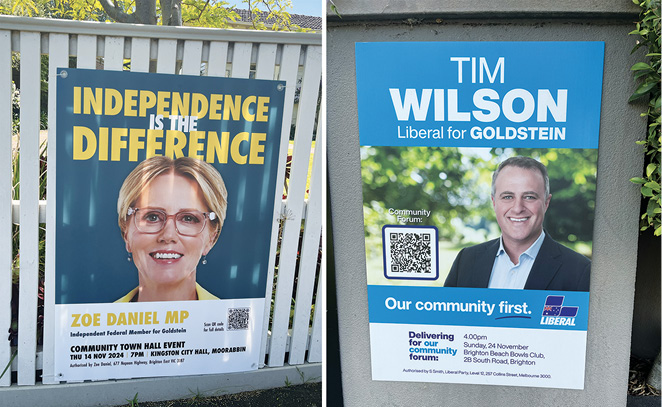
Plate 14.1 Corflutes on display in Goldstein seven months before the election
Photos: Carolyn Hendriks.
The movement had also changed since 2022. In this election, there were more local CI groups and candidates standing in diverse seats and their campaigns had longer lead times, were better resourced and supported and were able to attract more volunteers than in 2022. Major-party MPs and candidates had a greater understanding of the CIM and were in no way caught off-guard as they might have been in 2022. An illustrative example of this was in Goldstein, where former MP Tim Wilson successfully designed a long-planned local campaign to win back the seat from CI incumbent Zoe Daniel (see Ilanbey 2025). As shown in Plate 14.1, the public contest between Wilson and Daniel began well before election.
Since 2022 there had also been growth in third-party entities challenging and campaigning against CI candidates, especially incumbent CI MPs. For example, in the Melbourne seat of Goldstein, a group calling itself ‘Repeal the Teal’ was active throughout the 2025 election campaign with pamphlets, posters and T-shirts. Other third-party groups such as Advance and Better Australia had been active in multiple seats such as Wentworth (Bogle 2025) and Goldstein (Epstein 2025).
Overview of CI candidates
This chapter focuses on the candidates recognised by the Community Independents Project (CIP), a key body within the CIM founded by original members of Voices for Indi and Voices of Warringah. At the 2025 election, the CIP recognised 37 House of Representatives candidates and one Senate candidate.3 Below we provide an overview of these candidates, listing them under three groupings: incumbents (CI MPs), repeat challengers (CI candidates standing again) and newcomers (CI candidates standing for the first time).
A distinct aspect of the 2025 election was the sheer diversity of electorates in which a CI candidate stood (as summarised in Tables 14.1, 14.2 and 14.3, and visualised in Map 14.1). This diversity somewhat debunked the popular myth that CIs only emerge in wealthy metropolitan seats. Indeed, in the leadup to the 2025 election, commentators gave considerable attention to several CI candidates running in rural and provincial (regional) seats, on the back of unsuccessful attempts in either 2019 or 2022, such as Alex Dyson in Wannon, Caz Heise in Cowper and Kate Hook in Calare (see, for example, Newlands 2025). There were also CI candidates in outer suburban seats that were once safe Labor electorates. Other noteworthy features of the CI candidates in the 2025 election include: as in 2022, they were predominantly women—only eight of the 38 CI candidates were men; most have work backgrounds in the professions or public or community sectors; and most of the newcomers sought a campaign colour that distinguished them from the ‘Teals’.
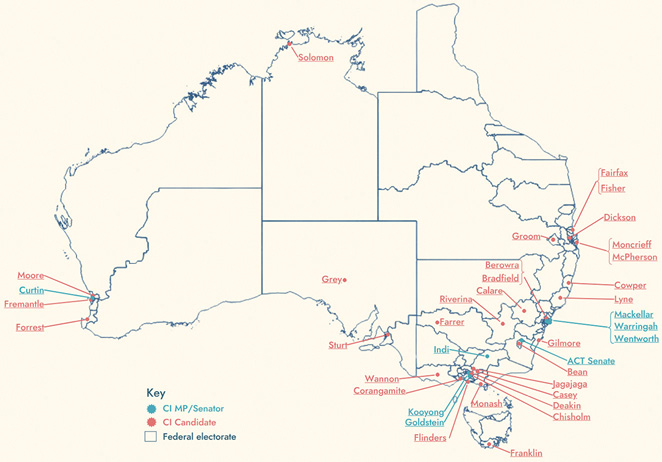
Map 14.1 Community Independent candidates and their electorates
Source: CIP (2025a).
It is also notable that apart from David Pocock in the ACT, there were no other CI candidates standing for the Senate in 2025. This reflects the fact that the electoral system used for the House of Representatives is more favourable than the Senate’s single transferable vote proportional representation system. Pocock is the exception, partly reflecting the small size of the ACT population.
Table 14.1 Community Independent incumbents (8)
|
Candidate |
Electorate |
Type of electorate |
Gender |
|---|---|---|---|
|
Kate Chaney |
Curtin, WA |
Metropolitan (inner) |
Woman |
|
Zoe Daniel |
Goldstein, Vic. |
Metropolitan (inner) |
Woman |
|
Helen Haines |
Indi, Vic. |
Rural |
Woman |
|
Monique Ryan |
Kooyong, Vic. |
Metropolitan (inner) |
Woman |
|
Sophie Scamps |
Mackellar, NSW |
Metropolitan (outer) |
Woman |
|
Allegra Spender |
Wentworth, NSW |
Metropolitan (inner) |
Woman |
|
Zali Steggall |
Warringah, NSW |
Metropolitan (inner) |
Woman |
|
David Pocock |
ACT Senator |
– |
Man |
Source: Compiled by authors from CIP (2025a) data.
Table 14.2 Community Independent repeat challengers (7)
|
Candidate |
Electorate |
Type of electorate |
Gender |
|---|---|---|---|
|
Nicolette Boele |
Bradfield, NSW |
Metropolitan (inner) |
Woman |
|
Alex Dyson |
Wannon, Vic. |
Rural |
Man |
|
Claire Ferres Miles |
Casey, Vic. |
Rural |
Woman |
|
Caz Heise |
Cowper, NSW |
Provincial |
Woman |
|
Suzie Holt |
Groom, Qld |
Provincial |
Woman |
|
Kate Hook |
Calare, NSW |
Rural |
Woman |
|
Deb Leonard |
Monash, Vic. |
Rural |
Woman |
Source: Compiled by authors from CIP (2025a) data.
Table 14.3 Community Independent newcomers (23)
|
Candidate |
Electorate |
Type of electorate |
Gender |
|---|---|---|---|
|
Nicole Arrowsmith |
Moncrieff, Qld |
Provincial |
Woman |
|
Nathan Barton |
Moore, WA |
Metropolitan (outer) |
Man |
|
Tina Brown |
Berowra, NSW |
Metropolitan (outer) |
Woman |
|
Sue Chapman |
Forrest, WA |
Rural |
Woman |
|
Verity Cooper |
Sturt, SA |
Metropolitan (inner) |
Woman |
|
Kath Davies |
Chisholm, Vic. |
Metropolitan (inner) |
Woman |
|
Kate Dezarnaulds |
Gilmore, NSW |
Rural |
Woman |
|
Peter George |
Franklin, Tas. |
Metropolitan (outer) |
Man |
|
Kate Hulett |
Fremantle, WA |
Metropolitan (inner) |
Woman |
|
Keryn Jones |
Fisher, Qld |
Rural |
Woman |
|
Chris Kearney |
Jagajaga, Vic. |
Metropolitan (outer) |
Man |
|
Anita Kuss |
Grey, SA |
Rural |
Woman |
|
Kate Lockhart |
Corangamite, Vic. |
Provincial |
Woman |
|
Jeremy Miller |
Lyne, NSW |
Rural |
Man |
|
Michelle Milthorpe |
Farrer, NSW |
Rural |
Woman |
|
Erchana Murray-Bartlett |
McPherson, Qld |
Provincial |
Woman |
|
Jess Ness |
Deakin, Vic. |
Metropolitan (outer) |
Woman |
|
Jessie Price |
Bean, ACT |
Metropolitan (inner) |
Woman |
|
Jenny Rolfe |
Riverina, NSW |
Rural |
Woman |
|
Phil Scott |
Solomon, NT |
Metropolitan (inner) |
Man |
|
Ben Smith |
Flinders, Vic. |
Rural |
Man |
|
Ellie Smith |
Dickson, Qld |
Metropolitan (outer) |
Woman |
|
Francine Wiig |
Fairfax, Qld |
Rural |
Woman |
Source: Compiled by authors from CIP (2025a) data.
CI election campaigns
Each CI candidate led a local community campaign. Many CI campaigns involved large volunteer numbers engaged in doorknocking and a variety of activities in the community to boost candidate visibility and attract supporters, as seen in previous elections (see Hayman 2024). Each CI campaign was shaped by the specific political dynamics of the electorate. This is reflected in the different policy issues CI candidates emphasised, the different colours they used and their different campaign approaches. As shown in Plate 14.2, some, like Jessie Price, followed Indi and opted for bright orange.
Compared with the 2022 election, CI candidates in the 2025 election had far more time to plan their campaign. In some cases, they had too much time and ran out of money (see Seccombe 2025b). The long campaign also presented challenges to campaign teams as they sought to maintain and sustain highly energised campaigns with hundreds of volunteers (we return to campaign fatigue below).
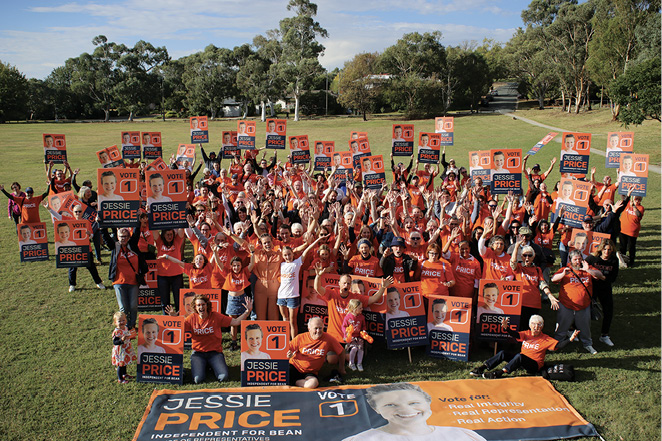
Plate 14.2 CI candidate Jessie Price and her volunteers in Bean, ACT
Source: Jessie Price.
The 2025 election followed AEC electoral redistributions in 2024 that resulted in the abolition of two seats (CI-held North Sydney and Labor-held Higgins in Victoria), the creation of a new WA seat (Bullwinkel) and, consequently, the redrawing of the electoral boundaries of a significant number of electorates. The impact of these boundary changes on CI candidates was variable. Importantly, for CI incumbents, their electorates were not the same as their constituencies during their term, particularly in Sydney and Melbourne. While the redistribution in New South Wales abolished one CI seat in North Sydney, the resulting boundary changes likely worked in favour of CIs in Bradfield and Warringah. In Melbourne, meanwhile, the abolition of Higgins seems to have worked against Monique Ryan in Kooyong and Zoe Daniel in Goldstein.
Some of the CI campaigns were especially confrontational and consequently attracted more national media attention than others. Examples of this include video footage emerging of CI MP Monique Ryan’s husband removing a corflute of Liberal candidate Amelia Hamer in Kooyong (ABC 2025a) and tensions in Wentworth relating to the conflict in Gaza. In contrast to the 2022 election, many of the volunteers on the CI campaigns found the pre-polling particularly politicised and, in some instances, unsafe and scary. This seems to have been a broader experience of many volunteers in the 2025 election, not just those supporting CIs (see Tingle 2025).
In this election, CI candidates were taken more seriously by parties and, in many seats, parties launched strong attacks on CI candidates (especially incumbent CI MPs). Parties and their candidates had a better understanding of the CI approach (and electoral threat) and they used this knowledge to challenge CI candidates. As mentioned above, the key example of this was Tim Wilson in Goldstein, but also in other seats the parliamentary voting records of CI incumbents, particularly their votes with the Greens, were used in advertising attacking the ‘independence’ of CI MPs. In addition, according to key figures within the movement, such as Zali Steggall on ABC TV’s Insiders program the day after the election, third-party groups such as Advance played a large role campaigning against CI candidates. The media covered several targeted attacks on CI candidates especially in metropolitan seats (for example, Tingle 2025d; Bogle 2025), but it is important to note that such attacks also surfaced in the regions. For example, as shown in Plate 14.3, posters were erected in rural areas such as Calare (NSW).
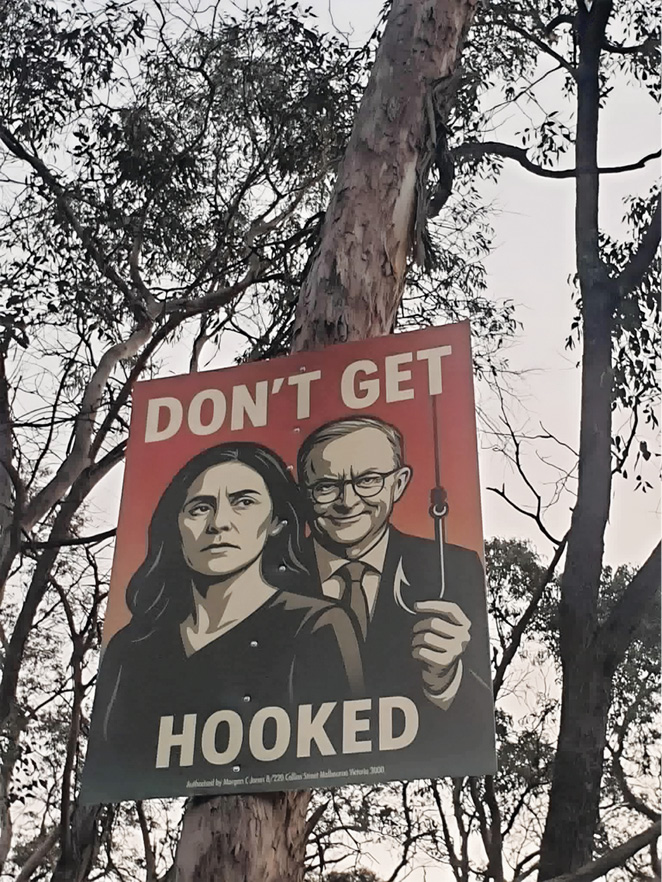
Plate 14.3 Negative attacks on CI candidate Kate Hook in Calare, NSW
Photo: Kate Hook.
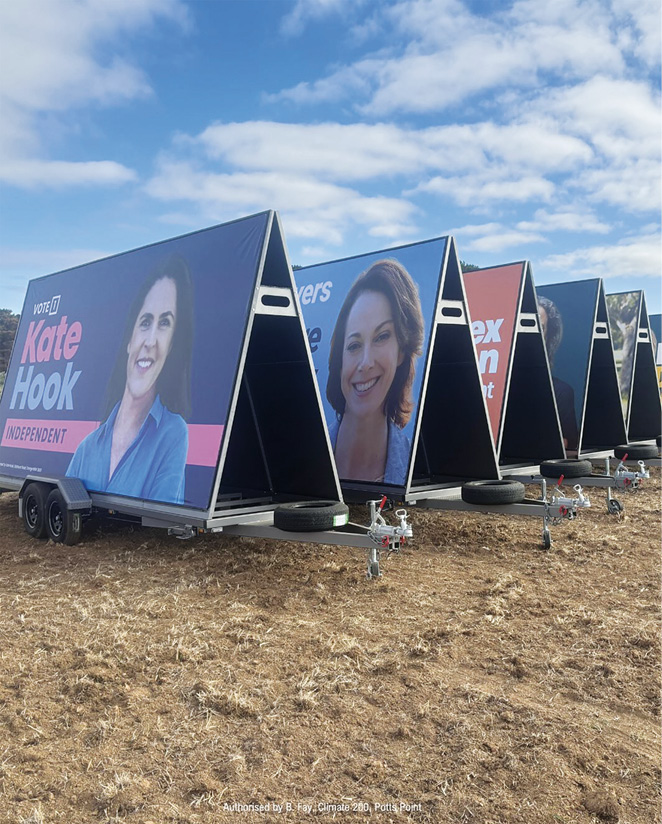
Plate 14.4 Climate 200–funded mobile billboards for multiple CI candidates
Photo: Climate 200.
While the campaign dynamics were highly localised, there were some common elements across CI campaigns, particularly in terms of donations and support from C200 (see Plate 14.4). Of the 38 CI candidates who stood, 33 received part of their funding and other support from C200. From what we understand, five CI candidates did not receive C200 support during the election. This included newcomers Chris Kearney (Jagajaga), Kath Davies (Chisholm) and Kate Lockhart (Corangamite)—all contesting Labor-held seats. In addition, David Pocock (ACT Senator) and Zali Steggall (Warringah) publicly moved away from C200 funding. This served to create distance from the organisation and its founder, Simon Holmes à Court (Coorey 2025). Steggall is quoted as saying: ‘I have received no funding from Climate 200 for the upcoming election … Suggestions that I’m beholden to Climate 200 or its founder are completely incorrect and overblown’ (Cropp 2025a).
In this election, CI campaigns were also well supported by a growing and more sophisticated network of intermediaries providing practical advice and mentoring to CI candidates. For example, the CIP convenes an annual virtual conference and hosts a public website with information and resources. In addition to C200, other funding bodies have been established—for example, the Vida Fund (to support women Independent candidates running on strong gender equity platforms) and the Regional Voices Fund (to seed local community ‘voices’ groups in rural and regional electorates). The Australian Democracy Network also hosted public forums at which CI candidates were invited to speak, such as their National Integrity Policy Forum on 23 April 2025. This election also saw growth in the use of diverse media platforms and podcasts that CI candidates used to build their local and national profiles, such as C200’s The Independents Podcast (hosted by Julia Zemiro) and the SpinProof podcast (hosted by Denise Shrivell).
As in 2022, CI candidates used a variety of colours in their campaigns, with many opting to not use teal shades.4 Interestingly, some party challengers who were seeking to oust incumbent CI MPs were replacing their traditional party colours with a more ‘teal’ shade. For example, in the seat of Curtin (which was the most marginal of the CI incumbent seats going into the 2025 election), Liberal Party challenger Tom White adopted a softer ‘teal-like’ blue tone for his election campaign.
Community Independents’ election results
The election results for CI candidates were mixed; much depended on the specific political challenges that played out in each electorate.5 Below we have collated the electoral results based on which candidates were successful, who made it into the final two and who did not make it into the final distribution of preferences.6
Table 14.4 Successful Community Independent candidates
|
Candidate |
Electorate |
Type of electorate |
Result 2CP (%) |
Swing first preference (%) |
Swing 2CP (%) |
|---|---|---|---|---|---|
|
Nicolette Boele |
Bradfield, NSW |
Metropolitan |
50.0 |
+4.2 |
+2.5 |
|
Kate Chaney |
Curtin, WA |
Metropolitan |
53.3 |
+2.5 |
+2.0 |
|
Helen Haines |
Indi, Vic. |
Rural |
58.6 |
+1.6 |
–0.3 |
|
Monique Ryan |
Kooyong, Vic. |
Metropolitan |
50.7 |
+3.1 |
–1.5 |
|
Sophie Scamps |
Mackellar, NSW |
Metropolitan |
55.7 |
–0.5 |
+2.4 |
|
Allegra Spender |
Wentworth, NSW |
Metropolitan |
58.3 |
+7.2 |
+1.6 |
|
Zali Steggall |
Warringah, NSW |
Metropolitan |
61.2 |
–0.1 |
+1.8 |
|
David Pocock |
ACT Senator |
39.2% group vote (quota 1.17) |
– |
– |
– |
Note: 2CP = two-candidate-preferred.
Source: ABC (2025b).
The successful candidates are listed in Table 14.4. Six of the seven incumbents were re-elected: five CI MPs and one CI senator—most with stronger margins than in 2022. As seen in Indi and Warringah in previous elections, once a CI is elected, voters tend to hold on to their representative. A new CI MP, second-time challenger Nicolette Boele, was elected in the Sydney seat of Bradfield after waiting almost four weeks for counting to be finalised. The Bradfield result was a rollercoaster for all involved; on the first count, the Liberal candidate was ahead by 8 votes and, yet, after the recount, the CI candidate won by 26 votes. Two months after the election, the Liberal Party lodged a petition to the Court of Disputed Returns contesting the Bradfield result.7
The two Melbourne CI incumbents, Zoe Daniel and Monique Ryan, had very close results after facing fierce competition from Liberal challengers, former Liberal MP Tim Wilson in Goldstein and Amelia Hamer in Kooyong. Both Ryan and Daniel had to wait more than three painstaking weeks to resolve their seats. Ryan was successful in Kooyong, with Daniel in Goldstein being the only incumbent CI MP to lose their seat in the 2025 election (after a partial recount that was called at her request).
The results indicate that, overall, the incumbent CIs did well. Four CI MPs had first-preference swings towards them, ranging from 1.6 per cent in Indi to 7.2 per cent in Wentworth. Four of the six also had two-candidate-preferred swings towards them. David Pocock was comfortably re-elected to the Senate. However, the Victorian incumbent CI MPs fared worse than those in other States and Territories. All three—Helen Haines, Monique Ryan and Zoe Daniel—had two-candidate swings away from them, and Daniel lost the seat of Goldstein (and is consequently included in Table 14.5).
Nine CI candidates made it into second place, as shown in Table 14.5. Three of these were repeat challengers, two of whom had small swings towards them in two-candidate-preferred terms: Dyson (Wannon) and Holt (Groom). Caz Heise in Cowper made it into the final two, but Nationals incumbent Pat Conaghan had a very small swing to him (+0.1 per cent).
Five newcomers made it into second place. Two came very close to unseating Labor incumbents in formerly safe seats: Jessie Price in Bean (ACT) and Kate Hulett in Fremantle (WA). Other newcomers, Ben Smith (Flinders), Michelle Milthorpe (Farrer) and Peter George (Franklin) also made it into the final two. All three were well-known local identities due to their professional backgrounds or community advocacy work.
Table 14.5 Community Independent candidates in second place
|
Candidate |
Electorate |
Type of electorate |
Incumbent |
Results 2CP (%) |
Swing first preference (%) |
Swing 2CP (%) |
|---|---|---|---|---|---|---|
|
Zoe Daniel |
Goldstein, Vic. |
Metropolitan (inner) |
Liberal |
49.9 |
–0.6 |
–3.3 |
|
Alex Dyson |
Wannon, Vic. |
Rural |
Liberal |
46.7 |
+12.7 |
+0.5 |
|
Peter George |
Franklin, Tas. |
Metropolitan (outer) |
Labor |
42.2 |
+21.7 |
+5.9 |
|
Caz Heise |
Cowper, NSW |
Provincial |
Nationals |
47.5 |
+3.2 |
–0.1 |
|
Kate Hulett |
Fremantle, WA |
Metropolitan (inner) |
Labor |
49.3 |
+23.0 |
+16.2 |
|
Suzie Holt |
Groom, Qld |
Provincial |
LNP |
44.3 |
+8.9 |
+1.2 |
|
Michelle Milthorpe |
Farrer, NSW |
Rural |
Liberal |
43.8 |
+20.0 |
+10.2 |
|
Jessie Price |
Bean, ACT |
Metropolitan (inner) |
Labor |
49.7 |
+26.4 |
+12.6 |
|
Ben Smith |
Flinders, Vic. |
Rural |
Liberal |
47.7 |
+21.2 |
+3.9 |
Note: 2CP = two-candidate-preferred; Shaded rows indicate repeat challengers and incumbents.
Source: ABC (2025b).
The repeat challengers, overall, did well—in terms of votes. All repeat challengers increased their primary votes, except for Kate Hook in Calare. In the Sydney seat of Bradfield, Boele (discussed above) had a strong first-preference swing and a two-candidate-preferred swing of +2.5 per cent. In regional Australia, Suzie Holt (Groom in Queensland) and Alex Dyson (Wannon in Victoria) had swings towards them, building on their positive 2022 swings. In regional New South Wales, Caz Heise, while having a primary-vote swing of +3.2 per cent, had a small two-candidate-preferred swing away from her 2022 result of –0.1 per cent. However, and most importantly, only one CI repeat challenger managed to translate votes into seats at the 2025 election. All others were unsuccessful in unseating the incumbent MP (Cowper, Calare, Groom, Wannon, Monash and Casey). It is also worth noting that both incumbents and repeat challengers did not enjoy the same kind of preference flows they did in 2022. The presence of other Independents (especially ex-party MPs) made the task of election for some CI candidates especially difficult (for example, Hook in Calare).
The large group of newcomers (23) had diverse results. While by virtue of being first-time contenders all technically had primary-vote swings towards them, only five made it into the final distribution of preferences: Bean (ACT), Fremantle (WA), Flinders (Victoria), Farrer (NSW) and Franklin (Tasmania). Interestingly, and in contrast to the incumbent MPs and the repeat challengers, three of these were in traditionally safe Labor seats (Bean, Fremantle and Franklin). As elsewhere, local dynamics were incredibly important, with David Pocock’s support, in addition to a strong local campaign, seen as a big vote-winner for Price in Bean; Hulett building on the back of a strong result in the preceding WA State election; and George, a well-known local media presenter, campaigned strongly on the issue of salmon farming in Tasmania (and was elected to the Tasmanian State seat of Franklin in July 2025). These strong results demonstrate the ability of CI candidates to be competitive outside Coalition seats. However, none of the newcomers was able to win the seat on their first attempt; they did, however, make some safe seats more marginal.
Of the CI candidates listed in Table 14.6, it is also noteworthy that a handful received significant numbers of first-preference votes and these were in rural seats—for example, Keryn Jones in Fisher (Queensland), Anita Kuss in Grey (South Australia), Sue Chapman in Forrest (Western Australia) and Jeremy Miller in Lyne (NSW). However, 10 CI candidates received fewer than 10,000 votes.
Table 14.6 Community Independent candidates not in final distribution of preferences
|
Candidate |
Electorate |
Type of electorate |
Incumbent |
First-preference votes |
First-preference swing (%) |
|---|---|---|---|---|---|
|
Nicole Arrowsmith |
Moncrieff, Qld |
Provincial |
LNP |
7,641 |
+7.6 |
|
Nathan Barton |
Moore, WA |
Metropolitan (outer) |
Liberal |
6,762 |
+6.3 |
|
Tina Brown |
Berowra, NSW |
Metropolitan (outer) |
Liberal |
13,135 |
+11.4 |
|
Sue Chapman |
Forrest, WA |
Rural |
Liberal |
18,206 |
+18.3 |
|
Verity Cooper |
Sturt, SA |
Metropolitan (inner) |
Liberal |
8,413 |
+7.2 |
|
Kath Davies |
Chisholm, Vic. |
Metropolitan (inner) |
Labor |
6,685 |
+5.9 |
|
Kate Dezarnaulds |
Gilmore, NSW |
Rural |
Labor |
8,371 |
+7.5 |
|
Claire Ferres Miles |
Casey, Vic. |
Rural |
Liberal |
11,590 |
+2.4 |
|
Kate Hook |
Calare, NSW |
Rural |
Independent (formerly Nationals) |
16,756 |
–4.6 |
|
Keryn Jones |
Fisher, Qld |
Rural |
LNP |
19,296 |
+16.3 |
|
Chris Kearney |
Jagajaga, Vic. |
Metropolitan (outer) |
Labor |
5,167 |
+4.6 |
|
Anita Kuss |
Grey, SA |
Rural |
Liberal |
18,745 |
+17.5 |
|
Deb Leonard |
Monash, Vic. |
Rural |
Independent (formerly Liberal) |
17,529 |
+6.4 |
|
Kate Lockhart |
Corangamite, Vic. |
Provincial |
Labor |
4,565 |
+4.4 |
|
Jeremy Miller |
Lyne, NSW |
Rural |
Nationals |
16,943 |
+15.5 |
|
Erchana Murray-Bartlett |
McPherson, Qld |
Provincial |
LNP |
13,366 |
+13.8 |
|
Jess Ness |
Deakin, Vic. |
Metropolitan (outer) |
Liberal |
8,253 |
+7.2 |
|
Jenny Rolfe |
Riverina, NSW |
Rural |
Nationals |
6,909 |
+6.5 |
|
Phil Scott |
Solomon, NT |
Metropolitan (inner) |
Labor |
7,501 |
+12.5 |
|
Ellie Smith |
Dickson, Qld |
Metropolitan (outer) |
LNP |
12,874 |
+12.2 |
|
Francine Wiig |
Fairfax, Qld |
Rural |
LNP |
13,085 |
+11.8 |
Note: Shaded rows indicate repeat challenger.
Source: ABC (2025b).
Broader reflections on the Community Independents Movement
While the number of CIs elected at the 2025 election was the same as the number of those holding seats going into the election, we offer a more nuanced interpretation of the CIM’s impact on Australian politics at this point. Compared with 2022, the CIM is growing; there were more electorate groups, CI candidates and volunteers than in the 2022 election. CI candidates also attracted more votes.
The CIM continues to operate as a localised movement and not a party. Local electorate groups take differentiated pathways. Some begin with the slow, deep work of engaging local constituents in conversations about political representation, after which they might select a candidate and then support their campaign; other groups move faster by jumping directly into candidate selection and campaigning (see Hendriks and Reid 2024a). In relation to the diversity of local groups within the CIM, Alana Johnson, co-founder of Voices for Indi and the CIP, reflects that in the 2025 election the groups that went directly into campaign mode channelled community effort into a single moment, the election, but in so doing, they potentially missed broader opportunities to engage and empower local constituents to take ownership in strengthening political representation.8
The diverse election results of CI candidates reflect the localised nature of the movement. Each CI campaign was shaped by different levels of community input, resourcing and local political dynamics. The diverse results of the CI candidates also render visible the fact that the preferential voting system played out differently for CIs depending on the candidate list. The 2025 election also demonstrated that the CIM is not a one-off phenomenon nor is it solely an anti-Coalition one; Labor and Independent seats were also targeted. Moreover, many CI candidates made their seats more marginal and, in some cases, led to longer and more complicated counting processes.
The question of whether this is a predominantly urban phenomenon remains open. Half the CI candidates who stood were in what the AEC defines as rural or provincial seats (19 of 38). Yet, despite their number, CI candidates in rural and provincial seats struggled to make the same kinds of electoral gains as their metropolitan counterparts (such as in Bradfield, Bean and Fremantle). An analysis of booth-level voting patterns in rural and provincial seats by Cathy McGowan (with CIP) shows that CI candidates ‘won’ booths in some regional cities—for example, Albury and Toowoomba (see CIP 2025c).
The movement also continues to navigate tensions between its localised, largely leaderless approach and the reliance of many CI candidates on C200 for donations and campaign support. As was seen with the varying approaches of CI candidates to C200 funding, C200 generates challenges for the CIM. This is not just about its large financial contributions, but also about the media attention that C200 founder, Simon Holmes à Court, attracts. One CI insider is quoted as saying: ‘Every time he sticks his head up, it creates negative media. It shouldn’t be about him, it should be about the candidates’ (Coorey 2025). In addition, former CI MP Kylea Tink, who stepped into a spokesperson role for the CIP in May 2025, is quoted as saying, in reference to the focus of a range of actors, including the media, on C200:
Climate 200 at the moment is having an oversized share of the voice when it comes to what’s really driving this movement … That is very frustrating. This movement is far larger than Climate 200 and it’s going to continue to get larger still. (Cropp 2025b)
Conclusion
The 2025 electoral journey of CI candidates serves as a reminder that Australia’s electoral landscape remains dominated by the party system. For CI incumbent MPs, it is not always about smooth re-election, as Daniel and Ryan experienced in Goldstein and Kooyong, respectively. While in some seats, CI candidates are disrupting the party stranglehold, and in one case a new CI MP was elected, even after two or three attempts, most repeat challengers have been unsuccessful.
In the Forty-Eighth Parliament, the Labor Party’s significant majority means that CI MPs, as part of the crossbench, are likely to have less influence than in the Forty-Seventh Parliament. When this proposition was put to Zali Steggall on ABC TV’s Insiders program the day after the election, her response was that they would continue to play an important role in keeping the government accountable. This is even more significant in the Senate, where the Labor government will no longer need to work with Independents and other minor parties if they can reach agreement with either the Coalition or the Greens. This will be a test for David Pocock, who had significant influence in the last parliament due to the Senate numbers.
Fatigue is also a significant issue for the movement; will repeat challengers and newcomers keep trying? Can candidates and their volunteers continue to sustain the electoral pressure? In addition, will donors keep supporting CI candidates? In Bradfield and Groom, Boele and Holt, respectively, maintained high profiles in their electorates over the past three years (see Hendriks and Reid 2024b) and this led to victory for Boele but not for Holt. In Wannon, 2025 was Dyson’s third unsuccessful attempt. One repeat challenger, Caz Heise in Cowper, has already announced she will not be standing as a CI candidate at the next election. This speaks to the demands of political campaigning, particularly in the absence of the organisational supports of a political party.
The 2025 election might also prove something of a ‘last’ chance for new CI candidates to fund big campaigns that can compete with parties. This is the result of changes to election financing laws scheduled to come into force before the next election. It remains unclear what the effects of these changes and the response of the CIM will be. In the previous parliament CI MPs opposed aspects of these reforms (see Chaney 2024). While incumbent MPs will be advantaged, the challenge will be for new CI candidates to find ways to raise their profile and compete in the absence of large campaign spending. In a positive light, this might redouble the efforts of the CIM to engage widely and deeply with local communities, as it has done in Indi since 2013. While the results of the 2025 election as a test for the CIM are inconclusive, what is clear is that it remains extremely difficult to disrupt Australia’s two-party system.
References
Australian Broadcasting Corporation (ABC). 2025a. ‘Kooyong MP Monique Ryan, husband apologise after removing political rival’s sign.’ ABC News, 24 March. www.abc.net.au/news/2025-03-24/federal-mp-monique-ryan-and-husband-apologise-after-sign-removal/105088472.
ABC. 2025b. ‘Federal election 2025—Australia votes.’ ABC News. www.abc.net.au/news/elections/federal-election-2025.
Australian Electoral Commission (AEC). 2025. ‘First preferences by party.’ Tally Room: 2025 Federal Election. [Last updated 10 June]. Canberra: Australian Electoral Commission. results.aec.gov.au/31496/Website/HouseStateFirstPrefsByParty-31496-NAT.htm.
Bogle, Ariel. 2025. ‘Third-party groups targeting teals in key seats swarm pre-poll areas in NSW and Victoria.’ The Guardian, 24 April. www.theguardian.com/australia-news/2025/apr/24/teal-independents-nsw-victoria-better-australia-federal-election.
Chaney, Kate. 2024. ‘Rather than banning big money, Labor’s electoral changes will guarantee cash keeps flowing to the big parties.’ The Guardian, 15 November. www.theguardian.com/commentisfree/2024/nov/15/labor-electoral-rules-changes-major-parties-donations.
Community Independents Project (CIP). 2025a. About: CI Candidates in 2025. [Online]. Sydney: Community Independents Project. www.communityindependentsproject.org/ci-mps-candidates.
Community Independents Project (CIP). 2025b. About: Community Electorate Group Register. [Online]. Sydney: Community Independents Project. www.communityindependentsproject.org/community-electorate-groups.
Community Independents Project (CIP). 2025c. Election Debrief: The Independent Wave. [Online]. Sydney: Community Independents Project. www.communityindependentsproject.org/cip-resources/election-debrief.
Coorey, Phillip. 2025. ‘David Pocock leaves the Climate 200 mothership.’ Australian Financial Review, 19 March. www.afr.com/politics/federal/david-pocock-leaves-the-climate-200-mothership-20250318-p5lkch.
Cropp, Ryan. 2025a. ‘“No funding”: More teals play down Climate 200 links.’ Australian Financial Review, 20 March.
Cropp, Ryan. 2025b. ‘“Headless movements fall”: Can Holmes à Court maintain the rage?’ Australian Financial Review, 17 April. www.afr.com/politics/federal/headless-movements-fall-can-holmes-court-maintain-the-rage-20250406-p5lpie.
Daniel, Zoe. 2025. ‘Statement to the people of Goldstein.’ [News]. Zoe Daniel, 31 May. zoedaniel.com.au/2025/05/31/statement-to-the-people-of-goldstein/.
Epstein, Raf. 2025. ‘Zoe Daniel says “lies and attacks” impacted election outcome in Goldstein.’ Melbourne Mornings, [ABC Radio], 2 June. www.abc.net.au/listen/programs/melbourne-mornings/zoe-daniel-on-losing-goldstein/105366164.
Hayman, Phoebe. 2024 ‘Doorknocks and dog bandanas: A new conception of field campaigning activities.’ Australian Journal of Political Science 59, no. 1: 55–71. doi.org/10.1080/10361146.2024.2313717.
Hendriks, Carolyn M. 2017. ‘Citizen-led democratic reform: Innovations in Indi.’ Australian Journal of Political Science 52, no. 4: 481–99. doi.org/10.1080/10361146.2017.1374345.
Hendriks, Carolyn M., and Richard Reid. 2023. ‘The rise and impact of Australia’s Movement for Community Independents.’ In Watershed: The 2022 Australian Federal Election, edited by Anika Gauja, Marian Sawer, and Jill Sheppard, 279–304. Canberra: ANU Press. doi.org/10.22459/W.2023.14.
Hendriks, Carolyn M., and Richard Reid. 2024a. ‘Citizen-led democratic change: How Australia’s community independents movement is reshaping representative democracy.’ Political Studies 72, no. 4: 1609–31. doi.org/10.1177/00323217231219393.
Hendriks, Carolyn M., and Richard Reid. 2024b. ‘Shadow representation: Making claims to represent better than the official representative.’ Representation 60, no. 4: 685–702. doi.org/10.1080/00344893.2024.2386987.
Ilanbey, Sumeyya. 2025. ‘Inside the campaign that brought Zoe Daniel down.’ Australian Financial Review, 7 May. www.afr.com/politics/federal/inside-the-campaign-that-brought-zoe-daniel-down-20250505-p5lwnp.
Johnson, Alana. 2025. ‘Doing politics differently: Safeguarding Australian democracy.’ In What’s the Big Idea? 30 Years of The Australia Institute, edited by Anna Chang and Alice Grundy, 90–93. Canberra: Australia Institute Press.
McAllister, Ian. 2023. ‘Party explanations for the 2022 Australian election result.’ Australian Journal of Political Science 58, no. 4: 309–25. doi.org/10.1080/10361146.2023.2257611.
Newlands, Maxine. 2025. ‘Independents took cities by storm last election. This time they’ve got regional Australia in their sights.’ The Conversation, 11 March. theconversation.com/independents-took-cities-by-storm-last-election-this-time-theyve-got-regional-australia-in-their-sights-250894. doi.org/10.64628/AA.7dc655k4a.
Reid, Richard, Carolyn M. Hendriks, and Anika Gauja. 2025. ‘An alternative to the party? Australia’s movement for community independents.’ Party Politics: July. doi.org/10.1177/13540688251356900.
Seccombe, Mike. 2025a. ‘Polling shows teals support is growing in Coalition base.’ The Saturday Paper, 22–28 March. www.thesaturdaypaper.com.au/news/politics/2025/03/22/polling-shows-teals-support-growing-coalition-base.
Seccombe, Mike. 2025b. ‘Inside story: How Albanese’s late election sent the teals broke.’ The Saturday Paper, 29 March – 4 April. www.thesaturdaypaper.com.au/news/politics/2025/03/29/inside-story-how-albaneses-late-election-sent-the-teals-broke.
Tingle, Laura. 2025. ‘Election volunteers say they experienced abuse and aggression at polling booths.’ 7.30, [ABC TV], 28 May. www.abc.net.au/news/2025-05-28/election-volunteers-say-they-experienced-abuse-and/105350306.
1 Some of these groups cover multiple electorates. For example, Voices of Tasmania covers the five Tasmanian electorates of Bass, Braddon, Clark, Franklin and Lyons.
2 Kylea Tink, who was elected to the seat of North Sydney in 2022, did not stand in the 2025 election as North Sydney was abolished in a 2024 AEC redistribution.
3 The CIP list is broader than the candidates listed by C200 because not all 2025 CI candidates were financed by C200. Some candidates—most notably, Andrew Wilkie and Rebekha Sharkie—are increasingly associated with the CIM because they receive funding from C200. We do not include these candidates in this chapter, because either they are a minor-party member (in the case of Sharkie) or they are an Independent who does not claim ‘community’ status (in the case of Wilkie). For a discussion of other Independents, see Chapter 15, this volume.
4 For more discussion of the CIM’s use of colour, see Hendriks and Reid (2023).
5 Whereas in 2022 the Australian Election Study (AES) Survey found that those voting for Community Independents were strategic voters seeking to oust Liberal candidates (McAllister 2023), we suspect the voting picture for 2025 is more complicated. The voting intentions for 2025 will be clearer once AES data are made available for the 2025 election.
6 The swings are based on the ABC’s (2025b) calculations, which factored in the effects of redistributions since the 2022 election and consequently differ from the AEC’s reported swings.
7 This petition was ultimately unsuccessful.
8 Personal communication with the authors, 16 July 2025.
Previous Next



