


 menu
Australian Journal of Biography and History: No. 11, 2026
Rewriting the lives of Tom and Mary Moore with objects
Introduction
The Very Reverend Dean Dundas celebrated the marriage of 38-year-old Thomas Bather Moore and 31-year-old Jane Mary Solly at All Saints Anglican Church, South Hobart, on 9 January 1889.1 The marriage united two well-established settler Tasmanian families. The bride’s father, Benjamin Travers Solly, was the colonial undersecretary and her mother, Jane Campbell Watts, was a descendant of a South Australian colonial administrator.2 The groom, educated in England for five years, came from a professional and entrepreneurial background. His father, John Moore, was a surgeon who had settled in New Norfolk in the 1840s; his mother was Martha Ann Read.3 Rather than reside within reach of their extended kin in the south of Tasmania, the newlyweds established their home at the Macquarie Harbour settlement of Strahan on the West Coast of Tasmania. Tom’s work was the reason for the move. He was employed as inspector of public works in this small, inaccessible port town, the region already familiar to him through prospecting, surveying and track cutting.
Mr and Mrs T. B. Moore set off for Strahan the day after their wedding, journeying overland on horseback instead of taking the regular coastal steamer. This inland route was considered an unconventional way to travel to the district, particularly for a woman. As Hobart’s Mercury newspaper pointed out, the pair’s ‘romantic bridal tour’ was over terrain ‘hitherto untravelled by any of the gentler sex’.4 Late in the evening on the fifth day of their arduous trip, Tom and Mary unlocked the door to their new cottage constructed just to the west of the township. Inside, they found a comfortable scene. Mary wrote to her family a few weeks later that ‘kind, willing hands had been at work’ to create a homely atmosphere, ‘and every room was partially furnished and even oil lamps lit and wood ready for the fire’.5
Strahan’s residents received Mary warmly, extending ‘a hearty welcome’ to her through the pages of the Mercury. The townsfolk, it was reported, hoped that Mary would be ‘pleased with [their] beautiful bay’, and that she would ‘enjoy many years of wedded happiness in her new home’.6 Her husband’s prickly personality, aversion to settled life and occupational preferences meant that these good wishes came to nothing. By the time the couple celebrated their third wedding anniversary, Tom had resigned from his stable government job to resume the isolated track cutting and prospecting of his bachelor days. This work took him away from his home and growing family for months at a time. By 1913, after tolerating these extended separations for many years, Mary had shifted permanently to Hobart without her husband.
Tom’s biographers to date have celebrated his contributions to the wider expansion of western Tasmania and his dogged activities as an explorer and prospector (Figure 1).7 But, at the same time, they acknowledge the impact of this work and his antisocial disposition on his personal relationships. Patsy Crawford, in her book The Track Cutter: The Life of Thomas Bather Moore, surmises that Tom was ‘already wedded to the bush life’ when he met Mary and ‘may have had little time to develop a romantic relationship that followed the more conventional path of social outings, intimate conversations and [the] exchange of tender letters’.8 Ian McShane, author of Tom’s entry in the Australian Dictionary of Biography, candidly notes that his ‘acceptance of the solitary life’ of a bushman instead of a respectable one as a married man ‘led to estrangement from his family’.9
Depictions of Mary as a casualty of Tom’s personal shortcomings can be attributed in part to biographers’ extensive use of Tom’s field books. Their dependence on this substantial sequence of notebooks is not surprising given the rich details to be gleaned from them.10 However, as an occupational record, they minimise Tom’s home life and domestic affairs. In their pages he is preoccupied with his bush work and not inclined to reflect at length on his relationship with Mary. Biographers’ failure to supplement the field books with other sources forecloses any sense of Tom as a married man. Mary, admittedly, is not the main subject of these biographies, yet her life and her role in Tom’s deserves attention, if only to give readers a better understanding of the couple’s relationship and the domestic situation that Tom rejected.
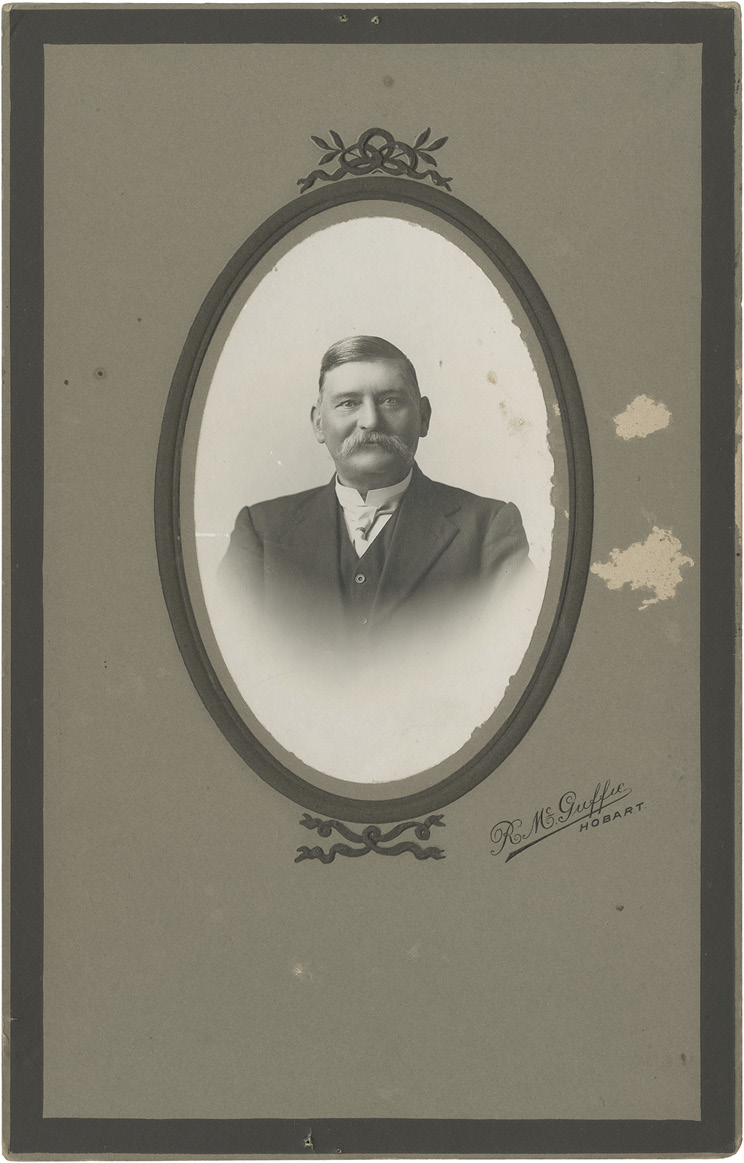
Figure 1: Thomas Bather Moore.
Source: Photographer: R. McGuffie. Courtesy of Tasmanian Museum and Art Gallery, Hobart, Q2017.6.9.1.
Expanding on source types can mitigate against the production of narrow life stories—exemplified by Crawford’s and McShane’s biographies.11 For example, artefacts, if used thoughtfully, may generate new lines of enquiry and surprising historical insights. Material culture studies is a methodology that starts with the premise that artefacts are inherently valuable as historical sources or prompts.12 Giorgio Riello, a proponent of this methodology, warns that it is not merely ‘history with things’, in which artefacts are read like texts or sources of historical information.13 He also stresses that scholars should not resort to writing ‘histories of things’ if they wish to gain the fresh insights or conclusions promised by this approach.14 Further, he insists that material culture ‘should not be used as an aid to enhance answers but for asking better questions’.15 Riello goes on to advise scholars to juxtapose ‘history and things’—that is, to deploy a looser, freer and more serendipitous technique of placing objects alongside and outside of history if they wish to take full advantage of them as sources.16
A deliberate reframing of the Moores’ lives along the lines suggested by Riello guides the following discussion.17 This article considers the interpretive utility of material culture and how it might be used to write about settler women like Mary whose lives have been passed over due to either a lack of, or biases within, conventional documentary sources.18 Two engraved silver napkin rings owned by the Moores are central to this case study. Implicated in several nineteenth-century, genteel, middle-class practices—gift giving, dining and housekeeping—the napkin rings highlight colonial domesticity and respectability on Tasmania’s western mining frontier. By placing them alongside narratives of gentility, Mary’s presence as a historical subject is enhanced and details of the social and domestic milieux abandoned by Tom start to emerge.
The Moores in the museum
The social history collection held by the Tasmanian Museum and Art Gallery (TMAG) in Hobart is the starting point for this object-led biographical account of Tom Moore and his wife Mary. The couple is materialised at TMAG in two donations. The first arrived in 2013 when John Mitchell of Hobart gifted an aneroid barometer (a portable device that measures atmospheric pressure and altitude) to the museum.19 Tom Moore had owned it before it was passed on to the donor’s father Benjamin John Mitchell, a surveyor like Tom. The names ‘T. B. Moore’ and ‘B. J. Mitchell’, scratched onto the back of the object, personalise the barometer and verify its provenance (although the details of the exchange or transfer of ownership are unknown). Like the transfer of its ownership to Benjamin Mitchell before him, the particulars of how John Mitchell came to possess the barometer are not recorded, although common sense would suggest that he inherited it from his father.20
The barometer is not the only object connected to the Moores in TMAG’s social history collections. In 2017, the museum received a gift from Tom and Mary’s granddaughter Margaret Elliston.21 This included five objects: a set of technical drawing instruments, a pocket barometer, a portable sundial, a magnifying glass and a pair of plate silver napkin rings engraved with the initials ‘T’ & ‘M’ (Figure 2).22 TMAG staff did not record specific information about the history, use or meaning of these items when they were acquired. Perhaps this was because the personal connection and autobiographical significance was obvious: four of the five objects are generic pieces of surveying equipment undoubtedly used by Tom. Clearly, they are by-products of his work.
The decorative napkin rings, which are functionally at odds with the four surveying tools, are a different matter. Their disconnection from Tom’s professional life makes it easy for biographers to ignore them. The lack of any provenance, even anecdotal, also obscures their evidentiary potential. But the adoption of a material culture studies methodology, and a commitment to unsettling the received version of Tom’s life story, offsets this incongruity, obscurity and absence. Approaching the napkin rings with curiosity and focusing on both owners, ‘T’ and ‘M’, instead of dismissing the objects as trivial anomalies, generates a more inclusive biography. In this case study, the napkins rings become an interpretive device, appreciated as material facts of Tom’s life as a married man and husband. This mode of engagement shifts the setting of his life story from the rough-and-ready, male-only bush camps of the west and south-west where he worked, to the Moores’ cottage in the coastal community of Strahan where he tried to settle down with his wife Mary.
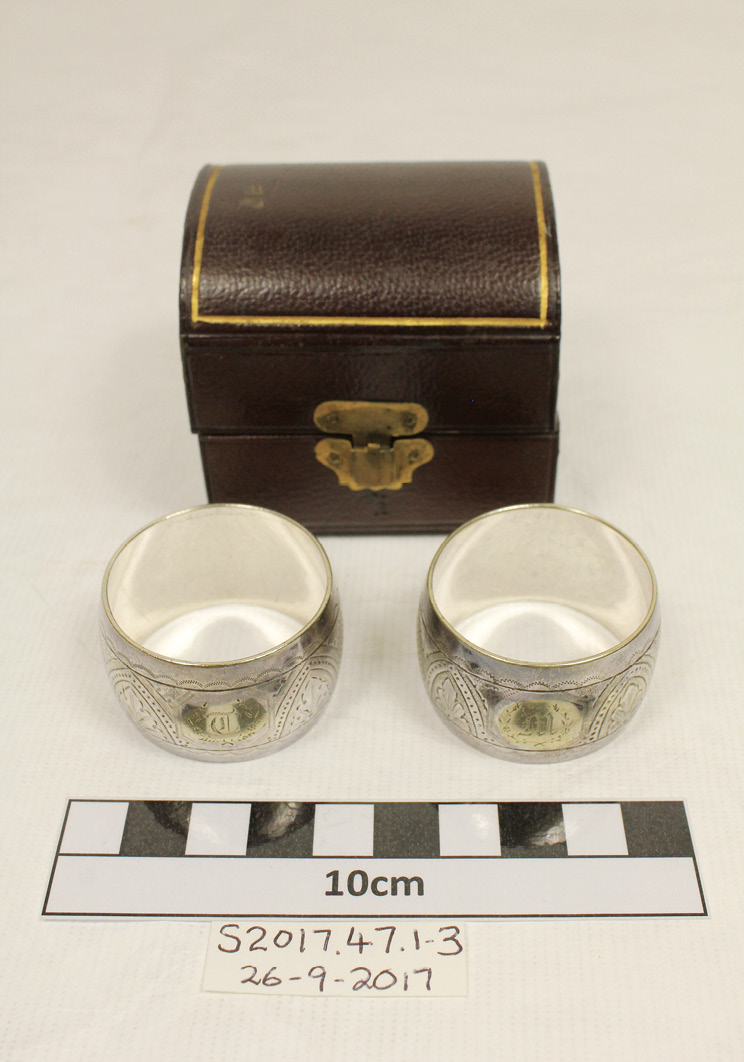
Figure 2: Two engraved napkin rings in a presentation box, unknown maker, c. 1889.
Source: Gift of Margaret Elliston, 2017. Courtesy of Tasmanian Museum and Art Gallery, Hobart, S2017.47.1-3.
Napkin rings and middle-class gift giving
At first glance, it is impossible to discern any empirical details about the engraved silver napkin rings. Their ownership is inferred by the two initials, but the objects themselves do not reveal any useful information. The initials and decoration are still legible—the engraving is still sharp, not worn down through repeated use or polishing. They lack a manufacturer’s mark, which makes it difficult to accurately date them, confirm their production or assess them within a history of silverware. But their potential for historical and biographical enquiry becomes apparent if attention is given to the broader, multiple social and cultural contexts within which such objects were acquired, exchanged, used and appreciated. As Riello observes, artefacts are ‘multifarious entities whose nature and heuristic value is often determined by the diverse range of narratives that historians bring with them’.23
The standard functions of napkin rings are an appropriate entry point for this case study. These utensils belong to a profusion of elaborate tableware and decorations that came to characterise formal middle-class social dining in the nineteenth century and into the twentieth. As a group, these objects were deemed necessary for the execution and demonstration of respectable table manners and polite dining. As historian Penny Russell has noted in her history of manners in colonial Australia, ‘mealtimes mattered … The rituals of the table served to refine, restrain, cultivate and elevate the act of eating.’24 Initialled or personal napkin rings were used to distinguish used table linen within a family household. A soiled napkin was rolled and pulled through an individually identified ring after use and stored until that person reused the same napkin at the next meal.
I will return to these two functions below. Before this, I want to consider Tom and Mary’s silver napkin rings alongside a narrative that illuminates their symbolic meanings. This narrative or context is the practice of giving gifts to mark significant life milestones. By the late nineteenth century, napkin rings—individually, in pairs, or in sets of 6 or 12—were popular gifts frequently presented at christenings, birthdays, weddings and anniversaries.25 The occasion at which the napkin rings were presented was most likely to have been Tom and Mary’s marriage in 1889. The pairing of the bride’s and groom’s initials and the custom-made box indicate they were presented as a sentimental token, and future family heirloom, that would remind the couple of both the gift giver and the day they were joined together as husband and wife (although this cannot be verified as a historical fact without documentation or a family anecdote).
Newspaper accounts give weight to this suggestion. Although it was uncommon to publish lists of wedding gifts in the press when Tom and Mary married, scattered reports in Australian papers from the end of the nineteenth century support this proposed provenance. For example, 10 months prior to the Moores’ nuptials, a Mr John Hart gave ‘plated serviette rings’ to one of the two Williams sisters when the siblings were married at a double wedding ceremony in Launceston.26 And in late 1899, a Mr and Mrs Neil Douglas, guests at the ‘pretty and stylish’ Brennan–Maher wedding in Kalgoorlie, gave the bride and groom a ‘beautiful pair of initialled serviette rings’.27 TMAG’s collections provide verifiable material evidence of this practice. The museum holds another pair of monogrammed silver napkin rings, described as a wedding present given to Hobart couple Ruth and Cecil Baldwin by Ruth’s parents Elizabeth and Henry Maning when they married in October 1918.28
Ostensibly, gifts given to Tom and Mary to celebrate their union would have ranged from the practical to the decorative. Wedding presents also operated in symbolic ways as media for the expression of social capital. Gifts usually conformed to shared aesthetic standards and signalled the economic capacity of the gift giver. They were tangible affirmations and assertions of the social position of both the gift giver and the recipients. They also acknowledged the gift giver’s familiarity with the newly married couple, their families and their material worlds. For example, as a senior colonial administrator, Mary’s father would have dined at Government House in Hobart with other members of the Tasmanian political elite, using decorative silverware and other accoutrement of official dining. And, finally, they denoted a certain standard of living and measure of taste that would influence how Tom and Mary furnished their home. That the couple owned and displayed possessions appropriate to their class was crucial given that their residence was to be in Strahan, seen by some as a settlement in need of social, moral and material improvement.
Napkin rings and genteel dining
The general social function of material culture is summed up by Daniel Miller and Christopher Tilley, the inaugural editors of the Journal of Material Culture. They observe that artefacts ‘are implicated in the construction, maintenance, and transformation of social identities’.29 More specifically for this discussion, James Symonds notes that, from the eighteenth century, ‘material expressions of status and social identity became commonplace at the table, and an integral part of dining in all but the humblest homes’.30 Similarly, archaeologist Sarah Hayes has observed of early colonial Melbourne’s ‘established middle class’, that ‘a well-set table was one of the most significant platforms for the display of gentility’.31 Repeated displays of such modes of consumption were critical because, as Penny Russell has shown, middle-class gentility was, in colonial settings, an inherently unstable identity that required social, visual and material reinforcement and policing.32
Historian Linda Young also draws specific attention to the dining table ‘as a public/private interface … [that] furnished the stage for the genteel performance of introduction, affiliation, connection and validation’ in the nineteenth century.33 Descriptions of table settings featured in press coverage of formal public dinners attended by notable or elite men. These occasions allowed diners to declare their social affiliations, both existing and aspirational, and to shore up any attendant anxieties if necessary. Published photographs of such events, viewed alongside images of private dining rooms, affirm the spectacular materiality of late nineteenth-century dining (Figure 3). Even minor ‘table furniture’, such as napkin rings, materialised the norms that determined the personal conduct and public selves of middle-class colonials.34 They were, in effect, tangible by-products of broader social expectations and everyday practices that defined and constrained Tom and Mary’s marriage and their domestic arrangements.
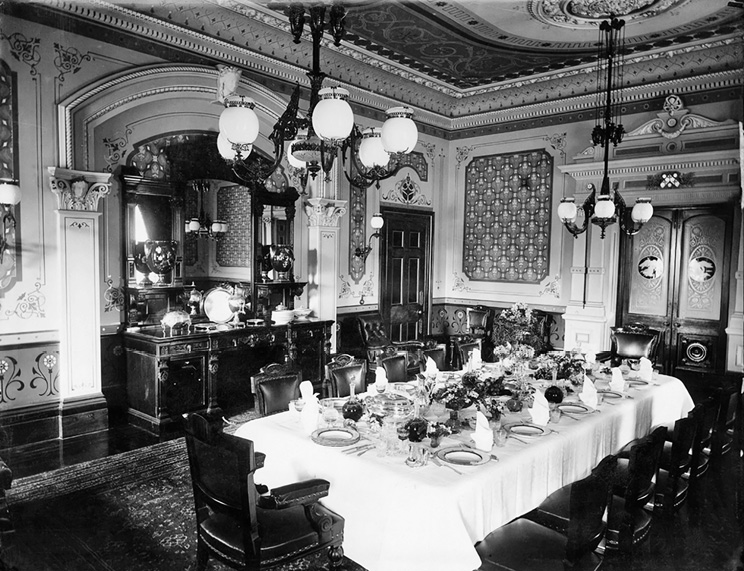
Figure 3: The Acacias, Marryatville, 1900.
Source: Photographer unknown. Courtesy of State Library of South Australia, Adelaide, B.3937.
Advice books reinforced the function of table settings as tableaux for performances of social status and civilised society.35 These publications proscribed an acceptable range of domestic objects for those eager to conform to middle-class social etiquette and material expectations. A 1901 Hobart edition of Mrs Beeton’s Cookery Book, for example, instructed that for a dinner party ‘the glass and silver should be right, the knives polished, the tablecloth and serviettes above reproach’, and that ‘nicely folded’ napkins should be ‘placed equidistant a little way from the edge of the table, with a roll or small thick piece of bread in or against them’.36Mrs Beeton’s also provided useful instructions for folding starched napkins into sculptural forms—‘the Sachet’, ‘the Fan’ and ‘the Mitre’.37 This suggests that napkin rings were not brought out to the table for social dining. But there are too many references in newspapers—including burglary reports—to matching sets of 6 and 12 to dismiss their usage in this context. In addition, not every hostess was inclined to follow this fashion or had the time or staff to fuss over napery.
Symons, Hayes and Young’s research, which shows that middle-class gentility was transmitted through static public and domestic spectacles while dining, is apposite for this discussion. According to these scholars, dining room tableaux declared a genteel host or household’s familiarity with respectable taste and consumption, as well as middle-class codes of conduct. Young also notes that this ‘genteel knowledge … was necessary to gather the correct goods, of the right combination, in the precise order, for just the purpose’.38 Within the context of the Moores’ home, initialled napkin rings would have served as discreet touchstones of their middle-class gentility.
Dianne Lawrence has made a similar point with respect to British migrant women in various nineteenth-century colonial settings—namely, that their gentility was ‘expressed through modes of behaviour in conjunction with material means’. For Lawrence, it is the material culture of ‘dress, living rooms, gardens and food management … [that] emerges as a critical mechanism for [the] ideological expression’ of colonialism.39 It follows that activities and objects associated with dining—the culmination of a range of domestic food management activities—warrant attention because of the role they played in consolidating colonial culture.
Napkin rings and laundry
In nineteenth-century Australia, dining was a dynamic practice and set of behaviours that deployed a rich array of paraphernalia carefully assembled for the active performance of colonial gentility. Textiles were essential for decorous dining, and hostesses were judged on the cleanliness of their table linen. This expectation of cleanliness at the table is glossed in Mrs Beeton’s admonition that a household’s linen had to be ‘above reproach’.40 For a successful dinner party, tablecloths and napkins were to be spotlessly clean, starched, ironed and folded before they were, in Mrs Beeton’s words, ‘made to look pretty … without being … obtrusive’ on the table for guests.41 Successful dining was, therefore, contingent upon what took place ‘behind the scenes’; the unseen and unspectacular activities that took place in the laundry were critical for genteel displays at the table.
Achieving appropriate levels of cleanliness was not a light task in colonial homes, especially in those with few or no servants. As B. W. Higman has noted in his history of domestic service in Australia, of all household labour, the ‘heaviest domestic work was commonly recognised to be that performed in the laundry’.42 It was a time-consuming endeavour undertaken once a week. Beforehand the copper was ‘filled with soft water, the tubs … well dusted and rinsed, the line tied up and the linen sorted’.43 Everything was assessed before the wash began, as different types of textiles and garments required special washing and drying techniques as well as cleansing agents and solutions. A ‘white’ wash, which included table linen, entailed the following sequence of activities: ‘soaking, washing, rinsing, boiling, rinsing, bluing, starching, hanging, drying, sprinkling, stretching, folding, ironing, and folding’.44 At the end of wash day, the equipment had to be cleaned and put away ready for next time.
Napkin rings were connected to the practical challenges of household management and the labour required to maintain the appearance of a clean and respectable home. With washing undertaken weekly, soiled table linen was not laundered immediately after a single use. Compromise was therefore necessary, and the reuse of napkins is a prime example. Monogrammed napkins and napkin rings helped to keep a household’s soiled linen in order, while also avoiding the accidental and uncouth reuse of linen by other family members. Personalised napkin rings are tangible proof of this concession, of balancing the demands of housekeeping with middle-class manners and the need to demonstrate domestic neatness. Even Mrs Beeton’s acknowledged this practice, noting that ‘if used a second time’ breakfast napkins were to be ‘simply run through a ring’.45
Settling in Strahan: New social networks
Although they were modest wedding gifts, Tom and Mary Moore’s silver napkin rings had numerous social, symbolic and practical functions that they might fulfill for the couple. But this meant little to the pair on their honeymoon, when they had no use for formal dining etiquette or its paraphernalia.46 Most of the pair’s journey to Strahan was on horseback with a stubborn packhorse carrying bare essentials. Wedding presents, personal belongings and household goods were no doubt conveyed to their new home by other means. Tom was very familiar with living rough in the bush, but it was exceptional for a woman of Mary’s social position. Her temporary release from ‘civilisation’ could be tolerated for a brief period; however, after the couple arrived in Strahan, Mary could not eschew the material comforts of a discerning middle-class household. This was because, like other women of her class, Mary’s home ‘not only provided [her with] respectability but also determined her place in the social hierarchy, since this was closely linked to the appearance and organisation of the home’.47
Strahan had existed for less than a decade when Tom and Mary started their married life there, settling on the unceded Country of the Lowreenne and Mimegin people, a place also visited by Peternidic people from the north-west and Ninene people from the south-west. The first Europeans to live there had been secondary offenders imprisoned at the penal settlement that opened in 1822 on Settlement (later Sarah) Island (Langerrarerouna) in the middle of the rough and unpredictable Macquarie Harbour. In the 1830s, the penal settlement buildings doubled as a temporary holding place for 55 Tasmanian Aboriginal men, women and children forced off Country as part of ‘Aboriginal Conciliator’ Augustus Robinson’s so-called ‘friendly mission’. These people who had been expelled from Country were destined to be exiled to the Wybelenna Aboriginal Establishment on Flinders Island. Sixteen did not survive their brutal interim incarceration.48
It was the discovery of minerals in Tasmania’s west some decades after this unconscionable episode in the region’s history that prompted an influx of white settlers to western Tasmania. From the early 1880s, Strahan serviced this booming economy and its largely peripatetic community (Figure 4).
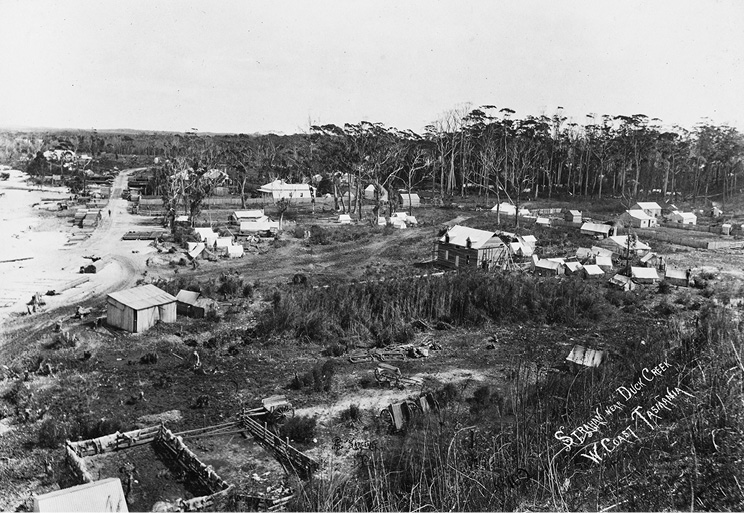
Figure 4: Strahan near Duck Creek, West Coast Tasmania (no. 102), late 1880s.
Source: Photographer: probably Albert Sargeant. Courtesy of State Library and Archives of Tasmania, Hobart, PH23/1/3.
Strahan’s upright residents must have eagerly anticipated the arrival of the Moores, a couple with enviable social credentials who would act as civilising agents in a region often referred to as the wild west. Tom, the inspector of public works and already known in the town, was involved in the development and economic expansion of the region. The introduction of his new wife and the promise of a family was equally propitious for advancing the community. As in other frontier settlements, Mary would assume the gendered task of refining the small town’s social and moral character. The Mercury’s local correspondent hinted at this task ahead, declaring that the ‘advent of Mrs T. B. Moore, the bride of the Inspector of Roads’, was an ‘agreeable addition’ to the town’s ‘lady residents’.49
Mary’s domestic activities and social rounds are noted in a diary she kept in 1892, three years after her arrival in Strahan.50 The settlement was by now showing signs of progress as it approached a decade since its official founding and gazetting. The town boasted a state school and was linked by rail to the nearby mining centre of Zeehan; construction of an Anglican Church had commenced and the Bishop of Tasmania had been feted as a visitor to the region.51 Tom and Mary were still living in Rosedale, the cottage they had occupied since their arrival in January 1889, now sharing it with their growing family. Their first son, Lawrence, had been born in 1890 and their first daughter, Margaret, the following year. A second daughter, Mary, was born shortly after Mary Moore stopped writing her diary.52
Mary’s diary is a terse record of the practicalities of living in a small, isolated community, and the activities that kept a middle-class mother of two busy. It was clearly not used for self-reflection, commentary or confession. The diary’s brevity and neutral tone are barriers to accessing Mary’s thoughts and feelings, yet, at the same time, invite speculation about her interior world.53 Her 27 matter-of-fact entries describe a narrow range of family and domestic concerns: housework, childcare, going to town, interactions with tradesmen, correspondence, gardening, washing and ironing, sewing and mending, visiting and receiving visitors, baking and attending church. Tom, mentioned in just four entries, came and went from Strahan at least 12 times that year due to his prospecting activities in the Tyndall Range.54 His restlessness provides a counterpoint to Mary’s spatially confined routine, which was circumscribed by her class and gender.55 This confinement is also marked when compared to the physical and social freedom of her ‘romantic bridal tour’ three years earlier.
Encounters with individuals noted by Mary reveal the neighbourly sociability and support that defined middle-class life in a small frontier town such as Strahan. From these interactions we can discern genteel culture adapted to the circumstances of living among a new community that was, for the most part, not intimately connected. Mutual aid between unrelated residents was a response to the lack of family support and the difficulties of securing domestic help in a region far from any centre of population. Only in the weeks leading up to the birth of the Moores’ third child did Mary mention someone who was perhaps employed to assist her around the house—this was ‘Alice’, who helped with childcare, light housework and food preparation.56
The women and men whose names appear in Mary’s diary confirm the Moores’ social position in the town. This circle consisted of members of the community’s middle-class professional families. Mary’s acquaintances included Nellie Urquhart (her husband Duncan Campbell Urquhart was a solicitor and later a politician); Mr and Mrs Fowells (Mr Fowells was the commissioner of Strahan); Mr and Mrs Gillon (Mr Gillon was a mason whose sister was married to Mr Conlan, Strahan’s superintendent of police); and Mr Harris (Rev. J. Oberlin Harris). The heads of these households were responsible for establishing and keeping order in the town, and developing its infrastructure, while their wives—Strahan’s ‘lady residents’—were expected to maintain middle-class domestic and community standards. These women would have been accustomed to genteel rituals, such as calling and drinking tea together, and running households discreetly furnished with possessions comparable to those owned by the Moores.
Mr and Mrs William Prior Hales, who arrived in Strahan at the end of 1889, were possibly the Moores’ closest social peers. Tom and Mary’s selection of Mr and Mrs Hales as godparents to their third child confirms their social intimacy, shared faith and family connections.57 While working in New Zealand in the 1870s, William Hales had married Marion Chilman, the daughter of a member of the provincial government of Taranaki in the North Island. William was a civil engineer who supervised the construction of the railway from Strahan to Zeehan. His father was the archdeacon of northern Tasmania. Through church business and diocese matters, he would have been acquainted with Mary’s father, who was an active member of Hobart’s St David’s Anglican Church.
Marion Hales, several years older than Mary, may have provided something approximating the kin support that Mary would have received had she and Tom lived closer to or in Hobart. Unfortunately, social interactions with Marion Hales were infrequent during the period covered by Mary’s diary—just a chance meeting while she and Tom were out on errands and two afternoon social calls. However, its pages reveal how the two households offered mutual support in other ways. Fourteen-year-old Annie Hales and 10-year-old Marion, known as May, often helped Mary around the house or looked after the Moore children at one or other of the two families’ homes. Mary reciprocated in kind by supplying the Hales with vegetables, milk and butter. Mary also recorded that Marion Hales gave her small gifts—some ‘lovely flowers’ and ‘lovely fruit’—and came to Mary’s aid when the Moores’ eldest daughter was ill and Tom was away on business.58
Laundry in Strahan
Mary’s diary is peppered with references to local businesses, acquaintances, neighbours, family members and friends. She relied on many of these people to support her and to sustain her social position in a frontier town isolated from other settler communities. But descriptions of the household’s material culture, which according to Lawrence is a ‘critical mechanism for the ideological expression of colonialism’ as well as class and gender, are rare. Mary mentions only a handful of objects aligned with her chores: sewing children’s clothing and a combing jacket, covering a children’s pram, assembling a medicine chest and mending a carpet. Extended descriptions of dining and its material culture are absent.59 There are, however, six entries referring to washing, drying, ironing and folding:
Monday 1 February: [G]ot the washing mostly dry[.] [I]n the evening ironed.
Tuesday 2 February: May [Hales] finished ironing early.
Monday 8 February: Lovely day[.] [W]ashing in pretty well folded by 3pm.
Tuesday 9 February: Ironed in the morning May [Hales] finished.
Tuesday 12 July: [W]indy. [C]lothes got dry during the morning[.] [A]fter dinner got clothes in + folded + commenced ironing.
Wednesday 13 July: I finished ironing & put away clothes.60
Mary does not go into detail about what was washed, ironed, folded and put away—whether the items were personal or household linen, Tom’s working clothes, her own garments or her children’s. But these bare accounts intimate the presence of the napkin rings hovering just beyond the page, the entries offering a glimpse from a distance into Rosedale’s dining room. It is entirely feasible that 10-year-old May Hales was helping her neighbour by ironing the simplest items, such as flat table linen, including napkins, rather than delicate or complicated items, and that the napkins that Tom and Mary might have used several times were perhaps rolled and pulled through the initialled napkin rings to keep them separate and orderly until the next wash day.
A visitor to Strahan: Extended family networks
Mary’s 1892 diary records her personal networks in Strahan, yet it contains few direct references to family members living elsewhere who were equally if not more important for the affirmation of her social status. No visits to or from kin are mentioned, but her references to letter writing and frequent trips to the post office indicate the importance of correspondence for keeping in touch with others. However, a casual remark made by Mary in the first entry of her diary, interrogated closely alongside material culture sources, reveals that at least one member of her extended kin network visited Strahan in 1892. The day in question, Wednesday 20 January, passed uneventfully. Tom worked at home on the shed and Mary occupied the children by taking them down to Gaffney’s store in Strahan for the mail. After tea, she and Tom went to the post office where they had a chance meeting with Mrs Hales and a discussion with a timber merchant. Mary also noted that she: ‘Saw Miss Mitchell about Gordon trip. Wrote to Mr Henry about the same.’61
It takes some effort to interpret the substance of these two brief sentences. ‘Gordon’ refers not to a person but to the wide, forest-edged river that flowed into Macquarie Harbour. Mr Henry, the town’s leading merchant, ran steamer excursions up-river and to Sarah Island (the site of the former penal settlement) in the middle of the harbour. Notably, this is the first and only time that Mary mentions Miss Mitchell in her diary. Yet some acquaintance must have existed between the two women for Mary to have been attentive to a ‘stranger’ in this way. Their interaction prompts several questions: who was Miss Mitchell, how did the two women know each other and what was the nature of their relationship?
The Moores’ silver napkin rings, very plausibly a wedding gift and a touchstone of social or familial intimacy consolidated through marriage, suggests a possible line of enquiry: did the two women share a marital connection? This theory turned out to be correct, although, paradoxically, it was a piece of Tom’s field working equipment—the barometer donated to TMAG by John Mitchell in 2013—that establishes a link of this nature between the two women. The two inscriptions on this object, ‘T. B. Moore’ and ‘B. J. Mitchell’, unambiguously tie the Moores to the Mitchells—and the Sollys. Genealogical records confirm B. J. Mitchell’s parents as Annie Margaret, nee Solly (Mary’s younger sister) and Edwin Harry John Mitchell (Miss Mitchell’s elder brother). Mary Moore and Miss Mitchell had a relationship through their two siblings’ marriage; both were aunts of Benjamin John Mitchell, the second owner of Tom Moore’s barometer.
The Mitchells were a prominent settler family, long-established on the east coast of Tasmania. Edwin’s father John Mitchell (who died in 1880) had been a surveyor and government administrator. From the early 1850s, the family resided south of Swansea at their Lisdillon property. The Lisdillon visitors’ books kept from 1866 to 1897 confirm the acquaintance between the Sollys and the Mitchells. Benjamin Travers Solly first visited in 1874.62 Daughters Jane Solly (as Mary was known before her marriage) then stayed for several weeks in 1877–78, followed by Annie in 1878 and 1880.63 After Annie and Edwin’s marriage in 1882, the couple lived at Mayfield, another Mitchell property, and were in regular contact with Sarah and the widowed Mrs Mitchell who continued to live at Lisdillon. Annie’s younger siblings also visited Lisdillon whenever they stayed with their married sister at Mayfield.
The discovery of Miss Mitchell’s identity serendipitously leads to a source not consulted by Tom Moore’s biographers—one that contains valuable glimpses of Tom and Mary Moore’s domestic life in Strahan. This was Sarah Mitchell’s 1892 diary, in which she recorded details of a fortnight’s sketching and sightseeing tour of the West Coast that she and a friend, Harriet Mayson, took in January.64 The region is filtered through Sarah’s eyes—a 38-year-old, unmarried Anglican lady—and illustrated in the 20 or so sketches she made during the sojourn, illuminating details of life in Strahan not documented by Mary Moore.65
Sarah and Harriet had travelled overnight on 12 January from Hobart to Strahan aboard the coastal steamer Banks Peninsula, staying at Gaffney’s hotel conveniently located opposite the Moores’ cottage. Mary was soon informed of the safe arrival of the two friends: in Sarah’s words, ‘after dinner’ she and Harriet ‘called on Mrs Moore (nee Mary Solly)’.66 Sarah’s use of Mary’s maiden name is a reminder of their relationship prior to Mary’s marriage—that is, that they were in-laws once removed and extended family by marriage. The practice of making immediate personal contact followed prevailing middle-class etiquette: it would be assumed that Sarah would call upon her ‘kin’ through marriage while she was in Strahan. The Moores could provide Sarah and Harriet with the security, sociability and introductions required by respectable ladies travelling in a wild region without a male companion.67
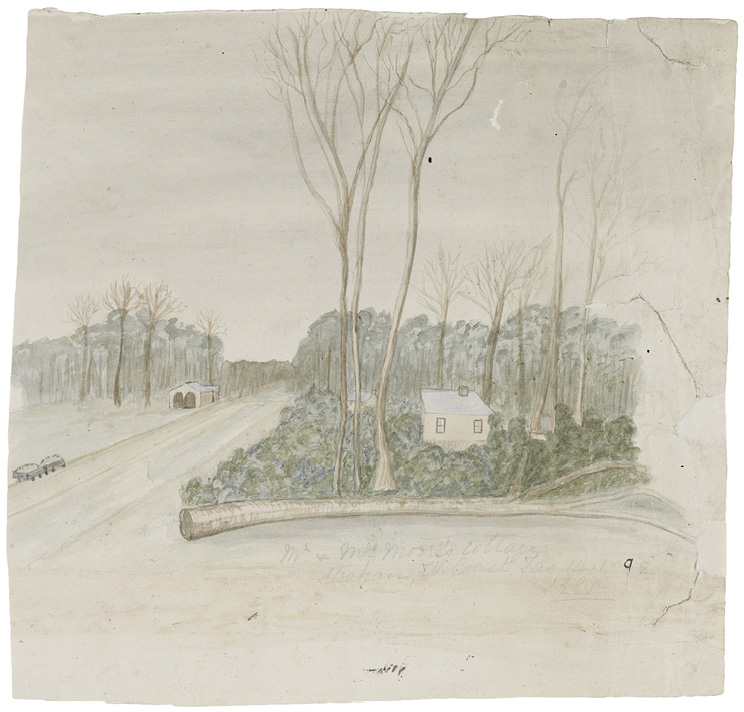
Figure 5: Mr & Mrs Moore’s cottage, Strahan, sketch by Sarah Mitchell, 1892.
Source: Courtesy of Tasmanian Museum and Art Gallery, Hobart, AG3353.604.
Mary called on the two friends on the evening of their arrival, inviting them to socialise with Tom and herself the next day. On the afternoon of their second day in town they were collected by the Moores after dinner, just as Sarah was finishing ‘an outline’ of their cottage drawn from the balcony of the women’s hotel (Figure 5). This was the first of several interactions with the Moores. Governed by good manners, and the middle-class practice of ‘calling’ after tea, these visits kept the Moores abreast of the pair’s movements as they travelled beyond Strahan. The four also dined together twice, with Tom obliged to meet the social demands of welcoming his wife’s extended family network. Both featured the civilised ritual of afternoon tea. Sarah described one of these as ‘4oc tea’, which was followed by a walk to the Moores’ block of land just out of town; the other, after a long day sketching at Lake Bellenger, saw Sarah and Harriet going ‘over to tea + evening with Mr + Mrs Moore’.68 Mary, interestingly, did not record these social occasions in her diary, and Sarah’s notes are brief.69 It goes unwritten that adhering to shared understandings of genteel dining would have entailed extra work for Mary, to prepare her home and food for the visitors, and for special attention to be paid to table settings and civility.
These occasions would have been opportunities for the exchange of trans-coastal family news, with Sarah acting as the link between the two Solly sisters Mary and Annie.70 Such social engagements were part of a widely understood repertoire of intimate and proforma performances that consolidated the social capital of respectable settler families like the Mitchells, the Sollys and the Moores.71 Reciprocal sociability and useful introductions were also critical to these middle-class family relationships. The interactions between the Hale and Moore households described above were one manifestation of this principle and Sarah’s and Harriet’s potential Gordon River excursion on Mr F. O. Henry’s steamer Meteor, brokered by Mary, was another. In Sarah’s words, she ‘got a note from Mrs Moore to Mr Henry + took it [to him] hoping to be asked to the [Harbour] heads today’.72 When the trip did eventuate, two days later, Mary’s intervention served Sarah’s artistic aspirations well. This private trip, put on for several prominent men visiting the district, was notable for the number of sketches she produced—six in total—of the river, the harbour and the penal settlement ruins on Sarah Island.73
The large number of calls that Sarah Mitchell made before she and Harriet left Strahan on 26 January underscores her commitment to, and performance of, genteel social forms—although the two friends’ sketching adventures in the district appear to be odds with these conventions of middle-class women’s behaviour. Sarah wrote that on the morning of their penultimate day in town, the two friends ‘went calling’ on a variety of people. Some of these townsfolk had a prior connection to her; others had been of assistance during her visit: ‘Mrs Charley Quin (nee Harriet Belette)’, whose wedding Sarah had attended in 1879;74 Katey Page, an ‘old servant’ of Sarah’s sister Amy; the police superintendent, Mr Conlan; Mr F. O. Henry; Mary Moore; and Ronald Giblin (the brother of Sarah’s brother-in-law Herbert Giblin who was her sister Amy’s husband), who happened to be in Strahan as well.75
Tom was not on the list of people who received a final farewell from Sarah Mitchell. He may have been working away from the Moores’ cottage that morning or further afield on business. Whatever the reason, genteel social etiquette along these lines was not a priority for him, and through his surveying, prospecting and pioneering field work he escaped its demands. Still, the napkin rings are a tangible reminder that Tom was tied to middle-class social networks and manners, even if, ultimately, they were of little consequence to him. It was another matter for his wife Mary, who, like Sarah Mitchell, was bound to the social performances and material culture ascribed to her because of her gender, class, marital and domestic situation, and her place of residence. While Tom and Mary’s initialled napkin rings signified their union and status as a respectable married couple, ultimately the performance of their middle-class gentility in Strahan was a solo act given by Mary.
Conclusion
Literary biographer Hermione Lee says of her 2005 collection of essays, Body Parts, that it:
begins and ends, not with whole life-stories, but with relics, legends and fragments, with the parts and bits and gaps which are left over after the life has ended. That’s what biographers use to piece their stories together, trying to make a solid figure, embodied on the page, out of what has gone on.76
This article has used ‘relics, legends and fragments’ to give Mary Moore greater substance than she is afforded by her husband’s biographers. It has presented vignettes of Mary’s life, set in Strahan where she managed a household, raised a family, mixed with townsfolk and maintained links with her extended family. The central relic has been a pair of silver engraved napkin rings; the legend that of Tom and his reputation as an antisocial explorer of Tasmania’s west; and the fragments, the 27 entries in Mary’s 1892 diary. Tom Moore’s barometer, handed down through the Mitchell family, and Sarah Mitchell’s diary and sketches from 1892, have also contributed to this initial exploration of colonial middle-class married life informed by material culture studies.
In treating the napkin rings seriously as an interpretive device, this case study has revealed the utility of material culture for biographical research and how it can be used to write about women, like Mary, whose lives have been overshadowed by accounts of their pioneering husbands. It has intentionally placed objects alongside narratives of gentility, specifically of gift giving, consumption and display, dining and housekeeping. This approach has augmented Mary as an historical subject and provided more information about the domestic and social milieu that she occupied but Tom deserted.
Tom’s vast occupational archive towers over and obscures Mary’s scant personal records. In this article, objects have been used to address this textual imbalance between husband and wife. Artefacts have not displaced texts and images. Rather, they have prompted a different set of questions than the ones posed by Tom’s biographers, prompting curiosity about Tom’s homelife as a married man and the expectations imposed on him and his wife because of their social and familial networks. Documentary and pictorial sources have supplied supporting empirical evidence about objects, the settings in which they were used and circulated, as well as their functions, meanings and significance.
The two engraved silver napkin rings owned by Tom and Mary Moore have brought into focus aspects of domesticity and respectability on Tasmania’s western mining frontier in the late nineteenth century. As a gift to a married couple, they were a tangible expression and memento of social connections and status; as table accessories, they indicated a household’s knowledge and expectations of genteel consumption, practices and performances; and as personalised utensils, they were connected to the demands placed on married women charged with keeping clean and respectable middle-class homes. It is unlikely that these historical concerns would have surfaced had this case study focused solely on the four objects corresponding directly to Tom’s life. While, in hindsight, the empirically opaque initialled silver napkin rings are an ironic metaphor for a failed marriage, their use in this case study has productively drawn out moments when Tom and Mary Moores’ colonial middle-class respectability, especially Mary’s, was materialised and performed in Strahan.
Acknowledgements
The bulk of the research for this article was undertaken while the author was a senior curator at TMAG. The author would like to thank the editors of this special issue, a peer reviewer for their useful comments, and the institutions and rights’ holders for supplying images and granting permission for the use of pictorial and archival material.
1 Mercury (Hobart), 16 January 1889, 1.
2 Patsy Crawford, The Track Cutter: The Life of Thomas Bather Moore (Foot & Playsted, 2020), chs 16 and 17.
3 Crawford, The Track Cutter, 21 and ch. 7.
4 Mercury (Hobart), 16 January 1889, 1.
5 Mary Moore to her family, February 1889, in Crawford, The Track Cutter, 239. The original letter is R2017.28.42, Documents Collection, Tasmanian Museum and Art Gallery, Hobart (hereafter TMAG).
6 Mercury (Hobart), 30 January 1889, 2.
7 C. J. Binks, Explorers of Western Tasmania (Mary Fisher Bookshop, 1980).
8 Crawford, The Track Cutter, 228.
9 Ian McShane, ‘Moore, Thomas Bather (1850–1919)’, Australian Dictionary of Biography, National Centre of Biography, The Australian National University, published first in hardcopy 1986, accessed 6 April 2022, adb.anu.edu.au/biography/moore-thomas-bather-7642/text13361.
10 These were transferred in 2004 from the West Coast Heritage Centre, Zeehan, to the Documents Collection, TMAG. A volunteer, Pam Stewart, later transcribed them.
11 An exemplary biography of a colonial Tasmanian woman that overcomes its subject’s barely documented life is Mary Hoban, An Unconventional Wife: The Life of Julia Sorrell Arnold (Scribe, 2019).
12 See, for example: Karen Harvey, ed., History and Material Culture: A Student’s Guide to Approaching Alternative Sources (Routledge, 2017), doi.org/10.4324/9781315165776.
13 Giorgio Riello, ‘Things That Shape History: Material Culture and Historical Narratives’, in History and Material Culture, 32.
14 Riello, ‘Things That Shape History’, 32.
15 Riello, ‘Things That Shape History’, 32.
16 Riello, ‘Things That Shape History’, 29.
17 This follows my interpretation of the couple’s story in a social history exhibition, West: Out on the Edge, curated for TMAG and open from 6 December 2019 to 18 October 2020.
18 For a similar approach using textiles and textile practices on the Victorian goldfields, see: Lorinda Cramer, Needlework and Women’s Identity in Colonial Australia (Bloomsbury, 2019), doi.org/10.5040/9781350069657.
19 Barometer with inscription, S2013.10, Social History Collection, TMAG.
20 The beneficiaries of Benjamin John Mitchell’s will (1896–1979) were Christopher John Mitchell and Sydney Mark Mitchell. See AD90-1-181, Will Number 70820, Tasmanian State Archives, Hobart (hereafter TA).
21 Margaret Elliston was the daughter of Margaret Moore, the only child of Tom and Mary Moore to marry. The couple’s five children were Laurence Bather Moore (1890–1901); Margaret ‘Greta’ Bather Moore (1891–1968); Mary Bather Moore (1892–1976); Thomas Cliffe Bather Moore (1895–1975); and Jean Travers Bather Moore (1899–1985).
22 Set of technical drawing instruments, S2017.44; pocket barometer, S2017.47.1-2; portable sundial, S2017.44.a-c; magnifying glass, S2017.48, napkin rings, S2017.47.1-3, Social History Collection, TMAG. At the same time, miscellaneous documents connected to the Moore family were added to the Documents Collection, TMAG.
23 Riello, ‘Things That Shape History’, 33.
24 Penny Russell, Savage or Civilised? Manners in Colonial Australia (University of New South Wales Press, 2010), 216. Russell’s specific focus is on the transmission of mealtime manners to children.
25 Napkin rings were also popular Christmas and farewell gifts and were sometimes presented as tokens of thanks. For the meanings of wedding presents in Britain in the second half of the twentieth century, see: Louise Purbrick, ‘Wedding Presents: Marriage Gifts and the Limits of Consumption: Britain, 1945–2000’, Journal of Design History 16, no. 3 (2003): 215–27, doi.org/10.1093/jdh/16.3.215.
26 Daily Telegraph (Launceston), 23 March 1888, 1.
27 Kalgoorlie Western Argus (Kalgoorlie), 30 November 1899, 12.
28 Stamped ‘C75’. Wedding presents to C. & R. Baldwin from E. L. and H. Maning, [1918] P2010.439, Decorative Arts Collection, TMAG.
29 Daniel Miller and Christopher Tilley, ‘Introduction’, Journal of Material Culture 1, no. 1 (1996): 5, cited in Lorinda Cramer, ‘Rethinking Men’s Dress through Material Sources: The Case Study of a Singlet’, Australian Historical Studies 52, no. 3 (2021): 425, doi.org/10.1080/1031461X.2020.1772328.
30 James Symonds, ‘Introduction’, in Table Settings: The Material Culture and Social Context of Dining, AD 1700–1900, ed. James Symonds (Oxbow Books, 2010), 1. For the array of equipage required for genteel dining and its apex, the dinner party, see: Linda Young, ‘Gentility: A Historical Context for the Material Culture of the Table in the Long 19th Century, 1780–1915’, in Table Settings, 139–42. See also recommendations in the advice book by Mrs Loftie, The Dining-Room (MacMillan & Co, 1878).
31 Sarah Hayes, ‘Gentility in the Dining and Tea Service Practices of Early Colonial Melbourne’s “Established Middle Class”’, Australasian Historical Archaeology 29 (2011): 39.
32 See also: Penny Russell, A Wish of Distinction: Colonial Gentility and Femininity (Melbourne University Press, 1994), ch. 2.
33 Young, ‘Gentility’, 142.
34 The Dawn (Sydney), March 1890, 10, cited by Russell, Savage or Civilised? 218.
35 For a discussion of etiquette literature in colonial Australia, see: Russell, Savage or Civilised? 193–8.
36 Mrs Beeton’s Cookery Book. A Household Guide. All about Cookery, Household Work, Marketing, Prices, Provisions, Trussing, Serving, Carving, Menus, Etc. Etc. (J. Walch and Sons, 1901), 275.
37 Mrs Beeton’s Cookery Book, 265–6.
38 Young, ‘Gentility’, 139.
39 Dianne Lawrence, Genteel Women: Empire and Material Culture, 1840–1910 (Manchester University Press, 2012), 3.
40 Mrs Beeton’s Cookery Book, 275.
41 Mrs Beeton’s Cookery Book, 275.
42 B. W. Higman, Domestic Service in Australia (Melbourne University Press, 2002), 144.
43 Eliza Darling, Simple Rules for the Guidance of Persons in Humble Life; Most Particularly Young Girls Going Out to Service (James Tegg, 1837), 102; Mrs Lance Rawson, Australian Book of Household and General Information: A Practical Guide for the Cottage, Villa and Bush Home: Recipes and Information upon Everything and for Everyone (Kangaroo Press, 1984), 102–8. [Originally published 1894.]
44 L. Ray Balderston, Laundering, 3rd ed. (L. R. Balderston, 1918), 69.
45 Mrs Beeton’s Cookery Book, 269.
46 Crawford, The Track Cutter, 235.
47 Penny Russell, ‘In Search of Woman’s Place: An Historical Survey of Gender and Space in Nineteenth-Century Australia’, Australasian Historical Archaeology 11 (1993): 28.
48 Julie Gough, ‘Langerrareoune (Sarah Island)’, The Companion to Tasmanian History, accessed 5 September 2025, www.utas.edu.au/library/companion_to_tasmanian_history/L/Langerrareroune.htm; N. J. B. Plomley, ed., Friendly Mission: The Tasmanian Journals of George Augustus Robinson 1829–1834, 2nd ed. (Queen Victoria Museum and Art Gallery, 2008), ch. 6.
49 The Mercury (Hobart), 30 January 1889, 2.
50 Another diary kept by Mary in 1888, the year before her marriage, has also survived. Both diaries were filed among Tom’s field notebooks but not verified as Mary’s until 2019. See R2004.112 (1888) and R2004.115 (1892), Documents Collection, TMAG.
51 See Zeehan Dundas Herald (Zeehan), 16 March 1892, 4; 8 April 1892, 3.
52 After cross checking dates and events, it is very likely that the entries written by Mary in November were recorded in 1905. These have not been considered in this discussion.
53 Thanks to the anonymous peer reviewer who offered suggestions for a psychologically informed and feminist reading of Mary Moore’s diary.
54 Crawford, The Track Cutter, 114.
55 Mary’s name does not appear on Tasmanian shipping lists for 1892.
56 Mary Moore diary, 12–16 July 1892, R2004.115, TMAG.
57 Thomas Bather Moore diary, 4 September 1892, R004.114, TMAG. William and Marion Hales’ eldest child Annie also attended the christening.
58 Mary Moore diary, 4 February and 11 February 1892, R2004.115, TMAG.
59 Mary’s references to dining or meals are used to demarcate time, for example: ‘After dinner Mrs Gillon came + stayed a good time.’ Mary Moore diary, 14 July 1892, R2004.115, TMAG.
60 Mary Moore diary, R2004.115, TMAG.
61 Mary Moore diary, 20 January 1892, R2004.115, TMAG.
62 Lisdillon Visitors’ Books, 1866–99, RS32/80, Royal Society of Tasmania Collection, University of Tasmania Special and Rare Collections, University of Tasmania Library, Hobart (hereafter RST: UTas).
63 Lisdillon Visitors’ Books, 1866–99, RS32/80, RST: UTas.
64 See: RS32/22, RST: Utas. Sarah visited Strahan alone in 1900, but this trip is not in scope for this article. Sarah Mitchell was a prolific and dedicated diarist, keeping one from 1866 until her death in 1946, aged 93.
65 These sketches, along with hundreds of others made by Sarah Mitchell, are in the Art Collection, TMAG.
66 Sarah Mitchell diary, 13 January 1892, RS32/22, RST: UTas.
67 The pair also carried letters of introduction to ‘Chiefs of Police’ in the district who could step in if they needed assistance and protection. Catherine Mitchell to Frank Mitchell, 30 January 1892, NS6161/1/34, TA. Police Superintendent Conlan met Sarah and Harriet and organised their luggage when they arrived in Strahan. Sarah Mitchell diary, 13 January 1892, RS32/22, RST: Utas.
68 Sarah Mitchell diary, 20 January 1892, RS32/22, RST: UTas.
69 20 January is the only entry made that month by Mary and the only one that coincides with Sarah Mitchell’s visit. Sarah and Harriet Mayson left Strahan on 26 January; Mary resumed her diary on 1 February.
70 During Sarah Mitchell’s visit, Mary must have suspected or known that she was pregnant with her third child (who was born on 21 August 1892), but this news, of great interest to her family, is unlikely to have been shared with Sarah and Harriet.
71 On the function of calls, see: Russell, A Wish of Distinction, 50–5.
72 Sarah Mitchell diary, 20 January 1892, RS32/22, RST: UTas.
73 Sarah Mitchell diary, 22 January 1892, RS32/22, RST: UTas. The six sketches are: AG3353.443–445, AG3353.450–452, Art Collection, TMAG.
74 Sarah Mitchell diary, 21 April 1879, RS32/9, RST: UTas. See also RSRGD 37/1/38 no. 234, TA.
75 Sarah Mitchell diary, 25 February 1892, RS32/22, RST: UTas.
76 Hermione Lee, ‘Introduction: Writing about Lives’, in Body Parts: Essays on Life-Writing (Pimlico, 2008), 5.
Previous Next



