


 menu
Australian Journal of Biography and History: No. 11, 2026
Jean Bellette and her gift to artists
Introduction
In a study of donors to Australian public cultural institutions, I researched the lives of significant philanthropists through the lens of their bequests since Federation in 1901. I employed wills as a primary source alongside scholarly work in Australian history, art history, museum studies, not-for-profit studies, sociology and contemporary fundraising theory. From this broader study, I examined six donors in detail because their bequests had impact, longevity or an unusual story that arose from the wishes they imposed on the benefitting institutions across more than a century.1
This article focuses on the Tasmanian-born artist Jean Bellette, who left the state to pursue her art practice and lived much of her adult life in Europe. Bellette painted professionally using her maiden name but her will was lodged in Australia with the Supreme Court of New South Wales (NSW) under her married name of Haefliger.2 Bellette died in Spain in 1991 and this research illuminates her legacy as a significant, yet overlooked, female artist and benefactor who fostered the careers of others both during and beyond her lifetime. Bellette did not return to her state of birth but she maintained connections with fellow Tasmanians, such as composer Peter Sculthorpe and her long-time friend Nell Reid.3 A small selection of Bellette’s artworks are held at the Tasmanian Museum and Art Gallery (TMAG).4
This is a historical analysis of a bequest and is not couched as legal history; however, working with wills as lawful documents required an acquaintance with relevant legal principles. This was obtained through consulting seminal texts such as Hutley’s Australian Wills Precedents and Law of Charity.5 The work of Rosalind Croucher (nee Atherton) on the history of Australia’s testamentary laws was relevant to Bellette’s bequest, which slipped into the cracks between her wishes and her will.6
The artist’s journey
Jean Bellette was born in Hobart on 25 March 1908 to Emma (nee Hall) and Edwin (Ned) Bellette.7 She spent her childhood in the rural north of Tasmania then attended the Quaker Friends’ School in Hobart, where she thrived in her art classes. In an interview conducted with oral historian Hazel de Berg in 1976, Bellette spoke of her parents’ influence on her love of art. Her postmaster father was ‘mad about music’ and held the role of secretary of the Hobart Philharmonic.8 Her mother studied painting, wrote stories and articles, and taught at Riviere College in Woollahra, NSW, before she married.9 Emma insisted that Jean repeatedly sketch cows and practise still life drawings to grasp the demands of the discipline.10 Bellette attended Hobart Technical College, studying painting and drafting under Lucien Dechaineux and Mildred Lovett. In 1926, the family moved to Sydney to enable Jean to pursue her art studies, and she enrolled at the Julian Ashton Art School to learn from Ashton and Thea Proctor.11 Bellette’s parents made sacrifices to support her art tuition in Tasmania and Sydney, and Jean worked hard to capitalise on her talent by studying, drawing for advertisers, writing articles and painting sets for theatre productions. One of her employers sponsored her attendance at art classes when it became clear that, despite her skill, she needed help to learn how to draw pots and pans for his retail advertising catalogues.12 Bellette also worked briefly as a reporter and described how she often waited in terror to meet with her editor outside the offices of the Sydney Mail. On one occasion, she was comforted by Australian author Miles Franklin who found her in distress. Such acts of kindness helped shape the young Bellette and would in the future influence her actions towards others.13 Jean was intelligent and sophisticated, and she easily forged enduring friendships.14 Photographs taken by Max Dupain and Russell Drysdale show a handsome woman presented in the style of actor Marlene Dietrich, usually with a paintbrush or cigarette in hand (Figure 1). She was known for her biting humour and was described as ‘conversationally recklessly daring’.15
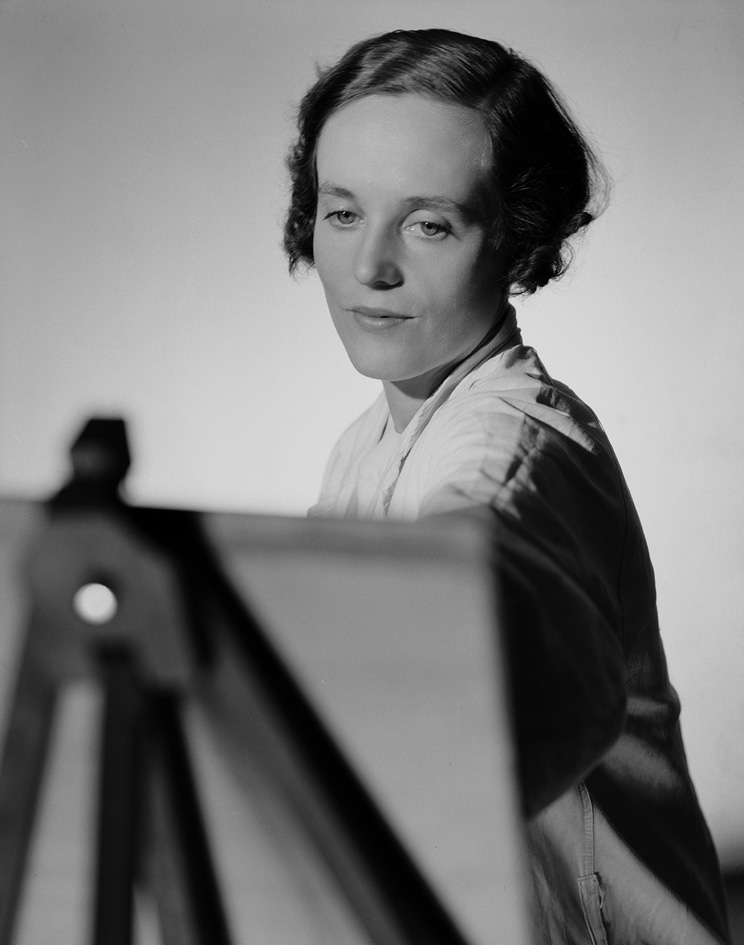
Figure 1: Max Dupain, Jean Bellette, c. 1936, photograph.
Source: Photo Collection of State Library of New South Wales, ON 609/Box 01/no. 338. collection.sl.nsw. gov.au/record/1bGWea8Y.
While studying at Ashton’s she fell in love with fellow student Paul Haefliger, who had moved to Australia from Switzerland with his mother and sister in 1929.16 The couple married in 1935, and Jean took Paul’s surname but continued to sign her works and exhibit as Jean Bellette. Bellette and Haefliger travelled to England to study at the Westminster School where she was deeply influenced by her teacher, the modernist figure painter Bernard Meninsky, who was born in Ukraine and raised in Britain.17 Bellette thrived in the creative European environment and she developed her own style. She drew on Meninsky’s devotion to old masters, classical composition and drawing, which she combined with the use of colour she learnt from British painter Mark Gertler.18 With conflict brewing in Europe, Bellette and Haefliger returned to Sydney in 1939.19
In her art, Jean Bellette invoked classical and mythological themes, translating her love of ancient imagery and history into an Australian version of modernism. The highly esteemed curator and art historian Ursula Hoff described Bellette’s style as a ‘quest of an historical dimension of the continuous, eternal and infinite’.20 Art historian Bernard Smith wrote of her ‘warm, sensuously romantic approach’.21 The classical essence of her subject matter is conveyed through the titles of her paintings, such as Oedipus (1945), Betrothal of Achilles (1948), Ruins Near Bathurst (1949) and Chorus without Iphigenia (1950).22 Exhibition reviews praised Bellette for her artistic authority, dignity, passion and even courage.23 Hoff characterised her work as ‘expressive, poetic, representational and belonging to an altogether different category’.24
Throughout the 1940s and 1950s, Bellette painted and taught among Sydney’s community of modernists. She exercised influence as a teacher, mentor and advocate, fostering students such as Margaret Olley by ‘guiding her eye and drawing hand’.25 Jean and Paul were frequent visitors at Chica Lowe’s famed boarding house Merioola, where dancers, photographers, painters, musicians and theatre designers lodged.26 While living in Sydney, the couple struggled to make ends meet, relying on his income as the art critic for the Sydney Morning Herald, her teaching and the sale of their work through groups shows and galleries. They were also helped by a modest income from shares and an allowance received from Paul’s mother.27 Their impecunious situation was not uncommon among artists, Bellette describing life for her and her friends as ‘rather a scramble’.28 Yet there was also a generous atmosphere in which they viewed themselves as a family, so that even rivals were pleased when a fellow artist succeeded because it benefitted the whole collective.29
In his 1995 television series on Australian art, the writer Robert Hughes condescendingly labelled work made by Sydney artists of that era as products of a ‘charm school’, lacking the pointed social commentary of their Melbourne counterparts.30 Perhaps Hughes did not notice that Bellette won the Sulman Prize in 1941 for her painting For Whom the Bell Tolls, which was a comment on the Spanish Civil War.31 Jean was one of the many artists who rallied to support their friend William Dobell and freedom of artistic expression during the 1943 Archibald Prize court case that challenged Dobell’s style in the context of J. F. Archibald’s entry criteria.32 She later joined the campaign to exhibit the touring European paintings that became stranded in Australia at the outbreak of World War II.33 Bellette responded furiously to Lionel Lindsay’s letter in the Sydney Morning Herald in which he derided contemporary art and invoked Hitler’s label of ‘degenerate’, attacking art makers with foreign-sounding names and listing Bellette and Haefliger among them.34 She savaged Lindsay for ‘expressing ideologies that showed much in common with the enemy nation’ whose ‘manifestations of racial hatred have shocked the world’.35 Art historian Janine Burke, who curated the Australian Women Artists 1840–1940 exhibition and catalogue, described Bellette as the leader of the Sydney art scene post–World War II.36 Bellette joined the nascent Contemporary Art Society, frequently contributed to the seminal journal Art in Australia, founded and won the Blake Prize for religious art and went on to exhibit for Australia at the Venice Biennale in 1954.37 Her painting Still Life won the Carillon City Festival Art Prize in 1955 and was the first work to enter the Bathurst Regional Art Gallery collection (Figure 2).38
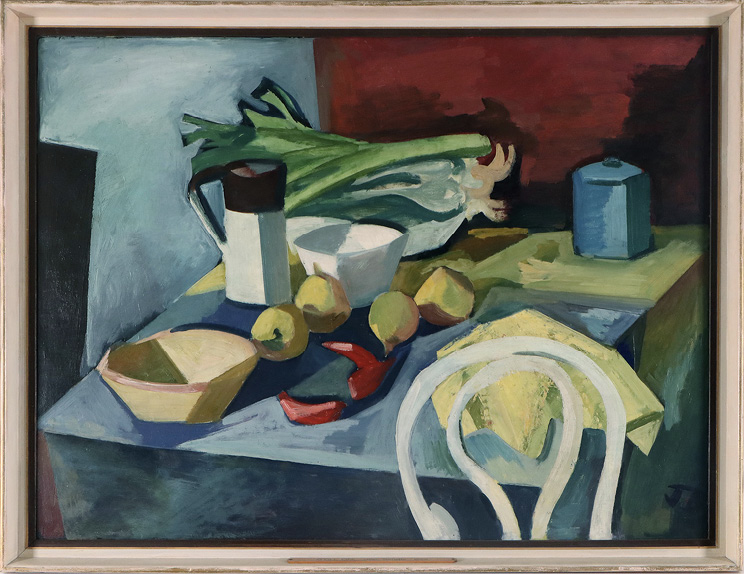
Figure 2: Jean Bellette, Still Life, 1955.
Note: Oil on board, 90 x 120 cm.
Source: Collection and photo courtesy of Bathurst Regional Art Gallery.
Yet Bellette’s strength of character was not reflected in her relationship with her husband, to whom she was devoted nearly to the point of subservience. Friend and protégée Margaret Olley assumed that Bellette’s attentiveness to Haefliger was grounded in insecurity arising from being slightly older than him, which was considered important in that era:
Paul had to come first. Paulie had to have his coffee. Paulie had to have this and that. She devoted herself to him and really I think she was a far better painter than Paul.39
The couple’s co-dependence was apparent to friends: ‘He demanding of her fantastic sacrifices, she estranging him still further in her slave-like willingness to fulfil his demands.’40 As critic for the Sydney Morning Herald, Haefliger was influential, as evidenced by his appearance as an expert witness for William Dobell during the Archibald Prize court case.41 Bellette’s work was never reviewed by her husband, which, given his power as an advocate and the importance of that key publication, undoubtedly impacted negatively on her standing and visibility during some of her most productive painting years in Australia.42 Like many women, Jean’s artistic identity was overshadowed by being the wife of a person who was influential in the art world.43 Even when she was awarded the Sulman Prize for the best subject or genre painting in 1944 for the second consecutive year, it was reported thus: ‘Jean Bellette, who won the Sir John Sulman Prize, is the wife of Sydney artist and art critic Paul Haefliger.’44 She told de Berg: ‘It was really very trying to be the wife of an art critic. I wouldn’t recommend it to anybody.’45 Ironically, when Haefliger was first offered the position, he suggested that Jean should take the job as she was a native English speaker, artist and writer. Bellette recalled: ‘The Herald replied very charmingly and politely that they were not in the habit of employing women in this function as a critic and couldn’t contemplate the idea.’46
Reviving a ghost town
From the late 1940s onwards, Bellette travelled to Bathurst on Friday evenings on the burgeoning regional air service to teach painting.47 This coincided with the painters Russell Drysdale and Donald Friend venturing west of the Blue Mountains to explore Australia’s ‘interior’ geographically and artistically. From their journeys, they produced paintings of Sofala, Hill End and the arid inland landscapes of NSW.48 The town of Hill End sits on a rise overlooking the Turon River in Wiradjuri Country, about 300 kilometres west of Sydney and a winding one-hour drive from the regional city of Bathurst. Gold fever struck the area in the 1850s when large nuggets were unearthed, but the town’s historical buildings remained intact long after the boom subsided.49 Hill End and the surrounding countryside was described by Alan Mayne in his history of the town as scarred by the ‘vomit of shale and slate’ left behind from the rush triggered by a gold nugget jackpot in 1872.50 Yet the light and landscape offered inspiration to the artists seeking to go beyond the conventional depiction of the Australian rural idyll, and they focused on the dry ground, desiccated bones, social isolation and empty streets.51 Drysdale’s works are entrenched in the Australian artistic canon, while most examples of Friend’s art were removed from public galleries when his serial paedophilia was revealed through the publication of his diaries.52 These diaries also provided a valuable account of the rediscovery of Hill End, where he and his erstwhile partner Donald Murray bought a run-down house on the corner of Beyers Avenue and Moores Lane. Many houses in the town were empty, and by the mid-1950s there was just a small population of rabbit catchers and hopeful prospectors left in the former boom town. His description is hyperbolic yet vivid: ‘The town is disintegrating a bit more, like an old leper losing limbs. They just seem to drop off, quite casually. Five families are leaving the district.’53 After Friend and Murray bought their Hill End cottage, Jean and Paul visited regularly and stayed with them or lodged at the Royal Hotel.54
Bellette and Haefliger were so captivated by Hill End that, in 1954, with the assistance of Paul’s mother, they bought a six-room dwelling. The cottage was set in a powerful landscape, replete with both ancient and modern history, and had been home to various Hill End families. It was built in 1870 by James Fox, with wattle and daub walls, hipped roof and a pit toilet located in a garden of fruit trees, pergolas and ornamental plants.55 It is entirely likely that Paul and Jean first acquired the cottage through an exchange of cash and a handshake in the bar of the Royal Hotel.56 Property was often traded informally there, so it is not unusual that the NSW Land Titles shows no records of official real estate transactions between 1875 and 1972 when the cottage was resumed by the Crown and leased back to Haefliger and Bellette.57 The couple visited the house on weekends to work in the garden, make art, take walks in the landscape and visit the pub. Jean won over the locals with her friendly and outgoing manner, although she caused a stir when she joined the men in the public bar.58 Paul was less well liked by the locals, possibly due to his reticence and their mistrust of his foreign accent and manner.59 The house became their retreat, and they were often joined by the Drysdale family, and artists David Strachan and Jeffrey Smart. Jean took every opportunity to work in solitude in the studio attached to the back of the cottage, with large windows facing north and a smaller window looking to the west. She dreaded the weekly return to the city.60
Artists in self-imposed exile
Just two years after acquiring their Hill End haven, Haefliger fell in love with his life model, which prompted a crisis in his relationship with Jean.61 In 1947, he submitted two entries to the Archibald Prize, one of his wife and one of his mistress.62 In an effort to repair the relationship, Jean and Paul went to Paris and the marriage struggled through the next rocky months. The trip foreshadowed their permanent departure from Australia, and for the next 34 years they lived between France, Switzerland and Spain, ultimately residing in Mallorca. It was common for Australian artists to travel to Europe, hoping to establish their names and fortunes and seeking inspiration from the works of major artists, foreign cultures and landscapes. Drysdale, Sidney Nolan, John Passmore, Lloyd Rees, John Olsen, Moya Darling, Margaret Olley, David Strachan and Fred Jessup all spent time abroad. They would rendezvous with their compatriots at London exhibitions, Parisienne ateliers or crumbling Spanish villas.63 Several of them visited Jean and Paul in Spain, but unlike most of their peers, the couple did not return to live in Australia.64
Despite the dramas, the marriage endured and, later in their lives, Paul’s notes to his wife reveal deep and genuine affection.65 Yet his letters to Russell Drysdale sent soon after their departure from Australia, which range from short, tightly written aerograms to many pages of garrulous stories of Australians in Europe, make little more than passing mention of Jean.66 Bellette’s letters to ‘Tassy’ Drysdale are honest and reveal their tenuous financial situation. She also indicated that Haefliger’s ostracism as an artist added to their self-imposed exile from Australia, despite the homesickness for their friends each expressed in their letters.67 Bellette wrote:
You know our problem. We have very little money left. If Paul comes back he’ll still be a stranger amongst the painters. They’ll never give him a go as a painter, I bet you, and that is what matters to him … It was most unfortunate that he was a critic for so long—will always be thought of as a horrid critic in Australia as far as I can see.68
While life in Spain under the dictator Franco was extremely hard for the local population, Jean and Paul lived well on the sporadic income they earned from selling their paintings in Australia or England, and the money that Paul received from his family in Switzerland. They also sold paintings in their collection made and given to them by their increasingly famous friends.69 The couple travelled around Europe to see the works of the European masters, which aligned with Bellette’s strongly held belief that ‘one must have access to the past’.70 For Bellette, Mallorca was a paradise where the light and landscape were perfect for painting. They lived in charming old houses and hired local people to help with cooking and farming.71 Mallorca offered an idyllic lifestyle and quality of life that they simply could not enjoy in Australia, complete with cheap cognac and plenty of cigarettes.72 The landscape and community settings of Mallorca also invoked their beloved environment of Hill End.73 Jean sent the works she made in Spain back to Australia but did not attend her Sydney exhibition opening in 1964, so she relied on her friends to maintain her connection with Australia. For example, Drysdale relayed the success of her show: the who’s who in attendance, the fine framing and display, the glowing reviews by credible critics Bernard Smith and James Gleeson, and the excellent sales to both private and public collections.74
Jean and Paul returned twice to Australia, in 1970 and 1975, finally able to travel in style thanks to the inheritance Paul received following his mother’s death.75 They bought a flat in the Sydney suburb of Elizabeth Bay and Bellette indulged her love for Sydney Harbour, which she found very exciting to paint.76 However, Sydney had changed from the intimate locality they had left in the 1950s, and Bellette admitted to feeling less at home there.77 Perhaps she took to heart the words of her friend George Bell, who wrote to her just days before his death, applauding her wisdom in ‘escaping this land of phonies artists and critics’.78 The couple returned to live in Europe where Paul became ill and died in 1982.79 Jean made her final visit to Australia alone in 1983 but returned to Spain, ignoring her friends’ entreaties to move back to Australia. She died in a local clinic on 13 March 1991 shortly before her eighty-third birthday, and news of her death spread quickly within her extensive network of regular correspondents across the world and friends who had visited her in Mallorca. In a fax to Margaret Olley, their mutual friend David Chenoweth explained that Bellette barely told a soul that she had received treatment for breast cancer, which spread throughout her body. Chenoweth mournfully wrote:
Well Margaret, what a woman: strong, tough, sensitive, talented, achieved … Now that she is dead I feel that a part, a better, stronger part of my own life has been taken from me.80
Access to the past
While Jean and Paul were living in Europe, the NSW National Parks and Wildlife Service (NPWS) took over ownership of ‘Haefliger’s Cottage’ in 1972, not long after Hill End was gazetted as a historic site under the National Parks and Wildlife Act in 1967.81 At that time, the property was valued at $2,387; however, rather than accept the remuneration offered by NPWS, Jean and Paul took the option to retain their connection and lease it at a nominal annual cost.82 The cottage had no permanent resident but was occasionally used for extended periods, such as when John Olsen and his family lived there for several months in 1961.83 During the couple’s long absence, it was also used by the Drysdale family, Jeffrey Smart and Brett Whiteley, and its value as a place for creative respite continued to build.84 Jean hoped to return there eventually, which might explain why they held onto the lease from afar for so many years, but there was also a desire to make the place available to others.85 She wrote:
Of course, I don’t want permanent tenants there so as to leave it free for others when they wish to take a turn. For instance, Diana Schlicht of Glebe. Also ourselves when we return.86
The fact the couple chose to retain the cottage when they had the option to sell fostered the impression that the house at Hill End was still owned by Jean and Paul. The will of ‘Jean Mary de Porre Haefliger (also known as Jean Bellette), the wife of Paul Haefliger, of 15/104 Elizabeth Bay Road, Elizabeth Bay, dated 9 February 1978’ reveals that this was not the case.87 Clause 5(c) pertained to the house at Hill End (see also Figure 3):
My Trustees shall hold for the National Parks and Wildlife Service of New South Wales the whole of the contents of the cottage at Hill End held by me under lease from such Service.88
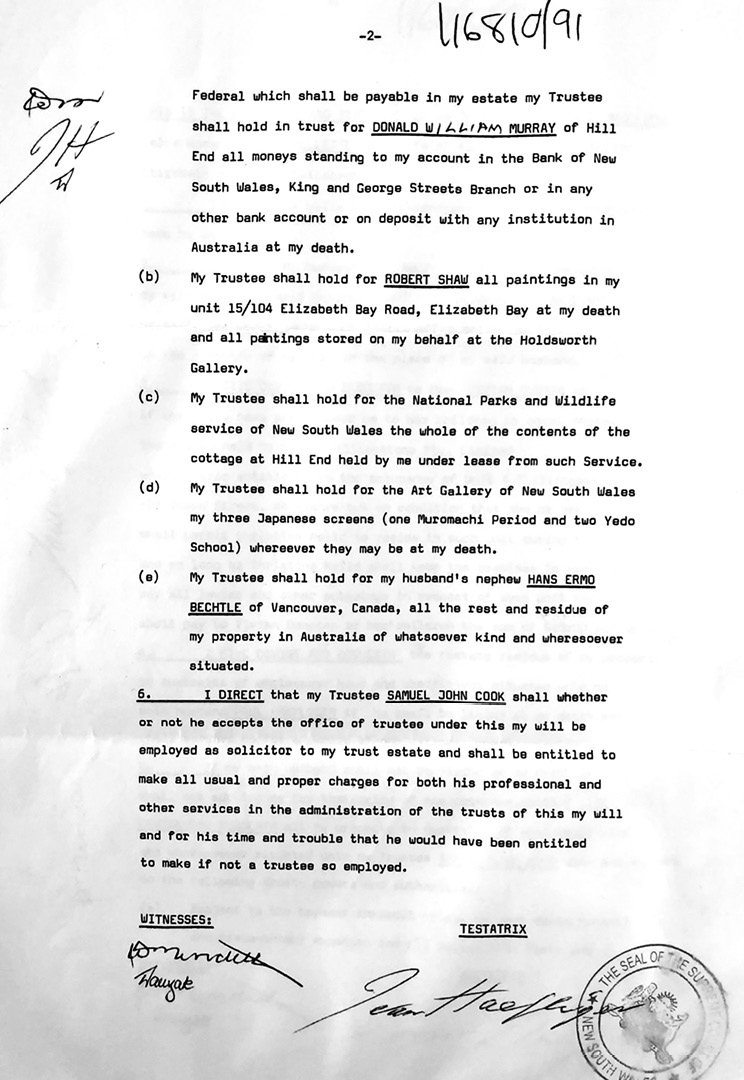
Figure 3: Excerpt from Jean Bellette’s will, 1978.
Source: Supreme Court of New South Wales.
The NSW Supreme Court granted probate on 20 May 1992. The monetary value of the estate is difficult to estimate as the assets were passed to beneficiaries rather than sold. Paul was named as the executor and main beneficiary; however, because he predeceased Jean, the property was instead held by her trustee and solicitor, Samuel John Cook, who implemented her wishes by disbursing the items to the named beneficiaries. After expenses were paid, money was allocated for Donald Murray who, at the time that Jean wrote her will, was still living in the Hill End cottage he had taken over from Friend.89 Bellette’s paintings were to be given to her friend Robert Shaw to mind on behalf of Holdsworth Galleries, through whom she sold her work. Three Japanese screens were set aside for the Art Gallery of New South Wales (AGNSW), and the residue of any property went to Paul’s nephew in Canada. Bellette’s flat in Elizabeth Bay was bequeathed to her goddaughter Vivian Dunstan on the condition that Christine Neild, her friend and confidant during her marital turmoil, could continue to rent it for a foreseen period at a fixed rent.90
Jean Bellette’s legacy of the long-running artist residency in Hill End is the result of a marvellous blend of legal instructions, legend and benevolent neglect. In her letter to Daniel Vitols she expressed a wish for the house to be used by friends, a great many of whom were artists. Consequently, it has long been accepted that Jean wished her cottage to be used specifically by artists, a use that has been maintained formally since 1995.91 As a leaseholder, Bellette had no authority to prescribe how the cottage could be used after her death, and she instructed her trustee to hold the furniture, art and other belongings in the house for the NPWS.92 By leaving her belongings in situ in the house at Hill End, Bellette cast a spell over the place like an act of adverse possession from beyond the grave. The former director of the Bathurst Regional Art Gallery (BRAG), Amanda Lawson, surmised: ‘The genesis of the bequest will always remain shrouded in mystery. I doubt we are going to find a document that lays it all out clearly.’93 Instead, the residencies continued a practice that had been firmly in place since 1957.
Artist Luke Sciberras has lived in Hill End for several decades and explained that there were people known as ‘trusties’ who were allowed to use the keys to the cottage. It was understood that the caretakers of the keys would receive advice from Jean or Paul about who could use the house in the owners’ absence. This is affirmed in a letter from Jean to Vitols that stated:
I should be pleased to put Peter Mitchell on the list of those who have entrée to our cottage. Just show this letter to Miss Hocking or whoever is in … when you are next in Hill End and say Paul Haefliger wrote this.94
The concept was handed across a series of friendships and the house was always used in that way.95 Little had changed in Hill End for so many decades and Jean, far away in Spain, may have assumed that would always be the case. Vitols, Mitchell and their friend, Ross Brown, occasionally travelled out to Hill End to check that everything was in order.96 Former publican of the Royal Hotel Gwen Eyre would look over the cottage when she visited Donald Murray. Bellette was kept informed through a steady exchange of letters.97 Bellette’s wishes and the keys to the house were passed from one friend to another.
In 1967, Hill End was reserved as a conservation area and later managed according to the National Parks and Wildlife Act 1974.98 Officially known as the Hill End Historic Site, the town’s vitality has been measured by the number of banks, schoolteachers, general stores and pubs in operation. The 2021 Australian census data recorded a population of 111 permanent adult residents, 25 families and 128 private dwellings, which indicates how slight changes in the fortune of the town can have a big impact on the small and isolated population.99 Architect Gavin Wilson visited Hill End in the 1980s and stayed at Haefliger’s Cottage, which retained its ambience as if the owners had left for the weekend, not moved overseas several decades prior.100 He and his partner, Maggie Todd, took up the lease on another of Hill End’s old houses around the same time that Jean passed away in Spain and learnt that Bellette’s cottage was untenanted with her belongings intact.101 They recognised the importance of the town to Australia’s heritage beyond its goldrush history, and Wilson curated an exhibition called The Artists of Hill End: Art, Life and Landscape, which opened in July 1995 at AGNSW. The exhibition also toured the regional galleries in Bathurst, New England, Broken Hill and Ballarat.102 Wilson recalled that the NPWS site manager at that time knew Jean Bellette well and insisted that she had asked for the cottage to be used as an artists’ retreat, which may have contributed to it remaining largely undisturbed. Wilson and Todd were given access to the cottage, and they collaborated with the director of BRAG, Louise Doyle, to resource a residency program for contemporary artists.103 From 1995, Wilson managed the cottage for artists’ residencies on behalf of BRAG in a semi-formal style reminiscent of the trusty key system.
Such was the demand for use of the cottage by artists that, in 1999, an official lease agreement was developed between the NSW NPWS and BRAG, and the Hill End Artists in Residence program was formalised.104 The subsequent BRAG director, Amanda Lawson, focused on connecting the Hill End community with the artists staying at Haefliger’s Cottage. In 2003, following Donald Murray’s death, BRAG took up the lease on his cottage, which was added to the residency program.105 Lawson observed the influx of artists, some of whom bought land and stayed on, and she seized the opportunity to expand beyond landscape painters, inviting other genres of artists. For example, Julie-Anne Long choreographed a work in 2003 inspired by Jeffrey Smart’s work Nuns Picnic 1957 that was performed at a ‘romp of a night’ in the Royal Hotel in 2004.106 The casual arrangement inspired by the gatherings of the late 1940s sparked an ongoing movement in Australian art and patronage of artists, while the Hill End community appreciated the revived focus on the town. The residency program also built audiences for the gallery in Bathurst. The practical creative space that Bellette prized in Hill End proved equally appealing to contemporary artists.
Up until February 2022, the artists’ experience at Haefliger’s Cottage was virtually unchanged from the days when Jean and Paul had stayed on weekends, though augmented by an electric stove and a slightly upgraded shower stall. Residents stayed for a month at a time in the goldrush-era house, surrounded by Bellette and Haefliger’s furnishings, set in a garden that resonated with the essence of Australian arts luminaries. They dashed to the outhouse in the garden and slept in a sleigh bed beneath the stern portraits of Paul’s forebears that were painted by his mother, Annie.107 A vintage Cornelius Original fur still hung in the wardrobe. In a wooden chest in the living room, buried beneath linens and needlework from Jean’s trousseau, was a piece of fabric printed with the Myths and Legends design that was Jean’s contribution to the Modernage range of fabrics launched by Claudio Alcorso and Silk and Textile Printers in 1947.108 Artists used Russell Drysdale’s easel that was still propped in a corner of the studio (Figure 4). The material culture that remained in the house both contributed to the biographical understanding of the owners and fostered the connection to the past Bellette espoused. The cottage was a living house museum without the bollards and Perspex barriers that usually prevent visitors from touching the relics of the past. The house had also been embellished by the visiting contemporary artists, with light shades left by Peter Kingston, a trompe l’oeil of a rat squeezing through boards nailed over a hole in the kitchen floor, and the Jean Bellette Retrospective exhibition catalogue signed by Margaret Olley ‘In memory of Jean’.
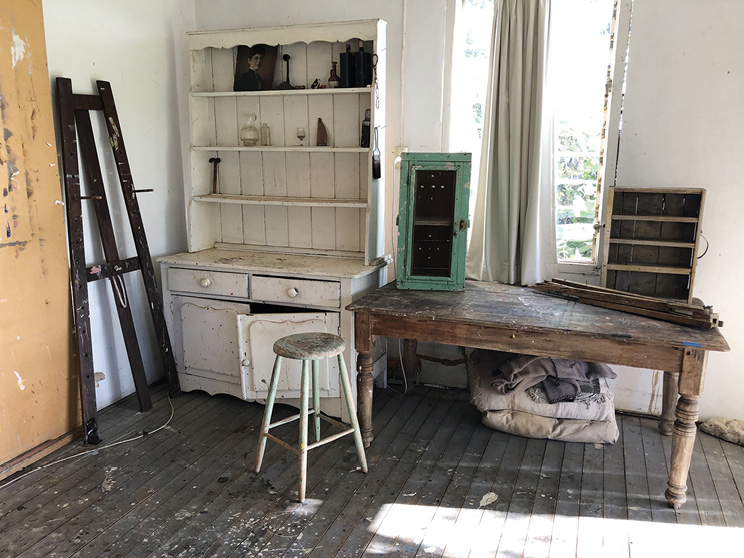
Figure 4: Jean Bellette’s studio at Haefliger’s Cottage, Hill End, 2022.
Source: Photo by Stephenie Cahalan.
BRAG showcased the Hill End Artists in Residence program as part of its public offering to the community, hosting 350 residencies for 320 artists between 1999 and 2022. These residencies resulted in 96 exhibitions and two touring shows.109 The gallery has acquired 510 works to the value of $1,750,000, and the residency evolved under the stewardship of director Sarah Gurich to work with Hill End’s own arts council.110 The notion of an inspiring destination also prompted a new style of a cultural tourism in Bathurst and Hill End among visitors who came to learn more about the town’s artistic history.111 Just as the goldrush is woven into the cultural fabric of the town, so too have Haefliger’s and Murray’s cottages become embedded in the town’s thematic history, identified nationally as ‘developing Australia’s cultural life’, representing ‘creative endeavour’ in NSW, and providing ‘inspirational environments and events’ in Central West NSW.112 Haefliger’s Cottage is recognised as ‘marking the phases of life’ for the time that the artist John Olsen and his family lived in Jean and Paul’s cottage.113 Equally significant is the perspective of NPWS, which recognises that the residency program continues to ‘shine a spotlight on the important destination of Hill End and maintains the artistic relevance of the village’.114 Tweed Regional Gallery and Margaret Olley Centre director Susi Muddiman stated:
The Hill End Artists in Residence Program is highly respected in the arts sector by both arts professionals and practicing artists. It has a defined place in Australian art history.115
Painter Ben Quilty completed two Hill End residencies, and, from his perspective, the benefit to the artist is multilayered. The cottage is far enough away from Sydney or other major centres to make it impossible to be interrupted by life’s daily distractions. The dwelling is modest but adequate, affordable and evocative:
You have a pile of firewood in winter and a key to the front door, and a little studio that Jean Bellette worked in a lot of her adult life and created some of her most important work. And Jean’s studio … you just have a sense that history is infiltrating what you do.116
The relationship between artists and the population of Hill End is more ephemeral but no less real than the statistics. Visitors gained the benefit of the atmospheric landscape, the experience of a small town and the interaction with the local community, while the local community enjoyed seeing their place reflected in the various artforms inspired by each residency. Sciberras described the relationship between the town’s permanent and temporary residents:
I have seen artists unpack their shopping, put their gear into the studio and head to the pub like a baby turtle to the sea on the beach, flapping their way down the street. If only because that’s invariably, in a small country town like this, where you get the pulse of a place. You see them arrive sheepishly, and they sort of poke their head into the bar where someone will say, ‘You look like an artist! Come in!’117
What was understood to be Bellette’s bequest has prevailed over the words in the legal document. The interpretation and execution of her will has been conducted by the memories of friends and colleagues rather than experts, and cemented by the ongoing collaboration of the legal beneficiary, the NSW NPWS. In February 2022, following an interruption to the residencies caused by the COVID-19 pandemic, Director of BRAG Sarah Gurich and managers in the Bathurst Regional Council decided against renewing the leases on Haefliger’s and Murray’s cottages because the costs associated with maintaining them made it increasingly difficult to sustain the residencies.118 The arrangement between the Bathurst Regional Council (on behalf of BRAG) and NPWS was such that the lessee was responsible for all maintenance except structural repairs to the cottages built in the late 1800s.119 This included the upkeep of the gardens, maintaining the iconic wire and wooden stripped fences and tending the historic plastered walls, steps, verandas and corrugated iron roofing. By 2022, the council spent approximately $80,000 on maintaining cottages that cost $6,000 in annual lease fees.120 BRAG sought to redefine the arrangement with NPWS but instead the latter commenced an open-market expression of interest (EOI) process that invited applications for use of the cottages.121
In the local community, the EOI process prompted alarm that artist access to the cottages could be lost if the program did not continue in its existing form.122 Other cottages in the town had already been leased to tenants, but there was a fear that Haefliger’s and Murray’s cottages might be converted to short-stay accommodation.123 BRAG submitted an EOI that included supporting testimonials by former resident artists and other cultural organisations.124 The state minister for the arts at the time, Ben Franklin, declared that there was no way he would let the residencies be lost ‘on his watch’.125 Artists were notified that the scheduled residencies would be cancelled in preparation for an open-market EOI process for the leases on Haefliger’s and Murray’s cottages.126
The implications of a change of use from arts residencies to tourist accommodation was significant for the town and the gallery alike. The cottages were important to BRAG as they generated content for the gallery in Bathurst. The residency was also significant to the NPWS and the managers of the town, as it featured in their conservation and tourism management plans.127 Sciberras has lived at Hill End long enough to see many artists come and go, or in some cases, come and stay.128 In his view, each artist or visitor imposed a cost on the cottage through wear and tear, but they also kept the cottage alive. He shared the view that maintaining use of the cottage and providing access to artists was fundamental to Jean’s intent:
The philosophy of it always was to be used by artists. I think they [Jean and Paul] have got to be looking down on this very happily as a tremendous success story. It would be terrible if we lost them.129
On a sunny Monday in February 2022, Sarah Gurich wandered through the vacant studio, and the freshly cleaned bedrooms and living room of Haefliger’s Cottage, ensuring that everything was in place before she shut the door and returned the keys to the local NPWS office. Through Bellette’s bequest, the contents would remain with NPWS but not necessarily in the cottage. Artists had lived and worked in the two cottages for over 70 years, but the suspension of the program heralded the end of that era.130
The last one who remembers
Bellette reportedly insisted that the house at Hill End be known by her husband’s name.131 Visitors enter through a gate bearing a sign that reads ‘Haefliger’s Cottage’, and conservation management documents for the cottage and the Hill End Historic Site feature the singular possessive apostrophe.132 The NPWS EOI documents have no apostrophe—that is, Haefligers Cottage.133 The reason for splitting hairs over the placement of punctuation is because it signals whether there was any motivation in naming the cottage to memorialise the benefactor. Jean’s documented subservience to Paul and his career, coupled with her continued professional use of her maiden name, support the theory that she prioritised the memorialisation of Paul over herself, even though she was more embedded in the Hill End community. While Jean was also legally identified by the surname Haefliger, the use of the singular effectively precludes her association with her legacy.
Bellette’s story and work is not as widely known as that of her friends and contemporaries, such as Drysdale and Justin O’Brien, or her students David Strachan and Margaret Olley. Few outside a small coterie in the Australian art sector know of her important artistic and social contribution to Australia, her colourful life and vivid personality.134 Bellette is absent from the writings of dominant art historians such as Richard Haese, Christopher Allen and Robert Hughes whose accounts of modern art only occasionally include women.135 Feminist art historians, including Joan Kerr, Janine Burke, Caroline Ambrus and others, have revisited that Australian canon to spotlight the many women artists who were roundly dismissed and denigrated.136 Indeed, without these efforts to recognise the presence of women artists, Australians could have assumed that few women ever picked up a paintbrush.137 Even though Bellette’s name appears in these amended accounts, her work only features faintly. Art historian Amanda Beresford sought to remedy this and worked towards a survey exhibition at AGNSW in 1994, which did not proceed.138 Instead, Gavin Wilson’s 1995 exhibition and book The Artists of Hill End celebrated the broader Hill End group, which included Bellette and her work, and planted the seed for the formal artist residency program to enable ongoing access to the cottage.139 Bellette continued to be lost among her male colleagues until Christine France curated Jean Bellette Retrospective in 2005 for the S. H. Irvin Gallery.140 Nearly two decades later, the artist remains largely absent from Australia’s artistic hall of fame, despite contemporary efforts to bring previously overlooked female artists to the fore.141
Bellette’s relative anonymity was compounded by her retreat to Mallorca, and she contributed to her own invisibility by eschewing research requests.142 Jean Bellette has been largely forgotten in the vocabulary of Australian artists, and the more thorough account of Hill End’s history names her far fewer times than her male counterparts who only visited the town, and usually stayed at her house.143 The NPWS webpage referred to the Bellette Gallery located in the Hill End visitor’s centre without explaining after whom it is named, and she is absent from the list of famed Hill End artists.144 Beresford accurately describes Jean Bellette as Tasmania’s lost classicist, and it would be appropriate to expand that title to also call her Australia’s lost modernist.145 With the residency at Haefliger’s Cottage discontinued and the contents of the cottage removed from Hill End to a NPWS archives storage facility, Bellette is now visible only through her isolated paintings scattered across public galleries and through BRAG, which continues to champion her art. Unlike those whose names endure on prizes, institutions and gallery labels, Jean Bellette may henceforth be all but forgotten.
However, while the cottage might remain empty, that will not diminish her gift. The number of notable artists who have produced significant works from their time at Haefliger’s Cottage or have progressed their careers based on their Hill End experience testifies to Bellette’s influence over the Australian artistic community. From Russell Drysdale to Wendy Sharpe, Bellette has ushered and urged practitioners on throughout their careers and maintained the house as a place for creative respite.146 In Hill End, the permanent presence of landscape artist Luke Sciberras, who champions the residency, points to the importance of the cottage as a working space to make art. Bellette’s legacy has relied on the interpretation of those who knew her in their lifetimes and cannot be assured in the absence of property ownership and hard cash. However, her influence reached beyond the specific directions in her bequest to the NPWS when the wishes that she communicated to friends took hold and flourished. Bellette’s legacy expanded into the artists’ residency at her house in Hill End, which thrived for three decades after her death extinguished her legal claim to the dwelling. While the future use of Haefliger’s Cottage remains unclear, the precedent it has established is indelible and can be attributed entirely to the unwritten wishes of Jean Bellette.
1 The other donors were Alfred Felton who left a bequest to the National Gallery of Victoria for the acquisition of art. J. F. Archibald’s bequest following his death in 1919 founded the immensely popular Archibald Prize for portraiture at the Art Gallery of New South Wales (AGNSW). John Power’s bequest to the University of Sydney funded the Power Institute of Fine Arts and seeded the Museum of Contemporary Art. Henry Allport endowed the Allport Library and Museum of Fine Arts within the State Library of Tasmania. Margaret Olley was a generous patron to artists and institutions both during her lifetime and after her death through the Margaret Olley Art Trust.
2 Jean Bellette, ‘Last Will and Testament of Jean Mary De Porre Haefliger’, Elizabeth Bay, Sydney, 9 February 1978.
3 Peter Sculthorpe, ‘Letter to Jean Bellette, 1 May, 1984’ in Jean Bellette Archive (1909–91), MS2008.2/ARC259, box 4, correspondence c.1984–1992, AGNSW.
Nell Reid, ‘Letters to Jean Bellette, 31 December 1984, 5 May 1985, undated, 30 July 1986, 1 December 1988’, in Jean Bellette Archive (1909–91), MS2008.2/ARC259, box 4, correspondence c. 1984–1992, AGNSW.
4 Jean Bellette, Still Life with Fish, 1954, oil on canvas, AG330, TMAG; Jean Bellette, Old Gold Workings, Hill End, c. 1950s, watercolour, gouache and ink, AG8908, TMAG.
5 C. Birtles, ‘Gifts to Charities and Unincorporated Bodies’, in Hutley’s Australian Wills Precedents (LexisNexis Butterworths, 2016); G. E. Dal Pont, Law of Charity (LexisNexis Butterworths, 2017).
6 Rosalind F. Atherton, ‘Expectation without Right: Testamentary Freedom and the Position of Women in 19th Century New South Wales’, University of New South Wales Law Journal 11 (1988): 133–57; Rosalind F. Croucher, ‘How Free Is Free: Testamentary Freedom and the Battle between Family and Property’, Australian Journal of Legal Philosophy (2012): 9–27.
7 Christine France, Jean Bellette Retrospective (National Trust of Australia, 2005), 11.
8 Jean Bellette, interview with Hazel De Berg, 17 June 1976, Hazel De Berg Collection, National Library of Australia, nla.gov.au/nla.obj-192617972/listen/0-240.
9 France, Jean Bellette Retrospective, 11.
10 France, Jean Bellette Retrospective, 12.
11 Amanda Beresford, ‘Jean Bellette: Tasmania’s Lost Classicist’, Friends of the Tasmanian Museum and Art Gallery Newsletter (1994): 8–9.
12 Beresford, ‘Jean Bellette’.
13 Bellette, interview with Hazel de Berg, session 1.
14 Meg Stewart, Far from a Still Life: Margaret Olley (Random House, 2005),133.
15 Donald Friend, The Diaries of Donald Friend, ed. Paul Hetherington, vol. 3 (National Library of Australia, 2005), 300.
16 Bellette, interview with Hazel de Berg, session 1.
17 France, Jean Bellette Retrospective, 12.
18 France, Jean Bellette Retrospective, 12.
19 France, Jean Bellette Retrospective, 14.
20 Ursula Hoff, ‘The Art of Jean Bellette’, Meanjin II, no. 4 (1952): 360.
21 Bernard Smith, Australian Painting, 4th ed. (Oxford University Press, 2001), 272.
22 France, Jean Bellette Retrospective, 30, 33–5.
23 James Gleeson, ‘Paintings by Jean Bellette’, Sun (Sydney), 8 March 1950, 10; James Cook, ‘Painting by an Eclectic’, Daily Telegraph (Sydney), 30 June 1954, 12; James Gleeson, ‘Authority, Dignity in Art Show’, Sun (Sydney), 30 June 1954, 40.
24 Beresford, ‘Jean Bellette’, 8–9; Hoff, ‘The Art of Jean Bellette’, 358–60.
25 Stewart, Far from a Still Life, 133.
26 Christine France, Merioola and beyond: Painters of the Sydney Charm School (Philip Bacon Galleries, 1999).
27 Barbara Hall, ‘Expatriate Years: 1957–1991’, in France, Jean Bellette Retrospective, 62.
28 Bellette, interview with Hazel de Berg, session 1.
29 Bellette, interview with Hazel de Berg, session 1.
30 Jim Berryman, ‘Bernard Smith and Robert Hughes: A Critical Dialogue’, Journal of Art Historiography 25 (2021): 24.
31 France, Jean Bellette Retrospective, 17.
32 Attorney-General v Trustees of National Art Gallery of NSW and Another (1944), Supreme Court (NSW), 212–215 (Roper J), in Weekly Notes 62 (10 January 1945).
33 Jean Bellette, ‘Letter to the Editor’, Sydney Morning Herald (SMH), 14 June 1940, 3.
34 Lionel Lindsay, ‘Letter to the Editor’, SMH, 16 October 1940, 6.
35 Jean Bellette, ‘Letter to the Editor’, SMH, 18 October 1940, 5.
36 Caroline Ambrus, Australian Women Artists (Irrepressible Press, 1992), 159.
37 Beresford, ‘Jean Bellette’, 8–9; France, Jean Bellette Retrospective, 14.
38 Sarah Gurich, email to author, 29 March 2023.
39 Stewart, Far from a Still Life, 133.
40 Friend, The Diaries, 404.
41 Peter Ross and Jo Litson, Let’s Face It: The History of the Archibald Prize, 6th ed. (AGNSW, 2017), 35; William Pidgeon (WEP), ‘Dobell in the Witness Box’, Sunday Telegraph (Sydney), 29 October 1944, 7.
Amanda Beresford, interview with author, by web conference, 16 July 2021.
42 Joan Kerr, ed., ‘Jean Bellette’, in Heritage: The National Women’s Art Book (Craftsman House, 1995), 310.
43 Beresford, interview.
44 ‘Orthodox Portrait Wins Prize’, Daily Telegraph (Sydney), 20 January 1945, 6.
45 Bellette, interview with Hazel de Berg, session 2.
46 Bellette, interview with Hazel de Berg, session 2.
47 France, Jean Bellette Retrospective, 18; Judith Campbell and Margaret Simpson, ‘South-Eastern Australia Air Route Maps of Butler Air Transport Limited, 1938–1939’, Powerhouse Collection, accessed 30 March 2023, collection.powerhouse.com.au/object/325209.
48 Robert Hughes, The Art of Australia (Penguin, 1966), 194–6; Richard Haese, Rebels and Precursors (Penguin, 1981), 240–4; Christopher Allen, Art in Australia (Thames and Hudson, 1997), 142; Gavin Wilson, The Artists of Hill End (AGNSW, 1995), 21–95.
49 Alan Mayne, Hill End: An Historic Australian Goldfields Landscape (Melbourne University Press, 2003).
50 Mayne, Hill End, 15–16.
51 Smith, Australian Painting, 226–9; Wilson, The Artists of Hill End, 21–95.
52 Antony Funnell, ‘Our Favourite Paedophile: Why Is Donald Friend Still Celebrated?’, ABC News, 28 November 2016, www.abc.net.au/news/2016-11-28/donald-friend-our-favourite-paedophile/8053222.
53 Friend, The Diaries, 330.
54 Friend, The Diaries, 109–349; Wilson, The Artists of Hill End, 15.
55 High Ground Consulting, Conservation Management Strategy, Haefliger’s Cottage (Haefliger-Bellette Cottage), Hill End (High Ground Consulting, 2006), 15.
56 High Ground Consulting, Conservation Management Strategy, 7.
57 High Ground Consulting, Conservation Management Strategy, 7.
58 Wilson, The Artists of Hill End, 77.
59 France, Jean Bellette Retrospective, 21; Bronwyn Hanna, ‘Regendering the Landscape in New South Wales’, Report for the Department of Environment and Conservation, 2015, contemporaryartandfeminism.com/images/Bathurst/bHanna_genderedLP.pdf; Wilson, The Artists of Hill End, 77.
60 Friend, The Diaries, 349.
61 Jean Bellette, ‘Letter to Vivian Dunstan, 11 August 1982’, in Jean Bellette Archive (1909–91), MS2008.2/ARC259, box 1, correspondence c.1932–1974, 2.8, AGNSW.
62 Beresford, interview; ‘Archibald Prize 1947’, Art Gallery NSW (n.d.), accessed 12 December 2023, artgallery.nsw.gov.au/prizes/archibald/1947/.
63 Simon Pierse, Australian Art and Artists in London, 1950–1965 (Ashgate, 2012).
64 Pierse, Australian Art, 234–6.
65 Paul Haefliger, ‘Correspondence to Jean Bellette’, in Jean Bellette Archive (1909–91), MS2008.2/ARC259, box 1, correspondence c.1932–1974, 2.8, AGNSW.
66 Paul Haefliger, ‘Letters to Russell Drysdale, 1959’, in Sir Russell Drysdale—Correspondence, 1933–1981, ML MSS.4191/1 (8), 4191/1/37–4191/1/449, State Library of New South Wales (SLNSW).
67 Jean Bellette, ‘Letter to Russell Drysdale, 21 June 1956’, in Sir Russell Drysdale—Correspondence, 1933–1981, ML MSS.4191/1 (8), 4191/1/27, SLNSW.
68 Bellette, ‘Letter to Russell Drysdale, 21 June 1956’.
69 Hall, ‘Expatriate Years’, 64.
70 Bellette, interview with Hazel De Berg, session 2.
71 Hall, ‘Expatriate Years’, 64.
72 Hall, ‘Expatriate Years’, 64.
73 Jean Bellette, ‘Letter to Russell and Lynne Drysdale, 30 November 1963’, in Sir Russell Drysdale—Correspondence, 1933–1981, ML MSS 4191 5 (8), 419/8/191, SLNSW.
74 Russell Drysdale, ‘Letter to Jean Bellette, 25 August 1964’, in Jean Bellette Archive (1909–91), MS2008.2/ARC259, box 2, 2.4, correspondence c.1932–1974, AGNSW.
75 Hall, ‘Expatriate Years’, 64.
76 Bellette, interview with Hazel de Berg, session 2.
77 Bellette, interview with Hazel de Berg, session 2.
78 George Bell, ‘Letter to Jean Bellette, 17 October 1966’, in Jean Bellette Archive (1909–91), MS2008.2/ARC259, box 1, correspondence c.1932–1974, 2.8, AGNSW.
79 Hall, ‘Expatriate Years’, 65.
80 David Chenoweth, ‘Fax to Margaret Olley, 14 March 1991’, in Jean Bellette Archive (1909–91), MS2008.2/ARC259, box 1, 2.8, notebooks c.1932–1974, AGNSW.
81 High Ground Consulting, Conservation Management Strategy, 6.
82 High Ground Consulting, Conservation Management Strategy, 8.
83 Wilson, The Artists of Hill End, 97.
84 Mayne, Hill End, 120–2; Wilson, The Artists of Hill End, 96–115.
85 France, Jean Bellette Retrospective, 21.
86 Jean Bellette, ‘Letter to Daniel Vitols, 11 November 1982’, private collection. Diana Schlicht was a friend and a member of the artist community that included her husband, Roland Schilcht, Charles Blackman and Brett Whiteley.
87 Bellette, ‘Last Will and Testament’.
88 Bellette, ‘Last Will and Testament’.
89 In Jean Bellette Archive (1909–91), MS2008.2/ARC259, box 1, 2.8, notebooks c.1932–1974, AGNSW.
90 Bellette, ‘Last Will and Testament’, 2.
91 Luke Sciberras, interview with author, Hill End, 14 February 2022; Wilson, The Artists of Hill End, 113; Peter Kingston, personal communication with author, 17 February 2022.
92 Bellette, ‘Last Will and Testament’, 2.
93 Amanda Lawson, interview with author, Berry, 21 March 2022.
94 Bellette, ‘Letter to Daniel Vitols’.
95 Sciberras, interview.
96 Ross Brown, interview with author, Hill End, 17 August 2023.
97 Daniel Vitols, ‘Letter to Jean Bellette, 1983’, in Jean Bellette Archive (1909–91), MS2008.2/ARC259, box 1, correspondence c.1932–1974, 2.8, AGNSW; Peter Mitchell, ‘Letter to Jean Bellette, 6 April 1987’, in Jean Bellette Archive (1909–91), MS2008.2/ARC259, box 1, correspondence c.1932–1974, 2.8, AGNSW; Gwen Eyre, ‘Letter to Jean Bellette, 16 September 1988’, in Jean Bellette Archive (1909–91), MS2008.2/ARC259, box 1, correspondence c.1932–1974, 2.8, AGNSW.
98 Conybeare Morrison International, Conservation Management & Cultural Tourism Master Plan for Hill End Historic Site, Volume 1: Master Plan (March 2013), i, environment.nsw.gov.au/publications/hill-end-historic-site-conservation-management-and-cultural-tourism-master-plan.
99 ‘All Persons Census Quick Stats—Hill End (NSW)’, Australian Bureau of Statistics, 2021 Census, accessed 7 July 2022, abs.gov.au/census/find-census-data/quickstats/2021/SAL11910.
100 ‘All Persons Census Quick Stats—Hill End (NSW)’.
101 Gavin Wilson, phone interview with author, 4 August 2021.
102 Wilson, The Artists of Hill End, 4.
103 Wilson, The Artists of Hill End, 4.
104 Lawson, interview.
105 Margot Riley, ‘Beyers’ Cottage’, Curie, SLNSW, 2015, accessed 16 September 2025, www2.sl.nsw.gov.au/archive/curio/exhibit/1308/stories88dd.html?from_collection=2&page=7.
106 Amanda Lawson, ‘A Speculative Venture: Contemporary Art, History and Hill End’, Kunapipi 27, no. 1 (2005): 151, ro.uow.edu.au/kunapipi/vol27/iss1/16.
107 Brown, interview.
108 A Group of Australian Artists, A New Approach to Textile Designing (Ure Smith, 1947), 26; Stephenie Cahalan, Colour and Movement: The Life of Claudio Alcorso (Forty South, 2019), 38–42.
109 Bathurst Regional Art Gallery, infographic, 2022.
110 Bathurst Regional Art Gallery, infographic.
111 Lawson, interview.
112 High Ground Consulting, Conservation Management Strategy, 5.
113 High Ground Consulting, Conservation Management Strategy, 5.
114 Bathurst Regional Art Gallery, Bathurst Regional Art Gallery Strategic Plan 2021–2024 (Bathurst Regional Council, 2021), 15.
115 Bathurst Regional Art Gallery, Bathurst Regional.
116 Ben Quilty, phone interview with author, 9 August 2022.
117 Sciberras, interview.
118 Sarah Gurich, interview with author, Hill End, 14 February 2022.
119 Gurich, interview.
120 Gurich, interview.
121 New South Wales National Parks and Wildlife Service, ‘Invitation for Expressions of Interest Eoi-9072, Murrays and Haefligers Cottages, Hill End Historic Site’, EOI documents, 2022.
122 Micaela Hambrett, ‘Hill End Artist Cottages Out to Tender, Prompting Panic in Art Community’, ABC News, 1 April 2022, abc.net.au/news/2022-04-01/hill-end-cottages-out-to-tender/100938730.
123 Sciberras, interview.
124 Bathurst Regional Art Gallery, ‘Hill End Artists in Residence Program, Overview 1999–2021’, 2022.
125 Hambrett, ‘Hill End Artist Cottages Out to Tender’.
126 Sarah Gurich, email to author, 31 January 2022. I was a recipient of the Hill End Artists in Residence program offer and was scheduled to undertake a residency at Haefliger’s Cottage in October 2020 to pursue this doctoral research. This was paused due to the COVID-19 pandemic and held over to October 2022 before its cancellation in January 2022.
127 Gurich, email to author.
128 Elizabeth Farrelly, ‘Ours for Eternity? Saving the Home of Artist Martin Sharp’, The Sydney Morning Herald, 9 October 2020, smh.com.au/culture/art-and-design/ours-for-eternity-saving-the-home-of-artist-martin-sharp-20200922-p55xxw.html.
129 Sciberras, interview.
130 The outcome of the EOI process and future access for artists to Haefliger’s Cottage was unresolved in July 2024.
131 Sciberras, interview.
132 Conybeare Morrison International, Conservation Management; High Ground Consulting, Conservation Management Strategy.
133 ‘Hill End Artists in Residence’, Bathurst Regional Art Gallery, n.d., accessed 21 October 2025, bathurstart.com.au/artist-opportunities/residencies/hill-end-artists-in-residence/; NSW National Parks and Wildlife, ‘Invitation for Expressions of Interest’.
134 Lawson, ‘A Speculative Venture’, 140–56.
135 Jane E. Hunt, ‘“Victors” and “Victims”?: Men, Women, Modernism and Art in Australia’, Journal of Australian Studies 27, no. 80 (2003), 65–75, doi.org/10.1080/14443050309387913.
136 Joan Kerr and Jo Holder, eds., Past Present: The National Women’s Art Anthology (Craftsman House 1999); Janine Burke, Australian Women Artists, 1840–1940 (Greenhouse Publications, 1980); Ambrus, Australian Women Artists, 150–2.
137 Joan Kerr, ed., Heritage: The National Women’s Art Book (Craftsman House, 1995).
138 Beresford, interview.
139 Wilson, The Artists of Hill End, 113–14.
140 France, Jean Bellette Retrospective, 12.
141 Anne Summers, The Lost Mother: A Story of Art and Love (Melbourne University Press, 2009); Natasha Bullock, Kelli Cole, Deborah Hart and Elspeth Pitt, eds., Know My Name (National Gallery of Australia, 2020); Hanna, ‘Regendering the Landscape’.
142 Barbara Gibb, ‘Letter to Mrs Jean Haefliger, 21 June 1986’, in Jean Bellette Archive (1909–91), MS2008.2/ARC259, box 4, letters 1984–92, AGNSW.
143 Mayne, Hill End.
144 ‘Hill End Historic Site’, New South Wales National Parks and Wildlife Service, n.d., accessed 3 June 2022, nationalparks.nsw.gov.au/visit-a-park/parks/hill-end-historic-site.
145 Smith, Australian Painting, 274.
146 Wendy Sharpe, Dinner at Hill End (1996), mixed media on paper, accessed 16 April 2024, artgallery.nsw.gov.au/prizes/sulman/1997/21952/.
Previous Next



