


 menu
Australian Journal of Biography and History: No. 11, 2026
Deep mapping colonial Hobart in search of Maria Lord
Introduction
Between 1811 and 1814, a house was built on Hobart’s Macquarie Street that, over 200 years later, is still standing and has the distinction of being the oldest extant town house and four-storey residence in Australia.1 Known as Ingle Hall since the late 1890s, it was the residence of Edward and Maria Lord from roughly 1816 to 1823. The Lords were Hobart Town’s power couple of the day; they were the wealthiest citizens of the colony, owned extensive properties with large quantities of livestock, cargo brigs and retail enterprises, and effectively controlled Van Diemen’s Land’s meat, wheat and rum trades. Maria had primary management of the bulk of their concerns, including a general store and warehouse located at Ingle Hall. Maria was also a former convict, something no-one in Hobart Town would let her forget.
While Maria is not absent from the historical record, her appearances are fleeting. There is no confirmed portrait of her still in existence nor did she leave anything behind to reveal her inner life. There is evidence of her assiduousness in business—which challenges many of the stereotypes that have persisted in the representation of Australian colonial women, particularly convict women—but seemingly no records to show who she really was. Maria is not alone in this fate: many prominent women in nineteenth-century Australia who were visible to their contemporaries have faded from the dominant historical narrative in the present day. Catherine Bishop’s illuminating Minding Her Own Business: Colonial Businesswomen in Sydney (2015) also wrestles with this idea, citing Australia’s long acceptance of a masculinist national story as one of the reasons that ‘it was generally accepted by historians that women largely disappeared from public commercial life’,2 with the notable exception of Mary Reibey. Bishop’s fascinating research demonstrates that, despite the well-worn tropes that have shaped the stories of Australian colonial women for centuries, there is a great deal of evidence to show that they ‘did not look on from the sidelines but were right in the thick of the main game’.3
This argument applies to Maria’s story. She was a very visible part of her husband’s success, and my project’s main aim is to demonstrate how she challenges many of the existing narratives about women in early colonial Australia. However, reliance on Maria’s small archive (in comparison to her husband’s) would only get me so far in attempting to tell her story. Therefore, my central question is: how can a writer (of fiction or non-fiction) creatively negotiate archival silences to re-situate and re-present a lesser-known historical figure?
In this article I reflect on that question and share the methodology I developed to overcome some of the challenges of writing about Maria. The methodology draws on principles of deep mapping, using these to inform the character, world and psyche of my subject, as well as a creative framework for reading through archival gaps. I use Ingle Hall as the illustrative example here, as this was the place that delivered the most poignant and crucial insights in the practical application of the methodology, which ultimately shaped a novel-length creative hybrid work that hopefully achieves my aim of both representing and re-presenting this historically overlooked Tasmanian life.4 I conclude that this unique combination of deep mapping methodology with the fertile opportunities of hybrid cross-genre writing produces an intimate and immersive retelling of the past, in which the form accurately reflects the process of a creative historical practice, helping writers of all kinds to explore lesser-known aspects of the past in an increasingly dematerialised present.
The search for Maria Lord
Maria Riseley (1778–1859) came to Australia in 1804 as a convict, serving a seven-year sentence for stealing goods from her employer.5 Very little is known about her childhood and life before she came to Australia. One can only imagine, as she was moved in chains from the Horsemonger Lane Gaol in London and loaded onto the Experiment in Portsmouth Harbour, how terrified and anxious she might have been, not to mention completely unaware of the profound impact her enforced exile would eventually have on the colony of Van Diemen’s Land.
The Experiment landed at Sydney Cove in June 1804 and Maria was assigned as a domestic servant to a man named John Thompson. By June 1805, she was at the Female Factory at Parramatta, giving birth to John Thompson’s child.6 Things looked grim for her. A prisoner with no money and no prospects, she seemed destined for the usual fate of assigned female convicts—surrender her baby to a local orphanage and resign herself to a life of servitude and sexual exploitation.7 However, her fortunes changed quite rapidly, and unexpectedly, when she was selected to be the companion of Edward Lord, an officer in the marines and rising star in the administration of the newly formed Van Diemen’s Land. She agreed to set sail with him, and her child, to Hobart Town in late 1805, where a very different life awaited. It is difficult to know how much agency Maria might have had in the situation; however, during the early years of transportation, especially in a settlement like Van Diemen’s Land where free women were scarce, it was common for military officers to take a female convict as a ‘companion’, and the ensuing relationships were not necessarily exploitative or coercive.8 It is possible that Maria, who later proved herself to be astute and strategic, saw this as a lucky escape and an opportunity she stood equally to gain from.
Edward Lord was acting governor of Van Diemen’s Land following the death of David Collins and had great ambitions in the acquisition of wealth and power. As a government officer, he was not permitted to trade—but Maria could, using all of Edward’s connections and advantages. She set up a general store in Hobart and proved herself to be a skilled and capable businesswoman, eventually managing all of Edward’s business concerns and effectively controlling the meat, wheat and rum trades in Van Diemen’s Land. In 1808, Maria received an absolute and unconditional pardon from Joseph Foveaux, the lieutenant governor of Norfolk Island, likely as a favour to Edward.9 Despite this exoneration and her subsequent marriage to a powerful, well-connected man, becoming one of the colony’s wealthiest and most successful women in the process, she was still referred to as ‘a Convict Woman of infamous character’.10
Maria married Edward shortly after her pardon. Over the next 13 years, five more children joined their family, and she expanded and controlled most, if not all, of their business ventures, which flourished. Edward and Maria were very much at the centre of Hobart Town’s society, regularly throwing balls and hosting visiting dignitaries from New South Wales and abroad. They appeared to be a success story, in every sense of the word. Maria was now in her early 40s, a mother of seven children and enjoying comforts that she likely could never have acquired back in the rural Huntingdonshire of her girlhood.
An astute entrepreneur, Maria often operated quite independently, Edward leaving her in sole charge of their enterprises when he made his frequent trips, often for years at a time, back to England. These long absences would have taken a considerable toll on their marriage, compounding Maria’s loneliness at being excluded from the society of the genteel ladies who had settled in Hobart Town in the intervening years. A letter from Janet Ranken, a new arrival, back to her sister in England in 1821 noted: ‘The society here is abominable. Mr Lord a man worth half a million money is married to a convict woman.’11 Despite the astonishing turnaround in her personal fortunes, it seemed Maria could never entirely escape her past.
In 1824, Hobart Town was rocked by a scandal that tore its power couple apart: 46-year-old Maria had an affair with Charles Rowcroft, a man 20 years her junior. Edward sued his wife’s lover in open court, won and quit the colony for good.12 He and Maria remained legally married but never lived together again. Following the trial and Edward’s departure, Maria continued to live and work in Hobart Town, her head held high despite the scandal and disgrace. She fought Edward to retain some ownership and control of their complicated and far-reaching business ventures and ‘publicly announced herself to be a woman working to support her children’.13 Her relationship with her estranged husband was unusual for the time—they remained in sporadic contact and Edward recognised her in his will, an act of benevolence (or guilt) that was never realised, as Maria succumbed to ‘decay of Nature’ on 22 July 1859, having spent nearly 55 of her 80 years in Australia.14 Edward died aged 78 in London, two months later.
I first heard about Maria Lord in 2005, quite by chance. I was in my early 20s and living a very pedestrian life, so it was hardly surprising that Maria’s story immediately captivated me. I was astounded that this remarkable-sounding woman was virtually unknown and unacknowledged in the public narrative of Tasmania. I had never heard of her before, nor had anyone else I mentioned her to. This struck me as odd, because the handful of sources that were available suggested that Maria had been one of Tasmania’s, if not Australia’s, first female entrepreneurs. Moreover, the Lords’ wealth and success seemed largely due to Maria’s abilities. Edward, for all his charm and ambition, left an impression of having been devious (he was caught smuggling liquor into Hobart,15 among other things), not particularly detail oriented and liable to make impulsive, extravagant decisions. It was puzzling to me that Maria’s achievements were not reflected in what was publicly available at the time.
Instead, she was passed over as ‘a minor character who has barely entered Australian history’;16 the few scholars that had noticed her by 2005 were, like me, puzzled by the ‘deliberate silence of the public record’.17 There was evidence to prove her self-professed ‘assiduity in business’,18 including a handful of business letters in her own hand—written in the careful, deliberate style of someone who possibly learnt to write as an adult—but seemingly nothing containing any element of candour to show who she really was. We only have the recollections of others, such as Robert Knopwood,19 William Bligh,20 William Parramore,21 John Pascoe Fawkner22 and Janet Ranken,23 with which to form a portrait of Maria Lord. Through them she emerges as a shrewd and capable woman who flouted norms, fought against double standards and male hypocrisy, and was underestimated, judged and ostracised for her mistakes, ambitions and success—all sources of potential identification and empathy by contemporary women.
In the almost 20 years between my first encounter with Maria Lord and the completion of my PhD project, many things have changed. It is still the case that there are very few verifiable traces of Maria’s personal life, either in England or Australia; however, the reasons for Maria’s thin archive and resultant historical obscurity have become clearer. While it seems simplistic to state, Maria was living in a patriarchal system in which, as Anna Funder has written in Wifedom, a plethora of ‘wicked magic trick[s]’ combined to erase women and their voices—many of which ‘still hold sway today’.24 The explosion of interest in family history and the efforts of many individual historians over the past 50 years has shown that Australia has also suffered from ‘a major distortion of its convict history’, wherein the initial flourishing of a society that allowed convicts to build successful lives as citizens once they had served their sentences was mostly forgotten by the early twentieth century.25 Both factors help to explain why Maria faded from public view: she was just one of countless women corralled out of history’s sight as a ‘collusion of social forces’ created a ‘national loss of memory’.26

Figure 1: Journal written by John Owen Lord on board the Lion during a voyage from London to Van Diemen’s Land, 1829.
Source: Tasmanian Archives, NS301/1/2.
When I began my PhD in 2019, I found clear evidence of this erasure. Every still-available source was almost standalone and unconnected, the links between Maria and the businesses and family she created worn thin, even violently severed. This seemed illustrative of how links to convict ancestors were still ‘being erased at a personal and family level’ well into the twentieth century.27 In the Tasmanian Archives I examined the original journal of Maria’s son John from 1829 and observed what appeared to be a literal removal of Maria from the record (Figure 1).
Thankfully, there has been significant redress over the past two decades, particularly by female historians who have uncovered stories of previously unknown women. Carol Baxter’s An Irresistible Temptation (2006), Babette Smith’s Defiant Voices (2021), Jessica North’s Mary Ann and Captain Piper (2022), and Kiera Lindsey’s The Convict’s Daughter (2016) and Wild Love (2023) are recent examples that demonstrate both the tenacity of historians in recovering colonial lives and the high level of public interest in such stories. These works are marketed as non-fiction, though many of the authors have used hybrid techniques, such as speculative biography, recognising the key role of imagination in the absence of empirical evidence.28
A significant change in Maria’s extant historiography was the publication of Tasmanian historian Alison Alexander’s Corruption and Skullduggery: Edward Lord, Maria Riseley, and Hobart’s Tempestuous Beginnings (2015). Acknowledging Maria’s considerable contribution to the establishment of present-day Tasmania, Alexander combs the historical record for her traces. When evidence is scarce, she uses speculation to imagine conversations (between Edward and Maria or other prominent figures of the day) in the style of a play. These ‘Flights of Fancy’ are clearly signposted to the reader. Alternatively, she widens the focus, using the careers of Edward and Maria ‘to describe the general picture’ of the early days of Hobart Town, where ‘famine, drunkenness and corruption, and slow growth to modest prosperity’ were experienced.29
Alexander posits that the Lords and their businesses reflected the morally dubious character of early Van Diemen’s Land: ‘with retribution largely absent, corruption started at the top, and it was scarcely surprising that the rest of the population followed’.30 As a result, Alexander argues, it was the ‘hard-working, more sober, more competent settlers of the 1820s who really established Tasmania’;31 hence, it should not have been surprising that early settlers like Maria and Edward faded from the dominant narrative because, until the second half of the twentieth century, historians chose to either sanitise this period of Tasmania’s history or ignore it completely.32 Alexander negotiates the sparse nature of Maria’s archive and the difficulty of assessing her motivations when ‘no evidence remains’.33 Her use of ‘Flights of Fancy’ illustrates the arguments of numerous contemporary scholars that, with ever-increasing interest in the lives of lesser-known historical figures (especially women), there is a consequent need for a more flexible approach to explore them. Donna Lee Brien and Kiera Lindsey have explored the role of speculation and imagination in historical and biographical practice, arguing that:
speculation and imagination are intrinsic to … the biographical process and not, therefore, something that needs to be justified as a solution to the challenge of an apparent archival gap.34
Nearly all life writing requires an element of interpretation, and, therefore, ‘can be posited to be speculative to some degree’.35 Importantly, even Alexander’s cautious use of imagination in Corruption and Skullduggery substantiates my claim that Maria is a subject for whom a more experimental approach, even within a narrative that aims to be strictly biographical, is both appropriate and necessary.
It has been my aim to re-situate (or re-present, as Greg Dening put it36) Maria in the imagination and narrative of contemporary Hobart and the postmodern world, where there is ‘an increasing appetite for interchangeability between fact and fiction’.37 For its ability to ‘extend the parameters of history’s interests and concerns’, fiction felt like the most appropriate vehicle for my journey.38 This is not to diminish the value of the discipline of history, and this article does not posit that a flexible, imaginative approach such as deep mapping is superior to more empirical methods of enquiry. It is important to state that deep mapping only worked for this project because I had exhausted the limits of the archives and undertaken a substantial amount of traditional research, not just to reassure myself that the claims of scarce archival records pertaining to Maria were indeed true, but also to recreate her world and wider context convincingly. In presenting my methodology, I argue that deep mapping is a tool that can creatively supplement traditional research methods, not replace them entirely. As the historian and novelist Peter Cochrane observes, when there is ‘historiography for the storyline’, the resulting work becomes a partnership between fact and fiction.39
Exploring less orthodox methods of enquiry is not unusual in contemporary historical writing and I feel fortunate that my project has coincided with an exciting cultural moment in which the totality of history and its truth claims are being regularly challenged. If we have only sparse documentary evidence, or none at all, it is important that imaginative and flexible approaches are developed so that unknown lives can be recovered and explored.
The origins and incarnations of Ingle Hall
What a tale the building could tell if only it could speak. It has been a mute witness of the many changes that have taken place in the city over a period of a century. How many Government House pagents [sic] of the early days, have been witnessed from its windows. A King and Princess of the royal blood have driven past its doors. How much suffering has occurred just outside its wolls [sic], and how much good grog has been stowed away and drank in its cellars.40

Figure 2: Ingle Hall, Macquarie Street, Hobart, 1966.
Source: Whishaw Collection, Tasmanian Archives, NS165/1/198.
The pivotal moment of my project did not occur in the archives, or at my writing desk, but when I turned my attention and curiosity to the streets of Hobart, and beyond. Late one morning in September 2020, I masked up, summoned my courage and knocked on the door of Ingle Hall, a multistorey colonial town house on the corner of Macquarie and Argyle streets, in the central business district of Hobart (Figure 2). I knew that Maria had lived and worked there, but I had never seen inside. Something was pushing me towards it, as if I were, to paraphrase Toni Morrison, waiting in place before the light arrived: all writers ‘approach that place where they expect to make the contact, where they become the conduit, or where they engage in this mysterious process’.41 To my delight, the current occupiers were welcoming and supportive of my project and invited me to return whenever I wished. I began to write regularly at Ingle Hall over the next three years as an unofficial writer-in-residence. It was the site where I began to build Maria’s flesh around the skeletal set of facts I collected from the archives.
I have been fortunate to be able to widen the geographical scope of my search for Maria. In 2022, I was able to make an unexpected visit to Maria’s birthplace in Huntingdonshire and to the site of the old gaol in London where she was held for nearly 18 months before transportation; to various sites in Sydney and Parramatta; and to relevant sites around Tasmania, including Bothwell and New Norfolk. However, I kept returning to the white house on Macquarie Street. As such, in this article, I am using Ingle Hall as the illustrative example of my methodological approach.
Ingle Hall’s story is one of transition, transformation and shapeshifting. In the Tasmanian Archives and Heritage Office, it has a thicker file than Maria Lord herself. It has never been firmly established whether the original house was built by Edward Lord or his friend John Ingle, nor is the exact year of its construction known. Its truest beginnings are even harder to confidently discern; the site would have been something else entirely prior to the arrival of the Europeans. Nipaluna (Hobart) was already home to the muwinina and palawa/pakana peoples, and the proximity of the river, timtumili minanya, to the site where Ingle Hall now stands might have meant that people regularly set up home nearby to enjoy the resources of the water according to the season. There is evidence that sophisticated land management practices were in place in Lutruwita (Van Diemen’s Land, now Tasmania). When David Collins and his party, including Edward Lord, came ashore in 1803, they found land that was green, abundant and readily navigable. Indeed, as Gammage has argued, ‘had it not been so well managed, had there been no templates, the invaders might not have come’.42 The site of what is now Ingle Hall and the land surrounding it would most likely have been carefully cultivated and managed in a systematic fashion, creating fresh water and food sources for the people, and seasonally controlled with fire.43
Historians have concurred that the land where Ingle Hall was eventually built was most likely granted to John Ingle.44 Since its construction in what experts can only estimate was around 1812,45 the condition, fabric and structure of Ingle Hall has been continually altered to accommodate various uses. It has been, among many other things, a brothel, a temperance hotel (coffee palace), a children’s library, a gynaecologist’s office, the original site of The Hutchins School (a private educational establishment for boys that has been relocated several times, most recently to the Hobart suburb of Sandy Bay), the Mercury newspaper offices, a museum and a residential dwelling. Architectural studies of the building in the 1990s described elements of Georgian and Victorian period fabric and their condition at key points between 1814 and 1998, as well as additions to intact fabric and structure from 1822, changes to plan formats, redesign and modern accretions.46 The exterior of Ingle Hall is original and intact; in 2016, it was determined that the interiors of the basement, the display office/room and the long room on the ground level, the school room/bedroom on the mid-level and the attic-level bedroom (in the south-east corner) are also original (Figure 3).47

Figure 3: Section diagram of Ingle Hall, ‘Install House’, 2019.
Source: Partners Hill.
Under its current custodianship, Ingle Hall has become ‘an experimental amalgam of public and private, dwelling and workplace, heritage preservation and contemporary occupation’.48 In many respects, it has been restored to its first purpose—it is a place of business as well as a home, as it was for Maria. The present occupiers have honoured and preserved Ingle Hall’s historical integrity while transforming it for modern living, demonstrating ‘inventive re-use, reanimation and travel through the building’s many incarnations and times’.49 In my own visits to the building, I came to share Julian Worrall’s assessment that the multitude and fluidity of Ingle Hall’s structure and purposes over its historical lifespan ‘has been compressed into a single moment’.50 Being there, I felt I was in the past and the present simultaneously. This brought to mind Beverley Southgate’s image of historians as ‘mediums who contrive on others’ behalf to stand between the past and present … to reveal what had become obscured (but had always nonetheless been there)’.51 Naturally, it is not possible to experience the house exactly as previous inhabitants did; however, listening to footsteps on the stairs, how sound travelled with the opening and closing of doors, even observing how cigarette smoke drifted in from the street in thin curls through gaps in the windows, was evocative enough for me to imagine the 1820s equivalent when Maria Lord was mistress of the house.
After my initial visit to Ingle Hall, I began to wonder whether, in the absence of printed facts in an archive, which are ‘intentionally produced for public viewing and meant to be understood by a wide audience’, could place, and, specifically, this space, be a tangible substitute?52 I have used Doreen Massey’s definitions of place and space as a compass. Massey argues that, while ‘both concepts are incredibly mobile’53 where boundaries are porous and open, the concept of space is particularly dynamic. Space is ‘always under construction … a product of relations-between … it is always in the process of being made. It is never finished, never closed.’54 By contrast, place is ‘where spatial narratives meet up or form configurations, conjunctures of trajectories which have their own temporalities … the accumulation of weaving and encounters [that] build up a history’.55 These definitions were particularly synchronous with my deep mapping experience and the overall concept of the methodology.
‘Positioned between matter and meaning’: An introduction to deep mapping
Faced with the closure of archives in 2020 due to the COVID-19 pandemic, I needed an alternative method of enquiry that focused on praxis. Mary Modeen and Iain Biggs have written extensively on creative engagement with place. They argue that a conceptual tool like deep mapping is a strong example of an arts-led research methodology that ‘is concerned with responsiveness’ and can ‘generate expertise, confidence, understanding and new orientations to issues, problems, concerns and opportunities’.56
Deep mapping is a multidisciplinary methodology. It is primarily deployed in the spatial humanities, but can encompass geography, philosophy, sociology, history and/or literature, among other disciplines. It is a means of creatively integrating abstract and literal evidence and knowledge of a place in a way that is ‘inexact and oriented toward experimentation’, engaging ‘the senses and the intellect’ to reach a deeper understanding.57
Foundational research by David J. Bodenhamer, Trevor Harris and John Corrigan theorises deep mapping as centred around the very human ‘impulse toward contextualisation’.58 They argue that a deep map ‘supports our need to tell a multifaceted story’.59 In their view, such maps are:
not confined to the tangible or the material, but include the discursive and ideological dimensions of place, the dreams, hopes and fears of residents—they are, in short, positioned between matter and meaning.60
I have also embraced Maureen Engel’s definition: ‘Deep mapping is a way to open up questions rather than resolving them, to communicate knowledge rather than simply information.’61 While the spatial boundaries of the place in question remain solid, there is reflexivity within them, where imagination, memory and multiple perspectives come into conversation with each other. It is immersion in a subjective space where both the historical and contemporary can be explored. Deep maps are an invitation to experience history, literature and culture within a spatial and a temporal frame.62
Deep mapping is an inclusive methodology that ‘blur[s] the lines of separation’,63 encouraging the map maker/writer—and, subsequently, the map reader—to immerse ‘themselves in the warp and weft of a lived and fundamentally intersubjective spatiality’.64 The deep map maker will seek out multiple histories of a place, illuminating its obscure, silent or even erased voices. In this way, deep maps can create ‘intimate links between space and time: between who gets to be here and who gets remembered’.65 This resonated with my project, particularly in consideration of how an unknown woman who resists easy categorisation could narrate her own experiences.
The underlying argument of a deep map is only ever implicit; it is very much up to the user to become a participant and navigate through the material with the map maker/way finder, creating their own meanings and coming to their own conclusions. Combined with the scholarship of creative histories, in which historical research is brought into conversation with creative practices to provoke new methods and push disciplinary boundaries to allow for deeper truths and new questions,66 this concept provided a pertinent methodological framework through which to address my research question.
As to the deep maps themselves, they are both process and product, engaging what physical evidence (and more nebulous elements like emotions and memories) exists within defined spatio-temporal contexts, and utilising multilayered multimedia, to produce an outcome that is framed ‘as a conversation, not a statement’.67 The primary objective of deep mapping is, ironically, not necessarily to map the place of interest in a traditionally cartographic style but, instead, to examine it through different perspectives in order to make visible—either visually, through words, through performance, or a combination of these—what the space or place contains in terms of histories, stories and memories.68 Deep maps are not always creative projects, such as novels, poetry or creative non-fiction, but common applications of the methodology usually involve creative and open explorations of a place/space. An excellent recent Australian example is Four Rivers, Deep Maps (2022) edited by Jo Jones with Neil Curtis, a collection of responses to four rivers in Scotland and Western Australia, exploring how residents inhabited these places in the past and how they inhabit them now, weaving various strands of place, history and time together. Where Four Rivers differs from other examples is its attempt to capture movement in its deep mapping rather than simply being ‘in place’.
It should be noted that my project—and, therefore, this article—is concerned with the ‘anthropological, embodied and performative spatialities that are bound up with the practice of deep mapping’,69 as this better serves the purpose of the map maker as writer (or filmmaker, musician or artist), as opposed to spatial geographer or data analyst, which is where much of the scholarship is focused. The idea of a data-driven, digitally limitless deep map is exciting and appealing, but I am primarily interested in the potential of the methodology within creative praxis. This means that I am traversing the ‘messy grey patches’ of unexplored territory between ‘the past and the present, the traditional and the avant-garde, the archives and the repertoire’70 with no guidebook, but with the hope of allowing new understandings, connections and possibilities to emerge.
Histories, stories and places that have ancient and sacred pasts that have defied the bounds of conventional historiography are well served by the scope and flexibility of deep mapping. Unsurprisingly, it is a growing area of interest in Australian humanities in terms of re-imagining relationships to place, and there are many highly creative examples spanning numerous disciplines.
Margaret Somerville has explored deep mapping as a practice to bring Indigenous and non-Indigenous perspectives together with the aim of representing ‘past relationships and contemporary stories’ and reinscribing ‘stories of deep time … a time that exists in the present as well as the geological past’.71 Somerville argues that, through deep mapping, ‘special place stories that have been erased, or rendered silent and invisible, are reconnected to the land’.72 She describes it is a valuable practice by which ‘one’s responsibilities to care for country continue into the present and can be shared by all who inhabit that place’.73
Deep mapping is a useful tool for educators, particularly in rethinking colonial relationships and settler histories, as it ensures that students not only have access to different realities, stories and worldviews, but also can see how these coexist.74 The establishment of the Research Centre for Deep History at The Australian National University in 2019 shows how the collaborative nature and principles of deep mapping are being integrated into contemporary historical practice in Australia, assisting in ‘expanding history’s time scale and scope’75 to better appreciate Australia’s 65,000 years of human history and situate it more appropriately in a global context.76
Deep mapping can be intensely personal, as both a concept and a practice. Arguing that all writers are map makers, Vanessa Berry explains that ‘the map is more than the metaphor: it is the organizing principle of narrative’.77 But how could I ‘map’ silence or archival gaps? Susanna Scarparo provided a partial answer:
When it comes to the many women who are absent from the records of history, to think of them as lost may tempt us to fill the gaps rather than to read through them.78
I was keen to understand the difference between filling the gaps and reading through them and how the latter would work in practice. There was no template (or map) for ‘reading through gaps’ or ‘archival overlaps’.79 Even the most prolific deep mapping scholars acknowledge the difficulty of articulating the practical application: ‘[there are] no instructions for making deep maps. No manuals, no algorithms. We wish it were that easy: plug here, play there, and voila, a deep map.’80 However, as my doctoral project was to demonstrate how reading through historical gaps or archival overlaps worked in practice as a guide for other scholars and writers exploring similar projects, I needed to seek a practical framework for my deep mapping enquiries.
I adopted Australian scholar and novelist Meg Mundell’s POET model, which identifies five different place-oriented experiential techniques (hence the acronym) commonly used by creative writers in the creation of literary place (Figure 4). Mundell’s POET model, like deep mapping, is ethnographic in nature, as it encourages the writer/map maker to create a sense of ‘“being there” sufficient to experience the mundane and sacred, brash and nuanced aspects of socio-cultural life and, through observations, encounters and conversations, to come to an understanding of it’.81

Figure 4: The POET model—a process-based model of literary place making created by Meg Mundell.
Source: Meg Mundell, ‘Crafting Literary Sense of Place: The Generative Work of Literary Placemaking’, Journal of the Association for the Study of Australian Literature 1, no. 18 (2018): 10. Drawn for this issue by Tom Schoon.
As Figure 4 demonstrates, the five elements of the model do not operate in isolation, but overlap, unified by the ‘catch-all category’ of the nebulous, which may include the creative use of ‘more esoteric and slippery phenomena’, such as dreams or spiritual channelling.82 The inclusion of the nebulous, Mundell explains, is to acknowledge, first, the subconscious’s role in creative practice, and, second, that nebulous techniques tend to resist ‘full explication’ and ‘might provide a refuge of sorts for the more mysterious and fragile elements of literary place-making’.83
Retrospective is a method that draws on the writer’s (or map maker’s/way finder’s) personal memories of a place, both past and more recent. Casting back in this way can be a fruitful literary technique. Immersive uses direct encounters with place, primarily through site visits that offer the writer ‘an immediate sensory and emotional engagement’ that is hard to replicate.84Collaborative involves using shared or cultural understandings of a place, tapping into resources, archives or any other cultural knowledge about the place, be it intertextual (such as artefacts, written texts, maps) or interpersonal (conversations, stories, rumours). This can be an invaluable creative tool. Engaging with place using vicarious techniques enables the writer/map maker to explore various perspectives and find the empathy with which to emplace characters within a story. This is often where the emotional honesty of a work comes from—through imaginatively engaging with the former occupants of a place, thereby creating more resonance and even a bodily response from the reader/user of the deep map. The unifying category, the nebulous, involves more mysterious, less tangible elements of engaging with place in order to recreate it. This could, Mundell suggests, include such slippery phenomena as dream content, pure imagination, subconscious formulations, intuition, the sublime, the uncanny, hauntings and genius loci (spirit of place).85
Mundell explains that these five elements of the POET model ‘span the gap between personal and shared understandings of place, and between our lived experiences of place and its textual manifestations’,86 which are also synchronous with the objectives of a deep mapping practice. Site visits are an essential component of the POET model as they often reveal ‘sensory and spatial details that enrich, or even catalyse, a story’.87 Therefore, I embarked upon a plan of action to conduct site visits to places relevant to Maria, where I could hopefully engage in multi-sensory encounters with the spaces and put this model to the test. What emerged was part immersive history, part spiritual channelling and part imaginative play.
Making a deep map of Ingle Hall
Deep mapping Ingle Hall (Figure 5) was a truly immersive, deeply intimate and thought-provoking process that I was privileged to experience and enjoy. At the generous invitation of the current inhabitants, I wrote at the house most weeks over the winter of 2021 and over the summer, autumn and spring of 2023, varying which room I occupied for the purposes of emotional attunement. I listened to the house with its constant cacophony of noise, hardly surprising for a busy office filled with people on what has been one of Hobart’s main streets since the inception of the colony. This made it easy to imagine the activity happening outside in Maria’s time, as Government House, the Market Square and, of course, the harbour, were only a convenient stroll away.

Figure 5: Exterior of Ingle Hall, Macquarie Street, Hobart.
Source: Author photograph, 2024.
My unofficial writing residency at Ingle Hall deepened the meaning of each encounter for me. I was able to return on multiple occasions and spend hours sinking into the experience of being in place. This allowed for a more conscious engagement with time and the temporal than perhaps was afforded to me in other places where I had only an hour or two to look around. My experience of this is consistent with the findings of other scholars. For example, Mary Modeen and Iain Biggs are advocates of ‘slow residencies’ as a part of a deep mapping practice, arguing that they allow the map maker to concentrate attention, resulting in ‘a rich combination of recall, linking memory, matter and the embodied experience of life, with the present’.88 Likewise, a team of multidisciplinary researchers in Italy conducted a week-long deep mapping residency in a remote village and found that ‘deep map practices can benefit from being combined with a research residence in the area under investigation’.89
I documented every writing session at Ingle Hall with words, photographs and impressions. When I was given one of the rooms at the front to write in, I would look out of the windows on to Macquarie Street, through glass so old it has thickened with time, slightly distorting the view. I paced the room to get a sense of how former inhabitants might have moved about. I crouched to take photographs of the handmade nails, the heads square and black in the original floorboards, and gently ran my fingers over the embossed wallpaper. I noted the way the stairs sounded when someone walked on them, imagining the echo of shoes and feet, voices travelling up and down, and the swishing and scratching of long skirts on the floorboards, 200 years ago.
Each time I sat down to write, my emotional responses surprised me: sometimes I felt afraid, sometimes I was tearful, sometimes I could sense a playful energy. Occasionally, I would be swamped by feelings so powerful I was convinced I was imagining them. These responses—the emotional mapping, as per Loeffler’s argument—were the genesis for many crucial scenes in the novel.
On one visit, I was invited to view the basement, which is where Edward and Maria had their general store in around 1816 (Figure 6).
|
TO BE SOLD, at the Warehouse of Mr. EDWARD LORD, Macquarie Street, seven Casks of Virginia leaf TOBACCO; three Years Credit will be given to the Purchaser; payment to be made in Wheat or Meat at Storehouse prices. |
Figure 6: Advertisement: ‘Warehouse of Mr Edward Lord’.
Source: Hobart Town Gazette and Southern Reporter, 10 August 1816, 1, nla.gov.au/nla.news-article651408.
The person accompanying me lifted a metal lid of what looked like a storage box for tools and ladders, but was actually the entrance to a hidden staircase (Figure 7).

Figure 7: The steps leading down to the basement of Ingle Hall, Hobart.
Source: Author photograph, 2020.

Figure 8: The basement of Ingle Hall, Hobart.
Source: Author photograph, 2020.
Inside the basement, it was dim (Figure 8). Light entered through the iron bars across two small glassless windows on the eastern, Argyle Street, side (Figure 9). Dust, cobwebs and dead insects gathered in piles on the sills. The floor was covered with a thick and moist sand, almost like paste, which got trapped in the soles of my boots. The basement is one of the few remaining original features of the house, so the bricks, which would have been made with mud, were moist to the touch. A tiny portion of the river stone floor has also been preserved (Figures 10, 11 and 12).

Figure 9: The basement window facing Argyle Street in Ingle Hall, Hobart.
Source: Author photograph, 2020.

Figure 10: Original river stone floor in the basement of Ingle Hall, Hobart.
Source: Author photograph, 2020.

Figure 11: Back storeroom in the basement of Ingle Hall, Hobart.
Source: Author photograph, 2020.

Figure 12: Original fireplace in the basement of Ingle Hall, Hobart.
Source: Author photograph, 2020.
Every part of me tingled with excitement, knowing I was standing where Maria had stood, two centuries earlier. I inhaled the cold air, the mushroomy smell of decay and dampness, and imagined how the shop might have looked and felt with Maria running it.

Figure 13: Writing in place in what was Maria’s living room at Ingle Hall, Hobart.
Source: Author photograph, 2023.
As previously mentioned, there is virtually no evidence of Maria’s internal world and subjectivity, but she carried on a successful business in colonial Hobart, for which there is plenty of evidence. From advertisements in the Hobart Town Gazette to Edward Lord’s letter book, I built up a clear picture of Maria as the key decision-maker and manager of the day-to-day operations of the Lords’ enterprises.
When writing in place at Ingle Hall (Figure 13), I was able to use these facts—her stock, her customers—and channel them into the spirit and energy of the site where much of her enterprise took place. That is, I used the materiality of Maria’s world to build her character and reflect her emotional landscape.
Lists of items, both those that Maria stole and later sold in her stores, were among the few pieces of verifiable data available; they were the basis for scene-building, clues I hunted for in site visits and thematic devices in the narrative to reflect Maria’s longings, ambitions or needs. I shared my deep mapping research regularly with my colleagues and at various symposia throughout the duration of this project, producing several multimedia artefacts that incorporated photographs, video, audio, excerpts from the archives and pieces to camera (Figures 14 and 15). These secondary outputs of my fieldwork were extremely useful as I refined my ideas and approach.
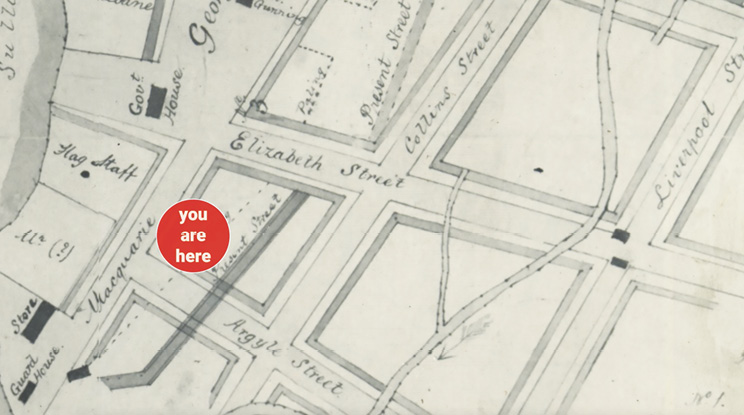
Figure 14: A still from my deep map video of Ingle Hall.
Source: Author, September 2021. This makes use of James Meehan’s survey map of Hobart, 1811 (AF394/1/1), with the permission of Tasmanian Archives.
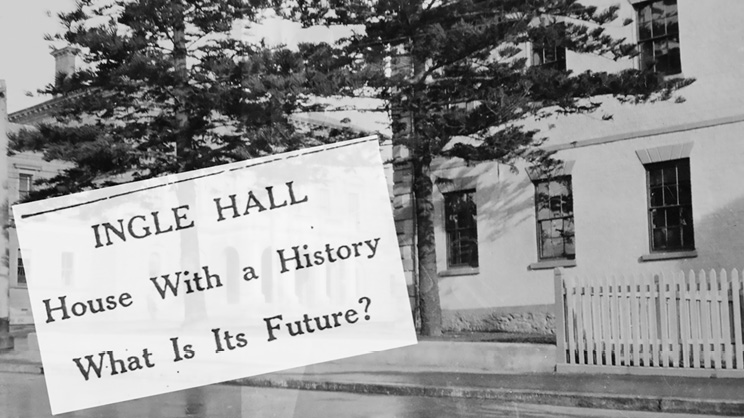
Figure 15: A still from my deep map video of Ingle Hall.
Source: Author, September 2021. This features an image of Hobart Town Hall and side of Ingle Hall from Argyle Street, 1930 (NS1231/1/36), with the permission of Tasmanian Archives.
From a practical perspective, the deep mapping fieldwork I undertook at Ingle Hall provided me with the keys to unlock Maria’s character and sharpened my empathy for her. When I sat in the building, alone, with modern life happening all around me, not only could I imagine the loneliness and longings of the woman who had lived there two centuries earlier, but also I could feel those sensations in my own body. I was no longer overwhelmed by the lack of facts or by the ambiguity of Maria’s inner life. Instead, I was now working ‘with the silences, omissions and distortions’ rather than fighting them.90 And, after nearly 20 years of waiting, Maria was finally in the room with me.
Conclusion
My deep mapping of sites related to Maria Lord, particularly at Ingle Hall in Hobart, were the most crucial and informative research practices of my doctoral project. In this article, I have provided a definition of deep mapping; outlined the possibilities it offers for creative writing and historical research projects; and offered examples of how I engaged with Ingle Hall, the building in Hobart where the protagonist of my historical novel once lived. While my findings are far from conclusive, this kind of methodological experimentation and attunement exposed me to new ideas, strengthened my creative practice and assisted in the development of a unique poetics with which I was able to craft a different kind of story about a colonial woman. I have not positioned myself as Maria’s biographer, but as a scholar and writer of fiction who is interested in women who have been ignored, forgotten or deliberately excluded from history. I am also interested in the reasons for those exclusions and how we can re-situate them in the present without verifiable data. When faced with archival silences, I argue that an imaginative approach, one that respects the historical evidence but moves into an inventive and self-transforming space, is highly useful in contesting well-worn tropes and stereotypes, particularly in relation to convict women.91 In maintaining respect for the historical record but searching for new interpretive possibilities, my novel—the result of my deep mapping experiments—is as close to the ‘truth’ of Maria Lord as I have been able to discern.
My methodological approach complements those of many other literary scholars and writers exploring lightly documented female lives. It allows for imaginative engagement with a place related to one’s subject, providing vicarious ‘access to human experiences in that time that the record alone cannot provide’.92 It allows the writer/way finder to move beyond the known and into a deeper realm where they can recreate ‘lost’ lives, resulting in writing that ‘as a rule respects the known facts, yet is free to interpret them, enlarge upon them and supplement them according to the certainties of the empathic act’.93 In the context of women in colonial Australia, it is also an opportunity to provide ‘a record of the too-often overlooked impact [women] had on the early development of the colony—a record that, until now, has been largely dominated by their husbands’.94 Of course, this method will not be appropriate for every historical situation and subject; however, for those like mine requiring a more flexible approach, where fiction might be the form but not the guiding objective, it has proved fruitful. Above all, I offer my research and findings as an invitation to explore what might be possible. As Hayden White famously said: ‘It does not matter whether the world is conceived to be real or only imagined; the manner of making sense of it is the same.’95
Through my creative hybrid work of traditional and imaginative research, I believe I have been able to capture Maria Lord’s character more fully than other accounts, and I contend that this is my novel’s main achievement—the authentic reconstruction of Maria Lord as a person, transforming her from someone who has been mostly silent in the historical record to someone who can be known and re-situated in the present.
Acknowledgements
I wish to thank the Writing Lives Group at the University of Tasmania; the anonymous referees for their kind and useful feedback; Dr Annaliese Claydon for her perceptive editorial advice; and my PhD supervisors Professor Kristyn Harman, Associate Professor Naomi Milthorpe and Dr Danielle Wood for their generous encouragement.
1 Crawford Cripps Wegman Architects, ‘Ingle Hall, 89 Macquarie Street, Hobart: A Store and Town House Built by John Ingle c.1812—A Conservation Study of the Site Prepared for The Mercury’ (May 1992), 76. Copy privately supplied to the author.
2 Catherine Bishop, Minding Her Own Business: Colonial Businesswomen in Sydney (NewSouth Publishing, 2015), 2.
3 Bishop, Minding Her Own Business, 263.
4 The term ‘creative hybrid work’ is explored by Hazel Smith in The Handbook of Creative Writing, 2nd ed. (Edinburgh University Press, 2014). Smith describes hybrid texts as those that collapse ‘the polarisation of the critical and creative, and meld the two together in the same text’ (331), highlighting ‘the intellectual work that creative writing undertakes, and the way it engages with philosophical, cultural and political systems of thought’. Such hybrid works ‘tend to be intertextual, often dialoguing with other texts by commenting on or quoting from them’ (335), disrupting any clear distinction between creative and critical. The creative component of my dissertation, while based on historically accurate events and real people, is, strictly speaking, a work of fiction. For ease, in this article I refer to it as ‘the creative work’ or ‘the novel’ interchangeably.
5 Alison Alexander, Corruption and Skullduggery: Edward Lord, Maria Riseley, and Hobart’s Tempestuous Beginnings (Pillinger Press, 2015), 36–9.
6 Alexander, Corruption and Skullduggery, 42.
7 Alexander, Corruption and Skullduggery, 2.
8 Catie Gilchrist, ‘Catherine Crowley: A Convict Sea Wife’, St. John’s, accessed 26 August 2025, stjohnsonline.org/bio/catherine-crowley/.
9 William Bligh to Castlereagh, in Historical Records of Australia. Series I, Governors’ Despatches to and from England, vol. 7, 1809–13 (Library Committee of the Commonwealth Parliament, 1914–1925), 128–9.
10 William Bligh to Castlereagh, 129.
11 Janet Ranken, letter, December 1821, in Lifelines: Australian Women’s Letters and Diaries, 1788–1840, ed. Patricia Clarke and Dale Spender (Allen & Unwin, 1992), 151.
12 Alexander, Corruption and Skullduggery, 284.
13 Kay Daniels, Convict Women (Allen & Unwin, 1998), 28.
14 Hobart Town Daily Mercury, 26 July 1859, 2, trove.nla.gov.au/newspaper/page/837339.
15 Robert Knopwood, 30 October 1807, in The Diary of the Reverend Robert Knopwood, 1803–1838: First Chaplain of Van Diemen’s Land, ed. Mary Nicholls (Tasmanian Historical Research Association, 1977), 101.
16 Daniels, Convict Women, 29.
17 Daniels, Convict Women, 2.
18 Hobart Town Gazette and Van Diemen’s Land Advertiser, 20 August 1825, 3.
19 For ease, I will cite entries in the Australian Dictionary of Biography (ADB), where they exist, for these figures in case the reader is not familiar with them. Linda Monks, ‘Knopwood, Robert (Bobby) (1763–1838)’, Australian Dictionary of Biography, National Centre of Biography, The Australian National University, published first in hardcopy 1967, accessed 16 June 2024, adb.anu.edu.au/biography/knopwood-robert-bobby-2314/text3003.
20 A. G. L. Shaw, ‘Bligh, William (1754–1817)’, Australian Dictionary of Biography, National Centre of Biography, ANU, published first in hardcopy 1966, accessed 16 June 2024. adb.anu.edu.au/biography/bligh-william-1797/text2037.
21 Michael C. I. Levy, ‘Parramore, William Thomas (1797–1854)’, Australian Dictionary of Biography, National Centre of Biography, ANU, published first in hardcopy 1967, accessed 16 June 2024, adb.anu.edu.au/biography/parramore-william-thomas-2538/text3447.
22 Hugh Anderson, ‘Fawkner, John Pascoe (1792–1869)’, Australian Dictionary of Biography, National Centre of Biography, ANU, published first in hardcopy 1966, accessed online 16 June 2024, adb.anu.edu.au/biography/fawkner-john-pascoe-2037/text2517.
23 Janet does not have her own ADB entry, but she is mentioned in her husband’s entry. Gavin Long, ‘Ranken, George (1793–1860)’, Australian Dictionary of Biography, National Centre of Biography, ANU, published first in hardcopy 1967, accessed 16 June 2024, adb.anu.edu.au/biography/ranken-george-2572/text3515.
24 Anna Funder, Wifedom: Mrs Orwell’s Invisible Life (Penguin Random House, 2023), 22.
25 Babette Smith, Australia’s Birthstain: The Startling Legacy of the Convict Era (Allen & Unwin, 2009), 13.
26 Smith, Australia’s Birthstain, 66.
27 Smith, Australia’s Birthstain, 83.
28 Kiera Lindsey, ‘“Deliberate Freedom”: Using Speculation and Imagination in Historical Biography’, TEXT 22, no. 50 (2018): 3, doi.org/10.52086/001c.25601.
29 Alexander, Corruption and Skullduggery, 4.
30 Alexander, Corruption and Skullduggery, 5.
31 Alexander, Corruption and Skullduggery, 3.
32 Alexander, Corruption and Skullduggery, 3.
33 Alexander, Corruption and Skullduggery, 265.
34 Lindsey, ‘Deliberate Freedom’, 2.
35 Donna Lee Brien, ‘The Facts Formed a Line of Buoys in the Sea of My Own Imagination’, in Speculative Biography: Experiments, Opportunities and Provocations, ed. Donna Lee Brien and Kiera Lindsey (Routledge, 2022), 22, doi.org/10.4324/9781003054528.
36 Greg Dening, ‘History “in” the Pacific’, Contemporary Pacific 1 (1989): 134.
37 Greg Lehman, ‘Interest and Truth in History: A Review of Truganini: Journey through the Apocalypse by Cassandra Pybus’, Aboriginal History 45 (2021): 166, doi.org/10.22459/AH.45.2021.07.
38 Beverley Southgate, History Meets Fiction (Pearson Education, 2009), 10.
39 Peter Cochrane, ‘Switching to Fiction’, Sydney Review of Books, 12 July 2020, sydneyreviewofbooks.com/essay/switching-to-fiction/.
40 ‘Notes by the Way’ [by the Odd Man], Critic, 1 February 1924, 2.
41 Toni Morrison, ‘The Art of Fiction No. 134’, interview by Elissa Schapell and Claudia Brodsky Lacour, Paris Review 128 (1993), theparisreview.org/interviews/1888/the-art-of-fiction-no-134-toni-morrison.
42 Bill Gammage, The Biggest Estate on Earth: How Aborigines Made Australia (Allen & Unwin, 2011), 250.
43 Gammage, The Biggest Estate on Earth, 2 and 247–50.
44 Alexander, Corruption and Skullduggery, 329.
45 Crawford Cripps Wegman Architects, ‘Ingle Hall’.
46 Seishona Pty Ltd, Ingle Hall’s Condition and Fabric, 14 May 2016, viii. Copy privately supplied to the author.
47 Seishona Pty Ltd, Ingle Hall’s Condition and Fabric.
48 Julian Worrall, ‘Install House, Partners Hill’, Architecture Australia 109, no. 4 (2020): 81.
49 Worrall, ‘Install House’.
50 Worrall, ‘Install House’.
51 Southgate, History Meets Fiction, 13.
52 Arlette Farge, The Allure of the Archives (Yale University Press, 2013), 5, doi.org/10.12987/yale/9780300176735.001.0001.
53 Doreen Massey, Space, Place and Gender (Polity Press, 1994), 1.
54 Doreen Massey, For Space (SAGE, 2005), 9.
55 Massey, For Space, 139.
56 Mary Modeen and Iain Biggs, Creative Engagements with Ecologies of Place: Geopoetics, Deep Mapping and Slow Residencies (Routledge, 2021), 3, doi.org/10.4324/9781003089773.
57 David J. Bodenhamer, John Corrigan and Trevor M. Harris, eds., Making Deep Maps: Foundations, Approaches, and Methods (Routledge, 2022), xv, doi.org/10.4324/9780367743840.
58 David J. Bodenhamer, ‘The Varieties of Deep Maps’, in Making Deep Maps: Foundations, Approaches, and Methods, ed. David J. Bodenhamer, John Corrigan and Trevor M. Harris (Routledge, 2022), 3. Bodenhamer’s chapter in this volume gives a detailed history of deep mapping as concept and practice.
59 Bodenhamer et al., Making Deep Maps, xv.
60 David J. Bodenhamer, John Corrigan and Trevor M. Harris, eds., Deep Maps and Spatial Narratives (Indiana University Press, 2015), 2 (emphasis added), doi.org/10.2307/j.ctt1zxxzr2.
61 Maureen Engel, ‘Deep Mapping: Space, Place, and Narrative as Urban Interface’, in The Routledge Companion to Media Studies and Digital Humanities, ed. Jentery Sayers (Routledge, 2018), 214, doi.org/10.4324/9781315730479-21.
62 David J. Bodenhamer, John Corrigan and Trevor M. Harris, ‘Introduction’, in Deep Maps and Spatial Narratives, 3–4.
63 Tobias Boos, Daniele Ietri and Eleonora Mastropietro, ‘Deep Map and Short Residence as Crucial Elements for a Dialogic Research Method Investigating Places’, The Professional Geographer 74, no.3 (2022): 529, doi.org/10.1080/00330124.2021.2008260.
64 Les Roberts, ‘Deep Mapping and Spatial Anthropology’, Humanities 5, no.1 (2016): xiv, doi.org/10.3390/h5010005.
65 Marvellous Grounds, ‘Archiving the Unarchivable’, Special Issue 1: QTBIPOC Space – Remapping Belonging in Toronto, 22 September 2016, marvellousgrounds.com/blog/art/.
66 Kiera Lindsey, Mariko Smith, Anna Clark, Craig Batty, Donna Brien and Rachel Landers, ‘“Creative Histories” and the Australian Context’, History Australia 19, no. 2 (2022): 330, doi.org/10.1080/14490854.2022.2050465.
67 Bodenhamer, Corrigan and Harris, ‘Introduction’, 4.
68 There are many examples of deep mapping methodology traversing disciplinary boundaries that are beyond the scope of this article, for instance: in theatre studies (Mike Pearson and Michael Shanks, Theater/Archaeology [Routledge, 2001]); spoken word performance and fictocriticism (Selina Springett, ‘Deep Mapping the River: A Palimpsest’, in Borderlines: Essays on Mapping and the Logic of Place, ed. R. Abeliovich and E. Seroussi [Sciendo, 2019]); and sound installations (Annea Lockwood, A Sound Map of the Housatonic River [Installation], Sound within Sound Festival, London, July 2024).
69 Roberts, ‘Deep Mapping and Spatial Anthropology’, xi.
70 Katherine Johnson, ‘Performing Pasts for Present Purposes: Reenactment as Embodied, Performative History’, in History, Memory, Performance. Studies in International Performance, ed. David Dean, Yana Meerzon and Kathryn Prince (Palgrave Macmillan, 2015), 36, doi.org/10.1057/9781137393890_3.
71 Margaret Somerville, ‘Deep Mapping Connections to Country’, in Manifesto for Living in the Anthropocene, ed. Katherine Gibson, Deborah Bird Rose and Ruth Fincher (punctum books, 2015), 117, doi.org/10.21983/P3.0100.1.21.
72 Somerville, ‘Deep Mapping Connections’, 118.
73 Somerville, ‘Deep Mapping Connections’, 117.
74 Samantha Owen and Jo Jones, ‘The Place of Deep Mapping in Teaching’, Public History Weekly, 19 January 2023, public-history-weekly.degruyter.com/11-2023-1/deep-mapping/.
75 ‘Overview: About RE’, RE accessed 6 July 2024, re.anu.edu.au/overview/.
76 The centre has a transdisciplinary approach that includes ‘working with Indigenous knowledge custodians, scientists, archaeologists, historians and other relevant experts’. In 2023, the centre launched a digital mapping project, ‘Marking Country’, which began as a digital atlas but evolved to capture the layers that the gathering of locational data revealed, showing the way people engage with Country, and have done for many generations. This project shows how this kind of methodology is being embraced in Australian historical practice, and how different, inclusive and creative ways of accessing and representing this country’s past are being deployed.
77 Vanessa Berry, ‘Spatial Experiments: Autobiographical Cartography’, in New and Experimental Approaches to Writing Lives, ed. Jo Parnell (Red Globe Press, 2019), 115, doi.org/10.5040/9781350493476.ch-007.
78 Susanna Scarparo, Elusive Subjects: Biography as Gendered Metafiction (Troubador Publishing, 2005), 147 (emphasis added).
79 Lindsey, ‘Deliberate Freedom’, 2.
80 Bodenhamer et al., Making Deep Maps, xiii.
81 Sue Lewis and Andrew Russell, ‘Being Embedded: A Way Forward for Ethnographic Research’, Ethnography 12, no. 3 (2011): 18, cited in Alison Owens, ‘The Curious Task of Fictionalizing the “Truth”: A Narrative Inquiry for Historical Fiction’, 9, Proceedings of the 19th Conference of the Australasian Association for Writing Programs, Wellington, New Zealand, 30 November 2014, aawp.org.au/wp-content/uploads/2015/05/Owens_A._Curious_Task_of_Fictionalising_Truth.pdf.
82 Meg Mundell, ‘Crafting Literary Sense of Place: The Generative Work of Literary Placemaking’, Journal of the Association for the Study of Australian Literature 1, no.18 (2018): 9.
83 Mundell, ‘Crafting Literary Sense of Place’.
84 Mundell, ‘Crafting Literary Sense of Place’.
85 Mundell, ‘Crafting Literary Sense of Place’, 10.
86 Mundell, ‘Crafting Literary Sense of Place’, 11.
87 Mundell, ‘Crafting Literary Sense of Place’, 4.
88 Modeen and Biggs, Creative Engagements, 206.
89 Boos, Ietri and Mastropietro, ‘Deep Map and Short Residence’, 529.
90 Natalie Kon-yu, ‘Letting Go of the Truth: Researching and Writing the Other Side of Silence in Women’s Lives’, TEXT 14, no.2 (2010): 9, doi.org/10.52086/001c.31465 (original emphasis).
91 Ann Curthoys and John Docker, Is History Fiction? (UNSW Press, 2009), 11.
92 James Vicars, ‘“True Histories”: Using Fiction in Writing Lives’, in Offshoot: Contemporary Life Writing Methodologies and Practice, ed. Donna Lee Brien and Quinn Eades (UWA Publishing, 2018), 73.
93 Ina Schabert, quoted in Vicars, ‘True Histories’, 67.
94 Meg Keneally, ‘An Intrepid Pair of Pioneers’, Weekend Australian, 13–14 March 2021.
95 Hayden White, Tropics of Discourse: Essays in Cultural Criticism (John Hopkins University Press, 1978), 98.
Previous Next



