Contributors
Lisa Allette Brooks is completing a PhD in the Department of South and Southeast Asia Studies, University of California, Berkeley, with designated emphases in science and technology studies and gender, women and sexuality studies. Her dissertation examines touch, gendered knowledges and subjectivities, and interspecies medicine in early South Asian and contemporary Keralan Āyurvedic medicine. Brooks’s research in India from 2015–17 was supported by a Fulbright-Hays DDRA Fellowship.
Natasha Fijn is a research fellow at The Australian National University’s Mongolia Institute. Her observational style of filmmaking and photography is derived from natural history and ethnographic filmmaking traditions, underpinned by a scholarly background in both anthropology and animal behaviour. Natasha was awarded a Fejos Postdoctoral Fellowship in Ethnographic Film from the Wenner-Gren Foundation during 2017, which funded the fieldwork for this piece.
Brooke Holmes is Robert F. Goheen Professor in the Humanities at Princeton University, where she has also directed the Interdisciplinary Doctoral Program in the Humanities (2015–20). Her books include The Symptom and the Subject: The Emergence of the Physical Body in Ancient Greece (2010) and Gender: Antiquity and its Legacy (2012), and she has been coeditor of five volumes, most recently Antiquities Beyond Humanism (2019). She is currently working on The Tissue of the World: Sympathy, Life, and Nature in Greco-Roman Antiquity.
Natalie Köhle is a historian of medicine, culture and the body, with a special interest in the comparative history of bodily fluids. She is working on a book about the history of humours in China and their ties to Āyurvedic and Greco-Islamic medical traditions, and on a project on the history of donkey hide gelatine. She is currently a research assistant professor in the Department of History at Hong Kong Baptist University.
Shigehisa Kuriyama is Reischauer Institute Professor of Cultural History at Harvard University. His recent publications include, ‘“No Pain No Gain” and the History of Presence’, Representations 146, no. 1 (2019): 91–111.
Lan A. Li is a historian of the body and a filmmaker. She is the author of the forthcoming book Body Maps: Meridians and Nerves in Global Chinese Medicine and co-founder of the video and podcast series Metaphors of the Mind. Li is currently an assistant professor in the History and Medical Humanities Program at Rice University.
Yan Liu is an assistant professor in the Department of History at the State University of New York, Buffalo. Specialising in the cultural history of medicine in pre-modern China, he studies the history of drugs, religious healing, alchemy and the exchange of medical knowledge in the global context. He is currently finishing a monograph that explores the medical use of poisons in classical Chinese pharmacy, highlighting the shifting boundary between medicine and poison as shaped by technical, political and cultural conditions.
James McHugh is an associate professor at the University of Southern California. His book Sandalwood and Carrion: Smell in Indian Religion and Culture was published in 2012. He is currently finishing a book on alcohol in South Asian history and religion.
Angelika C. Messner, Professor of Chinese Studies, acts as director of the China Centre at Kiel University. She initiated the Villa Vigoni research conferences on emotional knowledge in the Chinese past; has authored seminal articles and books on Chinese knowledge and medicine; is a board member of the Journal of the Economic and Social History of the Orient, Journal of Chinese Medicine (Shanghai) and Bloomsbury Series A Cultural History of the Emotions; and is the president of the International Association for the Study of Traditional Asian Medicines.
Nina Sellars is a visual artist and scholar, and curator of the Harry Brookes Allen Museum of Anatomy and Pathology, Faculty of Medicine, University of Melbourne, Australia. Her practice-led research is conducted across the fields of art, science and humanities, and interrogates the ways in which the discipline of anatomy shapes our understanding of the body, identity and subjectivity. Her work situates the anatomical body within a nexus of social, cultural and scientific concerns, both historical and contemporary.
Ya Zuo is an assistant professor of history at University of California, Santa Barbara. She is a cultural and intellectual historian of middle-period and early modern China. Her first book, Shen Gua’s Empiricism (2018) is a study of historical epistemology, and she has also authored several articles that engage a wide and diverse spectrum of topics, such as sensory history, medical history, book history and the history of emotions.

MORE FLUID TALES

Acknowledgements
and Impressum
Introduction

Fluid Matter(s): Introduction
Natalie Köhle and
Shigehisa Kuriyama
1. Manipulating Flow

In Flux
Brooke Holmes

Whose Life is Water,
Whose Food is Blood
Lisa Allette Brooks

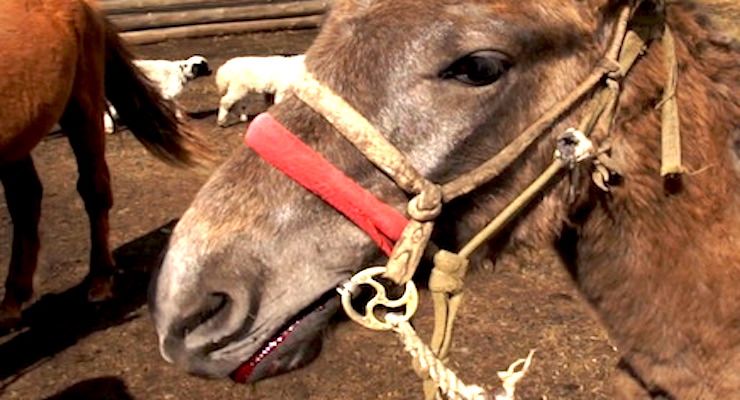
Bloodletting in Mongolia
Natasha Fijn

Fluid Feelings
Angelika C. Messner and
Shigehisa Kuriyama
2. Incorporating Flow

Life and Excrement
Shigehisa Kuriyama

Fluid Being
Yan Liu and Shigehisa Kuriyama

Intoxicating Transformations
James McHugh
3. Structuring Flow

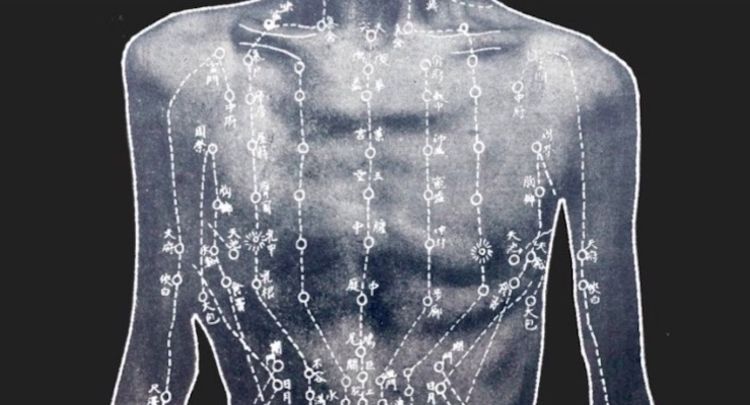
Sunk from Sight
Lan A. Li

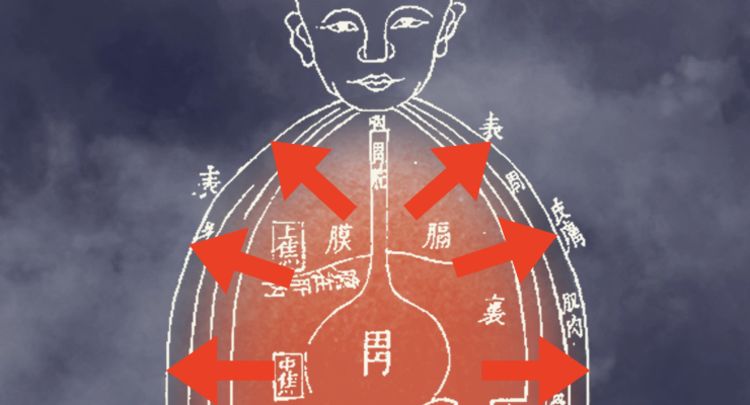
Spirit, Sweat and Qi
Natalie Köhle

Whence Cometh Sad Tears
Ya Zuo

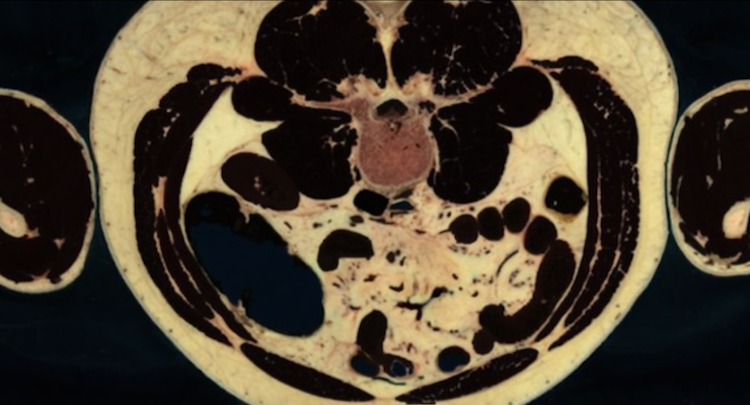
Fat Matters
Nina Sellars
Epilogue

Epilogue: Fluid Matter(s)
Shigehisa Kuriyama
Contributors

Fluid Matter(s)
Contributors


 Built with Shorthand