


 menu
2. ‘A New Frontier’: Pioneering Gender Politics in Fiji’s Independence Era
Up until the early 1960s, women’s organisations in Fiji were generally disengaged from national political debate. This changed in the decade leading up to Fiji’s independence in 1970, as newly formed national women’s organisations began to articulate their concerns through practical programs and more politically oriented activities. This chapter examines how this political dimension to women’s organising gathered strength in the 1960s and early 1970s. As the following pages will demonstrate, local women became increasingly involved in provocative political activity in these years, their focus of engagement moving from a narrow articulation of ‘women’s issues’ to a series of campaigns that challenged prevailing community values at the local and national level, as well as the broader structures of international political and economic power. In many respects, this activity appears to be highly radical. When closer concentration is given to the situated experience of those involved, however, other considerations come to light. It becomes possible to appreciate how trends within the broader political environment influenced activists’ assessments of their own political capacities in this setting and seemed to enable this provocatively styled behaviour. The personal reminiscences of those close to these events demonstrate that this type of political engagement was felt to be allowed within an independence era environment where the possibilities for political action appeared expansive. New futures for Fiji, Fiji’s women, and Pacific peoples more generally, were highly anticipated in this period. Women’s activism at this time reflects this general sense of optimism.
This chapter begins with an examination of the existing terrain of women’s organising prior to the emergence of the more politically oriented groups in the early 1960s. Consideration is given to the position occupied by older, well-established women’s cultural and religious organisations, and the role played by the colonial Fiji Women’s Interest Office in the early 1960s in encouraging the formation of new women’s voluntary associations.
The next section of the chapter examines the role of one prominent women’s voluntary organisation in Fiji, the Young Women’s Christian Association (YWCA). This organisation, like many others formed in the early 1960s, began life with a strong commitment to the participatory ethos of ‘community development’ and the presumed benefits of organisational membership for young women. In only a few years, however, the YWCA program challenged conventional approaches to the women and community development agenda which tended to define women’s responsibilities in purely domestic and familial terms. On the one hand, it promoted a multicultural approach to women’s advocacy. This was a significant departure from the more usual communal focus of women’s organising in Fiji which had tended to emphasise women’s interests as shaped by their location within particular ethnically defined or faith-based populations. On the other hand, the YWCA also sought to challenge the idea that women’s interests were somehow distinct from broader sites of community and international debate, and hence ‘non-political’ in content.
As this chapter goes on to demonstrate, such thinking saw YWCA members articulate a vision of gender equality on the local, regional and international stage, which was closely articulated with broader, internationalised perspectives of social justice. Such agendas contrasted dramatically with conventional styles of political dialogue in Fiji which tended to identify sources of local inequality in racialised rather than internationalised terms. It also contrasted with the more moderate political stance adopted by other women’s organisations operating in Fiji in the lead up to independence.
The final section of this chapter offers a more personalised perspective of how activists in Fiji understood their capacity to expand the space made available to women’s organisations within civil society during this period. I show why YWCA members judged the possibilities for provocative political activity to be expansive and explain how this influenced their negotiation of collectivity, progressive ideas and transnationalism. These are aspects of women’s political agency which are generally assumed to be distinctive to the terrain of women’s organising but, as the preceding chapters have demonstrated, they need also to be examined in ways which recognise their contingent nature.
Women and community development
Fiji’s YWCA was formed in the early 1960s, the final decade of British colonial rule in this island territory. Throughout the preceding colonial period, few development initiatives had been put in place for women. Those that did exist were geared around the conviction that the lives of local women required ‘improvement’ and ‘uplifting’ (Leckie 2002: 161). As such, colonial programs aimed to instruct Fiji’s women in European child-rearing and housekeeping techniques in the ‘earnest belief’ that this would set them on the ‘path of progress and social evolution’ (Schoeffel 1986: 42; see also Knapman 1986: 20–28; Lukere 1997; Jolly 1998: 191–99).
In the final decades of Fiji’s colonial history, government medical and education departments continued to run women’s programs that retained this educative orientation but also incorporated a community development approach which aimed to encourage greater local level participation (Sue 1982: 63).1 This shift was introduced by Marjorie Stewart, a development specialist with experience in East Africa and the West Indies who was posted to Fiji in the late 1950s by the British Colonial Office’s Ministry of Overseas Development. Stewart was instrumental in creating a more structured development program for women within the colonial administration and she encouraged Fiji’s women to form their own voluntary associations. By 1960 she had established a national Women’s Interest Office in Suva which came formally under the jurisdiction of Fiji’s Education Department (SPC 1976: 31). The programs administered by this office were chiefly concerned with the non-formal education of women and included such themes as ‘The Woman in Her Home and Village’ which provided instruction in areas such as home gardening, home beautification and improvement, cooking and sewing, hygiene, handicraft production and the use of ‘appropriate technologies’ in the home (Stewart 1960a: 45, 1962: 42). While Stewart moved on from this post in a short space of time, taking up the position of Women’s Interest Officer for the regional South Pacific Commission (SPC), the work of the Fiji-based Women’s Interest Office continued with great energy throughout the 1960s.
Frequent articles on the operations of Fiji’s Women’s Interest Office appearing in the South Pacific Bulletin during these years attest to the vibrancy of these efforts and report a flourishing of women’s organisations around Fiji. The newly formed groups were seen to provide women with the opportunity to exchange ideas and experiences (Stewart 1960a: 44), while also developing their ‘initiative and leadership’ skills (Parkinson 1961: 63).
Of course, there were many well-established women’s organisations operating in Fiji at this time, with some in existence for decades prior to the initiatives undertaken by the Women’s Interest Office in the 1960s. One of the earliest of these was the Soqosoqo Vakamarama I Taukei (SSVM), a Methodist organisation for indigenous Fijian women, which was founded in 1924 and known initially as Qele ni Ruve (Leckie 2002: 161). The organisation was headed by Rene Derrick, the wife of a colonial missionary. During this early colonial period, the majority of initiatives for women were only able to gain legitimacy if European or expatriate women were involved. A long-time Australian expatriate with close connections to the women’s movement in Fiji, Ruth Lechte, argued for example that ‘if a white woman didn’t head something up, it simply didn’t happen’ (2005). This meant that white women frequently held privileged positions within women’s organisations as leaders, and mentors. While this was certainly the case with Ruve, the efforts of local indigenous women of the Davuilevu region of Viti Levu and, in particular, the work done by the Ruve’s Vice-President, Lolohea Waqairawai, contributed greatly to the early strength of the organisation (Lechte 2005).
The domestic orientation of the programs favoured by the Soqosoqo Vakamarama (Schoeffel 1988: 35) is described by Eta Baro who recounts how, in the early days, the organisation would send ‘sewing patterns and cooking recipes … from Davuilevu’ to clubs all over Fiji. According to Baro, these efforts instructed ‘Fijian women … how to sew, cook using new recipes, keep their homes and villages clean and generally bring up healthy families’ (Baro 1975: 34).
However, as Penelope Schoeffel has argued, the indigenous imprint upon the organisation was strongly evident. The income-generating activities women were encouraged to take up, for example, were generally in the area of traditional Fijian arts and crafts (1988: 35). And, with the Derricks’ departure from Fiji in the 1940s, the whole leadership structure of the organisation began to more closely reflect the social structures that traditionally regulated Fijian social life. The importance of Fijian cultural protocols within this organisation is clearly evidenced by Waqairawai’s decision at this time to turn down requests that she assume the role of national president. Although she had been one of the longest serving members of the SSVM, she maintained that her lack of chiefly status precluded her from leading a Fijian organisation (Baro 1975: 35).
In addition to the SSVM, women’s associations were also formed within Fiji’s faith communities. According to their religious affiliation, women in Fiji might belong to the Methodist Women’s Fellowship, the Catholic Women’s League, or the Fiji Moslem Zenana League. However, the potential for these groups to develop programs solely for women was often limited by gendered expectations which defined their role primarily in terms of serving and supporting the needs of the broader community (see chapter 1; Griffen 1984: 517; Varani-Norton 2005).
The Women’s Interest Office in Suva was instrumental in creating enthusiasm for the establishment of secular women’s clubs which were more primarily focused upon addressing the needs of local women in their community. By 1962, the Office had over 410 women’s clubs registered on its books (Stewart 1962: 42) and had begun publishing a newsletter that went out to clubs keeping them informed of training courses and new network opportunities. Yet the precedent for interventions designed to ‘improve’ women’s lives remained. The domestic orientation of these programs saw a heavy emphasis placed upon aspects of maternal life such as improving family nutrition, domestic hygiene and home improvement. While these programs also encouraged women to participate in civic duties outside the home and develop local leadership skills, it is also clear that within the rubric of community development, ‘women’s interests’ were defined as ‘separate from those of men’ and oriented towards women’s familial responsibilities (Schoeffel 1982: 60).2
YWCA programs
By the end of the 1960s, one women’s organisation had begun formulating programs which challenged the narrower conceptualisation of women’s interests evident in the community development approach. This organisation was the Fiji YWCA. It had begun life in 1961 as a body with fairly moderate aims, offering a range of programs for young women that were entirely in keeping with the thinking of the times. However, a remarkable transition took place within this organisation in the space of a few years.
Beyond her responsibilities to the colonial government, Marjorie Stewart played an important role in the establishment of the YWCA in Fiji and acted as the organisation’s founding president.3 A close association developed between this organisation in its early days and the prestigious girls’ college, Adi Cakobau School (ACS),4 located in the Suva-Nausori corridor. Through her personal friendship with the principal of this school, Stewart was able to use the school’s networks to raise funds for the organisation and also to recruit YWCA members from its student population.
Amelia Rokotuivuna was the head prefect of ACS, and a personality well known to Stewart. Upon leaving school, Rokotuivuna was encouraged to apply for a paid position within the YWCA. Her long career with this organisation began with her employment as a receptionist and coordinator of the YWCA’s Girls Clubs. Taufa Vakatale, who went on to become president of the YWCA, was a teacher at the ACS in these years and also became involved in the organisation through this connection.
As previously noted, during Fiji’s colonial period, it was almost mandatory for women’s organisations to include the presence of European women if they were to gain any type of legitimate recognition within the community, and there was certainly a strong expatriate presence within the YWCA in its early years. Nonetheless, the local women who were actively involved in the YWCA at this time described this expatriate presence in generous terms. Stewart herself was remembered as a personality whose Quaker faith was underpinned by a commitment to ‘social service.’ Rokotuivuna argued that her capacity for both organisation and intellectual thought were highly beneficial to the YWCA in its early years (2002b). The 1962 appointment of two professional, salaried women, both expatriate Australians, to run the day-to-day activities of the organisation was also seen as contributing positively to the YWCA’s development. Ruth Lechte was appointed as the organisation’s General Secretary and Anne Walker was made Program Secretary. Vakatale argued that it was the presence of these two figures that ‘basically … made the Y go.’ She stated that they were personalities of the ‘right caliber’ to deal with the varied membership that the organisation attracted in ensuing years (2002).
While expatriate women contributed the types of skills and experience that would be beneficial to the day-to-day operations of the YWCA, they also fostered a vibrant intellectual profile within the organisation and an encompassing leadership philosophy (Rokotuivuna 2002a, 2002b; Vakatale 2002). Rokotuivuna argued that from the time of the YWCA’s establishment, there existed a ‘serious intellectual group that talked about issues.’ Many of the early members of the organisation argued that unlike the older and more well-established women’s organisations whose leadership structures generally reflected age or social status hierarchies, the founding members of the YWCA encouraged young, educated, community-minded local women with an interest in social and political change to assume positions of authority.
In addition, the participation of local women university graduates was a benefit to the YWCA. In 1968, the University of the South Pacific (USP) was founded and figures such as Rokotuivuna worked hard to forge strong relationships between the YWCA and the local student community, particularly through links with the USP campus chapter of the Christian Student Association.5 Whereas the strong proportion of overseas, tertiary-educated women within the local YWCA community contributed initially to the organisation’s intellectual profile, in later periods increasing numbers of local university students coming into the YWCA contributed to the emerging activist profile of this organisation.6
YWCA activities at this time tended to reflect a philosophy of inclusiveness which stood in contrast to the communalist tendencies that structured the sphere of women’s organising and the existing terrain of civil society more generally in Fiji. This was evident from the outset, as indicated by Stewart, herself (1962: 44) when she described her vision for the newly formed YWCA, as being able to: ‘unite in its membership women and girls, irrespective of race or creed, in a programme devoted to spiritual, physical, cultural and social development and through that membership group to take action within the community on questions relating to women and girls’ (1962: 44).
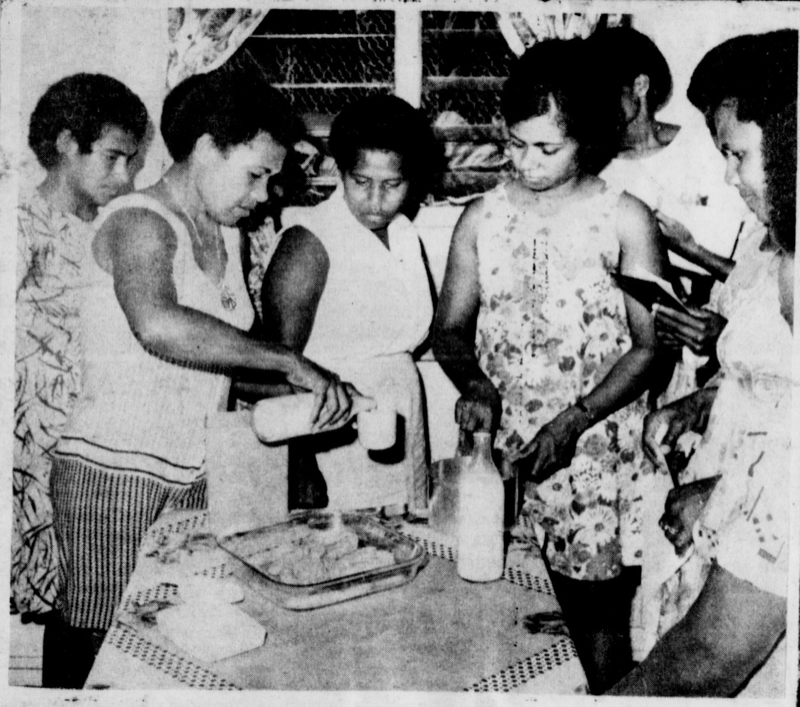
Figure 2.1. Cooking classes held at the YWCA.
Source: Photograph YWCA press cutting archive. Courtesy Pacific Manuscript Bureau (PAMBU), The Australian National University (ANU).
The ecumenical and multicultural focus was evident in the range of YWCA activities offered from its headquarters situated, at this time, on the first floor of the Suva Town Hall, and from various other sites around Suva. Classes were offered in English, Fijian and Hindi language, typing, public speaking, fabric printing, bag-making and sewing. While organised sport had, up until this point, been the principal domain of the colonial establishment and the indigenous elite (Goodwillie 2005), the YWCA promoted a multicultural approach to sporting activities and included programs for athletics, badminton, hockey, softball, swimming and tennis (Fiji YWCA 1965a, 1965b, 1970b; 1965–1970 Program Committee Record Books). Blue Circle Clubs catered for teenage girls and offered instruction in arts and crafts, sewing and cooking as well as local outings.
In addition, the YWCA ran Neighbourhood Clubs which offered activities on a weekly basis for young married women in various locations around Suva. These groups offered instruction in areas such as sewing, cooking, carpentry, inter-club sports and Red Cross first-aid training. In 1967, the YWCA also introduced a program of Housegirls Clubs. These were designed to provide a social outlet for household workers whose opportunities for socialising and learning new skills were limited by their ‘live-in’ employment situation (Fiji Times 22 April 1970).7 In all of these activities, a strong emphasis was placed upon intercommunalism, something which contrasted with the more generally prevailing norm of ethnically segregated women’s groups.
By the late 1960s, the YWCA had begun to broaden the focus of its activities further, developing activities not just for women and girls but for Fiji’s youth more generally. A Home Industries program was established to enhance the earning capacity of early school leavers. In addition, a youth drop-in centre was created and a youth counsellor appointed (Fiji YWCA 1970b; Fiji Times 1 March 1973; Vakatale 2002).
In 1973, the YWCA moved to a new, purpose-built, five-storey headquarters in central Suva. In its public report released in 1969, the YWCA building committee was eager to point out that the new headquarters would not be ‘a static monument’ but instead ‘a home for a living and growing program among the people of these islands—a contribution to the Fiji of the future’ (Fiji Times 29 December 1969). These new premises allowed the YWCA’s program to expand significantly. The existing curriculum was expanded to include vocational courses aimed at meeting the needs of early school leavers and enhancing their job prospects (The Post 27 March 1973).
In this capacity, Rokotuivuna argued that the YWCA was an early precursor to the modern day Fiji Institute of Technology (Rokotuivuna 2002b). YWCA records show that enrolments for the vocational courses totalled 220 in this period and in later years were to reach 500 with students receiving instruction in typing, book-keeping, English language, office work, shop assistants’ work, household workers’ training, hospitality work and commercial cleaning (Fiji YWCA 1973; Rokotuivuna 2002b).
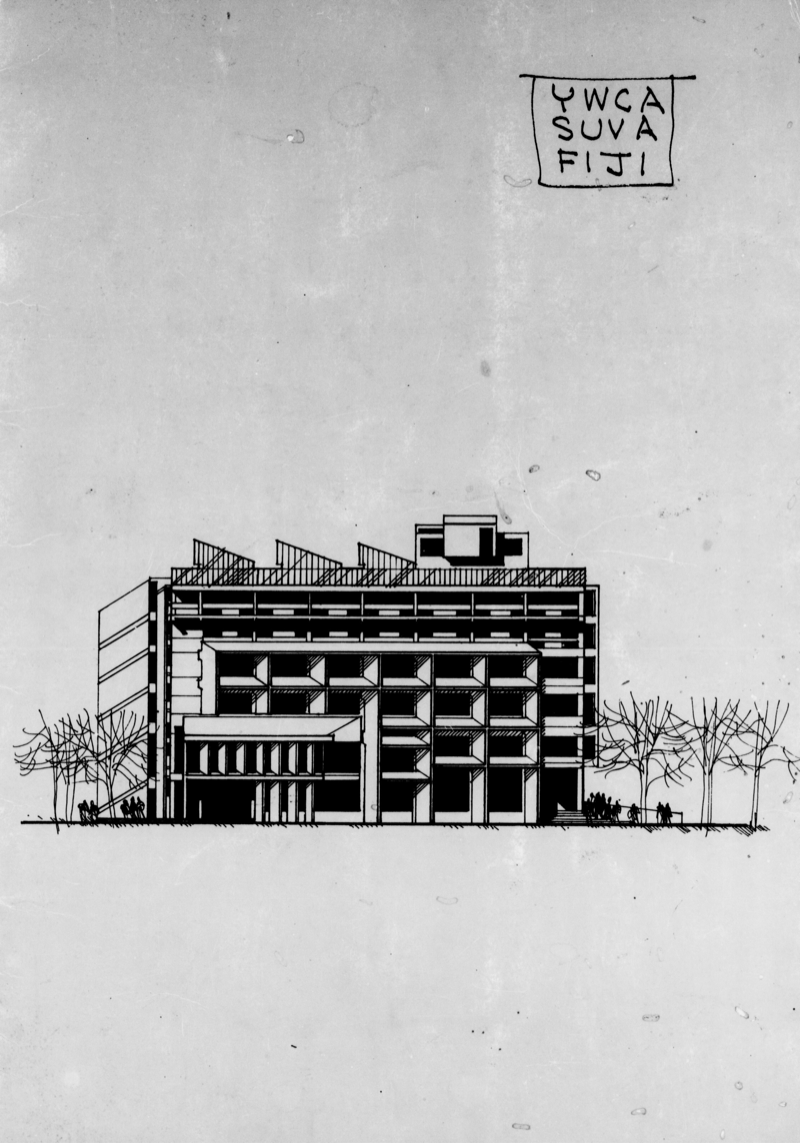
Figure 2.2. Building plans for the YWCA showing the external design.
Source: Image YWCA press cutting archives. Courtesy of PAMBU, ANU.
The widely expanded focus of the YWCA’s educative and social programs indicates that by the early 1970s, it had evolved as an organisation with a broad commitment not simply to the welfare of women and girls but to urban youth more generally. In this role, it clearly aimed to act as an adjunct to the state in the area of training and welfare provision, something no doubt encouraged through Stewart’s earlier organisational mentorship and her dual roles as a YWCA member and colonial women’s development officer. In a paper published by the organisation in 1967, and entitled ‘The Role of Voluntary Services in Social Welfare,’ the YWCA acknowledged the lack of state resources in developing countries and the complementary role that the non-government sector could play in social service provision. This paper argued that cooperative ventures between government and voluntary bodies could create a ‘very adequate framework’ for the provision of social services (Fiji YWCA 1967b).
However, in these years the ‘Y’ also assumed an important role as a public advocacy body and, in this function, it often emerged as a critic of state activity. From the moment of foundation, YWCA leaders had urged members to ‘take action in the community’. In later years, the idea that the organisation should develop an ‘active concern for human community’ became a guiding principle (Fiji YWCA 1973), albeit one which led to frequent involvement in highly politicised and provocative public debate.
Public advocacy
Parliamentary representation
To begin with, the YWCA’s local public advocacy occurred in a fairly ad hoc manner, with strategies limited to letter-writing campaigns or lobbying activities targeting local parliamentary representatives or civil servants (Rokotuivuna 2002b). However, in the lead-up to independence, one event in 1965 helped establish the YWCA’s profile as an organisation that aimed to promote an increasingly radicalised political agenda.
With national debate raging over the contentious issue of political representation in the country’s new parliament, and the likely number of communal seats reserved for each of Fiji’s ethnic communities, YWCA members Suliana Siwatibau, Vakatale and Rokotuivuna, took part in a public forum convened to hear women’s views on the future shape of Fiji’s constitution and electoral system. The YWCA women used this occasion to articulate a vision for the future of Fiji that challenged in unambiguous terms the existing communal system of electoral representation. In front of the British Parliamentary Under-Secretary for the Colonies, Eirene White, delegates from other women’s organisations, and the media, each of these YWCA speakers called attention to the unjust structures of administrative and political rule that had come into existence during colonial rule in Fiji, and argued for their abolition. Vakatale branded the denial of political representation to Fiji’s Chinese community a violation of ‘rights’. Siwatibau argued that the communal electoral system more generally had potentially harmful consequences for an independent Fiji. She remarked that ‘protecting Fijians and having only what is good for Fijians, means that other races are not treated justly and injustice leads to strife’ (Fiji Times 29 April 1965). The most contentious proposition of the meeting was offered by YWCA secretary Rokotuivuna, who voiced strong criticism of the hierarchical nature of indigenous political leadership and the longstanding practice of reserving Legislative Council positions for members of the Great Council of Chiefs. She argued that ‘Fijians should vote as they like, for whom they like,’ and that there should be a ‘common roll worked in conjunction with the communal roll.’ Further to this, she stated that she would like to see the Council of Chiefs ‘wiped out’ and ordinary Fijians begin to ‘think for themselves’ (Fiji Times 29 April 1965).
As news of the YWCA speakers’ claims filtered through the media, their stand was widely interpreted as a betrayal of Fijian interests. Of all the submissions made by women’s groups to the meeting, including the Fijian women’s association Soqosoqo Vakamara, the Fiji Women’s Club and the local branch of the Pan Pacific and Southeast Asian Women’s Association (PPSEAWA), the YWCA members attracted national attention for their strong criticism of Fiji’s governance structures.
This early challenge to colonial manipulations of race relations in Fiji reflected longstanding principles within the Fiji YWCA but they were also ideas that had been discussed within World YWCA conferences during this period. Indeed World YWCA conference resolutions from 1963 and 1967 had urged women within local YWCA associations to challenge institutionalised systems of racial discrimination and social and political injustice (World YWCA 1995: 131, 142; Lechte 2005). Fiji’s YWCA members were fully apprised of this and determined to act on these issues when opportunities presented. This international mandate did not lessen the controversy surrounding the three women speakers’ actions, however. The fallout from this event was significant. The YWCA came to be seen as a local centre for radical political thought. As Vakatale explains, ‘we were branded as anti-chiefs, anti-tradition. So it started from there. The radicalism of the YWCA started from there’ (2002).
Nuclear testing
One of the most significant campaigns run by the YWCA from the early 1970s onwards was in relation to nuclear testing in the Pacific region. Civil society organising around this issue was beginning to intensify at this time, as the YWCA, along with the USP Student Christian Association, and the Fiji Council of Churches, sought to organise protest activities and educate the public as to why continued tests should be opposed. A newly formed group, the Against Testing on Muroroa committee (ATOM), played a significant role in raising public awareness on nuclear testing in the Pacific and drew some of its most active members from YWCA ranks. However, in its own capacity, the YWCA also sought to raise local women’s awareness of the threats a nuclearised Pacific posed to the long-term health of local populations and the environment.
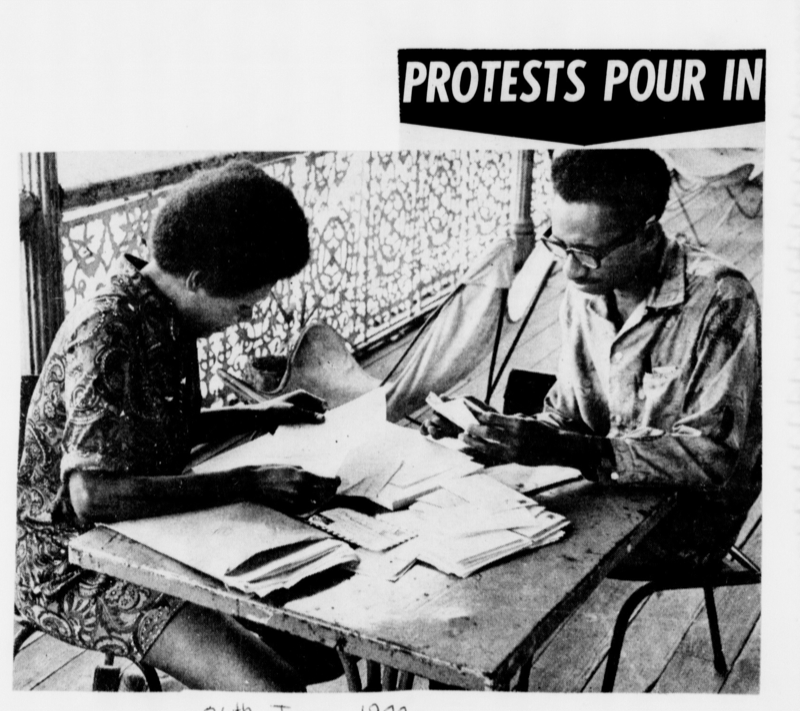
Figure 2.3. Amelia Rokotuivuna and fellow ATOM member Akuila Yabaki sorting letters that were protesting about nuclear testing.
Source: Photograph YWCA press cuttings archive. Courtesy PAMBU, ANU.
Here again, YWCA activities on this question had a transnational currency and reflected concerns raised by the World YWCA in relation to warfare issues, the uses of nuclear energy, and the global proliferation of nuclear weapons (1995: 140). At the local level, however, there was some resistance to this radical expansion of ‘women’s interests’. A level of community scepticism and apathy saw comments such as ‘Why can’t they just concentrate on being young women rather than doing the anti-nuclear campaign?’ directed at the YWCA (Rokotuivuna 2002b). This meant that the YWCA, along with the other civil society partners involved in this movement, had to work creatively to foster local interest in this issue. The YWCA used public education campaigns to turn community attitudes around and often relied on small theatre performances to encourage people to identify with this issue. As Slatter demonstrates, these types of advocacy methodologies could change attitudes. In a review of the YWCA’s work in this area, she cites one observer’s reaction to a critical account of nuclear testing in the Pacific:
Now (we) know, from what was presented today, what can happen as a result of such explosions. We admit our ignorance and lack of knowledge. We criticised the stand that the ‘Y’ and the USP students took in the past but we did not understand. We want a Fiji-wide march to be planned for all women in Fiji to witness (1976: 47).
The activities of Fiji YWCA members on this issue were also persuasive within the World YWCA Council, which in 1971, adopted a resolution that urged associations to express their concern to national governments over nuclear testing in the Pacific, and to also voice these protests within relevant agencies of the United Nations.8 The world YWCA’s recognition of the detrimental aspects of ‘persistent nuclear testing in the Pacific Area’ (World YWCA 1995: 148) was viewed as a win for Fiji YWCA members and reinforced the idea that they had an international mandate to undertake advocacy on these issues both at the local level, and when opportunities later arose, on the international stage (Vakatale 2002).
For the most part, however, the YWCA’s activities on the anti-nuclear issue were aimed at building local-level support amongst the general public and within government. In the latter aim, the YWCA, in coalition with other organisations had some success. In the months leading up to Fiji’s independence in October 1970, there was an increase in public demonstrations of opposition to French and US nuclear testing in the Pacific.9 Responding to this pressure, government representatives began to take up this issue within regional forums such as the SPC, and after independence, within the United Nations and the Commonwealth (Ogashiwa 1991).
In the following years, YWCA members acting within the broader ATOM coalition continued their campaigns and urged the Fiji government to support regional moves to have ‘all or part’ of the Pacific Ocean declared a nuclear free zone. In addition, Fiji’s statesmen were urged to refer the French administration’s activities in the Pacific Territories to the United Nations Committee on Decolonization, on the grounds that its regimes were ‘oppressive’ (Ogashiwa 1991: 48). These efforts to link issues relating to nuclear testing with the enduring presence of the colonial powers in the Pacific became an important plank of regional civil society activity and inspired the foundation of the Nuclear Free and Independent Pacific Movement which continues as an active organisation to this day.10
While local and regional activity on the anti-nuclear issue clearly paid dividends in terms of winning support from Fiji’s government for the YWCA’s anti-nuclear cause, it is also worth noting that even the local churches acted in support of this position. In a country such as Fiji, where religious values are deeply held, it was highly significant that the burgeoning anti-nuclear movement was able to garner support from the churches. They had generally steered a conservative political path and avoided explicit engagement on foreign policy issues. The Pacific Conference of Churches, a relatively liberal organisation, had played an important role in promoting awareness of nuclear testing issues in the public domain and passed a range of resolutions at its annual General Assemblies calling for a nuclear-free Pacific. In Suva, the Pacific Theological College had also been active on this issue and had taken part in anti-nuclear protest marches in 1969 (Siwatibau and Williams 1982: 68). However, the fact that the highly conservative Methodist Church of Fiji also supported civil society actors promoting an anti-nuclear stance (Fiji Times 6 December 1972), and had stood alongside Archbishop George Pearce, the leader of the Catholic Church in Fiji on this question (Slatter 1976: 45), demonstrates both the breadth and the ecumenical reach of anti-nuclear advocacy during this period. It may have been a radical departure from the ‘women’s improvement’ programs of earlier periods, but the YWCA’s political activism on the anti-nuclear issue can be seen as both driving and reflecting prevailing political sentiments of the time.
Family planning
YWCA campaigns on anti-nuclear issues certainly struck a chord with influential political and religious actors in Fiji at this time, yet the organisation’s activity in some other areas was of a far more controversial hue. This was most strikingly evident when the organisation became involved in advocacy around questions of sexual health, family planning and birth control. Here the YWCA pitted itself against opposition ranks which were in some ways no less formidable in the domestic context, than the French administration had proved to be on the international issue of nuclear testing. For in this debate, the YWCA placed itself in direct contradiction to the very public ‘pro-life’ platforms supported by both the Catholic and Methodist Churches of Fiji—religious institutions that exercised significant influence over sections of Fiji’s population.
In 1973, the YWCA had begun to make public calls for improved services in the area of family planning, a greater availability of contraception and the creation of an abortion counselling service (Fiji Times 6 March 1973). Rokotuivuna and Lechte drew on their experiences of dealing with young women coming into the YWCA as a basis for their claims that issues relating to sex education and family planning were being ignored by the government and that this situation was having serious ramifications for young women (Fiji Times 6 March 1973).11 In 1974, the YWCA Public Affairs Committee (PAC) presented a submission to government calling for increased activity in the area of family planning and the legalisation of abortion. YWCA members were conscious of the potentially divisive nature of this action and attempted to defend the organisation’s position in a way that made reference to Christian teachings. The PAC submission, therefore, contrasted religiously conservative arguments which viewed man as responsible to God in all areas of his life, with more contemporary views which saw ‘procreation as one of the areas of life now under a person’s own control’ (Fiji YWCA 2 May 1974, Public Affairs Committee (PAC) Record Book). The submission stated: ‘The woman now has the responsibility to decide what happens to her body. This approach, when moral authority resides with the person and not with external authorities, seems very much in line with the growth to maturity which is the goal of Christian living’ (Fiji YWCA 2 May 1974, PAC Record Book).
At the same time, the global affiliation of Fiji YWCA members to a broader association again influenced how this issue was approached in the local context. In the late 1960s, the World YWCA had begun to consider various aspects of family planning in relation to its policy on the social, educational and economic ramifications of population growth. While World YWCA Council resolutions at this time did not call explicitly for the legalisation of abortion, they did urge local associations to support the creation of health, education and counselling services for family planning that would safeguard individual freedom but at the same time remain widely accessible (World YWCA 1995: 135).
In the local context, attempts to create a theological defence of abortion, or to justify this stand through reference to resolutions passed within the global YWCA body, did not help diffuse opposition to the YWCA’s stand on this issue. Indeed the organisation’s pro-abortion position forced some members to question their continuing involvement in the organisation (Slatter 1976: 49; Vakatale 2002).
However, when asked about the YWCA’s loss of support on this issue, Rokotuivuna argued that the organisation did not lose ‘kudos’ for its pro-abortion stance, and that many Fijian women privately voiced support for the YWCA position, but did not dare to make public statements to that effect (2002b). She felt that despite the submission’s controversial nature, the organisation’s relationship with government and other non-government bodies was not unduly harmed and the organisation ‘was not locked out by its radical stance’ (2002b). Certainly the YWCA’s proposals on this matter were considered provocative in policy-making circles and were not taken up by the government of the day. As later discussion will show, however, the fact that they were issued at all is striking and indicative of a particular type of conviction held within the YWCA regarding the expansive nature of political space within civil society and the organisation’s capacity to challenge religious convictions so strongly held within the community.
Economic justice
Questions of economic justice were also a powerful concern within the YWCA in these years and saw organisation members engage in a critical examination of global and local economic structures and how these impacted upon the lives of Fiji’s women. The organisation had initiated a number of studies on wealth and resource distribution in Fiji, prepared a report entitled Conditions of Work for Women on the roles of women in the public service (Fiji YWCA 23 July 1974, PAC Record Book), and made submissions to parliamentary sub-committees investigating counter-inflation legislation (Fiji YWCA 12 August 1974, PAC Record Book). Prominent members of the YWCA had also been involved in two independent publications examining how international factors influenced development outcomes in Fiji.
Once again, these were areas of concern that had begun to receive attention within the World Council of the YWCA. In 1971, the Council passed a series of resolutions on social and economic justice in which national associations were urged to ‘work deliberately to make YWCA members and the community aware of the inequalities which exist in each society’ (World YWCA 1995: 147). These resolutions also required national associations to lobby governments to ensure that foreign and domestic policy was ‘directed towards the achievement of economic and social justice’ (World YWCA 1995: 147). Resolutions in this area clearly provided local YWCA members in Fiji with an international mandate to resist the influences which were felt to produce economic injustice within Pacific communities.
In 1973, Claire Slatter and Rokotuivuna contributed chapters to a work entitled Fiji: A Developing Australian Colony which exposed the extent to which Australian interests had allegedly compromised Fiji’s economic sovereignty (Dakuvula 1973: 10). Rokotuivuna argued that Australia’s position as a ‘dominant economic power in Fiji’ had a ‘bearing on existing problems’ and would contribute to their exacerbation ‘in the future’ particularly given the country’s reliance upon a sugar industry which was largely controlled by the Australian company, Colonial Sugar Refineries (CSR) (Rokotuivuna et al. 1973: 9). Slatter’s contribution to this work investigated the tourism industry and the assumption that increasing numbers of tourists visiting Fiji meant increasing levels of wealth and well-being for local people. Slatter found that the ‘nature and scale’ of the type of tourism industry that predominated in Fiji made it largely an export economy which favoured not Fiji’s people, but the ‘metropolitan powers, including Australia, Japan and the United States’ (1973: 18–25).
In 1975, Rokotuivuna and Slatter were involved in a seminar that resulted in another published work, The Pacific Way: Social Issues in National Development. Here again, discussion centred upon the ability of local populations to have their interests represented in development processes. For example, Rokotuivuna argued for the formulation of development plans which were built around ‘quality of life’ or ‘style of life issues’ rather than formal development ‘growth’ targets, which assume that quality of life improvement will occur as a by-product of national economic progress (Rokotuivuna 1975: 7).
For Rokotuivuna, Slatter and other YWCA members, strong grassroots and activist connections ensured that these types of deliberations were not simply an academic exercise in ‘what ought to be’, but firmly grounded in local concerns. For example, in this period, the YWCA made strenuous efforts to improve the working conditions and earning capacity of household workers. The organisation provided practical courses that aimed to improve the training of young women engaged in this industry and give it a more professional face (Fiji Times 17 December 1970). It also supported workers’ efforts to create a household workers union, and made representations to government on this question (Fiji YWCA 9 October 1975, PAC Record Book).
And the Fiji government’s responses to some aspects of this activity certainly appear to have been more lenient than in later periods. For example, the organisation’s efforts to safeguard the earning potential and conditions of low-skilled, female, household workers appears to have won some sympathy from local policy makers. While the unionisation option was not taken up, the fact that government representatives were willing to consider a range of other state-initiated measures to protect these workers (Fiji YWCA 9 October 1975, PAC Record Book) indicates a prevailing liberal attitude within government towards the question of women’s labour rights. This would become much harder to discern in ensuing decades. Therefore, while YWCA advocacy designed to create awareness of the international threats posed to Fiji’s economic sovereignty, or more localised activity aimed to reduce the economic vulnerability of women workers, was both innovative and provocative to some extent, aspects of this activity also appear to have found favour with local political figures.
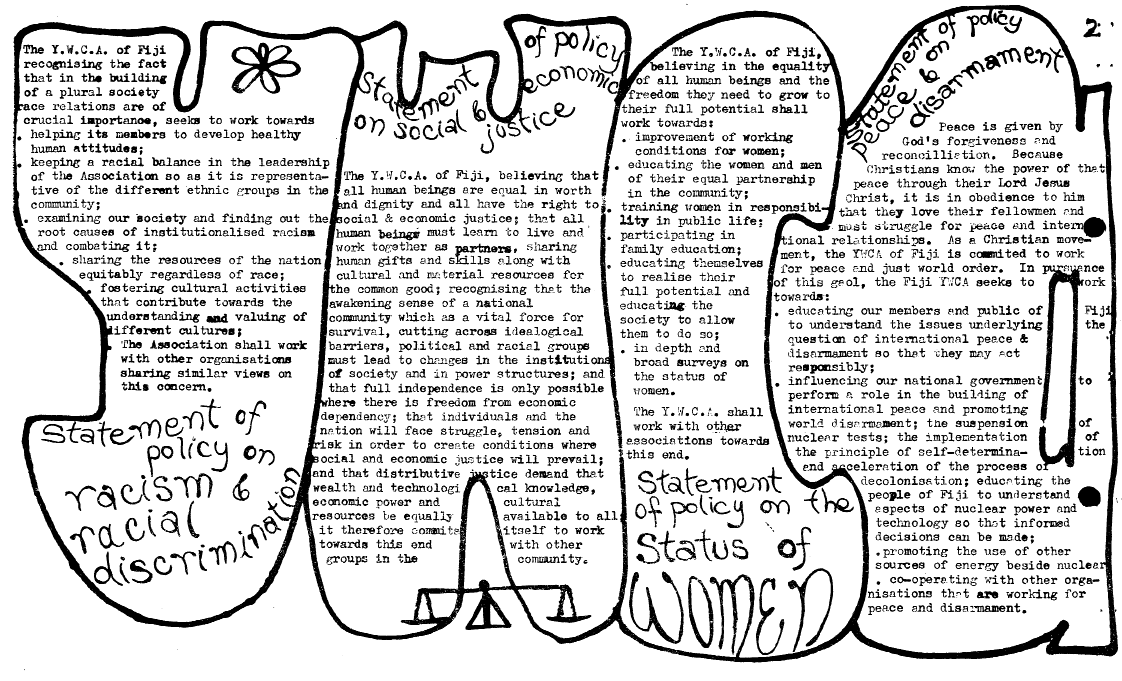
Figure 2.4. YCWA Platform for Public Affairs Advocacy. YWCA 3rd National Convention Report, 10–13 September 1976.
Source: Courtesy PAMBU, ANU.
International Women’s Year: 1975
The independence era political environment seemed to provide an increased latitude for women’s involvement in public debate, often in areas outside those more conventionally associated with women’s advocacy. However, it is also clear that YWCA activity generally retained a distinctive quality and contrasted in significant ways with the public conduct of many other women’s organisations. This included the recently established National Council of Women (NCW), formed in 1968 as a national peak body to represent women’s organisations nationally, and act as a focal point for government liaison on women’s issues. This entity enjoyed close government support and received a government grant of £40 to fund its establishment (Kamikamica 1982).
The NCW principally drew its membership from representatives of the older and more well-established women’s groups in Fiji—faith-based organisations such as the Catholic Women’s League or the Fiji Moslem Women’s League, the mass organisation for indigenous women, the SSVM, organisations for Indo-Fijian women and, in addition, some provincially based groups. While it has been argued that the NCW has followed a conservative political path thanks to its close relationship with the Fiji government (Jalal 1997), the fact that the NCW always aimed to speak for a range of women’s organisations representing a broad span of interests also made the amalgamation of competing perspectives a difficult task (Goodwillie and Lechte 1985). This was particularly so given the influential presence of the SSVM within the NCW; a presence which tended to ensure that the organisation did not pursue political agendas deemed damaging to broader indigenous interests. To maintain a working relationship with its institutional benefactors and to avoid alienating important sections of its membership, the NCW therefore eschewed the YWCA’s ‘head-on’ approach to questions of gender inequality or racial difference and assumed a more reserved political profile.
The divergent paths developed by the two organisations were clearly evident in the local activities undertaken by each association to mark International Women’s Year (IWY), declared by the United Nations in 1975. This event was not accorded a high priority by the Fiji government or the local media and may have passed unnoticed were it not for the efforts of women’s organisations and, in particular, the work of the Fiji YWCA and the NCW.12 The NCW structured its IWY activities in ways that focused upon the unifying aspects of the broader national project in the post-independence context, and the need for greater recognition of women’s contributions towards nation-building. On the other hand, the YWCA sought to use the IWY to focus attention upon the issue of race relations in Fiji, and the negative consequences for women of discriminatory political and social structures. The YWCA proposed a public affairs program which would examine negative racial stereotypes, structures of land access which were determined by race, and the preferential distribution of educational scholarships according to ethnic background in Fiji. In all these areas, YWCA activity threatened to challenge the doctrine of Fijian paramountcy, a concept fervently protected by the indigenous political establishment and either respected or negotiated with great caution by civil society actors at this time.
By focusing upon issues of race relations in Fiji, the YWCA was, again, clearly following an agenda that reflected World YWCA Council resolutions on questions of racial and ethnic discrimination. Yet, in the lead-up to the IWY, some within the local YWCA felt this to be an unnecessarily contentious course of action (Fiji YWCA 11 December 1974, PAC Record Book). Ultimately, the majority of the YWCA board voted in favour of a program devoted to a discussion of race relations in Fiji, persuaded by the view that the promotion of a multiracial Fiji would be a positive activity for Fiji’s women in general terms (Fiji YWCA 1974, PAC Record Book). The emergence of internal contestation within the organisation around this question is significant, however, and demonstrates the presence of rupture points within the association’s collective structure which, in later more troubled political periods, would become significant.
Advocacy on the international stage
Given the quite different local political profiles of Fiji’s two national women’s organisations, it is perhaps not surprising that when the government named its delegation to attend the intergovernmental UN conference for women in Mexico City in 1975, it included a representative of the NCW. The low priority placed by the government on conference attendance is evidenced by the fact that the only government representative on the delegation was an assistant to the Minister of Social Welfare, Adi Losalini Dovi. The nomination of these two delegates was interpreted by YWCA members as an extremely conservative decision, and it was felt that neither woman would engage in any critical reflection upon women’s status in Fiji (Rokotuivuna 2002b).
YWCA members therefore looked to the parallel NGO Tribune proposed for the Mexico City event as the type of venue which might more easily allow for critical deliberation. The World YWCA used its networks to recruit women to attend the Tribune,13 and the Fiji YWCA was asked to suggest suitable participants from the Pacific Islands. This request came soon after the first Nuclear Free and Independent Pacific Conference that was held in Suva in April, 1975. Building upon the contacts forged by Fiji YWCA members at this event with critically minded civil society actors from a number of Pacific locations, a list of ‘radical women’, who were sure to pursue a provocative agenda in Mexico City, was presented to Tribune organisers (Rokotuivuna 2002b). For these reasons, the Pacific delegation sponsored by the World YWCA to attend the Mexico City Forum included independence and indigenous rights activists such as Déwé Gorodé from New Caledonia, Tea Hirshon from Tahiti, Hilda-Halkyard Harawira from Aotearoa New Zealand and Grace Mera Molisa from the New Hebrides (Rokotuivuna 2002b; personal communication Claire Slatter July 2005). These were personalities who shared the strong anti-nuclear stance of the Fiji YWCA members, and were emerging as important and radical political figures in their own countries. Rokotuivuna, Lechte, Vanessa Griffen and Slatter represented the Fiji YWCA in Mexico City.
Many delegates to the 1975 Mexico City Tribune found the event overwhelming, and the representatives from the Pacific Islands were no exception (McConaghy 1975).14 The sheer scale of the event left some of the region’s delegates with the impression that they gained little from their international participation (Siwatibau 2002). Rokotuivuna was one of the few delegates from the region who was given the opportunity to participate on a formal Tribune panel. She spoke on nuclear disarmament issues alongside Sean MacBride, winner of the 1974 Nobel Peace Prize, and a Jamaican-born representative, Noel Brown. While each of the male speakers outlined the dangers of nuclear weapons and the nuclear industry in general terms, Rokotuivuna emphasised the impact of nuclearisation in the Pacific Islands, and highlighted local women’s perspectives on the continuing influence of colonial powers in the region (Moore 1975: 14). In addition to this formal appearance, Pacific delegates also released two joint statements calling for an end to nuclear testing in the region, and self-rule for the region’s colonial territories.
Pacific women’s contributions to this forum were designed to highlight the unique combination of local and international influences that contributed to the subordination of Pacific Island communities and, by extension, local women. According to Rokotuivuna, this was a framework that resonated strongly with some Tribune participants as closely resembling their own situation. For others, however, it presented a challenging perspective on gender inequality that was difficult to accept.
Certainly, pronouncements upon the international dimensions of women’s disadvantage and, in particular, demands for a more equitable global redistribution of economic and political resources, were frequently evident within the official UN conference proceedings in Mexico City. Within the intergovernmental forum, G77 representatives described the impacts of local instances of poverty and racism in ways that consistently laid the blame for these conditions at the door of the western, industrialised nations. They described these phenomena as colonial legacies that developed states now had an obligation to rectify in order to stabilise the post-colonial world. They also argued that Third World economic dependency would only be eradicated when exploitative relationships between developed and developing regions were ended (Mair 1986; Tinker and Jaquette 1987; Fraser 1987).15 These demands caused great disquiet amongst delegates from industrialised nations, however. US Ambassador Barbara White argued that such tactics were designed to divert attention away from a closer consideration of ‘women’s issues and led to an unnecessary politicisation of conference debate’ (UNIWY Secretariat 1975: 27).
The emergence of these same lines of division within the more informal Tribune proceedings (Fraser 1987: 62), tended to contradict the allegations of ‘unnecessary’ diversion made by White and others. As Mary-Jo McConaghy noted at the time, many of the NGO representatives from industrialised countries at the Tribune were ‘uninformed’ about Third World demands for a redistributive ethos to guide international policy-making generally and, in particular, G77 activity in support of the establishment of a New International Economic Order (NIEO). Determined to promote a feminist framework of ‘solidarity between women’, they were often bitterly disappointed when these ideas were rejected by activists from the South (McConaghy 1975: 104). Participants from the Third World, on the other hand, interpreted this determination to promote western-oriented feminist frameworks as an effort to cloister discussion of women’s status in a way that was only relevant to developed regions. They argued that this was a strategy designed to focus attention away from the industrialised world’s responsibilities to developing regions and tantamount to ‘cultural imperialism’ (Falk and Blasius 1976: 263; see also Mair 1986; Tinker and Jaquette 1987; Fraser 1987).
While both the official intergovernmental conference and the more informal NGO Tribune were sites of heated debate and serious division over these issues, the concerns of G77 states were ultimately reflected in the World Plan of Action, the official conference document. The introductory section of this text made specific reference to issues of colonial and neocolonial domination, racial discrimination and global inequality, describing these as impediments to the advancement of all peoples from the developing world. At the same time, G77 states also drafted a separate document to the Plan of Action, which became known as the Mexico Declaration. This document offered an even more critical perspective of the current practice of international political and economic relations, and their impact upon the lives of southern women. Here, calls were made for greater global economic equality, protection of state sovereignty over natural resources, and an end to the ongoing violence associated with practices of colonialism, neocolonialism, Zionism and apartheid (UNIWY Secretariat 1975: 52, 51–58).
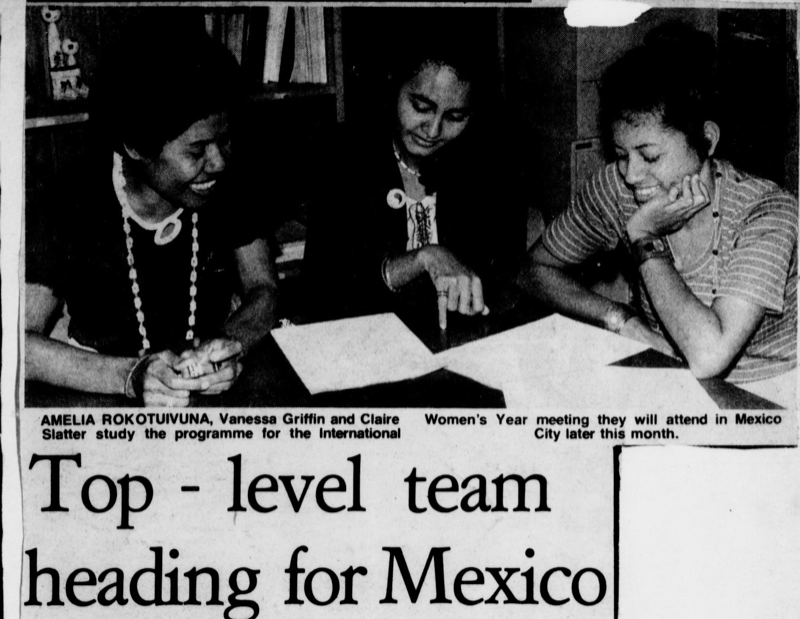
Figure 2.5. Fiji’s NGO delegation examining the UN International Women’s Year Conference Program before travelling to Mexico City.
Source: Photograph YWCA press cutting archive. Courtesy PAMBU, ANU.
When considered against these broader developments, it is clear that the position adopted by Pacific Island Tribune participants, and in particular that expressed by Rokotuivuna in her Tribune presentation, were entirely in keeping with broader themes frequently in evidence at the Mexico City conference. By drawing attention to the actions of the region’s colonial powers and the alleged damage being done to the interests of Pacific Island peoples, Rokotuivuna and her fellow delegates articulated an analytical perspective on the status of women that was in keeping with the concerns raised by many other delegates from developing regions. For some present at Mexico City, this was a highly provocative strategy. For others, these actions were in keeping with broader currents shaping the political negotiations between developed and developing states during this period.
Regional developments
If the local resonance of the International Women’s Year had been muted in Fiji before the Mexico City conference, the decision to stage a regional women’s conference in Suva several months later stimulated interest in women’s issues and simultaneously boosted the momentum of women’s organising at both local and regional levels. This was a wholly NGO-organised affair with YWCA members in Papua New Guinea (PNG) and Fiji responsible for the conference organisation and the sourcing of sponsors to fund the event.16 The 1975 Conference of Pacific Women in Suva attracted roughly eighty representatives from women’s organisations across the Pacific Island states, and included women from non-independent territories of New Caledonia, New Hebrides, Hawaii and French Polynesia. Observers from Australia, New Zealand, Canada and the US were present, as was Jamaican-born Lucille Mair who had been a strong advocate for women from the developing world during the Mexico IWY event.17
Conference discussion revolved around the ‘forces that shape women in society’ (Slatter cited in Griffen 1975a: iv), and considered themes such as family and traditional culture, religion, education, the media, law and politics. In these presentations, it became apparent that two competing perspectives of women’s disadvantage were employed. One was narrowly framed and examined women’s customary and familial roles. The other ‘reached far beyond’ the conventional definition of ‘women’s issues’, focusing more particularly upon the international factors that shaped the lives of Pacific women (Slatter in Griffen 1975a: iv). Melanesian delegates in particular were inclined to adopt this more broadly defined focus in their deliberations, examining how colonial interventions and modern ways of living had impacted upon traditional gender roles at the family level and encouraged a dissolution of traditional systems of knowledge and land tenure (Griffen 1975b: 15, 42–45, 70–77).
A speaker from PNG, for example, described how contact with European cultures had led to a diminishing of women’s customary and familial status and an erosion of women’s sites of traditional authority. Déwé Gorodé outlined the various ways in which continuing French rule in New Caledonia had destroyed Kanak traditions and social and cultural institutions. In the struggle to protect these things, Gorodé argued that the actions of the ‘Kanak woman must be inseparable from the struggle for national liberation of the people’ (cited in Griffen 1975b: 109).
These were not perspectives shared by all, however. In particular, women from the Polynesian islands of Samoa, Tonga and the Cook Islands argued that the radicalism that defined the statements to the conference made by Melanesian delegates from Fiji, New Caledonia or the New Hebrides should not be considered applicable to Pacific women across the board.18 These participants tended to argue that European interventions in the region should not be wholly criticised and had offered some positive benefits to local women, such as greater access to means of economic independence (Griffen 1975a: 11). Nevertheless, even where conference themes seemed to lend themselves to a more localised examination of patriarchal structures such as the role played by women in domestic life, this discussion invariably became infused with broader considerations of how Pacific Island social and cultural institutions were subverted or manipulated by influences emanating from outside the region (Griffen 1975a).
The foregrounding of Pacific experience in these discussions and the final conference declarations formulated in Suva which concentrated upon issues such as nuclear disarmament and decolonisation can be viewed as characteristic features of the advocacy of the women of the Pacific Islands during this period. Indeed, they continue the distinct trend towards a provocative and structurally inclined form of advocacy that first emerged within the Fiji YWCA in the mid-1960s. While statements made by many of the most radical participants at this event echoed themes that had been taken up by post-colonial leaders in other settings in the preceding years, it is important to note that the issues raised at this conference were not a simple emulation of Third World dependency discourse. Rather, the principal focus of these discussions was Pacific women and their experience of nuclearisation and colonial or alleged neo-colonial subjugation. As such, this type of advocacy grew out of critical and concrete evaluations of Pacific women’s lives and how they were being shaped by economic and political forces emanating from outside the region.
In the following section, these trends are discussed in a more situated fashion by examining how YWCA members understood their ability to utilise the political spaces available to them in the independence-era political environment. Emphasis is placed upon the interplaying local and global contingencies that shaped women activists’ views of the prevailing political climate and their subsequent negotiations of organisational collectivity, progressive ideas and transnationalism in this period.
Collectivity
During my interviews with women who had been part of the YWCA during this period, references were frequently made to the group’s organisational structures and how these contrasted with those of more established women’s organisations. Emphasis was placed upon the protocols that regulated participation within Fiji’s civil society more broadly, how these impacted upon women’s organisations in general, and how they were alternatively negotiated by YWCA members. In general, the older and more politically conservative women’s organisations were characterised in ways which suggested that broader hierarchies of social organisation in Fiji were also replicated within these groups and contributed to the relative authority of individual members. As the earlier discussion has shown, within the mass organisation for indigenous women, the SSVM, questions of social rank were an especially pertinent consideration when determining the appropriate person to assume the leadership of the organisation upon the departure of the long-time expatriate president, Rene Derrick.
According to my interlocutors, these types of relationships were negotiated differently within the YWCA at this time. Unlike other women’s organisations, there was an absence of a class consciousness within the YWCA, which allowed Rokotuivuna to rise to a senior position in the organisation despite the fact that she was not a person of high social rank within Fijian society.19 Moreover, the organisation’s members also downplayed the traditional deference to elders that was evident in many other women’s groups. Vakatale argued, for example, that ‘there were traditional women’s groups who felt that young women shouldn’t speak out … they should let the old women speak out first. But here at the YWCA it was different. The older members sat back and got us young women, educated women, to take the leading role’ (2002).
The fact that the YWCA embraced a multicultural ethos was also generally viewed as something that set it apart from other women’s organisations and challenged the communal identifications so prevalent within the realm of associational life outside the organisation. Discussing the YWCA’s ecumenism, Rokotuivuna argued that by ‘playing down the traditions of our particular faiths, we felt we were aiming for higher goals’ (Rokotuivuna 2002b). These commitments towards inclusion were not only relevant to the ways in which relations between Fijians and Indo-Fijians were negotiated within the YWCA either. For Rokotuivuna, the fact that expatriate YWCA members encouraged local women to voice their opinions on political and social issues and take leading roles within the organisation challenged the hierarchies of ethnicity more generally evident in Fijian civil society. She commented, ‘remember, this is colonial Fiji! It was the first time for me ever to sit around and talk to a European as an equal’ (2002b).
The multicultural ethos had been firmly stated in Stewart’s articulation of the organisations’ objectives at the time of its foundation in 1962, and was also mandated by World YWCA Council resolutions. My interviews with older members such as Vakatale, Rokotuivuna and Siwatibau, and later YWCA representatives such as Claire Slatter and Sharon Bhagwan Rolls indicated that Lechte and Walker, as YWCA coordinators, played an important role in making these tenets a reality. Their talent for welcoming people from all communities and various age groups into the organisation was recognised as significant and something which set the YWCA apart from the majority of organisations within Fiji’s civil society sphere.20
These successes contrasted with the agendas promoted by the NCW. Although this entity aimed to act as a national peak body representing many of the older and more established women’s organisations in Fiji, it was far less successful in maintaining a multiracial profile. The fact that the SSVM was a member and, at this point, perhaps the most numerically powerful organisation affiliated with the group, meant that the NCW profile in many ways reflected an indigenous approach to women’s issues. In general, the organisation was therefore willing to entertain the concept of multiracialism, and indeed women’s advancement, only insofar as it did no damage to the broader political, social and cultural agenda promoted by the indigenous establishment, which was committed to the preservation of indigenous paramountcy (Jalal 1997).21
Certainly the Fiji YWCA felt no such constraints in this regard. While the organisation’s members were conscious of the local political potency of racial questions, key members within the YWCA felt it was also time for this situation to be challenged. By establishing an organisational structure which facilitated participation regardless of racial origin, age or social standing, the YWCA acted in ways that posed an implicit challenge to the protocols which established hierarchical relationships within other women’s organisations and which, since early colonial times, had also structured how relationships were forged within civil society more generally.
The first regional conference for Pacific women staged in Suva to mark IWY may, on the surface, appear to be a development which suggests an extension of the same type of horizontal collectivity evident within the YWCA to a broader regional arena of women’s networking. Yet, efforts to forge pan-regional connections were, in fact, disrupted by disputes amongst the region’s gender activists over appropriate frameworks for the interpretation of Pacific women’s experience. The means used to resolve these disagreements suggest an emerging hierarchy of knowledge within the regional sphere of women’s organising which was shaping how discussions of gender equality took place at this time.
As has been shown, women from the Melanesian regions tended to describe Pacific women’s status in ways that regularly made reference to the international political context, and the structural sources of inequality in world politics. This contrasted with the more localised examination of women’s subordination offered by delegates from the independent Polynesian states such as Tonga, the Cook Islands and Samoa. During the course of this conference, these women complained that Melanesian women’s criticisms of foreign intervention in the Pacific did not reflect their views and that their own divergent opinions on women’s status were not given enough recognition (Griffen 1975a, 1984; Rasmussen 1980; Kahn 1980).22
Yet, Melanesian delegates to the 1975 Suva conference successfully downplayed these perspectives as lacking a critical edge (Mera Molisa 1991; Rokotuivuna 2002b). The final dominance of the Melanesian women’s agenda is evident in the 1975 conference resolutions, which emphasised issues of indigenous sovereignty and Pacific nuclearisation. In this particular context, it seems that an internationalised perspective of women’s disadvantage, reflecting trends emerging more generally within the realm of global politics, were considered to have greater ‘critical’ currency than the viewpoints offered by conference delegates whose approach to gender equality was informed by more localised perspectives.
These types of incidents demonstrate how circumstances within the prevailing political environment shaped the negotiation of collectivity amongst and between women’s organisations at the local and regional levels. The protocols that regulated local civil society activity more generally in Fiji clearly impacted significantly upon the operations of organisations such as the NCW and the SSVM. Only within the YWCA was a determined effort made to develop more equitable and inclusive structures of organisational collectivity, in line with a more broadly held conviction that Fiji’s independence era would be one of broader political and social change. Yet hierarchies were not entirely absent from all the activities undertaken by YWCA members during this period and were certainly evident if we consider the privileging of certain types of approaches to advocacy that featured as part of the networking between Melanesian and Polynesian delegates to the 1975 Suva conference. Once again, broader political contingencies, in this case of an international variety, help explain this situation. Prevailing trends in the global political environment, particularly the rise of critical Third World perspectives of inequality, contributed a certain weight to the structurally inclined perspectives of women’s subordination proposed by Melanesian delegates during this period. The corresponding downplaying of Polynesian frameworks for understanding gender equality is indicative of the knowledge hierarchy which structured relations between women’s organisations engaged in an emergent Pacific regionalism.
Progressive ideas
In contrast to the many women’s organisations in Fiji whose advocacy for women emphasised familial and domestic roles, the YWCA’s efforts to progress the women’s agenda ventured into far more politicised and often controversial territory. In some instances, the YWCA successfully won government and community support for its stand, most notably in coalition with a range of civil society actors working to promote opposition to French nuclear testing in the Pacific. On other issues, such as legalised abortion or constitutional design, the YWCA position was far more contentious and challenged the central tenets of Christian belief systems and political values such as indigenous paramountcy. These value structures and systems of belief had shaped Fiji’s social and political life since early colonial times. Nonetheless, during this independence era, YWCA activists felt themselves to be standing upon a ‘new frontier’ which could allow these things to be challenged. Rokotuivuna’s description of the prevailing political environment at this time indicates how YWCA understood their capacity for political agency. ‘[A]t Independence there is a marriage of these ideas with the political agenda of the nation. You are in a climate that is like a new frontier. You feel that you are founding a nation and you have a pioneer attitude’ (2002a).
Personal recollections of the stand taken by YWCA members during the pre-independence discussions on Fiji’s constitution in 1965 frequently highlighted the fact that this was considered an important opportunity to push for political change. The women involved clearly emphasised the fact that they were the first and, at this time, only group to move away from an ethnically or culturally defined appraisal of Fiji’s governance structures. They understood these actions to be a progressive departure from the more conventional stance expected of Fijian women on these issues. Rokotuivuna remembers the meeting as:
one of the defining moments of the YWCA as a group that has a defining ideology that shapes its action. When we met, the Soqosoqo Vakamarama stood up and read their statement and it was exactly the same as the Alliance Party had proposed. We walked in and started talking about cross-voting. This was the first annunciation of a truly multiracial ideology (2002b).
While the idea that young activists could pioneer change within the local pre-independence-era political environment certainly encouraged these actions, they were also motivated by the idea that Fiji’s colonial legacies needed to be challenged. Siwatibau, for example, remembered emphasising the colonially instituted structure of race relations and the need for a new system to be created. She stated:
We listened to her speak [Eirene White], and then all the others speaking, and I started to get annoyed because no one seemed to be saying anything. I wanted to say we’ve had enough. So when it was time for us to speak, we said, ‘we’re ready, we’ve been a colony for too long.’ We said ‘we have to revise our system…’ (2002).
By their actions, these women challenged orthodox thinking in relation to Fijian paramountcy, prevailing structures of political hierarchy, and also the appropriateness of young Fijian women engaging in debate on such issues. Their contention that Fijians needed to start thinking for themselves and stop following their chiefs was countered with the accusation that they were putting forward an ‘Indian’ agenda (Siwatibau 2002). As Rokotuivuna notes, ‘people were horrified that this group of Fijian women stood up against the Fijian orthodoxy’ (2002b).23
This stand was not only shaped by dissatisfaction with local political structures, however. International developments also influenced how the YWCA members conducted themselves during this event. Vakatale noted, for example, that the civil rights struggles taking place in the southern US prompted her to consider how more equitable race relations might be developed closer to home. International coverage of these events influenced her to think about the extent to which structures that entrenched discrimination and inequality were taken for granted in Fiji (2002). Similarly, World YWCA condemnation of national political and social structures promoting inequality was also influential and encouraged Fiji’s national association to think about the local impact of discriminatory race relations (World YWCA 1995: 131; Lechte 2005).24
Advocacy on the sensitive issue of abortion also occurred in a way that included broader critiques of authority structures in Fiji. In this campaign, prevailing ideas about the location of moral authority in Fiji were challenged and individual citizens were encouraged to think and decide for themselves about questions of morality. The YWCA argued that the Methodist and Catholic Churches’ religious teaching tended to erode individual capacity for self-realisation. By emphasising individuals’ ability to choose, rather than framing their demands for legalised abortion in ways which simply opposed the church, YWCA members demonstrated a confidence that established structures of authority could be challenged and the time had come, as Siwatibau argued, for Fiji’s citizens to ‘think for themselves’ (2002).25
The YWCA drew many of its most active members from the student body of the newly established regional USP, and this also influenced their approach to advocacy on a range of issues. Strands of Marxist political thought were a prominent feature of academic debate on the USP campus in these years (Robertson 1986), and this intellectual environment appears to have encouraged local students to reject the idea that the prevailing structure of race relations and political economy in Fiji was a natural state of affairs. Instead, critical attention was focused upon the legacies of Pacific colonisation and how these might explain the ongoing prevalence of social and economic inequality in Fiji. These ideas proved highly persuasive within the YWCA as well, and organisation members such as Rokotuivuna, Slatter, Siwatibau and Griffen were influential in promoting perspectives on women’s subordination which were similarly oriented.
At the same time, YWCA members viewed advocacy that highlighted the global dimensions of gender disadvantage as also being ‘progressive’ in an international sense. For example, when recalling the participation of local Fijian women in the first NGO Tribune convened as part of the IWY conference in Mexico City, Rokotuivuna argued that she had gone to Mexico to demonstrate the existence of ‘progressive thinking women’ in the Pacific region. She argued, ‘I think our contribution was to go there and to make the NGO women’s movement aware that there is group of women in the South Pacific who are concerned. There is a very strong anti-nuclear group who is also concerned with development issues. It’s in an embryo stage but these are progressive thinking women’ (2002b).
During our interviews, Rokotuivuna was keen to differentiate the conservative nature of presentations made by Fiji’s official conference representatives who, she argued, ‘were just making speeches’ without ‘knowing what was happening’, with the more radicalised and internationally informed position articulated by participants to the Tribune (2002b).
Those who articulated structural perspectives of gender disadvantage faced strong opposition from western feminists at Mexico City. Yet, this period of heightened ‘Third Worldism’ provided an expanded transnational space for civil society actors from developing states to advocate from a similar perspective. Closer to the region, these arguments were lent added legitimacy as Pacific statesmen began to question the prevailing structures of world politics which permitted nuclear testing and continuing colonial rule of Pacific territories. These developments meant that gender activists from the Pacific Islands, particularly those from the Melanesian region, were confident of their ability to promote what they deemed to be ‘progressive’ perspectives of gender disadvantage at the local, regional and international levels.
Certainly, the YWCA’s stand on issues related to racial discrimination or reproductive rights challenged prevailing customary and religious belief systems and stood in stark contrast to the more conventional and narrowly focused approach to ‘women issues’ undertaken by the other women’s groups. Nonetheless, the ‘pioneering’ attitude of this organisation and its confident challenges issued in a range of areas indicates a broadly held perception within the YWCA that Fiji was being influenced by new political currents and that the country’s independence represented a ‘new frontier’ of progressive political opportunity.
Transnationalism
YWCA members generally described the transnational influences they encountered during this period as both positive and foundational in terms of how they influenced the trajectory of Pacific feminism. Rokotuivuna and Slatter remarked upon the importance of the second wave feminist writings emerging from Australia, Britain and the US during the late 1960s and early 1970s. In particular, they mentioned Germaine Greer’s (1970) Female Eunuch as a work that was able to speak to women in local contexts. Griffen reiterated this point stating, ‘a few of us could grasp, without even coming from that world, that there was a universal element of truth in these writings. We took these ideas seriously and began writing about them, very briefly and simply and crudely in our own student newspaper’ (1987: 5).
Local women activists had to struggle against opposition to these ideas within the broader realm of civil society where feminist thought tended to be dismissed as an imported ideology of women’s liberation that had no application in the Pacific (Jolly 1996; Douglas 2002). Nonetheless, during this period, feminist works circulating internationally had a broad appeal to those closely associated with the Fiji YWCA.
Certainly, the new institutional willingness to address gender inequality at the UN level during this period,26 provided Pacific women with important opportunities to represent their region on the international stage, as was demonstrated by their participation at the United Nations IWY conference in Mexico. The issues they debated had important resonances with the contentions shaping world politics more generally during this period. Nonetheless, the starting point for these debates remained the Pacific region and Pacific experience. Many activists were therefore keen to draw global attention to the negative impact of intersecting structural forces in a way which emphasised the regionally specific and cumulative nature of challenges which faced Pacific communities as a whole, and Pacific women in particular.
As Griffen (1987) points out, this was an advocacy framework which feminists from wealthier parts of the world found difficult to accept. The early experiences of Pacific women taking part in discussions on the international stage revealed that there was indeed a vast gulf between the feminist perspectives employed by western women and those who approached these questions from a Third World perspective. Western feminists’ conceptual approach to women’s disadvantage seemed, to Pacific women, to be narrow and unable to accommodate alternative perspectives of disadvantage and subordination. As Griffen states, ‘Western feminists did not take into account conditions such as poverty, colonialism or imperialism or racism and white domination in some parts of the world. Western feminists sometimes separated the wider issues of international social and economic relations’ (1987: 6).
This scenario left Pacific women with the feeling they were not being heard at the IWY conference. It also made them distrustful of the feminist agenda and its universalist ambitions. ‘Sometimes we felt we were on the sidelines,’ writes Griffen, ‘and were not quite as feminist as Western feminists’ (1987: 6).
Of course, local activists did not want to give the impression that a political discourse designed to advance the rights of women was inauthentic to the Pacific context, an imported vein of thought that lacked local legitimacy. There were already many within the region’s political classes that were willing to use this line of argument to dismiss women’s concerns in blanket fashion (Griffen 1975b).27 To get around this scenario, many activists chose to avoid calling themselves feminists altogether, given that the term seemed locally unhelpful and was compromised by a western bias in international contexts (Griffen 1987: 6).
Other transnational associations were more positive, however, and appeared to further incline Fiji-based women activists to develop the critical and structurally inclined aspects of their political activity. The affiliation between the Fiji YWCA and the World YWCA seems to have been particularly productive in this regard.
As this chapter has demonstrated, the advocacy positions adopted by the local Fiji YWCA in relation to questions of racial discrimination, reproductive health, peace and disarmament issues, and questions of economic justice, were clearly influenced by the resolutions passed at World Council YWCA meetings held every four years. However, these resolutions were not simply applied uncritically at the local level, but developed or adjusted to fit the local context. For example, Fiji YWCA members confronted the issue of racial discrimination in the local context by drawing attention to the ways in which this phenomenon was an unjust legacy of colonial rule in Fiji that must be confronted if Fiji were to be truly independent. And, in their work on issues of economic and social justice, another area in which World YWCA resolutions (adopted in 1971) had urged national associations to take action, Fiji YWCA members had adopted a perspective heavily influenced by dependency-oriented perspectives of economic development that had become a prominent feature of local academic debate.
Of course, it cannot be denied that the Fiji YWCA was affiliated with a transnational organisation whose origins were European and which had, in the past, been heavily influenced by national associations in Britain and the US (Garner 2003: 234). Nevertheless, as the World YWCA evolved throughout the twentieth century and expanded its global structure, the influence of the formerly dominant associations subsided, and the transnational body was well-positioned to articulate objectives which had a relevance to all national associations (Garner 2003: 234). The fact that Pacific women were able to exercise influence within the World YWCA on the question of nuclear testing, reflected in the resolutions passed at the Accra World Council meeting in 1971, eloquently proves this point.
Conclusion
By emphasising the situated experience of YWCA members in Fiji in the 1960s and early 1970s, I have demonstrated how this organisation came to engage in a provocative style of organisational activity that challenged the operations of older and more established women’s groups. In its more practically oriented activities, the YWCA clearly adopted a different perspective of ‘women and community development’ that aimed to meet the needs of women and men together and that challenged the communalist focus of many existing women’s groups. Moreover, through its public advocacy work, the YWCA emerged as a provocative voice engaged in debate in highly politicised areas conventionally considered outside the purview of women’s organisations.
In a variety of ways, YWCA activity in these years displayed an approach to collectivity, an attitude towards ‘progress’, and a negotiation of transnationalism which was different to other civil society actors in Fiji, who were more likely to reinscribe rather than challenge the social and political status quo. Yet, contingencies within the prevailing global and local political environment shaped this activity in important ways. Those involved felt that these actions were allowed because Fiji was entering a new era of expansive political possibilities. Within government and amongst Fiji’s Church leaders, a more liberal attitude on issues such as nuclear testing or wage protection for low-wage workers seemed to be emerging. Similarly, broader currents shaping regional and global politics were seen to open the way for local civil society actors to question the structural imbalances, political and economic, which were compounding the disadvantage of Third World peoples. Although representatives from the Fiji YWCA faced resistance to aspects of their advocacy from both domestic and international actors, the types of subjects broached by them on the local and international stage indicates a strongly held conviction that this was an era of political promise.
Were these promises realised in the following years? The next chapter continues the story of women’s organising in Fiji by examining, once again, the situated experiences of women activists as they pressed their claims for women’s advancement on the local, regional and international stages. Many in Fiji anticipated that the continued institutional emphasis placed upon women’s issues within the UN would create important opportunities for local women’s organisations in Fiji. But ultimately, the concrete gains were few. Some significant developments for women were achieved in this next decade, yet it was also a time when the nature of women’s advocacy began to shift in interesting and perhaps unanticipated directions. The next chapter examines how and why these shifts occurred and what they meant for the status of women more generally as the UN Decade for Women continued.
1 During this period, community development approaches were viewed as a remedy to correct the shortcomings of conventional ‘trickle down’ development programs by encouraging what today might be termed a more ‘participatory’ style of development. In a UN report which examined women’s roles in community development, the term was defined as ‘the processes by which the efforts of people themselves are united with those of government authorities to improve the economic, social and cultural conditions of communities, to integrate these communities into the life of the nation, and to enable them to contribute fully to national progress’ (UN 1972: 5).
2 Although, as Bronwen Douglas has argued, these types of programs also provided local women with the opportunity for socialisation beyond the more laborious tasks that they undertook in the domestic environment. While Douglas acknowledges the fact that these programs contributed to a widespread promotion of European gender stereotypes, she also contends that blanket dismissal of these types of projects as old-fashioned, or outmoded, tends to overlook the extent to which they also provided a source of collective social empowerment for local women (1999, 2003).
3 The YWCA began as a Suva-based organisation and was initially affiliated with the New Zealand YWCA. In 1965, the Fiji YWCA was formed as a national organisation. Even so, the majority of the organisation’s activities were located in Suva. By 1970, the Fiji YWCA had also established a branch in Lautoka.
4 Adi is a chiefly title for indigenous women in Fiji.
5 Before this time, women pursuing higher education were required to travel to New Zealand, Australia or England. Vakatale, Siwatibau, Esiteri Kamikamica and Rokotuivuna completed university studies overseas, and returned to Suva prior to the establishment of USP.
6 According to Vanessa Griffen, Rokotuivuna was particularly instrumental in forging strong links with the local student population, women and men, and ‘pulled them into the activities of the YWCA’ (Griffen 2005).
7 The issue of household workers’ free time was crucial to the Housegirls Clubs’ success. Therefore in 1967, the YWCA’s General Secretary wrote to the employers of household workers around Suva informing them of the YWCA’s programs for their employees and urging them to allow the girls enough time off to attend club activities (Fiji YWCA 30 January 1967, Programme Committee Record Book).
8 As early as 1963, the World YWCA Council had passed resolutions condemning the further development of weapons of mass destruction and, in particular, nuclear weapons technology (World YWCA 1995: 131).
9 In May 1970, five months before Fiji’s Independence, expatriate USP academic Dr Graeme Bains published an article in the Fiji Times designed to raise local consciousness of the negative consequences of French nuclear weapons testing on Mururoa Atoll (Ogashiwa 1991: 46). Bains’ critical appraisal of the situation attracted interest from the Student Christian Movement and the YWCA Public Affairs Committee which, along with the USP Student Association and the Fiji Council of Churches, organised a public meeting on the issue. This event attracted five hundred people, including the Fiji Minister for Labour, Ratu Edward Cakobau, who attended as a representative of the Chief Minister, Ratu Sir Kamisese Mara. The meeting passed a series of resolutions protesting against further French testing programs and urging Ratu Mara to take the issue to the South Pacific Conference scheduled for September 1970 (Fiji Times 30 May 1970). Before the September meeting of the South Pacific Conference, ATOM members briefed the Fijian delegate, Jonati Mavoa, who then took up the anti-nuclear cause during the formal conference proceedings (Ogashiwa 1991).
10 In 1974, ATOM organised a regional conference on the issue of nuclear testing with Rokotuivuna chairing the planning committee. Out of this conference, the regional body known as the Nuclear Free and Independent Pacific was founded, which would become highly influential in generating awareness of both nuclear testing and colonisation issues in the following decades.
11 An article in the Fiji Times (6 March 1973), cites both Rokotuivuna and Lechte as arguing that ‘criminal abortions were a major problem in Fiji’ with Lechte describing her personal knowledge of two cases where young women had died as a result of illegal ‘back-street’ abortions. For these reasons, the YWCA claimed the need for social services that could provide counselling for those who sought abortions and more broad-reaching programs of sex education and family planning.
12 Reports on the subject in Fiji’s newspapers, for example, were devoted to a discussion of local organisations’ sale of promotional material featuring the symbol of the IWY dove rather than any clear consideration of what this development at the international level might mean in concrete terms for Fiji’s women (Fiji Times 22 April 1975).
13 This situation is undoubtedly explained by the fact that Mildred Persinger, head of the World YWCA during this period, was also one of the chief organisers of the Mexico City Forum (Fraser 1987).
14 While some Fiji members had experience of international forums for women through their participation at World YWCA conferences staged every four years, these affairs were hardly of the scale of the UN 1975 Tribune.
15 Such arguments had received broad international exposure during this period as G77 nations applied increasing pressure within the UN. In 1964, the General Assembly had been persuaded to support the formation of a Convention on Trade and Development (UNCTAD) which aimed to encourage a more equitable economic and trade environment internationally. In 1974, in large part due to G77 pressure, the General Assembly universally ratified a declaration for the Establishment of a New International Economic Order (NIEO), a policy which aimed to protect the economic sovereignty of all states and create the type of global economic environment which would promote trade and development in Third World countries and increase their economic participation at the international level (Bhagwati 1977; Gregg 1981; Labra et al. 1981; Hart 1983). It was hoped that these international mechanisms would encourage a more equitable global economic environment by restructuring fiscal relations so that industrialised northern nations did not continue to benefit from their economic exploitation of disadvantaged southern states. During this period, G77 nations also demonstrated a strong sense of solidarity in relation to issues of apartheid in South Africa or the Israeli occupation of Palestinian territories in the Middle East. They frequently condemned international tolerance of these policies which, they claimed, amounted to the subordination of entire populations on the basis of ethnicity, denying them internationally accepted rights to political representation or self-determination.
16 Conference organisers relied upon a diverse range of international funding for the conference. Religious organisations such as the Board of Global Ministers of the United Methodist Church of the United States, the Australian Council of Churches and the Presbyterian Churches of the United States all donated money. The Canadian International Development Agency also provided significant financial support, as did the World YWCA and the Foundation for the Peoples of the South Pacific (Griffen 1975a).
17 In the lead-up to the 1980 UN Mid-Decade Conference for Women, Mair was made conference Secretary-General.
18 Personal communication with Greg Fry. Fry was an observer at the 1975 conference and witnessed the nature of interaction between delegates. Interestingly, this tension is not mentioned in Griffen’s report of the conference proceedings published in 1975, although she does make some mention of disagreement occurring between delegates over the constitution of ‘women’s issues’ in a later piece she wrote discussing the history of women’s organising in the Pacific in 1984 (Griffen 1984: 519).
19 Rokotuivuna had won a scholarship to attend the elite girls school ACS.
20 The incorporation of young Indian women into the ‘Y’ was initially helped by the efforts of Denise Hussein, an important figure within the Indo-Fijian organisation, Stri Sewa Sabha, but also one of the first Indian women to become involved in the YWCA administration (Rokotuivuna 2002b; Lechte 2005).
21 Robbie Robertson and William Sutherland (2001) have demonstrated the ways in which the indigenous elite in Fiji maintained control of the politically dominant Alliance Party and were able to use the discourse of multiracialism in a way that suggested a broad commitment to the advancement of all Fiji’s peoples but which, in fact, benefited only a narrow indigenous chiefly elite from the country’s Eastern provinces—the Tovata confederacy (see also Durutalo 1985; Kelly and Kaplan 2001; Lawson 1991; Firth 1997).
22 Grace Mera Molisa, a long-time women’s activist from Vanuatu (part of Melanesia), argued that such tendencies reflect important cultural differences between Melanesian and Polynesian women. She claimed that Polynesia’s stratified social structures frequently allowed women to rise to positions of leadership due to their hereditary status. For this reason, when women leaders from Polynesia took to the international stage, they frequently denied the impact of gender inequality in their countries (Mera Molisa 1991). Mera Molisa argued that these perspectives denied ‘the centrality of gender difference because it is eclipsed by rank’ (Jolly 2005a: 149–50). Mera Molisa was scornful of claims made by her Polynesian counterparts that women are not discriminated against within Pacific Island cultures, describing them bluntly as ‘a lie’ (Jolly 2005a: 150; Mera Molisa 1991).
23 The tone of press reports of the proceedings, and the wave of protest letters in the newspapers, reveal the provocative nature of this type of political behaviour (Fiji Times 29 April 1965, 4 May 1965).
24 While the 1963 World Council deliberations in Nyborg Stand, Denmark touched upon this theme, it was examined with greater energy at the World Council meeting held in Melbourne in 1967. At this event, YWCA members were encouraged to recognise the ways in which racial prejudice was manifest in personal social relationships and ‘woven into the complex pattern of an entire society’. The council argued that certain groups within society effectively manipulate issues of race in ways that allow them to ‘maintain their economic and social position’. National associations were urged to ‘give their support to attempts to ensure equal civil and political, social and economic, religious and cultural rights for all racial and ethnic groups’ and to assist public authorities to guarantee human rights (World YWCA 1995: 142).
25 This contrasts starkly with how the same issues have been treated in later periods of Fiji’s political history. While family planning programs are still carried out by a number of international NGOs operating in Fiji today, the issue of abortion appears to have become something of a taboo subject within the prevailing political environment, and rarely features as an issue of discussion within NGO ranks or national policy-making circles despite the fact that it is still officially illegal (although procurable privately). This situation persists alongside a growing public concern and media focus on the subject of teenage pregnancies and many documented instances of abandoned newborn babies (see Daily Post 16 April 2002; Fiji Times 1 March 2002, 15 April 2002, 6 November 2002).
26 Since the early 1970s, and particularly in the wake of Esther Boserup’s groundbreaking work on this subject, the status of women in development (WID) had received increased attention at the level of international policy making. In 1973, an amendment to the US Foreign Assistance Act stipulated that future development aid projects would be required to ‘give attention to those programs, projects and activities which tend to integrate women into the national economies of foreign countries, thus improving their status and assisting the total development effort’ (Papanek 1975a: 196). In the years that followed, international aid agencies from many Scandinavian countries followed suit, and by the mid-1970s the UN Agencies and the World Bank were also incorporating a WID focus into their policy design for developing regions (World Bank 1975). For an indication of burgeoning academic literature on this subject in later years, see the special issue of Community Development Journal edited by Hermione Lovel and Marie-Therese Feuerstein, 1985.
27 As Margaret Jolly notes, women in other parts of the Pacific negotiated these tensions in different ways. While calling attention to the ways that patriarchal aspects of local custom ‘naturalised’ women’s secondary status, figures such as Jully Sipolo in the Solomon Islands (Griffen 1987) or Mera Molisa in the newly independent state of Vanuatu ‘espoused’ feminist values but, in this period, refused the term feminism (Jolly 2005a). Instead, they preferred to articulate their demands for gender equality in ways which called attention to contemporary customary practices which degraded women, and simultaneously ignored the traditional locations of women’s customary authority which had in the past been respected. Similarly, Jolly also describes how gender activists in the region have, for many years, rhetorically aligned discourses of women’s empowerment with Christian tenets. Such practices clearly indicate how systems of religious belief or cultural protocols shape civil society activity in the Pacific Island region, and, in particular, influence the advocacy of gender activists (Jolly 1996, 2005a; see also Douglas 1998, 2002, 2003).



