


 menu
5. ‘A Gentler Political Engagement’: 1995–2002
In November 2002, Fiji’s Prime Minister, Laisenia Qarase, addressed a meeting convened by the Fiji Women’s Crisis Centre (FWCC) as part of its annual 16 Days of Activism Against Violence Against Women. He voiced his support for the FWCC’s anti-violence message and declared the government’s shared commitment on this issue to be a clear demonstration of NGO-state ‘partnership in action’ (Fiji Times 22 November 2002). Ironically, in the next breath, the Prime Minister took a more critical line, admonishing the Centre for its uncompromising public profile. ‘[S]ometimes you might more effectively serve your cause with what I would describe as a little quiet diplomacy,’ Qarase argued (Fiji Times, 22 November 2002). These oddly matched sentiments seemed hardly befitting of the occasion and certainly detracted from the central message of the FWCC’s ‘16 Days’ campaign. When understood from a contextual perspective, however, these sentiments were hardly incongruous. By 2002, Fiji’s political climate engendered tense relationships between civil society and the state. This meant that for many women’s organisations, a path of ‘gentle’ engagement was considered the most politically expedient (Jalal cited fem’Link 2002a).
While the scenario described above might appear to suggest that not a great deal had changed in Fiji since the early 1990s, in fact the immediate post-Beijing era was anticipated with a sense of optimism by many gender activists. During this period the beginnings of a softening policy agenda from the formerly hardline nationalist government was discernible as the government initiated a process of constitutional review and also formulated a Plan of Action to see commitments made in Beijing reflected in local policy. The change of government that brought Fiji’s Labour Party to power at the head of a multiparty coalition in 1999 was viewed as further evidence that Fiji was entering a new and more liberal phase. While tensions between the state and civil society were not entirely absent, the ground for productive and sometimes unorthodox collaborations between women’s organisations and government agencies was more fertile in this period than in the early 1990s, and inclined many women’s organisations to increase their faith in the state.
Local and international political developments in 2000 disrupted this optimistic mood. In May 2000, a civilian-led coup again saw Fiji’s parliamentary processes overturned, the elected government ejected from power, and the installation of an interim, nationalist-led regime which aimed to abrogate the country’s new constitution. Amongst local gender activists the mood swung from optimism to despondency as their relations with the state again became more fraught. Many women’s organisations joined with a range of broader civil society actors who rallied in support of the 1997 constitutional reform process and advocated for return to democracy, thereby avoiding some of the organisational rifts that had occurred in the wake of the 1987 coup. Yet, they also faced considerable difficulty in making issues of specific concern to women resonate within a political environment where ethno-nationalism was again politically dominant.
On the international stage, the initial post-Beijing euphoria evident within the transnational realm of women’s organising appeared, by 2000, to have also dissipated significantly. A highly reactionary, transnational religious lobby, disgruntled by the policy developments advancing women’s rights in previous years, had gained international influence at this time (Steans and Ahmadi 2005; Chappell 2006; Reilly 2009). This network of state and non-state actors demonstrated a steady determination to stall the momentum of international consensus on women’s human rights which had been gathering in Beijing. Dubbed the ‘unholy alliance’ by some feminist observers (Chappell 2006), this grouping had some success in reducing the transnational space available to women’s groups looking to expand UN debate on women’s human rights into new areas.
International norms of ‘good governance’ which, at this time, constituted ‘the language of negotiations’ for international development institutions (Larmour 1998: 1), encouraged close institutional engagement with civil society actors in these years.1 The idea was that such practices would help make domestic and international structures of global governance more participatory and accountable.2 Yet, in the Pacific, organisations who were willing to partner external agencies’ development initiatives were also under some pressure to ‘dovetail’ their agendas with the broader tenets of the ‘good governance’ agenda (Slatter 2002). As we shall see, these developments were understood by local activists to have both positive and negative implications for the political agency of individual recipient organisations and the sphere of women’s organising in general.
The following pages will examine the contingencies of women’s political agency in Fiji in this period by describing how broader domestic and international political trends and developments shaped women’s organisational activity on the local, regional and international stage. In the later part of the chapter, greater emphasis is placed upon the situated experiences of activists themselves. Here, once again, consideration is given to their subjective appraisals of the prevailing political environment and how this influenced organisations’ efforts to promote collectivity, progressive ideas and transnational connection.
Local developments
A climate of reform?
Women’s organisations observed with some satisfaction the mood for reform which was building in Fiji in the mid-1990s. While a number of political developments occurring in these years suggested that the formerly hardline nationalist agenda promoted by the Soqosoqo ni Vakavulewa ni Taukei (SVT) government was beginning to alter, the most significant of these was Prime Minister Sitiveni Rabuka’s decision in 1994 to commission an independent process of constitutional review (FCRC 1997a, 1997b; Norton 2000: 91).
This development offered an important opportunity for women’s organisations to draw attention to those aspects of constitutional law that discriminated against women.3 Both Fiji’s 1970 and 1990 constitutions included citizenship clauses that were discriminatory, granting full citizenship rights only to children born outside the country whose fathers were Fiji citizens, and granting the right to apply for Fiji citizenship only to foreign wives of citizen males of Fiji. Indigenous nationalists regularly defended these laws, citing the Indo-Fijian community’s tendency to arrange marriages with Indian men from the subcontinent as the chief concern. The Fiji Women’s Rights Movement (FWRM) opposed this view, arguing that existing citizenship provisions were unacceptably discriminatory and also contributed to a local brain drain by encouraging those professional and educated local women married to foreigners to live outside Fiji (Goodwillie and Kaloumaira 2000).
Building upon the success that the FWRM had achieved in coordinating action on CEDAW in the lead-up to the Beijing Conference in 1995, this organisation again sought to lead a coalition of women’s groups to take up this issue at the various Constitutional Review Commission hearings held around the country.4 The idea was to build upon the impetus for reform that was generated through the constitutional review process. This coalition eventually incorporated sixteen women’s organisations, and could boast well-established networks around the country and support from all of Fiji’s ethnic groups (Goodwillie and Kaloumaira 2000).5 One of the members of the constitutional commission was later to comment that wherever the CRC convened its hearings, it was confronted with women wanting to make submissions on the citizenship issue (Lal 2005). This was surely testimony to the important network building on this issue that was encouraged by the FWRM and its partners.
When the CRC’s final recommendations were presented to Fiji’s President, Ratu Sir Kamisese Mara, on 6 September 1996, it was clear that the work of the Women’s Citizenship Rights Coalition had been influential. The discriminatory aspects of citizenship law were now removed from the constitution and in addition, the constitution’s Bill of Rights also stipulated that discrimination on the basis of sex and gender was to be outlawed. This made Fiji’s reservations on Articles 5a and 9 of the CEDAW convention now unconstitutional and these were duly removed.
Despite some ‘tinkering’ with the commission’s recommendations, particularly in the contentious area of electoral representation for Fiji’s ethnic communities (Kelly and Kaplan 2001: 179),6 the general academic and civil society view was that the 1997 constitution provided ‘greater equity in rights between indigenous Fijians and other groups’ and reduced ‘racialism in politics’ (Lal, cited in Kelly and Kaplan 2001: 179; Citizens’ Constitutional Forum (CCF) 2005). This view was not shared by more parochial local actors who were aggrieved at many of the provisions within the constitution’s Bill of Rights. Almost as soon as the constitution came into effect in 1998, it faced challenges from indigenous nationalist interests who argued that it was incomprehensible to the grassroots, and established principles that ran contrary to indigenous interests and concepts of identity. They also claimed that the constitutional review process had been a hurried affair with inadequate consultation (Lal 2002; CCF 2005). For local women activists, however, acceptance of the 1997 constitution was viewed as a victory and an important demonstration of what could be achieved with a collective effort (Sharma, cited in Goodwillie and Kaloumaira 2000).
The government’s decision to establish a ten-year national Plan of Action for Women reflecting commitments made during the 1995 World Conference in Beijing, was also broadly welcomed by women’s groups as a signal that institutional gains for women were being made in this period. The Women’s Plan of Action was formally launched by the Prime Minister on 9 October 1998 and five priority policy areas were to be tackled to improve women’s status: gender mainstreaming in government planning and policy; women’s status in the law; micro-enterprise development; gender balance in decision making; and political representation and domestic violence (Fiji Ministry of Women and Culture 1998).
The plan’s discussion in each of these areas was remarkably frank. It cited statistics from a 1997 UN Development Programme (UNDP) report which stated that 25 per cent of Fiji’s population was living in poverty, with many more at risk of ‘becoming impoverished’ (UNDP with Government of Fiji 1997) and speculated upon the impact of this scenario for local women. The plan also touched on some highly sensitive areas, for example discussing the availability of family planning services and the negative impacts of the continued criminalisation of abortion (Fiji Ministry of Women and Culture 1998). The fact that the report’s forthright discussion on subjects such as reproductive health was acceptable to the government, clearly indicates the extent to which aspects of the prevailing political environment had transformed in the late 1990s. By raising these provocative questions in the public domain, the government certainly appeared to clear the way for civil society actors to take this debate further, even in the face of local religious sensitivities. By contrast there had been no deliberation on the issue of women’s reproductive rights in the previous decade.
But this more liberal attitude was not evident in all areas of the report. The fact that micro-financing initiatives were viewed uncritically in the plan, described as providing important mechanisms by which to tackle economic disadvantage and integrate women into the market economy, indicates other areas in which space for public debate was constrained. The perceived success of Grameen Bank micro-financing schemes for women in Bangladesh had seen this model widely endorsed by ‘most of the mainstream development agencies’ and replicated in many parts of the developing world (Rankin 2002; Bergeron 2003). Fiji was no exception. By the end of the 1990s, micro-financing schemes were held to be important national development strategies for women. Fitting neatly with the broader good governance paradigm which championed market-led economic growth as an efficient means of wealth distribution over other more literal forms of social provisioning (Schild 2002), these development models placed an important emphasis upon the positive benefits that would accrue if women’s entrepreneurial capacity and market participation were encouraged.7 The Fijian incarnation of micro-finance discourse clearly reflected broader tenets of neoliberal thought that had achieved a hegemonic status in global politics and seemed increasingly difficult for civil society actors around the globe to challenge.
In 1999, new elections were held in Fiji which resulted in a shock defeat for Rabuka’s SVT Party. The Fiji Labour Party won an outright majority and gave Fiji its first Indo-Fijian and former unionist Prime Minister, Mahendra Chaudhry. While the constitution’s power-sharing mechanisms stipulated that every party with a level of parliamentary representation that exceeded 10 per cent be included in the cabinet, the SVT steadfastly refused to join the newly established ‘Peoples Coalition’ government.
Fijian nationalists may have reeled from the electoral results, but women’s organisations celebrated the fact that the new parliament included eight women. Five took up cabinet positions as ministers or assistant ministers within the new government. The most prominent of these was Adi Kuini Speed, widow of the former Labour Party leader, Dr Timoci Bavadra deposed from government in 1987. Speed was appointed to the senior position of Deputy Prime Minister and Minister of Foreign Affairs (FWRM 1999). Lavinia Padarath, former Secretary of the Fiji Nurses Association, was appointed Minister for Women, Culture and Social Welfare.
In the months that followed, Fiji’s women’s organisations enjoyed a productive working relationship with the state. This allowed the FWRM to make significant headway in its objective to reform Fiji’s colonially inherited family law statutes, a campaign which had begun two years earlier. In 1997, Imrana Jalal had been named as Family Law Reform Commissioner and, in conjunction with the FWRM and the Fiji Law Reform Commission (FLRC), had initiated a two-year series of public consultations on family law which was funded by the UK’s Department for International Development (DFID) (FWRM 2000a). The redrafted Family Law Bill, which was presented to the ‘Peoples Coalition’ government in 1999, established a separate division of the Courts to hear family disputes and established an ‘irreconcilable differences’ rather than ‘fault-based’ regime for divorce rulings. The ‘Peoples Coalition’ government demonstrated confidence in the processes of consultation that had preceded the bill’s drafting and, by mid-2000, the bill had been read twice before Fiji’s parliament (Jalal 2002).
FWCC advocacy was also framed by similar legalistic objectives in this period as the organisation mounted a strong campaign for law reform in the area of sexual offences law. In 1996, for example, the Centre made a submission to the FLRC on new domestic violence legislation and as a result, the commission began a review of the country’s rape laws and a two-year process of public consultations. The commission’s final recommendations argued that rape in marriage be given clearer legal status, and that sexual offences be reclassified and mandatory sentences increased. It also argued that the evidentiary burden placed upon victims of rape be reduced and recommended that bulubulu no longer be recognised within the courts for cases of sexual abuse and rape (Vasakula 2002).
In these years, Women’s Action for Change (WAC) radically expanded the scope of its operations and also developed some unorthodox collaborations with government agencies and the private enterprise sector. The WAC umbrella provided support to a newly formed Sexual Minorities Project (WAC/SM) which aimed to advocate for, and provide support networks to, Fiji’s gay and transgender communities.8 WAC also established a childcare facility for women employed in garment factories in the Kalabo Tax Free Zone on the outskirts of Suva. This centre was partly funded by factory owners and was one of the first in Fiji created to meet the needs of low-income workers (Pande 2002; WAC 2000).
Additionally, the WAC Theater continued to concentrate upon community-development work, creating plays on issues such as teenage pregnancy and incest, environmental protection, domestic violence, drug and alcohol abuse, and mental health, and performing them in schools, tertiary educations, and at more public venues across Fiji’s main islands. The WAC Theater also began to develop ‘playback’ theatre techniques which Peni Moore described as a ‘theater about feelings’. These sessions required audiences to describe their own emotional responses to the issues presented in the plays and then to describe when they might have experienced similar situations in their own lives.9 Moore argued that in combination with community theatre, playback sessions proved a highly successful advocacy methodology. While these activities required audience members to think and act, rather than simply watch and listen, Moore also argued that playback theatre allowed WAC to stay in touch with local communities’ concerns (Moore 2002b).
In 1999, WAC was invited to work inside Fiji’s prisons as part of state rehabilitation education programs.10 The organisation formulated a series of drama and music workshops which aimed to improve prisoners’ communications skills, increase their self-esteem and provide them with non-violent means of dealing with problems.11 WAC also sought to introduce a gendered dimension into this program by focusing upon the ways in which prisoners related to women (Moore 2003: 128). The programs incorporated activities such as games and exercises, music and song writing, acting improvisation and playback theatre sessions. Moore argued that the utilisation of playback theatre in the prisons was particularly beneficial both in increasing inmates’ understandings of the ramifications of their actions and in improving self-confidence. She stated, ‘within an hour and a half we could get men going from looking at the ground to smiling … they could look you in the face, they could laugh, they could talk’ (Moore 2002b). Prison authorities also noted marked improvement in the attitudes of prisoners taking part in the WAC programs, with inmates demonstrating increased capacities for self-expression and concentration (Moore 2003: 134) and increased abilities to cope with feelings of ‘anger depression and loneliness’ (Sunday Times 20 February 2000).
The WAC’s work in local schools, and particularly the close association developing between this organisation and the Prisons Department, demonstrated the government’s lateral attitude towards NGOs during this period, for the methodologies employed by WAC within these institutions certainly had an unorthodox quality. Amongst women’s organisations more broadly, there was a general confidence in the government’s willingness to create gender-sensitive public policy and to enact legislation reflecting internationally endorsed conventions on human rights and gender equality. State support for women’s organisations involved in law reform activities, prisoner rehabilitation programs, and the promotion of human rights were indicative of the more tolerant political environment which prevailed during this period.
Civil insurrection
This climate of increased political tolerance was abruptly altered in May 2000, ironically on the eve of the third and final reading of the Family Law Bill in Fiji’s Parliament. On 19 May, a group of insurgents invaded Suva’s parliamentary complex, taking government members hostage and demanding that the country’s leadership be returned to the Fijian community. Allegedly, this group was supported, ‘behind the scenes’, by influential members of the indigenous political establishment who had continually sought to undermine the legitimacy of the incumbent government. The public face of this action, however, was George Speight, a local business identity who, although of part-European ethnic origin, described his attempts to bring down the government as both a defence of the Taukei, and a long overdue reassertion of the Kubuna confederacy’s entitlement to political power (Fraenkel 2000; Fry 2000).12 Within only a few hours, hundreds of nationalist sympathisers who had been protesting in Suva earlier that morning, flooded the grounds of the parliamentary complex and provided the initially small group of insurgents with a ‘human shield’ that effectively protected them from police or military intervention to restore order (Robertson and Sutherland 2001; Tarte 2001).
During the following days of tense political negotiations between the rebels, Fiji’s armed forces, President Ratu Mara and the Great Council of Chiefs, waves of violence swept Suva and many outlying regions of the Fiji Islands.13 On 29 May, the head of Fiji’s military services, Commodore Voreqe Bainimarama, attempted to reassert some semblance of stability in the country. He convinced the incumbent president, Ratu Mara to step down, formally abrogated the 1997 constitution, on the basis that it provided ‘no framework for resolving the crisis’ (cited in Robertson and Sutherland 2001: 24), and declared martial law. However, the rebels remained in parliament and the violence continued. In part, this violence was a spontaneous and opportunistic reaction to the events unfolding in Suva. In part, it was a coordinated and sustained campaign by the insurgents to weaken state authority (Robertson and Sutherland 2001: xv–17). Much of the violence was racially targeted and included the alleged rape of Indo-Fijian women, and the occupation of Indian-held leasehold farms and Indian businesses.14 As the political standoff continued, however, the nature of this violence became more brazen, with a number of public infrastructure sites targeted. The coup conspirators seemed eager to demonstrate to their adversaries their capacity to wreak coordinated havoc (Robertson and Sutherland 2001: 23).15
The majority of women’s groups responded to the hostage crisis and the prevailing environment of lawlessness with extreme disappointment. However, given the tense political environment, they were also careful to voice their opposition to the rebels’ actions in ways that did not make them targets of nationalist aggression. YWCA members attracted early press attention by condemning Speight’s actions and calling upon women to demonstrate their resistance to his message of ‘indigenous rights’ by wearing black (Fiji Times 21 May 2000). As in 1987, other organisations voiced their opposition to these developments by writing letters to Fiji’s daily newspapers. In one letter, the FWCC described the actions of the nationalist rebels as a ‘severe blow to the efforts of all those who have worked tirelessly towards the goal of peace and multicultural prosperity in our country’ (Fiji Times 22 May 2000).
While nationalist sympathisers were once again calling for Fiji to declare itself a Christian state, the Church also provided women’s organisations with an important platform for demonstrations against the coup leader’s actions. Within days, Suva’s Holy Trinity Anglican Cathedral became the venue of a daily peace vigil which was coordinated by the Fiji National Council of Women, and which brought together women from all of Fiji’s faith communities. Dressed in black, they mourned the ‘threat of violence’ that hung over the nation, and expressed the hope that a ‘peaceful resolution’ might be negotiated (Fiji Times 22 May 2000, 28 May 2000). Women attending this vigil also drafted a series of letters to President Ratu Mara and the Great Council of Chiefs calling for a return to constitutional government in Fiji.
After fifty-six days, the political standoff was brought to a resolution which saw the incumbent government dismissed, the chief coup perpetrators charged and placed in custody, and an interim government installed, headed by a Lauan businessman, Laisenia Qarase.16 While requests from the Women’s Peace Vigil for equal representation of women and men in the new administration were initially ignored, increased lobbying saw the interim cabinet include a woman as interim Minister of Women, and four women also assume the positions of assistant ministers (FWCC 2000). Gender activists supporting a return to democracy were particularly disappointed to see the interim administration appoint Adi Finau Tabakaucoro as Assistant Minister for Women. Tabakaucoro’s public statements expressing sympathy for the motivations behind the coup-plotters actions indicated that her political allegiances to the Taukei remained as solid in 2000 as they had been in 1987 (FWCC 2000; Fiji Times 25 May 2000, 27 May 2000).
If women’s organisations needed further proof of the interim regime’s ethno-nationalist sympathies, this was clearly provided by its hasty formulation of an indigenous affirmative action policy presented to the nation in mid-July. Entitled ‘The Blueprint for the Protection of Fijian and Rotuman Rights’, this policy outlined plans to establish a new constitution by 2001 that would enshrine Fijian rights to political and economic self-determination and correct the perceived lack of opportunities faced by Fijians in areas such as private enterprise or education.17 The new administration may have declared its opposition to the coup plotters’ methods, but the release of this policy clearly demonstrated a strong resonance with many of Speight’s stated aims (Tarte 2001). Defending their right to rule on the basis of indigenous paramountcy, members of this regime regularly repeated the refrain first heard in 1987, that democracy was a ‘foreign flower’ which contributed to local instability because of its ‘conflict with custom’ (Qarase, cited in Pacific Beat, Radio Australia, 19 May 2001). Qarase also claimed his rise to the position of interim Prime Minister was part of ‘God’s plan’ (cited in Field 2002). By invoking values associated with the vanua (indigenous custom) and lotu (Church)—powerful and intersecting sites of authority for Fiji’s indigenous communities—the interim political leaders attempted to undermine potential challenges from pro-democracy civil society groups and legitimate their ethno-nationalist agenda.
The new government seemed keen to ignore the depths of economic hardship confronting all of Fiji’s ethnic groups in the wake of the 2000 coup. This was particularly so for many local women, once again placed in a situation of extreme vulnerability as the social and economic impacts of the May 2000 political upheavals began to take effect. At the height of the nationalist violence, reports began to emerge of women allegedly raped and sexually abused in the Tailevu and Muaniweni areas where outbreaks of interracial violence had been most serious. There were also allegations that within the parliamentary complex, women were also subject to various kinds of violence and sexual abuse (Robertson and Sutherland 2001; Jalal 2002). The FWCC responded to these reports by sending teams out to the provincial areas to document these incidences of violence and to draw national attention to the ‘human rights violations’ that had been suffered by women at the hands of the rebels (FWCC 2001b).
Negotiating the post-coup environment
In the longer term, both the FWCC and Save the Children Fiji (SCF) noted increases in the prevalence and severity of domestic violence as families sought to deal with the psychological and financial pressures that had increased as a result of the 2000 coup. Fiji’s daily newspapers regularly featured reports of wage-earners with responsibilities to extended families describing the impact of their retrenchment from employment in industries such as garment making and hospitality. These sectors suffered a serious downturn as the international sanctions applied to Fiji began to take effect (Fiji Times 5 June 2000, 13 June, 2000).18 In research undertaken by SCF in the twelve months following the coup, it was argued that income loss occurring in this period equated to far more than a mere reduction in ‘purchasing power’. Increasing economic pressures were said to have intensified a range of ‘social problems’ such as domestic violence, child abuse, suicide and drug and alcohol abuse, as people of all ages reported feeling ‘fearful, frustrated, angry and powerless’ (Carling and Peacock-Taylor 2001: 9).
While the FWCC documented the gendered fallout from the coup, and provided support for local communities where they could (FWCC 2000, 2001a), they also felt the impact of the changed political environment in a more direct fashion. As part of its ‘16 Days’ campaign in 2000, the FWCC planned to hold a peace rally and anticipated the attendance of a large group of supporters. Although public marches of this type had been a regular feature of FWCC activities since the early 1990s, they were viewed in a more sinister fashion in the post-coup political climate. This march was cancelled at the last minute when government officials revoked their original authorisation of the planned march—a move reminiscent of the heavy-handed responses to the pro-democracy demonstrations that occurred in the wake of the 1987 military coups.
The FWRM engaged in a strenuous campaign for a return to constitutional democracy, arguing that this was a necessary precondition if women’s rights were to be realised. The interim regime’s decision to stall further political debate on the Family Law Bill dealt a serious blow to the long-term ambitions of the FWRM and particularly Jalal, who had been closely involved with this reform process. Although pro-democracy campaigning had proved costly to the organisation in 1987 (with some members finding it hard to reconcile their loyalty to indigenous political leaders with the group’s broader commitment to democracy), the FWRM once again pursued the line that ‘democracy is a precondition for the attainment of women’s rights’. With this, they pursued a public course of action which pushed ‘aggressively … for the return to constitutional rule’ (FWRM 2001b: 15).
This stand included the controversial step of contributing legal support to a High Court case defending the 1997 constitution. This case had been launched in the name of a displaced Indo-Fijian farmer (Chandrika Prasad) and was supported by a multi-ethnic, pro-democracy civil society group, the Citizens’ Constitutional Forum (CCF). Although it was later referred to the Court of Appeal, this action was ultimately successful and saw the interim administration’s attempts to formulate a new constitution halted (Lal 2003; Yabaki 2004). This did not build increased support for the FWRM however. Some figures who had previously championed the organisation withdrew their support as members of Fiji’s post-coup political leadership publically condemned the FWRM stand as ‘inappropriate for a women’s organization’ (Houng Lee 2002). The FWRM continued to pursue its pro-democracy campaigns undeterred.
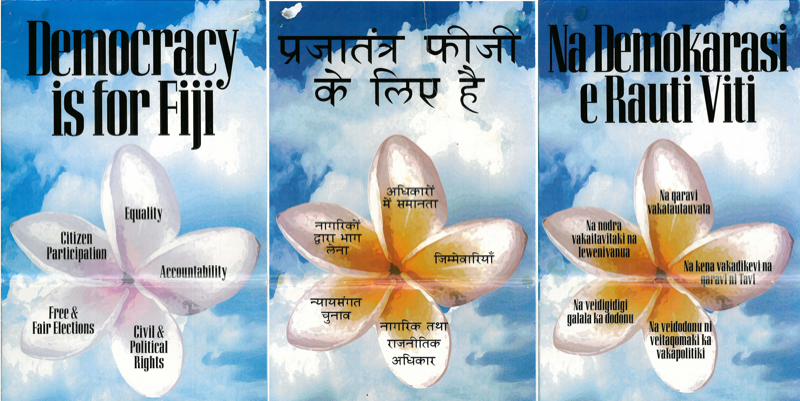
Figure 5.1. Democracy is For Fiji: FWRM’s ‘frangipani’ poster.
Source: Fiji Women’s Rights Movement, Suva, 2001.
This situation contrasts with the post-coup scenario in 1987. In this later period, a range of civil society groups had evolved a strong pro-democracy position. The CCF had, since 1996, been running programs to educate Fiji’s citizens on their constitutional rights, and had been strong supporters of the reform process. In addition, the Ecumenical Centre for Research Education and Advocacy (ECREA, formerly the research wing of the Fiji Council of Churches) also promoted a strong multicultural political agenda and a determined commitment to social justice and political and economic equity for all Fiji’s citizens. While the communal aspects of associational life in Fiji were still highly apparent in this period, the presence of these new groups meant that those women’s organisations embracing a pro-democracy position were able to find support from other organisations adopting a similar political stand. From here they could engage in range of much stronger pro-democracy initiatives than had been evident or indeed permitted in the post-1987 context.
In later months, the FWRM became involved in the creation of a community paralegal program which targeted civil society representatives. The long-term goal of this project was to establish a team of people who would be able to spread a message of support for democratic ideals, constitutional values and a human rights culture in Fiji (FWRM 2001b). Additionally, the FWRM sought to counter nationalist opposition to democratic models of power-sharing through a ‘Democracy is for Fiji’ campaign. The posters and pamphlets used in this campaign were translated into English, Hindi and Fijian and featured the symbol of the frangipani, a blossom native to Fiji, to counter the nationalist refrain describing democracy as a ‘foreign flower’.
In contrast to the FWRM, WAC’s fortunes were more precarious in this period. The organisation’s programs were under significant pressure as a result of the hardening of nationalist sentiment, and the general shift towards a more conservative style of politics that followed in the wake of the 2000 coup. Previously, the successful WAC initiatives in the area of prisoner rehabilitation or low-cost child care had relied upon the collaboration of government agencies or industry partners, yet these collaborations proved far easier to negotiate in the pre-coup period of liberal political reform and relative economic stability, than in the post-2000 context.
WAC’s prisoner rehabilitation project was the first to feel the impact of the post-coup regime’s altered approach to civil society collaboration. Almost immediately, the interim administration demonstrated some mistrust of the unconventional approach to prisoner rehabilitation undertaken by WAC and repeatedly signalled its intention to end WAC’s drama programs within the prisons. When a WAC cast member was caught entering the prison in possession of a small quantity of marijuana in early 2001, this provided the new ministerial authorities with the pretext they needed and the program was concluded (Moore 2002b).
WAC responded by redesigning this program to focus more squarely on the needs of ex-prisoners in the community. Conscious that, upon release, ex-prisoners faced poor employment prospects, social stigmatisation and peer pressure to resume criminal behaviour, WAC felt that programs which aimed to increase ex-prisoners’ income-earning opportunities as well as their self esteem would still be useful on the ‘outside’ and could contribute to ex-prisoner rehabilitation (WAC 2001).
WAC’s childcare centre at Kalabo also faced serious difficulties in the wake of the coup. Funding withdrawals from local garment manufacturers who were facing their own economic pressures along with heightened racial tensions amongst the centre’s staff, and declining enrolments due to job losses in the area, all took their toll on the centre and positive sentiment within the project began to evaporate. Continued efforts were made to keep the centre running on a small budget and with a reduced number of staff. In August 2001 it was finally forced to close (WAC 2001; Pande 2002).
Despite these setbacks, WAC’s theatre advocacy, particularly its use of playback theatre, were viewed by other civil society actors as having an important potential for peacebuilding efforts. In the post-coup climate, the interim administration had created a program around community reconciliation and had gone as far as establishing a Ministry for Reconciliation with the declared aim of restoring ‘peaceful coexistence’ amongst Fiji’s ethnic communities (Ministry of Reconciliation, cited in the Daily Post 2 April 2002). Pro-democracy groups such as the CCF and ECREA had been highly critical of these efforts, however, arguing that the rhetorical and ceremonial focus upon reconciliation was not matched by concrete evidence showing that the government was committed to move beyond the ‘politics of race’ (Yabaki, cited in the Daily Post 3 April 2002; ECREA, Fiji Times 13 November 2002, 16 November 2002; Rao 2002).
In contrast, the advocacy methodologies employed by WAC were recognised by other civil society groups as providing a more empathetic starting point for peacebuilding efforts. The Fiji and New Zealand offices of Save the Children provided important financial backing for a theatre-based project established by WAC which targeted children in regions where coup-related violence had been most serious. Save the Children Fiji and WAC felt it appropriate to target children from the ages of twelve to sixteen. WAC’s program aimed to encourage this demographic group to think critically about how questions of ethnic difference were manifest and politicised within their communities (Carling and Peacock Taylor 2001: 27; SCF 2001).19 Later assessment of the program found that it had contributed to the beginnings of closer inter-ethnic relations in the community and helped rebuild a measure of social stability (I. Ali 2002; SCF 2001).
The Women’s Peace Vigil, coordinated by Fiji National Council of Women secretary Sharon Bhagwan Rolls, continued to act as another platform for women’s post-coup peacebuilding efforts. This vigil met on a monthly basis in Suva through 2000 and 2001, and from there, various other campaigns calling for the restoration of Fiji’s democracy were formed.20 This ecumenical vigil also encouraged some to think about alternative platforms for gender activism. Bhagwan Rolls was concerned that media representations presented a perspective of Fiji’s coup which focused neither on the efforts made by women to encourage peaceful resolution of this crisis, nor the heavy burdens borne by women as a result of the civil and political instability (Bhagwan Rolls 2002a, 2000). In September 2000, Bhagwan Rolls therefore established an organisation called fem’Link which aimed to give greater prominence to the voices of women within the mainstream media and correct its tendency towards ‘unconscious and unrecognized’ gender bias (Bhagwan Rolls 2000). Through this initiative, Bhagwan Rolls sought to profile the contributions made by grassroots women towards social and political change and peacebuilding (Bhagwan Rolls 2002a). With small pockets of funding provided by external partners such as the International Women’s Development Agency, and the bilateral development agencies, DFID and Canada Fund, fem’Link produced a series of videos documenting women’s experiences in the post-2000 coup context. These were entitled Mothers in Dialogue (2000), Fem’talk Not Just Sweetalk (2001) and Keeping Watch (2002b).
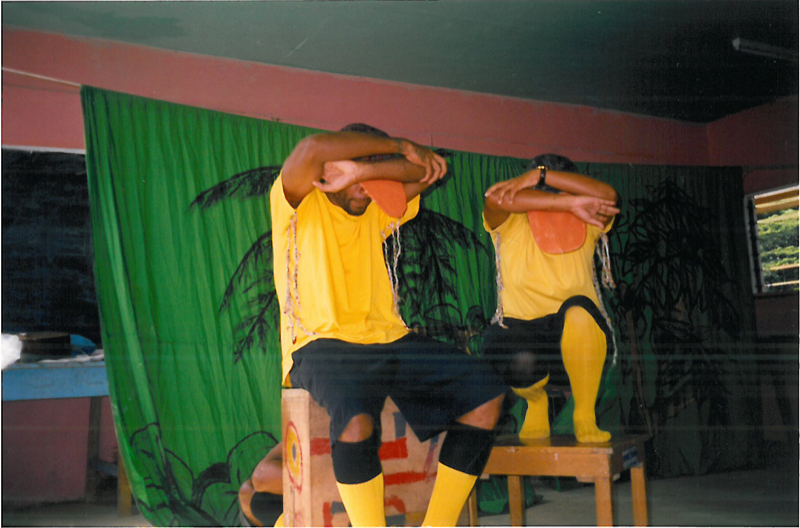
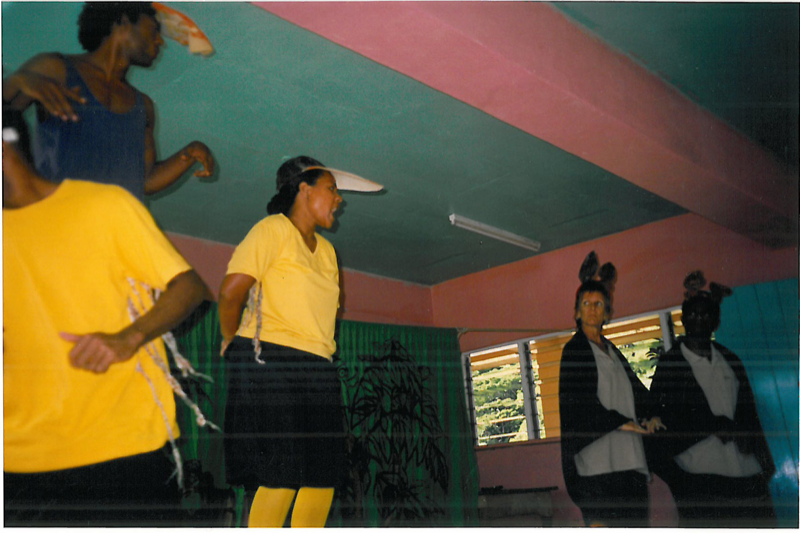
Figures 5.2 and 5.3. WAC performing Bats and Birds in a rural school. This play aimed to show school children how different communities can live together cooperatively.
Source: Photographs by Nicole George.
Resumption of parliamentary democracy: August 2001
While women’s organisations were generally pleased to see the resumption of constitutional democracy with national elections held in August 2001, the victory of the newly formed indigenous nationalist party Soqosoqo Duavata ni Lawenivanua (SDL), headed by the former interim Prime Minister Qarase, meant that the parameters for critical political debate on gender equality remained narrow. As contestation between the government and Chaudhry raged over Labour Party entitlement to Cabinet representation, the SDL nominated Asenaca Caucau to the post of Minister for Women. A staunch Taukei supporter, and daughter of a prominent pro-nationalist Minister within the Methodist Church, Caucau’s appointment once again ensured that Fiji’s women were represented in government by a figure whose understandings of gender equality were strongly influenced by her ethno-nationalist sympathies. This was made clearly apparent in August 2002 when, during the course of debate, Caucau likened Fiji’s Indian population to ‘noxious weeds’ with the capacity to ‘choke the land’ (Pacific Islands Report/PINA Nius Online, 4 August 2002).
While the SDL government was clearly doing its best to encourage a return to communal politics, the government’s hostile reaction to the CCF activity in these years warned all civil society actors that the parameters of government tolerance were limited. This was starkly demonstrated immediately prior to the 2001 elections when the interim government deregistered the CCF as a charitable organisation. The CCF’s involvement in the Prasad case, and its stated intention to take the Fiji President to court for his refusal to call elections, had been major irritations for the nationalist interim regime, with the Prime Minister branding the organisation ‘constitutional zealots’ (Pacific Magazine December 2001). Yet, the deregistration of the CCF did not quiet this organisation’s criticism of the interim government (CCF 2001). Neither did it dissuade donors from continuing their support for the organisation with bodies such as AusAID continuing to provide the CCF with funding, albeit in a less public manner (AusAID representative April 2002; Yabaki May 2002).
After the elections, the government’s retaliatory posture towards civil society groups continued. In 2002, for example, the government began to use the media to raise doubts about the ‘mandate of the CCF’ and the interests that the organisation claimed to represent. The Minister for Information, Josefa Vosanibola, argued that the CCF was ‘dependent on foreign donor assistance’ and, as such, derived ‘its mandate to speak on national issues in Fiji from … foreign donors’ (Fiji Times 4 April 2002).
In addition, public protest marches continued to be banned and public meetings on government policy were subject to surveillance. For example, in November 2002 a CCF-coordinated event staged in collaboration with the FTUC to protest a planned 25 per cent budget increase in Fiji’s value added tax (VAT) was the subject of intense state interest, with regular police patrols passing the FTUC premises where the meeting was held (author’s observation).
In this political environment, women’s organisations adopted a more cautious style of political engagement (Jalal, cited in fem’Link 2002a; Vere 2002a). This was clearly evident in the FWCC’s 2002 ‘16 Days’ campaign which focused upon the links between development and domestic violence. In the opening address for this campaign, delivered by Savenaca Narube, Governor of Fiji’s Reserve Bank, it was argued that violence against women should be understood as a development issue because of the national economic consequences of this phenomenon. Narube described the days lost in employment, welfare liabilities, and law enforcement and health care costs incurred by the state as a result of violence against women. He calculated that this phenomenon cost the Fijian economy roughly FJ$300 million per annum or 7 per cent of the country’s GDP (Daily Post 26 November 2002).
Choosing Narube to open this somewhat unusually focused campaign was certainly a move designed to win support from the conservative political elite.21 However, this strategy also meant that all questions relating to the gendered impacts of economic disadvantage were left aside. This was ironic given that the campaign followed immediately after the SDL government announced its decision to increase Fiji’s VAT; a development widely opposed by a range of other groups including the Fiji Council of Social Services, the FWRM, and the CCF who argued that it could only contribute to further economic hardship (Fiji Times 9 November 2002, 18 November 2002). This cautious path can be explained, in part, by the fact that FWCC operations and training programs frequently involved the participation of state authorities and their advocacy and community-support programs had also begun to receive substantial levels of financial support from government departments.22 On the other hand, FWCC trustees were also keen not to see the practical focus of the organisation’s activity jeopardised by more politically oriented engagement (Yabaki 2002). And, as the opening paragraphs of this chapter show, even when adopting this more cautious advocacy route, the FWCC was still subject to censure from the SVT leadership for the tone of its message and its failure to adhere to indigenous cultural protocols which emphasised ‘quiet diplomacy’.
While the FWRM had made a provocative pro-democracy stand during the interim government period, with the return of parliamentary democracy this organisation also began to moderate its advocacy in relation to some issues. This was particularly evident in its decision to use the issue of women’s economic status as a platform upon which to relaunch political debate on the Family Law Bill. In the post-coup political environment, liberal agendas of reform were more easily cast as threatening to indigenous paramountcy or in contravention of Christian principles. This meant that increased political attention was given to the Methodist Church’s claims that the Family Law Bill’s regime for divorce would encourage family breakdown. Similarly, the Soqosoqo Vakamarama’s concerns about the Bill’s recognition of putative fathers’ rights to child custody and maintenance support were also received with greater weight by the political elite (Colowai 2002).
Aiming to circumvent these reservations, the FWRM restructured its defence of the Bill in 2002 to dovetail with broader economic agendas. The FWRM argued that the proposed Bill would have a ‘major and positive impact on alleviating poverty in the poorest sectors of the community’ (Regional Rights Resource Team (RRRT) 2002b). In particular, the organisation claimed that the Bill’s maintenance regime offered more just and efficient mechanisms for divorced and separated couples and particularly women attempting to provide for and educate their children on a single wage.23
While the SDL government re-tabled the Bill in April 2002, pressure from its backbench members again stalled movement of the legislation through parliament. Despite the fact that the FLRC had been engaged in a two-year period of national consultations on family law reform in 1997, the SDL government launched a further round of public hearings on the proposed Bill in 2002. While the FWRM was bitterly disappointed with this decision, it continued to lobby in support of the Bill in a conciliatory fashion. Like the FWCC, the FWRM was clearly aware of the narrow limits of government tolerance with regard to critical advocacy in this period, and the organisational implications if these limits were transgressed. Clearly, ‘gentle engagement’ and the foregrounding of economic benefit were perceived to be the most expedient ways of framing solutions to gender disadvantage at this time (Jalal, cited in fem’Link 2002a).
Regional activity
During the period from 1995 to 2002, regional activity on gender issues continued in much the same manner as it had in the previous decade, with priorities placed on issues such as gender violence, women in politics and legal literacy. During this period, the South Pacific Commission (SPC) hosted two more triennial regional conferences for women in 1997 and 2001 which were coordinated by the Pacific Women’s Resource Bureau (PWRB). Deliberations at these events were generally framed by the provisions of the Pacific Platform for Action (PPA), which the PWRB continued to promote as a flagship achievement of the agency (SPC 1997: 33).
However, within advocacy circles there seems to have been a flagging enthusiasm for the provisions of the PPA and indeed the PWRB in these years. As the Fiji example indicates, the Beijing Plan of Action and CEDAW were generally the key international instruments cited in deliberations on gender issues by both representatives of women’s organisations and government agencies during this period, and the PPA was not generally prioritised as a policy guide or a local lobbying tool in the post-Beijing context.24 This suggests the emergence of a disconnect between domestic, regional and international policy-frameworks being utilised to address questions of gender inequity across the Pacific Islands region.
Moreover, the issue-specific focus of the PPA, and its identification of thirteen areas of critical concern for women’s advancement, limited the extent to which emerging issues in Pacific politics could be considered from a gendered perspective. Regional moves towards trade liberalisation and restructuring were gathering pace in these years and threatened to have important implications for the domestic political economies of Pacific Island states and the economic status of Pacific women.25 These questions did not feature as areas of contention at the SPC regional women’s conferences however.
In part, this reflects the fact that political classes across the region adopted a relatively uncritical response to trade liberalisation at this time. The view put forward by Fiji’s Permanent Secretary for Foreign Affairs and Trade, Ratu Isoa Gavidi, that Fiji’s accession to the World Trade Organization was necessary to ensure local economies were not left behind as globalisation processes intensified (Gavidi, cited in the Fiji Times 31 October 2001), was widely replicated by bureaucrats and political leaders across the Pacific (Slatter 2006).
On the other hand, the PPA policy framework also limited the extent to which non-state actors within the SPC institutional environment might raise such questions. The PPA approached questions of women’s economic empowerment in ways that were consistent with the neoliberal ethos of market liberalisation and state streamlining, emphasising women’s entrepreneurial capacities and market participation. By contrast, regional NGOs, such as the Pacific Concerns Resource Centre and a range of local academics, were offering far more critical perspectives on the long-term impacts of these policies for local industry and employment levels (Firth 2000; PCRC 2002). The distance between these two perspectives indicates that within the SPC regional forum there was little room for critical appraisal of the regional political economy.
After nearly twenty years of operations, the PWRB seemed not to have achieved the ambitions envisaged for it when Pacific women began lobbying for institutional representation at the regional level in the 1980s. The broader SPC institutional mandate which had made deliberation on region-specific issues, such as nuclear testing or colonisation in the Pacific, difficult in the 1980s, continued to function in the same way two decades later. This mitigated against the emergence of critical debate on regional economic policy issues of concern to local women.
The establishment of the United Nations Development Fund for Women (UNIFEM) Pacific, in 1997, offered Pacific women a new institutional platform from which to address issues of gender equality. Given that the United Nations Economic and Social Commission for Asia and the Pacific (UNESCAP) had provided a more enabling institutional environment for regional deliberation of gender concerns in past years, the creation of this new Pacific agency affiliated with the UN appeared to provide the scope for more critical, gender-sensitive, regional policy analysis than had been possible within the SPC. Ultimately, however, this UN-funded agency did not act as a counter-weight to the many political figures in the region that were uncritical advocates of trade liberalisation. In a UNIFEM pamphlet entitled ‘Women, Men, Globalization and Trade Liberalization’, women were urged to become involved in local decision-making processes so that they could have a greater impact upon policy outcomes which might mediate some of the negative impacts of globalisation in the region. The ratification of CEDAW was seen as important in this regard, and said to provide women with improved access to decision-making and a ‘framework for equity’. Women were also urged to join local women’s organisations so that they might become better informed on issues of trade and economic development and more politically active (UNIFEM Pacific 2000). A strong emphasis was placed upon the need for women to assume a level of personal responsibility in becoming politically active on these questions. At the same time, the intensified climate of neoliberal economic reform in the region seems to have been viewed as an inevitability, rather than a force to be resisted.
Certainly, the creation of a regional UNIFEM office saw stronger support offered to women’s organisations at both the local and regional levels than had been provided by the PWRB. Collaborative efforts between UNIFEM and local women’s organisations were able to take place in a more ad hoc manner, and were not structured by the restrictive mandate that made PWRB-NGO relationships more difficult. This also meant that UNIFEM provided important financial support for the activities of regional issue-specific NGO networks established by Fiji-based organisations such as the Pacific Women Against Violence Against Women network, coordinated by the FWCC. Through this network, established in the previous decade, the FWCC continued to provide training to gender advocates from most Melanesian states and also established contacts with women’s groups in New Caledonia, the Federated States of Micronesia and Samoa. The Crisis Centre also focused greater attention on the situation of Pacific women living in conflict zones, emphasising the predicament of women in Solomon Islands and Bougainville. In December 2000, the FWCC attempted to coordinate simultaneous rallies in Solomon Islands, Bougainville and Fiji to reflect upon the vulnerability of women in conflict situations. While the interim government in Fiji thwarted plans for the Suva march, rallies took place in the other two locations.
The FWCC also staged two regional meetings on Violence Against Women in August 1996 and February 2001. The 1996 meeting was used to conduct a review of regional strategies to combat violence and to locate areas in which additional training might be useful to local women’s organisations. The 2001 meeting again drew attention to women in conflict and the negative consequences suffered by women when a widespread breakdown in social services occurs (FWCC 1996, 2001a).
A new Fiji-based regional organisation established in 1995, the RRRT, sought to expand upon the FWRM’s previous regional work in the area of legal literacy promotion. Under the leadership of Jalal, former coordinator of the FWRM, the RRRT was principally concerned with the promotion of women’s human rights. However, in later years, the organisation expanded its focus to provide more general education on human rights issues in the region. One of the key aims of the organisation was to inform people of their ability to make demands upon the state when their rights had been violated. To this end, the RRRT aimed to promote local awareness of international conventions and how they might be used to promote greater equality for marginalised groups. While RRRT was committed to the promotion of CEDAW therefore, it also focused upon other international instruments such as the Universal Declaration of Human Rights, the Convention on the Rights of the Child and the Convention on the Elimination of Racial Discrimination (Masura 2002). Improving local communities’ knowledge of the content of their nations’ constitutions, and the protections these documents offered local citizens, was another of the organisation’s aims. All members of the RRRT staff were trained in law, human rights, civic awareness and government-civil society relations.
While the scope of the RRRT’s operations was broad in geographic terms, its activities were constrained by the funding relationships it negotiated with its chief benefactors; initially the UK Department of International Development, and later the UNDP. The RRRT was conceptualised as a project, rather than an NGO, and this influenced how it formulated its programs of rights awareness training. Rather than acting in an autonomous fashion, it was required to respond to requests for intervention from NGOs across the region. In this way, benefactors hoped to avoid a situation whereby they were seen to compromise the domestic sovereignty of Pacific Island states. In Fiji, for example, the RRRT regularly worked with organisations such as the Fiji Council of Social Services, the CCF, Soqosoqo Vakamarama (SSVM), the FWCC and the FWRM. Ostensibly, these organisations identified issues of need in the community, and then approached the RRRT for assistance in developing targeted human rights awareness programs. In practice, the order of these processes was more blurred (Masura 2002). Nonetheless, through these interventions, the RRRT aimed to train and support a network of Legal Rights Training Officers that were based in local NGOs and, once provided with the skills, to undertake public awareness programs, provide individual advice and participate in policy dialogue with government agencies (UNDP-RRRT).
International developments
New funding relationships
During this period, neighbouring states with an interest in the Pacific Island region placed an increasing emphasis upon developing collaborative relationships with civil society and non-government groups as part of efforts to promote good governance. The Australian government, the region’s largest bilateral aid-provider (von Strokirch 2003), incorporated these principles into its development policy programs with the Australian Minister for Foreign Affairs arguing, in 1997, that foreign aid must support NGOs that aim to increase local participation in governance (cited in Larmour 1998: 1). By 2000, AusAID’s policy on good governance emphasised the importance of a ‘strong and pluralistic civil society’ supporting the values of ‘freedom of expression and association’ (AusAID 2000). And in line with this focus, AusAID’s Pacific Regional Strategy, released in 2002, stated a commitment to strengthening local civil society capacity and an increased role for local organisations in community and humanitarian programs (AusAID 2002).
The coup in Fiji, continuing civil war in Bougainville, and violent civil unrest brewing in Solomon Islands in these years, were all seen to justify this shifting emphasis in aid delivery to the Pacific. The increased purchase of the ‘arc of instability thesis’ amongst Canberra-based policy makers in 2000 encouraged the view that conflict in the region was endemic, and economic development, stagnant. Deficiencies in local political processes and poor governance were identified as contributing to the problem (Reilly 2000; Henderson 2003; von Strokirch 2003; Hughes 2003).26
Such concerns shaped aid distribution decisions made for Fiji. International donors were reluctant to support a post-coup government that did little to hide its ethno-nationalist and class-based allegiances (Robertson and Sutherland 2001; Kelly and Kaplan 2001) and they were far more comfortable developing aid partnerships with non-state actors. Within this environment, civil society groups that were able to ‘dovetail’ their advocacy aims with broader agendas related to good governance were certainly able to attract the support of external aid-providers engaged in the region (personal communication, AusAID official, Suva, March 2002; Personal communication EU official, Suva, March 2002). As we have seen, the CCF’s pro-democracy activities were viewed favourably by external donor agencies such as AusAID during this period, despite the organisation’s difficulties with local political authorities. In addition, some women’s groups also benefited from this shift in emphasis and, at this time, received substantial amounts of core funding directly from aid agencies. In 1999, AusAID made a substantial increase in funding to the FWCC through its Pacific Regional Program, granting FJ$2.2 million to fund the organisation’s core expenses over five years (FWCC 1999a). Similarly, increased donor interest in supporting civil society organisations also translated into funding commitments for the FWRM from development agencies such as the Canada Fund and the DFID. International engagements of this type clearly created important opportunities for some women’s organisations in Fiji during this period. However, as I will later demonstrate, aid agencies’ prioritisation of particular political and economic ideals also began to influence how recipient organisations articulated their political goals.
Beijing+5
The participation of Fiji’s women on the international stage was dominated by two key events in the period from 1995 to 2002. The first was the Beijing+5 United Nations Generally Assembly Special Session (UNGASS) convened to review the global implementation of the Beijing Platform for Action. The second was the presentation of Fiji’s country report to the United Nations CEDAW Committee in 2002.
Preparations for the Beijing+5 UNGASS began under the Chaudhry government in 1999, with the production of a national report on the implementation of the Beijing Platform for Action (BPA) (Fiji Ministry of Women and Culture 1999b). Compiled during a period when women’s organisations were enjoying a high level of support from the state, this report noted with some satisfaction the ‘positive movements forward’ in government-NGO relations in the latter half of the 1990s, described as a ‘definite improvement upon the last decade’. The report described the influence that women’s organisations had been able to generate within government to promote ‘the integration of gender concerns’ in the areas of law reform, domestic violence, rape and sexual harassment. At the same time, the report also included a frank account of the types of obstacles impeding women’s equal and active participation in development. It stated that women contributed disproportionately to the ranks of employees within low-skilled and unregulated industries such as garment production or domestic and household work, but were poorly represented in professional fields and in senior management positions. It also described the situation of low-skilled single women attempting to support families as particularly concerning (Fiji Ministry of Women and Culture 1999b).
In the final instance, this report was never taken to New York. The events of May 2000 were still unresolved by the time of Beijing+5 UNGASS, which convened in early June 2000, and therefore no official delegation from Fiji attended this meeting. Nonetheless, the content of the national report drafted for this event gives some indication of the extent to which critical appraisal of government policy was possible both from within the national administration, and outside it, immediately prior to the 2000 coup. This situation altered dramatically in the post-coup political environment.
The events of May 2000 made it difficult for NGO delegations from Fiji to attend the Beijing+5 UNGASS, with many preferring to stay in the country rather than face the possibility of being stranded overseas should the crisis worsen. Three women from the FWRM—Gina Houng Lee, Raijeli Nicole and FWRM board member Dianne Goodwillie—were in attendance. These participants used the opportunity to draw international attention to the negative impacts of the coup upon women, and the efforts being undertaken by local women towards reconciliation and peacebuilding.
However, these efforts were greatly overshadowed by broader political debates taking place on this occasion. The UNGASS may have been envisaged as an opportunity to ‘breathe fresh life and stimulate further momentum’ in government and civil society efforts towards the implementation of the BPA, yet much of the debate during the preparatory stages had a retrograde quality that continued during the formal Beijing+5 session (Steans and Ahmadi 2005: 239). In particular, there was a determined push made by a coalition of conservative faith-based NGOs, the Vatican and Islamic states such as Pakistan, Iran, Algeria, Morocco and Syria, to have references to women’s reproductive rights and women’s sexual orientation excluded from the BPA Outcome Document which was to be voted upon at the conclusion of the session (IWTC electronic communication, 29 March 2000; Slatter 2001; Chappell 2006).
These tensions ensured that the final version of the BPA Outcome Document accepted by the UNGASS did not include references to the terms ‘sexual rights’ and ‘sexual orientation’. While this was a cause for disappointment, many observers noted that a good number of government representatives at the Beijing+5 Special Session demonstrated a general unwillingness to make commitments towards further action on the BPA, and a reluctance ‘even to restate’ the commitments they had made at Beijing ‘five years before’ (Slatter 2001; Chappell 2006). For these reasons, Amnesty International suggested that the UN Special Session might be more accurately described as ‘Beijing Minus Five’ rather than ‘Plus Five’ (Amnesty International 2000b).
Gender activists from Fiji were generally disappointed with the nature of debate taking place at this meeting and the apparent lack of willingness on the part of many official delegates to consider what needed to be done to take the BPA ‘to the next stage’ (Houng Lee, cited in FWRM 2000b). However, their principal aim in New York was to draw international attention to the domestic political crisis in Fiji. While the FWRM delegates were keenly aware of the limitations they faced in this regard, particularly given the fierce international debate amongst hundreds of participants, they made a particular effort to frame their concerns in ways that resonated with broader conference themes. In particular, they drew links between the issue of democratic rule in Fiji and the realisation of women’s human rights, arguing that democracy was the ‘foundation’ upon which these rights would be established and protected and that restoration of constitutional governance was a central contention amongst Fiji’s gender activists (FWRM 2000b).
UN CEDAW Committee Hearing 2002
When representatives from Fiji next appeared before the UN, this time to present the initial country report to the CEDAW committee in New York in 2002, parliamentary democracy had been re-established. As we have seen, however, with a pro-nationalist regime in power, the terms of political debate on gender equality were greatly constrained. As such, Fiji’s NGO ‘shadow’ delegation appearing before the CEDAW committee used this event to again draw international attention to the domestic political situation and the local obstacles which jeopardised efforts to improve women’s status.
The preparation of Fiji’s first CEDAW country report had been a thorn in the side of the Rabuka-SVT government since the late 1990s, and the report taken to New York in 2002 was in fact the third in a series of drafts; the previous two had met with SVT officials’ disapproval. This situation was turned around with the change of government in Fiji in 1999. The Minister for Women, Lavinia Padarath, became aware of the previous government’s inaction on the CEDAW reporting process and began a round of government-NGO consultations in 1999 which resulted in the production of the final report sent to the UN CEDAW committee prior to Fiji’s scheduled appearance in mid-2000. The events of May 2000 once again interrupted this process, however, and it was another eighteen months before Fiji appeared before the commission.
When this hearing finally took place, representatives of the SDL government’s Ministry for Women were required to speak to the country report originally submitted by the Chaudhry government in 2000 and to verbally update the Committee on recent political developments. While the government’s representative, Assistant Minister for Women, Losana Salabula, was frank about the civilian coup and the overthrow of Fiji’s elected government in 2000, these events were also described in a way that suggested that the interim regime had consistently been focused upon the restoration of Fiji’s constitutional democracy and left aside any discussion of the ongoing hostilities between the SDL and Labour over Cabinet representation or the difficult environment existing between the government and sections of Fiji’s civil society (RRRT 2002a). The Assistant Minister’s presentation was also laced with references to the SDL government’s Social Justice Act (formerly the interim government’s Blue Print for the Protection of Indigenous Fijian and Rotuman Rights) which, it was asserted, would ‘promise positive benefits for women’ (Fiji Mission to the UN 2002).
Fiji’s NGO shadow report told a different story.27 This report began by acknowledging the work done by Fiji’s government in various areas to improve the status of women, and also stated that the official country report presented by the government to the committee was accurate up until May 2000. However, describing the institutional environment since 2000, the authors were more critical, arguing that the nationalist ambitions now predominated within Fiji’s government and that this was detrimental to women. The NGO report, therefore, provided CEDAW committee members with a more up to date account of political developments since 2000. It also offered a more critical perspective of the government’s Blueprint legislation, arguing that no gender perspective was evident in this legislation, and that it ignored the economic predicament of underprivileged Indo-Fijian citizens. The report called attention to the economic costs of the coup and, particularly, the resulting disadvantage suffered by women as a result of job loss and industry decline. It also described the hostile and retaliatory nature of government dealings with women’s organisations, arguing that this ‘severely obstructed further work towards gender equality’ (FWRM et al. 2002). Personal statements made to the Committee by RRRT and FWRM board member Jalal, FWRM coordinator Virisila Buadromo and Wati Seeto-Dubain, also of the RRRT, reiterated many of these themes (RRRT 2002a) and ensured that committee members received with some scepticism the Fiji government’s claim that CEDAW was a ‘living reality in Fiji’ (UN CEDAW 2002).
Despite many of the criticisms made of the Fiji government in this report, CEDAW committee members stated that they had never read a shadow report that was ‘so complimentary’ of government efforts to advance the status of women (FWRM 2002). In part, these comments attest to the fact that the NGO concerns were raised in a non-confrontational tone, reflecting a decision made by the lead author-organisation, the FWRM, to avoid ‘bashing the government in an aggressive manner’ or embarrassing them on the international stage (RRRT 2002a). It was suggested that critical analysis of government policy could be framed in subtle tones and yet still be persuasive in front of the CEDAW committee. This tactic also ensured that the reports’ collaborators would not be subject to a hostile reaction from government once the reporting process was complete.
UN CEDAW committee members used the information provided during the NGO hearing to scrutinise the government report on an article by article basis. Committee members made over two hundred requests to the government delegation for further information and elaboration (RRRT 2002a; FWRM 2002). These queries focused upon the relationship between CEDAW provisions and domestic law, the mainstreaming of gender perspectives within the government’s social justice legislation, the uses of bulubulu in Fiji’s courts, the functioning of Fiji’s newly established Human Rights Commission and the prospects of legal reform in the areas of family law and domestic violence law.
The government delegation was required to formulate answers to these questions before taking part in a ‘constructive dialogue’ session before the CEDAW committee six days later. It was able to respond to only half of the queries, however, and held over many questions until Fiji’s next appearance before the committee. In a final press release issued by the UN CEDAW committee at the conclusion of the dialogue, Fiji was congratulated as being a ‘pace-setter in the region,’ but also criticised over the status of Fiji’s family law, described as ‘medieval,’ and the uses of traditional reconciliation practices within the court system, particularly in relation to the prosecution of domestic violence cases. While government representatives argued that this was a ‘vital custom,’ used to cement indigenous kinship ties, the committee urged the government delegation to pay increased attention to the ‘negative aspects of the … practice of bulubulu’ (UN CEDAW 2002; see also Merry 2006b).
Fiji’s NGO representatives were generally proud of the fact that they were the first representatives of the Pacific Island region to make an appearance before the UN committee. They also claimed that important dividends had accrued in the wake of their participation which vindicated their decision not to adopt a more aggressive tone in their criticisms of government policy. Participation in the CEDAW reporting process had put the Family Law Bill back on the government’s agenda, it was argued. In the wake of the New York hearing, Jalal was reappointed to the position of Family Law Commissioner by the Attorney General, and requested to prepare parliamentarians for the Bill’s first post-coup reading in April 2002 (RRRT 2002a).28
Yet, there were differences of opinion amongst women activists as to the broader utility of the CEDAW process, particularly given the costs of complying with CEDAW reporting requirements (Moore 2002a) and the strongly legalistic basis of the deliberations (RRRT 2002a; Chung 2002). These differences of opinion indicate the contending ways that political agency was understood by gender activists in this period. Some felt that prevailing local and global political conditions required a dovetailing of agendas in order that policy gains for women could be effectively negotiated. Others were more despondent about the formal realm of institutional politics and tended to adopt strategies of disengagement. However, these courses of action were shaped by activists’ appraisals of the prevailing political environment and their own judgments of their capacity for political agency in these years. The following section examines the ‘situated’ experience of gender activists and asks how subjective understandings of the prevailing political environment influenced activists’ negotiations of collectivity, progressive ideas and transnationalism.
Collectivity
Funding opportunities for women’s organisations increased significantly in this period as institutional donor agencies focused greater attention upon increasing civil society participation in local development initiatives. Yet the increased availability of funding also encouraged an intensification of competition amongst local women’s groups. Australian aid officials fully recognised this consequence of the Pacific civil society funding assistance regime, but this was not viewed as a fault. Indeed, the intensification of competitive relations between organisations was described by AusAID’s Pacific regional policy coordinator in September 2002 as ‘the price of doing business with the Australian government’ (March 2002).
From the perspective of AusAID officials, treating the civil society funding environment as a competitive ‘market place’ may have been seen as encouraging transparency and efficiency. Yet in practice, these conditions were generally only advantageous to the small number of women’s groups who had the organisational infrastructure and expertise that enabled their market participation. In Fiji, this meant that bodies such as the FWRM and the FWCC were routinely rewarded. By this date, both these organisations had developed sophisticated aid proposal writing techniques which allowed them to formulate projects that were consistent with donor priorities but which were also framed in ways that recognised local needs. These organisations also had the administrative infrastructure that allowed them to comply with donor agencies’ increasingly stringent and complex reporting and accountability requirements.
By contrast, this system tended to penalise other groups whose limited resources were stretched when producing detailed funding proposals. WAC’s eclectic and unconventional approach to gender advocacy meant that it was not recognised as a destination for core funding in the good-governance aid environment. The organisation led a perpetual ‘hand to mouth’ existence (Moore 2002b). In 2002, fem’Link faced similar pressures. Locating the next source of funding was an overriding priority for the two-person organisation, which at this stage did not have a solid track-record of media production achievements (Bhagwan Rolls 2002a). Faith-based women’s organisations such as the Fiji Catholic Women’s League, or the Fiji Muslim Women’s League, were also under-recognised in this funding environment. Donor agencies’ preference for working with secular rather than faith-based women’s organisations in Fiji dated back to 1987, and was explained by a fear that association with this type of organisation would be viewed as partisanship. Yet, this practice also meant that donor agencies generally underestimated the substantial district networks of these faith-based women’s organisations, and the importance of the community advocacy and welfare assistance projects they had developed for their constituents (Buksh 2002a; Evening 2002).29
The impact of increased competition over funding encouraged a ‘turfiness’ between women’s groups, one local observer argued, with issue areas jealously guarded so that domestic and regional influence could be maintained (Chung 2002). Certainly tensions between women’s organisations over funding were exacerbated as opportunities for engagement with donor agencies appeared to increase, but the same high profile secular women’s groups were routinely rewarded.30 Others commented that this tendency corrupted the spirit of voluntarism that had previously been critical to women’s organising, observing that ‘true activists were now an endangered species’ (Slatter 2002).
These funding arrangements tended to encourage relationships between organisations to take on a hierarchical quality, with well-funded organisations generally viewed as more successful and influential than other groups. Certainly, well-funded groups were proud of the strong relationships they had negotiated with external aid-providers and they publicised this fact frequently. For example, in its monthly newsletters, the Crisis Centre provided detailed reports of its financial agreements with AusAID, and accounts of Australian diplomats’ visits to the Centre’s Suva premises. In 2002, the Centre held public meetings at the Australian High Commission in Suva and also displayed the AusAID logo prominently on the billboard at the front of its offices. Similar tendencies were also evident in the activities of the RRRT and the FWRM. Recipient organisations seemed eager to promote their negotiation of funding as something that contributed to their broader political influence and international credibility and differentiated them from other, less well-funded, groups.
Yet, the negative ramifications of these funding arrangements can also be overplayed. As this chapter has shown, important organisational collaborations were also possible during this period and certainly took place during the period of constitutional reform when the FWRM led a domestic coalition of women’s groups demanding the abolition of discriminatory citizenship provisions. Moreover, the Women’s Prayer Vigil, staged during and after the coup in 2000, was an important pro-democracy initiative which attested to gender activists’ willingness to engage in spontaneous collaborative protest against political authoritarianism.
It is also important to note that other issues that had caused tension within and between organisations after the 1987 coups were less important in this period. For example, questions pertaining to the ethnicity of gender activists appear not to have caused the same coup-related divisions that they had in the past. The period of constitutional reform and the drafting of a Bill of Rights outlawing racial discrimination suggested the beginnings of a more liberal institutional environment than had prevailed in Fiji since independence. And despite the fact that the post-coup interim government may have done its best to abrogate the 1997 Constitution, the court ruling of 2001 ensured that it remained intact. These developments expanded the civil society space available to groups aiming to challenge communalism and provided local actors such as the ECREA and the CCF with important points of political leverage.
These developments were also significant for the realm of gender politics and saw many women’s groups take a much more pronounced stance against communalism than had been evident in 1987. ‘We need rainbows, not Rambos’, was a key slogan of the pro-democracy movement in Fiji, and it built upon the idea that effective opposition to ethno-nationalist authoritarianism required a collaborative effort from all of the country’s ethnic groups. This meant that within secular pro-democracy women’s groups such as the FWRM, where there was a much stronger emphasis upon organisational unity than had been apparent in 1987 (FWRM 2001b). These developments were not universal, and groups such as the SSVM continued to respond to local political developments in a more partisan manner.31 Yet, many women’s groups saw the promotion of democracy as a precondition for the recognition of women’s rights. Hence, they acted in a determined fashion to ensure that race would not be the point of cleavage amongst gender activists that it had been in the past (Jalal 2002).
These developments once again point to the importance of understanding how the contingencies of the prevailing political environment influenced organisations’ negotiations of collectivity during this period. Certainly, questions relating to the ethnic origin of gender activists were less divisive than they had been in the past. This suggests that the mid-1990s period of constitutional reform, and the later post-coup multiracial slogans of the pro-democracy movement, had encouraged many gender activists to resist rather than replicate the communal identifications that were more broadly apparent within civil society in Fiji. Yet, existing tensions amongst women’s organisations over funding were also exacerbated at this time as donor institutions sought to increase local engagement with civil society actors across the Pacific. Notwithstanding the instances where important collaborations between women’s organisations occurred in this period, in general terms the idea that funding levels equated to organisational success encouraged the emergence of hierarchical relationships between women’s groups. Better-funded groups were generally perceived to have a level of credibility and influence in gender politics exceeding that of organisations that lived a more ‘hand to mouth’ existence. Yet, such appraisals also overlooked the important grassroots services provided by less well-recognised groups, particularly the faith-based women’s organisations.
Progressive ideas
Speaking in 2002, Imrana Jalal, coordinator of the RRRT, and still an influential board member of the FWRM argued,
Feminism has become a gentler political engagement … the wisdom now is that you have to engage, even with people who you think are sexist, right wing, fundamentalist because really, if you want to have any influence on the political domain, you’ve got to engage with people whose politics you don’t necessarily agree with.… I engage with all kinds of people that 15 years ago I wouldn’t have had a cup of coffee with. I think that is not only part of my own individual political maturation, but the maturation of all of us as a movement (in fem’Link, 2002a).
Jalal’s reflections clearly indicated how the notion of engagement had become critical to gender activists’ understandings of their ability to promote progressive ideas. Yet her statements also included an implicit claim about the effectiveness of political moderation. She suggested that while the provocative style of campaigning that had taken place in the past had given way to a more moderate and politically mature method of political engagement, the ramifications in terms of ‘influence on the political domain’ had been positive, not negative.
Examinations of the political fortunes of women’s organisations in this period provide some level of support for Jalal’s position. Certainly the work of the citizenship coalition in the constitutional reform period had paid important dividends for Fiji’s women. The FWCC had early success in winning government support for redrafted sexual offences legislation. Additionally, the proposed Family Law Bill which had won support from the Chaudhry government, seemed by 2002 to be again under consideration by the politically conservative, pro-nationalist, Qarase-led government.
Yet, it can also be argued that this project of ‘gentle engagement’ was shaped in important respects by broader trends within the prevailing domestic and international political environment. Processes of ‘dovetailing’ were described to me by Claire Slatter as being an important organisational strategy within the prevailing international funding environment, with organisations actively referencing broader themes evident within domestic and international institutional agendas. For example, the juridical emphasis evident within FWRM and FWCC public advocacy in these years was broadly consistent with good governance norms as they were interpreted by institutional donor agencies which placed a high priority upon ‘rule of law’ and ‘law reform’ as key means by which to rejuvenate ‘state-relations with society’ and encourage ‘market-led growth’ in developing countries (Crook 2001).
AusAID’s policies on good governance during this period clearly conformed to this trend, and emphasised the ‘primacy of rule of law, maintained through an impartial and effective legal system’ (AusAID 2000). Links were also established between rule of law and economic stability; with AusAID policy stating that for markets to function effectively they needed both effective institutional support and the promotion of ‘social norms … that respect contract and property rights’ (AusAID 2000). AusAID’s 2002 Pacific Regional Strategy reiterated these themes, stating increased support for ‘law and justice institutions around the region’ (AusAID 2002).
The campaigns undertaken by the FWCC, FWRM or RRRT, which at this time promoted women’s human rights in a highly legalistic manner, clearly dovetailed gender equality objectives with broader international norms relating to rule of law and economic good governance. The idea that impartial and effective legal systems can correct the structures which discriminate against women, and increase their opportunities to access the economic benefits of development, was evident in much of the advocacy undertaken by these groups in these years.
For example, the focus upon women’s market participation was clearly in evidence in the FWCC’s 2002 ‘16 Days’ campaign which drew attention to the economic costs of violence against women. While the broader aim of this campaign was to win government support for proposed reforms in the area of sexual offences law, the emphasis placed upon the economic aspects of gender violence clearly suggested, in part, that government inaction on these issues was obstructing women’s market participation and jeopardising women’s entrepreneurial capacities. Similarly, the FWRM’s post-coup defence of the Family Law Bill was clearly focused upon the economic opportunities that this program would create, empowering women by lifting them out of poverty and improving their access to maintenance provisions. At the regional level, RRRT advocacy for human rights promotion was based upon a similar logic. Here it was argued that a formal recognition of rights could alleviate the lack of opportunity faced by those living in poverty. In a 2002 newsletter published by the RRRT, it was argued that,
You need to think about what causes poverty in the first place. First you need to understand that poverty is not just financial. A person can also be poor in terms of how much or little access he or she has to resources, like education and information due to a lack of opportunity. Therefore having human rights provides a basis through which people gain access to the resources they have been denied as a result of social, political and legal inequalities. Until every person has access to human rights, the cycle of poverty will not be broken (RRRT 2002b).
This emphasis upon economic opportunity, capacities for market participation and entrepreneurialism contrasted dramatically with the advocacy programs of gender activists in previous periods who tended to adopt the view that local issues of gender subordination could not be understood without coming to terms with the structural sources of inequalities at the global level and the international mechanisms that compromised Pacific Island states’ political and economic autonomy. In this later period, this emphasis upon global inequality had come to be seen as a non-progressive, perhaps needlessly ‘aggressive’ strategy (Jalal, cited in fem’Link 2002a). In the more conservative local and international political environment which prevailed in 2002, the strategies employed by women’s groups such as the FWCC, FWRM and RRRT suggest that these groups understood there was a strategic value in promoting ‘progressive ideas’ in a way which dovetailed with the broader tenets of ‘law and order’ based good governance.
However, while figures associated with the FWRM or RRRT may have viewed this as evidence of political maturation, others were more sceptical, arguing that ‘gentle engagement’ was not progressive and, in fact, encouraged a narrowing of organisational goals. Organisations such as WAC, who viewed themselves as operating in a way that was far more autonomous and disengaged from the state, regularly articulated progressive advocacy during this period, by outlining objectives in social change terms. Moore frequently expressed the view that empowerment begins with the individual and ‘until the inner person feels good, the outer person will not be able to change or survive’ (Moore 2002a). The range of programs falling under the WAC umbrella during this period may certainly have had an eclectic quality; however the underlying aim of promoting community empowerment and improving local levels of self-esteem suggests that this organisation was motivated by a very different conceptualisation of progressive ideas than more high-profile groups.
Yet, from a global governance perspective, program outcomes of this sort were much more difficult to measure, and had a far less comfortable fit with broader development paradigms. This helps to explain why WAC’s relationships with external donor agencies were consistently of a more ad hoc variety than other more high profile groups.
The extent to which Fiji’s Churches provided an enabling forum for women’s resistance to the May 2000 coup proved similarly difficult for external actors to conceptualise in global governance terms. Participants in the Women’s Peace Vigil described the importance of the emphasis upon ‘prayer and action’. They also valued the opportunities the vigil provided for ‘networking and creating a movement’. However, donor prioritisation of secular women’s groups tended to obscure the importance that this initiative held for local women, and how it allowed them to articulate a collective opposition to the actions of the nationalist insurgents (Bhagwan Rolls 2002a; Buksh 2002a).
Some organisations saw the dovetailing of progressive ideas with institutional agendas—domestic or international—as strategically important and a sign of maturity. These strategies clearly also appealed to donors. By contrast, initiatives that were more disengaged from institutional politics tended not to be recognised by donor agencies as progressive, or as providing evidence of women’s political agency, despite being understood as such, in a ‘situated sense’, by the activists involved. Clearly, women’s organisations had widely varying ideas about what could be considered progressive during this period. Yet, institutional aid providers tended only to recognise and give support to those women’s organisations whose ‘progressive’ agendas dovetailed with their own political and economic priorities.
Transnationalism
In 2002, some Fiji-based gender activists were beginning to ask whether the influence of transnational networking was distracting local organisations from attending to the needs of women in the domestic context. In particular, doubts were expressed about the juridical emphasis upon human rights advocacy for women and the increasing emphasis placed upon law reform focused advocacy by high profile organisations. Some argued that while such goals had achieved a transnational legitimacy, there was a disconnect between this type of advocacy and the specific needs of Fiji’s most vulnerable women, or the local ‘bread and butter issues’, as one activist put it (Vere 2002a; Moore 2002a). Others felt that such strategies ignored the fact that Fiji was a developing state and simply did not have the institutional infrastructure to support the proposed programs of law reform that were being advocated, in particular, by the FWRM.32
In 2002, the FWRM repeatedly described the Family Law Bill as a mechanism that would improve the conditions of women living in poverty (Jalal, cited in fem’Link 2002; Colowai 2002). This group was confident that the predicament of the poor could be alleviated if their rights were recognised and made redeemable through programs of state-based legal reform which would increase protection for women. As I have shown, these strategies dovetailed neatly with international good governance norms, yet some activists also raised concerns relating to the capabilities of individual women—and the extent to which this impeded access to the law. For example, some women claimed that the FWRM’s law reform program overlooked the specificities of Fiji’s socioeconomic context and, particularly, the extent to which poverty becomes an obstacle that impedes women’s access to the law (Moore 2002a, 2002b; Rokotuivuna 2002b).
These questions were increasingly urgent after 2000, due to the fact that women were once again bearing a disproportionate burden of economic hardship as a result of a post-coup national economic downturn. In my discussions with local researchers examining the predicament of female garment workers in Fiji in 2002,33 I learnt that women earning only FJ$45–50 per week, and generally living in Suva’s increasingly crowded squatter settlements, were in such a precarious financial situation that, should their long working hours allow it, paying the extra bus-fare into central Suva to discuss their situation with legal representatives or state welfare authorities represented a costly financial investment with no guarantee of return (see Harrington 2004: 498). When framed in this way, the optimistic promotion of legal literacy as a tool of empowerment for women appeared not to have taken into account the extent to which class and gender can become ‘enmeshed’, contributing to an intricate and multi-levelled system of ‘oppression’ (Sen 2002: 147), which requires a range of interventions beyond the confident promotion of legalistic solutions.34
Yet, if gender activists’ efforts to advance the status of women appeared to be narrowly focused or distracted, it is also clear that their ability to draw attention to the ‘bread and butter’ needs of women on the domestic and international stage were constrained by broader political trends. After 2000, their energies were engaged once again with the task of lobbying domestically for the restoration of democracy and protection of the 1997 Constitution. ‘Every 10 years our attention regularly gets diverted elsewhere,’ argued one observer.
At the same time, the domestic political terrain was not conducive to local activists giving prolonged attention to the capabilities of Fiji’s poor in anything other than legal terms; a situation that was similar to the post-coup scenario in 1987. In accordance with broader neoliberal orthodoxies, the post-coup government in 2002 had only limited welfare-assistance services in place. These were difficult to access and not well publicised. Even where applicants were considered sufficiently ‘destitute’ to receive government assistance, average allowance payments of FJ$6.65 per week were much lower than the estimated minimum weekly amount of FJ$45 needed to meet basic household needs. Additionally, the government sought to maintain its revenues through the imposition of a VAT, and indeed increased VAT rates by 25 per cent in 2002, a situation which further compounded post-coup economic disadvantage and consumed a ‘disproportionate amount of women’s earnings’ (Harrington 2004: 504). Yet, local civil society actors’ efforts to protest against these policies were subject to state scrutiny and constraint, as I have shown. In this environment, many women’s groups appeared reluctant to take a confrontational stand on the issues of women’s material disadvantage.
Similar constraints were in operation at the international level. The regressive nature of intergovernmental debate at the Beijing+5 UNGASS, in combination with the tactics employed by conservative religious interests, left little scope for critical international debate on the issue of women’s economic status, and no possibility of expanding upon the limited perspectives of this issue within the BPA. As one observer to these deliberations remarked, industrialised member-states were adamant that issues of gender and economic empowerment be articulated in language that emphasised ‘economic opportunity’ rather than ‘economic rights’ or fundamental global ‘structural change’ (electronic communication from Mitra Vasisht UNFPA New York to FWRM 2000). With the focus upon rights and market opportunities, there was limited scope for local activists to draw international attention to the question of how Fiji’s women would fare in a liberalised trading environment which threatened the future sustainability of Fiji’s export industries.
These same influences also appear to have influenced NGO conduct before the UN CEDAW committee in February 2002. Once again, the contributions made by women’s organisations to this process tended to be framed in rights-based language which focused upon state-based legalistic reform but which avoided a broader focus upon more contentious questions of global economic justice or local economic disadvantage. On this occasion, it seems clear that Fiji’s women’s organisations were responding to an international institutional environment which provided only limited political space to civil society actors aiming to contest broader neoliberal tenets of good governance.
These considerations suggest that although trends within the prevailing political environment encouraged women’s organisations to incorporate aspects of the broader institutional good governance agenda into their advocacy, they also diverted activists’ attentions away from the material aspects of women’s disadvantage on the domestic or international stage. This scenario contrasts significantly with the way such questions were addressed within the sphere of women’s organising in earlier periods.
Conclusion
Political developments in Fiji from 1995 encouraged local gender activists to look to the future with some optimism as momentum for political reform became apparent and the space for critical political engagement between civil society and the state expanded. By 2002, however, this mood of confidence had evaporated. The local return to nationalist politics in Fiji, and the severe deterioration in state-civil society relations, challenged the ability of gender activists to draw attention to contentious aspects of women’s subordination. At the same time, developments on the international stage also seemed to indicate that this was not the enabling realm for gender advocacy it had been in the past. Internationally endorsed models of development policy-making tended towards an uncritical application of market-participation strategies as the key to women’s economic empowerment and discouraged the articulation of region-specific discourses of gender advocacy that had been prevalent in earlier periods. Furthermore, conservative religious lobbies aimed to exclude the issues of sexual orientation and reproductive health from global debate on women’s rights. As we have seen, these developments had important implications for the ways in which gender advocates understood their capacity for political agency on the local and international stage.
Certainly, high profile women’s groups such as the FWCC and the FWRM maintained a strong commitment towards state, reform-focused advocacy, campaigning for changes to Fiji’s Family Law and Sexual Offences Law. In the post-coup context, this was a ‘gentle’ form of political engagement which saw these groups dovetail their ambitions with domestic and international institutional policy agendas and avoid provocative political confrontation. Amongst other groups, however, there was a level of scepticism about the benefits of this state-focused direction in advocacy. These groups aimed to develop a more grassroots focused style of advocacy that worked towards community empowerment and social change but remained disengaged from the formal sphere of institutional politics. Those groups that followed the path of institutional disengagement continued to view their activities as empowering, political, and posing a provocative challenge to the prevailing status quo. Yet, international donor agencies tended to recognise and support only those groups whose strategies incorporated the prevailing norms that shaped approaches to global governance and development. This mitigated against women’s organisations engaging in the type of internationalised, structurally inclined and highly provocative activity that had been discernible in earlier years.
The following chapter considers how the terrain of women’s organising fared as Fiji was rocked by yet another coup in 2006. Led by Fiji’s military commander, and defended, somewhat ironically in the name of ‘good governance’, this event ushered in a new era of punitive political authoritarianism. It also became the catalyst for deep divisions within civil society, as individual organisations struggled to agree on questions about Fiji’s governance and development priorities into the future. This scenario posed significant challenges for women’s organisations. Yet, the fact that Fiji’s authoritarian political regime seemed to take great delight in ignoring condemnations made of it by the international community, seemed also to encourage a shift in the local political environment and a newly critical turn in local gender advocacy circles.
As my discussion of this next stage in the history of women’s organising in Fiji will show, this set of circumstances seemed, in the long run, to encourage some activist groups to develop their political claims in ways that were reminiscent of the more critical, internationalised and provocative perspectives of women’s disadvantage in the Pacific that had been the trademark of earlier periods.
1 Within international aid agencies and development banks, ‘good governance became the “language of negotiations” in policy-making during this period and highlighted the importance of transparent and democratic public institutions, an independent judiciary and liberal market economies’ (Larmour 1998: 1).
2 Two key liberal assumptions about civil society informed this view. The first emphasised civil society as a site of procedural reform. Here the focus was upon institutional procedures and the capacity of civil society organisations to place an ‘important democratic check’ on the state to encourage greater accountability within the institutions of governance (Elliot 2003; Howell and Pearce 2001: 39–41; Anheier, Glasius and Kaldor 2001: 15). The second related to the ‘normative’ idea of civil society and the capacity of organisations within this sphere to act as ‘schools of virtue’, able to promote a democratic culture amongst the local citizenry (Elliot 2003: 18; Kenny 2003). More critical accounts of civil society tend to be sceptical of this liberal and idealised view and problematise the notion of civil society as discrete from the state or the market (Chandoke 2001, 2003; Khilnani 2001; Keane 2003).
3 The work done by women’s groups on this issue has been ignored in academic descriptions of the CRC which focus more on how questions of ethnicity and political representation were present in these deliberations (see Norton 2000; Kelly and Kaplan 2001; Lal 2002, 2003).
4 The commission was comprised of Professor Brij Lal, an eminent Indo-Fijian Pacific historian, Tomasi Vakatora, an indigenous parliamentarian and former Speaker of the Fijian parliament and Sir Paul Reeves, a former Governor-General of New Zealand.
5 These included the FWRM, FWCC WAC, NCW, PPSEAWA, YWCA, the Fiji Women Lawyers Association, the women’s wing of the National Federation Party and the Fiji Labour Party, and a number of Indo-Fijian organisations—the Fiji Girmit Council for Women, TISI Mathar Sangam, and Stri Sewa Sabha.
6 The final version of the 1997 Constitution gave explicit recognition to indigenous rights and allocated two-thirds of Fiji’s parliamentary seats as communal seats with local electorates defined by ethnicity (Fijian, Indo-Fijian and Others) and one-third of the seats declared common role or cross-voting seats, for which voters of all races could cast a ballot (Kelly and Kaplan 2001: 179). The decision to have the positions of President and Vice-President appointed by the Great Council of Chiefs was seen to adequately protect the principle of indigenous paramountcy.
7 For more critical perspectives on micro finance projects for women see Rankin (2002), Schild (2002), and Goetz (1997).
8 At this time, WAC/SM negotiated funding through partner NGOs in the US and Europe, receiving grants from the New York-based Astraea Lesbian Foundation for Justice, the Umverteilen Foundation in Berlin and Mama Cash, a Dutch organisation supporting the work of innovative women around the world.
9 During these sessions, audience members were invited to describe their emotional responses to the material being presented and then to describe scenarios where they might have encountered similar situations in their own lives. The cast members then ‘playback’ this story before the whole audience, aiming to increase understanding amongst all audience members of the storyteller’s experiences (Moore 2002b).
10 At this time, WAC was performing a play titled Homecoming which illustrated the difficulties ex-prisoners face when trying to combat prejudice and stigma in the community. Their efforts were brought to the attention of Fiji’s Justice Department.
11 WAC worked with young offenders at Suva’s Nasinu Prison, a pre-release unit at Naboro Prison, Natabua Prison in Fiji’s Western Division and Korovou Women’s Prison, visiting each of these sites on a weekly basis.
12 Drawing on substantial support from clan members in the Tailevu provinces, Speight claimed to be representing the Kubuna Confederacy and challenging the political position of the Tovata Confederacy of Eastern chiefs which had maintained political dominance of Fiji since the colonial period (Fraenkel 2000; Fry 2000).
13 For a detailed account of these developments, see Tarte (2001), and Robertson and Sutherland (2001).
14 In isolated settlements in the regions of Tailevu, Naitasiri and Muaniweni, on Vanua Levu, the violence was so serious that Indo-Fijian refugees began heading westward towards camps in the Lautauka region where they sought protection from ‘marauding gangs of Fijians’ (Robertson and Sutherland 2001: 28).
15 Around the country, police stations came under siege, as did telecommunications infrastructure, Suva’s main source of electricity (the Monasavu Hydro-electricity plant), army bases, tourist resorts, a tuna cannery in Levuka, the Fiji Water bottling plant at Rakiraki and regional airstrips.
16 Qarase had close allegiances to the Tovata-based political establishment in Fiji, which, thanks to the military’s intervention, was again in a position of political power.
17 Many of the ‘affirmative action’ provisions within this Blueprint later appeared in the SDL government’s Social Justice Bill, which came into effect in February 2002, after general elections in August 2001, won by Qarase’s Soqosoqo Duavata ni Lewenivanua (SDL) Party.
18 In line with calls for international support from the Fiji Trade Union Congress (FTUC), Australian and New Zealand unions placed an international ban on freight handling to and from Fiji. The rapid impact of these sanctions meant that within less than a month over 2000 jobs had been lost within local garment manufacturing and tourism—industries which were largely dependent upon women’s labour. (Fiji Times 10 June 2000, 9 June 2000).
19 The fear that Fiji had entered a ‘coup cycle’, in which repeated instances of political and civil unrest could become more likely in the future, was felt keenly by organisations such as the SCF who argued that many of the perpetrators of violence during the 2000 coup would have been in their teenage years during the 1987 military coups and thus potentially understood the events taking place at that time as a legitimation of discriminatory and lawless behaviour.
20 These included the Fiji Blue Day Democracy Campaign which was supported by business, labour unions and a variety of NGOs and the Women’s Action for Democracy and Peace or WAD’aP (Bhagwan Rolls 2000: 63).
21 Debate of this kind has more frequently examined how processes of development or financial pressures of underdevelopment increase the potential for women to be exposed to violence (see Carrillo 1992; Bradley 1997). In this FWCC-sponsored debate, however, the Fijian economy was placed at the centre of the argument rather than a consideration of the ways in which economic variables might increase the likelihood that Fiji’s women would be exposed to violence in their daily lives.
22 On 14 November 2002, the FWCC received a FJ$38,000 grant from the Ministry of Women to assist its upcoming ‘16 Days’ program.
23 Fiji’s current system gives little support to women to pursue their husbands for maintenance payments, with only 15 per cent of ‘poor women’ successfully accessing regular income of this type. Unlike the existing regime, the new Family Law Bill does not require women to appear before the courts. Instead they are required to put their case before a Maintenance Officer empowered by the courts to collect payment from fathers. The FWRM argues that the Bill also ensures that the unemployed or those living in rural areas do not escape their maintenance obligations by instituting a system of payment in kind rather than the cash-only payments that are a feature of the current system (Colowai 2002).
24 This also made difficulties for government representatives and gender advocates who had trouble articulating local priorities in ways that matched the regional gender policy priorities of the PWRB. This disconnect between national and regional policy frameworks created substantial difficulties for Pacific Island governments when drafting country reports on the implementation of the PPA for the triennial conferences (SPC 2001: 12).
25 In response to Australian pressure, Pacific Island states had begun to consider a range of trade liberalisation measures for the region. The Pacific Islands Forum Secretariat had drawn up two key agreements which aimed to ease trade restrictions in the region and ultimately facilitate the creation of a Pacific Islands free trade region. Formally endorsed and signed by Pacific Islands Heads of State attending the Forum Meeting in August 2001, the Pacific Island Countries Trade Agreement (PICTA) and the Pacific Island Countries Agreement on Closer Economic Relations (PACER) both came into effect by 2002 (Scollay 2001). In addition to these agreements, Pacific Island states that were originally signatories to the Lome Trade agreements through their participation in the African Caribbean Pacific-European Union Accord (ACP-EU) were, in the late 1990s, also in the process of new trade negotiations which became formalised under the Cotonou Agreement of 2001. While countries such as Fiji had enjoyed privileged access to European markets for their sugar exports, the Cotonou Agreement proposed the phasing out of these systems of preferential trade by 2008 in accordance with World Trade Organization regimes (Firth 2000). Argumentation defending these reforms emphasised the need to create competitive and sustainable local industry in the Pacific that would no longer rely on external support.
26 Criticisms of the ‘doomsday’ imagery used to frame analysis of the Pacific Island region have been made by Fry (1997, 2000), Fraenkel (2004) and Chappell (2005).
27 Although this shadow report was prepared at short notice by the FWRM in collaboration with the FWCC, ECREA, WAC, the Fiji Nursing Association, fem’Link, the Fiji Women’s Catholic League and Stri Sewa Sabha, the general impression it created of the post-coup political climate from 2000 onwards contrasted in important areas with the official line taken by Fiji’s government representatives (FWRM et al. 2002).
28 Aside from a number of informal reports which were circulated around the Pacific Islands region by the RRRT and the FWRM in 2002 describing the NGO delegations experiences before the CEDAW committee (RRRT 2002a; FWRM 2002), the RRRT also published a more formal technical manual on the CEDAW reporting process drawing on the lessons learned by Fiji-based NGO delegates (RRRT 2003).
29 These included raising awareness on policy issues such as the CEDAW and the Family Law Bill, but also included housing and income-generating projects for single mothers and destitute women (Buksh 2002a; Evening 2002).
30 Alison Van Rooy has argued that ‘all too often donor agencies deal with the development NGOs they already know, sidelining other types of civic organizations’ (Van Rooy 1998: 67).
31 For example, during this period, the SSVM began to articulate a more pro-nationalist line of argument and was supportive of moves to abrogate the 1997 Constitution.
32 For an examination of how these same questions have been posed within international agency advocacy circles see Nighat Said Kahn (2002).
33 I am grateful to Christy Harrington and Claire Slatter for sharing their insights with me on the working and living conditions of Suva’s garment workers in 2002 (see Harrington 2004).
34 At the same time, the confident promotion of legalistic measures as a means by which ‘poor women’ can redeem their rights generally also overlooks the extent to which poverty can be socially disempowering and debilitating to the individual’s self-esteem. As Naila Kabeer has noted in the Malaysian context, women in these situations may have limited experience in ‘fending for themselves in a public space’ or dealing with public officials (Kabeer 1999: 246).



