


 menu
Navigating Prosperity and Security in East Asia
8
Economic integration and national security in a strategic policymaking environment: The case of Vietnam
Thanh Tri Vo and Duong Anh Nguyen
Introduction
Vietnam’s approach to strategic and economic policymaking has consistently married a deep engagement with regional processes of economic integration with efforts to working with all major powers to ensure peace and stability.
Since Doi Moi, economic integration has been among the three key pillars of reforms in Vietnam, together with market-oriented reforms and macroeconomic stabilisation. A vast amount of literature (Dinh et al. 2009; CIEM 2013; Dinh et al. 2020) has shown that economic integration has been highly interactive with domestic economic reforms. Specifically, economic integration has broadened opportunities through access to foreign investment and foreign markets, adaptation to international trade rules and deeper participation in global value chains. Periods of progressive economic integration (i.e. 1989–96, 2000–07, 2014–19) also came with fundamental economic reforms, which led to significant socioeconomic development and thus nurtured greater consensus towards economic integration.
After numerous wars, including for national unification, Vietnam stresses the importance of protecting national security and, more broadly, a stable environment for socioeconomic development to take place. Over time, the country has gradually become more open to the international dimensions of national security. In 2020, the country was elected as a non-permanent member of the United Nations Security Council (UNSC). During its Association of Southeast Asian Nations (ASEAN) chairmanship in 2020, Vietnam was able to coordinate efforts to enhance UN–ASEAN collaboration. Within this context, the interaction between national security and economic integration in Vietnam is no longer unidirectional. Instead, economic integration helps to strengthen cooperation between Vietnam and its partners, which in turn leverages Vietnam’s capacity to protect national security.
Looking forward, Vietnam will find the unfolding international environment challenging and highly uncertain. Trade tensions among major economies—namely the United States, China and those in the European Union—can induce shifts in global production and supply chain networks, creating both opportunities and challenges for Vietnamese enterprises. Non-traditional security issues, including the COVID-19 pandemic and threats to cyber security, are set to become more frequent. The COVID-19 pandemic necessitates a serious review of various dimensions of the development paradigm, including sustainable development, the role of the state and the emergence of the digital economy, all of which entail potentially increasing rivalry between superpowers. Even the initiation of new free trade agreements (FTA) may weigh further upon trade diversion driven by geopolitical competition. Still, new opportunities are emerging. The Fourth Industrial Revolution (IR 4.0) has brought on various achievements across many sectors. Some studies (e.g. PECC 2018) show that developing and low-income countries will not necessarily lag behind in accessing and taking advantage of IR 4.0.
Vietnam’s overarching policy goal is economic development, which it has pursued through an outward-oriented approach that prioritises regional economic integration. More importantly, Vietnam consistently promoted regional economic diplomacy via a process that placed ASEAN at the central position. Its approach to security policy also heavily centres the role of ASEAN in creating a peaceful and stable regional security environment. Security policy is not separate from, but rather informs Vietnam’s approach to economic integration.
This chapter aims to discuss, through three selected case studies, Vietnam’s approach to economic integration and national security, and how ASEAN may complement and accommodate Vietnam’s efforts to strengthen and uphold both. The remainder of the chapter is structured as follows. The next section elaborates some considerations of Vietnam’s approach to economic integration and national security. This is followed by a discussion of three case studies that illustrate Vietnam’s approach. The final section concludes the chapter.
Vietnam’s approach to economic integration and national security: Some considerations
Economic integration efforts
Since Doi Moi, Vietnam has embarked on an open door policy and parallel economic reforms. The 6th National Congress of the Communist Party of Vietnam emphasised the importance of broadening opportunities and building capacity for all groups so as to promote economic development and improve living standards, among other objectives. Accordingly, Vietnam made early and progressive efforts towards trade and investment liberalisation. The 1987 Foreign Investment Law laid the first legal foundations for foreign direct investment (FDI) activities in Vietnam. Vietnam then established relations with multilateral financial institutions such as the International Monetary Fund and World Bank, and re-established ties with the Asian Development Bank in 1993. The US lifted its embargo on Vietnam in 1994 and the two countries normalised relations in 1995. That year, Vietnam also signed the EU Framework Cooperation Agreement and acquired full membership of ASEAN. Vietnam lodged its application for World Trade Organization (WTO) membership in 1995 and applied for membership of the Asia-Pacific Economic Cooperation (APEC) forum in 1996.
During 1997–99, Vietnam’s trade reforms slowed due to the Asian financial crisis. The country imposed temporary import bans and restrictions on some consumer goods in 1997 to combat its sizeable current account deficit. In 1999, facing enormous risk of deflation, the Vietnamese Government implemented stimulus measures rather than accelerating structural reforms, to induce investment and growth.
From 2000 to 2020, Vietnam implemented various policies related to investment, trade liberalisation and integration into the world economy. Vietnam signed a bilateral trade agreement with the US in 2000, which took effect in 2001. Through the ASEAN community-building process, Vietnam was also a signatory to various FTAs of ASEAN and its partners (China, Korea, Japan, Australia, New Zealand and India). In January 2007, Vietnam became the 150th member of the WTO. Since then, Vietnam has deepened its international economic integration by internalising the rules and standards of the global economy and market. Vietnam has gradually opened its economy and market through establishing bilateral relations in trade, investment and finance, and by participating in multilateral mechanisms in those areas. By the end of 2020, Vietnam had become a member of all major international organisations, joining negotiations of various FTAs including the Comprehensive and Progressive Agreement for Trans-Pacific Partnership (CPTPP), the European Union–Vietnam Free Trade Agreement (EVFTA) and the Regional Comprehensive Economic Partnership Agreement (RCEP). Most notably, the CPTPP and RCEP overcame major hurdles at APEC in 2017 and ASEAN in 2020, both of which were hosted in Vietnam.
ASEAN integration remains highly important to Vietnam for several reasons (Vo 2012). First, ASEAN was Vietnam’s first regional playing field for trade and investment liberalisation, which matches the relatively low level of development in Vietnam. The gradualism of ASEAN integration also permits capacity building and involves less regulatory and economic costs. Second, ASEAN integration has become more comprehensive, covering not only trade and investment but also socioeconomic cooperation, foreign affairs, security cooperation and non-traditional security issues. Third, ASEAN member states have been working together to reduce the intra-regional development gap, particularly between the CLMV (Cambodia, Laos, Myanmar, Vietnam) countries and other ASEAN member countries. Finally, ASEAN has been emerging in popularity in international and regional initiatives, such as the East Asia Summit and Asia–Europe Meeting. Thus, being a member of ASEAN has allowed Vietnam to contribute to the various regional activities and dialogues that have helped promote further economic integration and sustainable development in Southeast Asia.
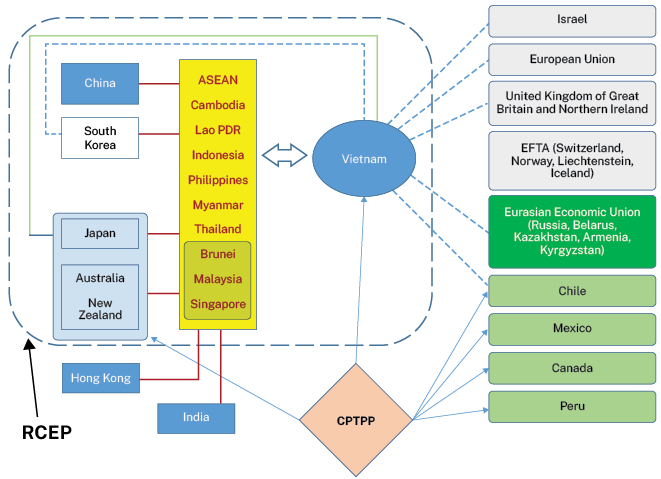
Figure 8.1: Vietnam’s free trade agreements
ASEAN (Association of Southeast Asian Nations), CPTPP (Comprehensive and Progressive Agreement for Trans-Pacific Partnership), EFTA (European Free Trade Area), EU (European Union), Laos, RCEP (Regional Comprehensive Economic Partnership). Source: Tran et al. (2021).
Acknowledging that importance, Vietnam is keen on respecting ASEAN centrality in regional issues, including those related to non-traditional security. In the pioneering Hanoi Plan of Action in 1998, Vietnam and other ASEAN member countries recognised the need to facilitate regional economic recovery and regional economic integration after the Asian financial crisis. While engaging in strategic partnerships with other ASEAN members and other sub-ASEAN processes (such as Cambodia, Laos and Vietnam triangular development, or Mekong Subregion development), Vietnam duly supports the role of ASEAN in dialogues and in identifying measures to address common regional issues. As ASEAN chair in 2010, Vietnam undertook various initiatives to strengthen relations with ASEAN’s dialogue partners, the most notable of which was the engagement of the US and the Russian Federation at the East Asia Summit. Vietnam also supported other ASEAN member countries and dialogue partners in coordinating the implementation of the Master Plan for ASEAN Connectivity, explicitly acknowledging the ownership of ASEAN in regional connectivity initiatives.1 As a non-permanent member of the UNSC during 2020–21, Vietnam made efforts in 2020 to promote cooperation between the UN and ASEAN.
The second aspect of Vietnam’s economic integration is its WTO-plus approach. With depth and comprehensive coverage,2 WTO membership further consolidates Vietnam’s approach to multilateralism. The FTAs Vietnam signed after 2007 reflect this approach, which aims to deepen trade and investment ties with key partners. Despite the events of 2020, Vietnam remains committed to multilateralism. Vietnam has cooperated with like-minded countries in efforts to revive international economic integration. Specifically, Vietnam worked with other CPTPP partners to revive the agreement in its host year of APEC in 2017, after the US withdrew from the Trans-Pacific Partnership in January that year. Likewise, Vietnam worked with ASEAN, China, Korea, Japan, Australia and New Zealand to conclude and sign RCEP in 2020 at the ASEAN Summit, after India withdrew from the agreement in 2019.
Vietnam’s approach to security issues
One of Vietnam’s top national interests is maintaining a peaceful and stable environment for socioeconomic development, while protecting national sovereignty. Vietnam has implemented a defence policy that is peaceful and focused on self-defence, as reflected in its unwillingness to use, or threaten the use of, force in international relations, resolving all disagreements and disputes with other countries by peaceful means. Vietnam advocates addressing flashpoints and potential conflicts in the region through dialogue and peaceful negotiation.
Vietnam advocates gradual modernisation of the military, increasing its defence capacity only to maintain military strength at the level necessary for self-defence. Vietnam opposes arms race activities. Having fought in various wars for its independence and freedom, Vietnam expresses its full respect for the independence, sovereignty, unity, territorial integrity and interests of other countries on the basis on international law and the principles of the UN Charter. In return, Vietnam demands other states to recognise its own independence, sovereignty, unity, territorial integrity and national interests.
Vietnam also advocates for the settlement of territorial disputes on land or sea by peaceful means on the basis of international law. Regarding the South China Sea3 territorial dispute, Vietnam firmly claims to have sufficient historical evidence and legal basis to prove undisputed sovereignty over the waters and islands, including Hoang Sa and Truong Sa archipelagos. Vietnam remains willing to resolve disputes through peaceful negotiation based on the provisions of the 1982 United Nations Convention on the Law of the Sea (UNCLOS). While continuing to seek a long-term solution to this issue, Vietnam advocates that all parties must exercise restraint and strictly implement the ASEAN–China Declaration on the Conduct of Parties in the South China Sea (DOC). Vietnam advocates for a move towards building a code of conduct (CoC), and for achieving a fair and long-term solution to this complex problem so that the South China Sea remains a sea of peace, friendship and development.
Actively preventing and repelling threats of war is one of Vietnam’s key defence tasks in peacetime. Its optimal defence strategy is the safeguard of independence, sovereignty, unity, territorial integrity and other national interests without waging war. Vietnam advocates a defence strategy based on a range of political, economic, diplomatic, sociocultural and military activities aimed at eliminating the causes of armed conflicts and war. In addition, Vietnam’s defence strategy uses integrated measures to maintain internal stability and prevent external interference threats.
Vietnam opposes acts of terror in all forms and opposes activities that take advantage of counterterrorism to interfere in the internal affairs of other countries. Vietnam works at home and abroad to prevent terrorist activities and activities that support terrorism in any form. Vietnam believes anti-terrorism measures and international cooperation against terrorism must be carried out within the framework of the UN, in accordance with the basic principles of the UN Charter and international law. Vietnam has signed eight out of 12 UN conventions on counterterrorism and is considering joining the remaining conventions (Luong 2020).
Finally, Vietnam is gradually adapting its approach to economic integration so as to make greater contributions to national security. Vietnam expanded its outward approach from international economic integration to international integration. The 2013 Resolution 22-NQ/TW on International Integration of the Politburo emphasises that economic integration is the centre of international integration, and that integration in other areas contributes to enhancing economic integration. This is reiterated in the Resolution 06-NQ/TW of the Central Committee of the Communist Party of Vietnam on effective economic integration upon implementation of a new-generation of FTAs. In other words, international cooperation in security also contributes to effective economic integration.
In fact, national security is incorporated in all of Vietnam’s strategies related to economic integration and international integration. For instance, the government’s action plan towards effective and sustainable development after WTO accession (under Resolution 49/NQ-CP in 2014) identifies the need to combine economic development, national security and defence in marine, island and strategic locations. Vietnam has started several initiatives that combine national security and international integration. The country has also joined several international activities related to security. For example, Vietnam has deployed solders to international peacekeeping, most recently the second deployment of Military Level 2 Field Hospital to South Sudan in 2019. Vietnam was also involved in the first US–ASEAN military exercise in 2019.
Vietnam wants to become a reliable partner to all countries and territories. Thus, Vietnam needs to approach regional geopolitical developments with careful consideration. Balancing relationships with major powers is now almost unavoidable, especially when such powers engage in more direct strategic competition. Vietnam has consistently asserted the key principles of ‘no military alliances’, ‘no siding with one country against another’ and ‘no foreign military bases on Vietnamese soil’. Since 2019, these key principles were elaborated, specifically:
Vietnam consistently advocates neither joining any military alliances, siding with one country against another, giving any other countries permission to set up military bases or use its territory to carry out military activities against other countries nor using force or threatening to use force in international relations (Vietnamese Ministry of Defence 2019, 23–24).
There are several grounds for these principles. First, a history of complicated interactions with major powers has compelled Vietnam to adopt a balanced approach to international relations. Second, these principles are consistent with Vietnam’s objective to diversify and multilateralise cooperative relations. Third, Vietnam perceives and supports the increasingly instrumental role of ASEAN in international issues (such as freedom of navigation and denuclearisation).
Finally, Vietnam must now navigate both trade and investment relations and maritime and land border conflicts. In the context of increasing information availability due to the internet, it is getting harder to ignore the impacts of maritime and land border conflicts on public sentiment, and in turn on trade and investment relations with the associated countries. In 2014, for example, Vietnam had to take measures to prevent and mitigate damages dealt by protestors to the production premises of foreign-invested enterprises.
In the face of increasingly complicated US–China rivalry that spans both economics and security, a naturally emerging question is whether Vietnam can continue its combined approach to economic integration and national security. We argue that US–China rivalry is further consolidating Vietnam’s approach to economic integration and national security. More importantly, embracing the role of ASEAN in such an approach may help. This shall be the focus of the next section.
Selected cases
Case I: US–China trade war, 2018–19
During the months between June 2018 and 2019, trade tensions between the US and China became increasingly complicated and unpredictable. Both countries’ behaviour had direct and indirect impacts on the world economy. The fallout of the trade war between the US and China indirectly impacted Vietnam, providing both opportunities and challenges for Vietnamese exporters.
Before analysing the evolution of Vietnam’s response to the US–China trade dispute, it is worth briefly revisiting the timeline of events. During the presidential election in May 2016, Donald Trump emphasised the priority of addressing the US trade deficit with China. In April 2017, the United States Trade Representative started investigating the threat of imported steel and aluminium products to US national security. Its investigation into the regulations, policies and behaviour of the Chinese Government related to technology transfer, intellectual property and innovation was ongoing in August that year. In March 2018, the US imposed a 25 per cent tariff on all steel imports (except from Argentina, Australia, Brazil and South Korea) and 10 per cent tariff on all aluminium imports (except from Argentina and Australia). A week later, China imposed tariffs ranging from 15–25 per cent on 128 products from the US (worth about US$3 billion).
US–China tensions escalated in June 2018, and bilateral negotiations did not result in an agreement. The trade war officially began in July 2018 as the US imposed an additional import tariff of 25 per cent on US$34 billion of Chinese imports. China then imposed a retaliatory tariff of 25 per cent on US imports with the same estimated value. In August 2018, the US imposed an additional 25 per cent tariff on another US$16 billion of imports from China. China retaliated by imposing 25 per cent tariffs on US$16 billion worth of imports from the US. China also lodged an official complaint to the WTO against the US for imposing import tariffs on its solar panels. In September 2018, the US imposed an additional tariff of 10 per cent on Chinese imports worth US$200 billion (with a communicated plan to increase the rate to 25 per cent by 1 January 2019). China also imposed tariffs of 5–10 per cent on US$60 billion of US imports. At the G20 Summit on 2 December 2018, the US and China agreed to suspend the escalation of tariffs for the trade negotiation for 90 days. After some meetings, by the end of February 2019, President Donald Trump extended this suspension and continued negotiation in an effort to reach a trade agreement.
The truce did not last. In May 2019, the US–China trade war escalated after negotiations failed to reach agreement. The US increased additional tariffs from 10 per cent to 25 per cent on Chinese imports worth US$200 billion. Huawei, China’s major technology company, was banned from purchasing products from US companies. In response, China announced that it would increase additional tariffs from 10 to 25 per cent on US imports worth US$60 billion by specific groups (officially implemented from 1 June 2019). China’s Ministry of Commerce also published its ‘Unreliable Entity’ list. In early June 2019, China released a white paper on US trade talks. Just before the G20 Summit in June 2019 in Japan, China and the US made a truce and then restarted trade talks. Still, the talks progressed slowly until December 2019. Specifically, in August 2019, the US labelled China as a currency manipulator, while various threats to increase tariffs and products for tariff exemptions were made in parallel with bilateral trade talks during July–November 2019. It was only in December 2019, and just before a new round of tariff hikes, that the two countries agreed on the Phase One trade deal.
Impacts of the US–China trade war on Vietnam
The rise in tensions between the two powers had a range of impacts—positive and negative—on third parties in the region. By the end of 2019, Vietnam had managed to take advantage of the opportunities and deal with the challenges stemming from the trade war. Despite Vietnam’s ex-ante assessment of the impact, economic and export growth rates were still relatively high, and implemented FDI was increasing steadily. These positive developments likely occurred due to the tit-for-tat tariff barriers imposed by the US and China increasing export opportunities for developing countries, including Vietnam. Increasing uncertainty surrounding the US–China trade war may also make major multinational companies consider shifting part or all of their existing manufacturing facilities in China to other countries like Vietnam. The exchange rate has been more or less stable, thereby contributing to mitigating adverse impacts from these external events on the domestic macroeconomic environment. Quantitative assessments (e.g. Malesky and Mosley 2021; Petri and Plummer 2020) have so far been restricted to the impact of tariff measures by the US and China. These assessments indicated benefits to Vietnam in the form of increasing national income, labour upgrading and so on.
Still, Vietnam has suffered impacts from the US–China trade war. Vietnamese exports to China only grew by 0.1 per cent in 2019, significantly below the figure of 16.6 per cent in 2018. This was partly due to Vietnam’s participation in China-focused value chains: foreign investors decreased production in China, leading to weaker demand for imports from Vietnam. The depreciation of the yuan during the trade war made Vietnamese goods less competitive in the Chinese market. Additionally, by the end of 2019, both the US and China had already carried out actions and implemented policies that negatively affected Vietnam’s exports to these countries. China increased the standards and regulations applied to imported goods, including those from Vietnam. For instance, China has applied additional technical barriers on Vietnamese agricultural imports. This may have been in retaliation to Vietnam enforcing stricter control over products imported from China to prevent origin circumvention. As for the US, the most remarkable action was in May 2019, when it included Vietnam on the monitoring list for currency manipulation.
Various assessments undertaken in 2018–19 (CIEM 2019; CIEM 2020; Nguyen and Dinh 2018) agreed on the possibility that Chinese goods would be exported to Vietnam before re-exporting to the US to circumvent American duties on Chinese exports. By June 2020, some circumvention probes were launched by the US. Import and export data may also raise concerns about the impact of trade diversion. Although export growth to China decelerated significantly from 16.6 per cent in 2018 to 0.1 per cent in 2019, Vietnam saw its export growth to the US increase from 14.3 per cent to 29.1 per cent in the same period. Conversely, Vietnam’s imports from China increased by more than 15.2 per cent in 2019, faster than in 2018 (11.7 per cent).
Investment data also indicate significant FDI inflows from China into Vietnam. In 2019, registered capital of FDI projects from China and Hong Kong amounted to US$2.4 billion and US$2.8 billion, respectively. China and Hong Kong were, respectively, the third- and second-largest sources of new FDI to Vietnam in 2019, only after South Korea. A potential concern is that investors just moved temporarily to Vietnam to shelter from the impacts of the trade war. Still, the implementation of the ASEAN—Hong Kong FTA in June 2019 may simply facilitate ‘hot money’ for capital contribution or purchasing shares from Hong Kong into Vietnam, in the absence of adequate measures and screening policies.
Vietnam’s initial response to the trade war was closely aligned with its approach to economic integration—that is, working with all partners to improve trade management and facilitate trade without discrimination. Vietnam also provided regular justification and clarifications to the US on issues related to the bilateral trade deficit, product origins and the exchange rate. Vietnam engaged in frequent discussions with the US to address the issues related to the justification of Vietnam’s share in value-added in exports, and its intention to buy more agricultural products from the US. Vietnam also enhanced its cooperation with the US in investigating the origin of Vietnamese exports. Apart from the bilateral working group meeting in June 2018, there has been no similar meeting for Vietnam to justify its market economy to the US, and Vietnam does not seem to be in a rush for more meetings. Regarding currency manipulation, even from early 2018, Vietnam explicitly stated that it had not sought and would not seek to devalue the national currency to support exports. Vietnam has continued to justify this approach even after the US included Vietnam in the monitoring list of currency manipulation in May 2019.
At the same time, Vietnam continues to improve trade with China. Vietnam made efforts to build capacity for domestic companies to comply with the stricter standards of the Chinese market. In doing so, the explicit statement was that China had applied stricter standards for several years already—even before the trade war. Vietnam continued to work with China, ASEAN and other partners to conclude the negotiation of RCEP in 2019 (and signed the agreement in 2020 even after the withdrawal of India). Vietnam was one of the first ASEAN member states to ratify the ASEAN—Hong Kong FTA, enabling the agreement to enter into force in June 2019.
Vietnam has also attempted to increase the quality of its trade and investment relations. For instance, the Ministry of Industry and Trade requested tighter control by relevant authorities over certificates of origin to minimise trade fraud. Vietnam also improved screening and selection of FDI projects via higher economic, social and environmental standards, under Resolution 50-NQ/TW of the Politburo on attracting FDI in August 2019. However, the country made it clear that these regulatory changes would be applied on a horizontal basis for its own development objectives, rather than trying to discriminate against any partners. More broadly, Vietnam continued to work with ASEAN to express support for the multilateral trading system,4 including in specific areas like e-commerce.
Case II: COVID-19 pandemic in 2020
The COVID-19 disease was first reported in late 2019 and quickly became a worldwide pandemic. By the end of 2020, the pandemic had spread to 218 countries and territories, resulting in over 82.4 million cases and about 1.8 million deaths (Nguyen and Hoang 2020). The number of new cases skyrocketed, particularly in late June 2020. Throughout 2020, the risk of a ‘second wave’ or ‘third wave’ of COVID-19 became increasingly evident in various countries.5
Given the challenges facing the world economy before 2020,6 the COVID-19 pandemic has only further intensified global economic, political and social uncertainty and instability. Unpredictability is reflected in the wide-ranging forecasts of global economic downturn and recession in 2020 by international organisations and policy research institutions. Debates on recovery scenarios for the global economy (following a V-, W-, L-, U-shaped, or ‘Swoosh’ model) have become more frequent, indicating the complexity and uncertainty in the COVID-19 context.
In response to the COVID-19 pandemic, many countries implemented unprecedented measures, including movement restrictions, border shutdowns, temporary suspension of business activities and non-essential services, social distancing and large-scale expansionary monetary-fiscal stimuli (see CIEM 2020; World Bank 2020). As the number of new COVID-19 infected cases gradually decreased in the second quarter of 2020, some countries relaxed social distancing measures in an effort to restart production and business activities.7
Vietnam reported the first two cases of COVID-19 infection in late January 2020, and, by the end of 2020, had 1,465 cases (Ministry of Health 2020). The pattern of new cases was uneven across the year. Three major waves were recorded in the periods from early March to late April 2020, from late July to late August 2020 and in the second half of December 2020. Vietnam declared the pandemic situation nationwide and implemented stringent movement restrictions and social distancing on 1 April 2020. These measures were relaxed during the second half of April 2020. During the latter waves, Vietnam only implemented social distancing on a restricted basis (i.e. only in the areas with infected cases, rather than on a nationwide basis).
Economic policy responses of Vietnam
Throughout 2020, Vietnam focused on flexible and timely policy responses to the COVID-19 pandemic. Controlling the spread of the disease was the top priority to consolidate social stability and instil public confidence. Vietnam simultaneously paid close attention to businesses and communities facing economic hardship and undertook various measures to alleviate such difficulties. Specific measures included lowering interest rates,8 debt restructuring, preferential programs, deferral and rescheduling of tax payment and land rental, and reducing the prices of electricity, services, and oil and petrol for prioritised groups. Apart from continuing previous priorities to promote exports and FDI, Vietnam made efforts to accelerate disbursement of public investment, and mobilise domestic investment and domestic consumption.9
The above policies allowed Vietnam to effectively control and prevent the spread of disease and implement the appropriate responses to mitigate the consequences of COVID-19. Policy measures were based on actual situations, regularly updated scenarios and related analysis forecasts—this approach stemmed from Vietnam’s experience with previous difficult times such as the US–China trade war. According to the COVID-19 Government Response Stringency Index,10 Vietnam’s responses were implemented much earlier than those of other countries around the world (see Figure 8.2). From late April 2020, travel restrictions gradually relaxed, allowing business and production operations as well as normal daily life to resume, provided the necessary precautions were in place.
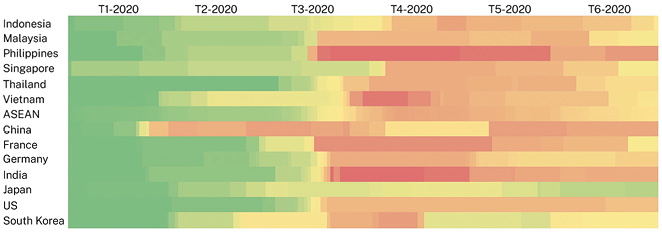
Figure 8.2: COVID-19 Government Response Stringency Index
Source: Hale et al. (2020, cited in CIEM 2020). Note: the closer to 100, the redder the colour. Graph displays data collected until 15 June 2020.
Vietnam’s fight against the pandemic instilled a high level of confidence across communities and in businesses, particularly in light of its ‘dual target’ of containing the pandemic and boosting economic recovery. Regular information on the COVID-19 pandemic and the various policy measures undertaken by government was conveyed in a transparent and diversified manner and was accompanied by wide policy consultation. Vietnam arguably turned the tide of public distrust, which had been somewhat eroded as a consequence of the Formosa disaster in 2016, enabling it to gain strong public support thanks to its ‘ability to manage problems clearly and smoothly’ (Clark 2020).
More importantly, Vietnam has retained macroeconomic policy space to respond to adverse developments (if any) in the future. According to the World Bank, Vietnam’s balance of payments, budget deficit and the financial sector—major transmission channels of external shocks to the domestic economy—remained relatively positive. As a note, prudent fiscal management measures during the period 2016–19 improved policy space for the government in carrying out fiscal-monetary support in 2020 (CIEM 2020).
Opportunities and challenges for Vietnam in the context of COVID-19
Despite the consequences of COVID-19, the pandemic has arguably brought about important opportunities, even turning points, for the development of many countries, including Vietnam. One remarkable impact is that the COVID-19 pandemic has accelerated a partial shift in global supply chains, accompanied by the inflows of FDI. However, the CIEM (2020) contends that the shift of supply chains away from China (China Plus One) began prior to the COVID-19 pandemic due to economic downturn and increasing labour costs in China, the US–China trade war, and competition from ASEAN and India. However, in the context of the pandemic, the shift was reinforced not only by enterprises’ own benefit calculations, but also by various countries’ national policies that were aimed at reducing dependence on the Chinese market and lessening the adverse impacts of supply chain disruptions in the future.11
Vietnam had appealed to foreign investors long before the COVID-19 pandemic struck. This was thanks to drastic reforms of its domestic business environment (in particular, from 2014) and Vietnam’s important FTAs (e.g. CPTPP, RCEP and EVFTA). The pandemic has not weakened or disrupted these factors. Instead, Vietnam’s relatively effective response to COVID-19 has strengthened the confidence of its foreign investors. For instance, the implementation of EVFTA and expedited ratification of the EU–Vietnam Investment Protection Agreement by EU members may benefit EU investors who are considering moving investment out of China.
The COVID-19 pandemic did not shift Vietnam’s focus away from the digital economy. Instead, the disruption of economic operations based on traditional platforms forced Vietnamese agencies and enterprises to be more active in utilising digital platforms for management, production and business operations. This includes implementing online delivery systems, introducing e-payments and online-learning. Both the Vietnamese Government and private enterprises have embraced these new economic models and methods. Applications of the digital economy and e-government development have accelerated since 2018–19.12 The COVID-19 pandemic has also built greater consensus within Vietnam on the adoption of 5G technology, which is now seen as inevitable. Discussions of 5G adoption no longer refer to the risk of a ‘digital divide’, which was more commonplace during the time of US–China trade tensions in 2019. Vietnam has sought measures to improve access to 5G technology, including through the development of hardware by domestic firms.
COVID-19 has undermined strategic trust among the world’s major economies. Confidence levels during the pandemic are influenced by a variety of factors: how well a country has managed to control the spread of infections, official statistics related to COVID-19, whether a country supports multilateral mechanisms in tackling COVID-19 and so on. As the 2020 ASEAN chair, Vietnam sought to promote regional cooperation and bilateral and multilateral relations in fighting COVID-19 (see Box 8.1). Vietnam’s ‘COVID diplomacy’ was strengthened in both bilateral and multilateral frameworks with key partners, particularly through the Special ASEAN and ASEAN+3 summits on COVID-19, the Special ASEAN Foreign Ministers’ Meeting on COVID-19, and the Special ASEAN Economic Ministers Virtual Conference Meeting on COVID-19, as well as through donating medical supplies to countries around the region.
Box 8.1: Some results of the Special ASEAN and ASEAN+3 summits on COVID-19 in April 2020
|
On April 14 2020, as ASEAN Chair, Vietnam held virtual Special ASEAN and ASEAN+3 Summits on COVID-19. The Joint Declaration of the Special ASEAN Summit emphasized ASEAN’s solidarity in responding to COVID-19 in the spirit of a ‘Cohesive and Responsive ASEAN’. ASEAN Leaders agreed: (i) to further strengthen public health cooperation to contain the pandemic and protect people; (ii) to promote the exchange of information and experience sharing, technical assistance and scientific and technological cooperation in containing and preventing the transmission of the disease; (iii) to discuss and develop a post-pandemic recovery plan, including liberalizing markets for trade and investment, recovery and development of regional supply chains, and strengthening food security; and (iv) to underscore the importance of a multi-stakeholder, multi-sectoral and comprehensive approach by ASEAN to effectively respond to COVID-19 and future health emergencies. The Summit led to numerous initiatives, including to encourage the development of regional reserves of medical supplies; to consider formulating a standard ASEAN response to public health emergencies; to develop ASEAN guidelines on the provision of emergency assistance by ASEAN missions in developing countries to nationals of ASEAN member countries in crisis situations; and to propose the establishment of the COVID-19 ASEAN response fund. The Special ASEAN+3 Summit acknowledged the value of regional cooperation mechanisms in responding to disease emergencies. New mechanisms include national risk assessments, periodic reports on the Risk Assessment on the International Dissemination of COVID-19 in the ASEAN region, the virtual ASEAN+3 Senior Officials Meeting on Health Development, and the implementation of the International Health Regulations. Pre-existing regional cooperation mechanisms include the ASEAN Emergency Operations Center Network for public health emergencies, the ASEAN BioDiaspora Virtual Centre, and the ASEAN+3 Field Epidemiology Training Network. The Special Summit Joint Statement reaffirms that ASEAN+3 is willing to share experience, policy responses, treatment methods, epidemiological research and clinical treatments; to provide medical supplies; and to promote cooperation on the production of COVID-19 vaccines. ASEAN+3 leaders also agreed on timely support for ASEAN+3 nationals (vulnerable groups in particular) in accessing healthcare services and returning to their home countries. In addition, ASEAN+3 leaders established an ASEAN+3 task force on responding to epidemics; requested China, the Republic of Korea and Japan to assist in building financial, technological and professional capacity of public health systems; proposed the establishment of an ASEAN+3 reserve of essential medical supplies; made a proposal on enhancing the role of the ASEAN+3 Macroeconomic Research Office (AMRO) in planning economic recovery and development post-COVID-19; utilised existing mechanisms that ensure economic and financial stability and food security such as the Chiang Mai Initiative Multilateralization (CMIM) and ASEAN+3 Emergency Rice Reserve. |
Source: CIEM (2020).
Still, the COVID-19 pandemic poses challenges and obstacles for Vietnam. First, promoting exports of high-demand products like medical supplies is no easy task, because under-developed domestic industries may lead to potential input shortages. Second, without sufficient monitoring, the shift of global supply chains may force Vietnam to become the destination for the production of low-tech and environmentally unfriendly goods. Finally, the COVID-19 pandemic reinforces both traditional and non-traditional challenges to Vietnam’s security. For instance, cybercrime and cyber attacks have increased drastically amid the unfolding pandemic and rising demand for online platforms.13
Strategic competition among major countries intensified after COVID-19, posing new challenges for Vietnam’s foreign economic relations. Confrontation between the US and China and strategic gatherings around the world have become increasingly complicated and unpredictable. This can pressure countries like Vietnam to ‘take a side’ in certain key areas such as technology, medical supplies and supply chains. Therefore, rushed decision-making in this uncertain environment will only involve Vietnam in geopolitical competition with major countries, rather than improve its resilience (CIEM 2020).
Facing a mixture of both new and old opportunities and challenges, Vietnam’s response to the COVID-19 pandemic in 2020 had some important implications. First, the conduct of policies should be associated with regular updates and assessments of growth scenarios. Such scenarios should not be narrowly defined with respect to the evolution of the COVID-19 pandemic alone but should instead cover aspects of strategic actions by major economies as trade investment partners of Vietnam. Second, the Vietnamese Government should retain policy space to respond to post-COVID-19 scenarios. Accordingly, macroeconomic stability remains fundamental to strengthen the confidence of enterprises and consumers as well as consensus on reforms and restructuring initiatives. Third, business environment reform should be promoted on the basis of the remarkable achievements during the period 2014–19. Thus, Vietnam should renew reforms to attract foreign investors, and, at the same time, improve the growth potential of the economy (which, in turn, will increase its appeal to foreign investors). These policies were identified before the COVID-19 pandemic and should be accelerated to adapt to the new context.
In Vietnam’s view, the consequences of the COVID-19 pandemic have spread beyond the borders of individual countries. Thus, it is necessary to have a comprehensive, closely coordinated approach to recovery at regional and international levels. Effective international cooperation remains a pillar for development and economic restructuring. Concerns about the geopolitical implications of RCEP in the COVID-19 context are legitimate but must be addressed on the principles of supporting ASEAN centrality and adhering to Vietnam’s long-term approach to economic integration. In this regard, Vietnam and ASEAN may work with external partners to set a good example of more friendly economic policies on some products—including medical supplies and rice—that may have a direct contribution to international cooperation after COVID-19.
Case III: South China Sea
The South China Sea (known in Vietnam as the East Sea) is a geopolitically important location. Sixty per cent of seaborne trade passes through Asia, and the South China Sea accounts for one-third of global shipping (China Power Team 2017). This maritime area is also rich in resources, with an abundance of islands, fisheries, oil and gas deposits. In 2013, the US Energy Information Administration estimated that the South China Sea had an oil reserve of 11 billion barrels and a natural gas reserve of 190 trillion cubic feet.
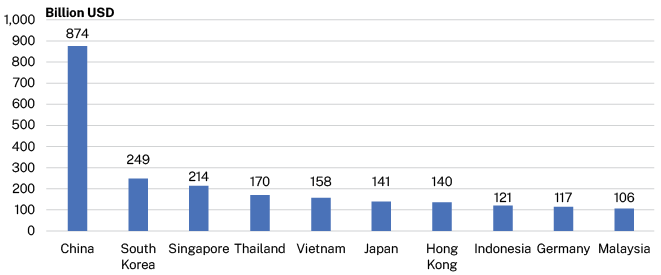
Figure 8.3: Exports through the South China Sea
Source: China Power Team (2021).
According to the EU-Asia Centre (2013), the South China Sea is arguably one the most disputed areas in Southeast Asia. Vietnam, China, Chinese Taipei, the Philippines, Indonesia, Malaysia and Brunei Darussalam have made overlapping territorial claims to the South China Sea waters, and to some islands and rocky outcrops in them. Meanwhile, disputes over the South China Sea involve a body of international laws that are both contested and difficult to interpret (Poling 2013). Incidents of small naval confrontations between official vessels and fishing boats of various countries in the South China Sea are not rare. While claims to natural resources like oil, natural gas, minerals and fish exacerbate these disputes (EU-Asia Centre 2013), protecting sovereignty over the territory and waters is also the highest priority for concerned countries, including Vietnam.
Vietnam has consistently emphasised that peace, stability, cooperation and development in the South China Sea are common desires and goals of all countries in the region and the broader international community. Vietnam underscores the importance of respect for international law, respect for legal order at sea and full and responsible enforcement of UNCLOS 1982. In line with this, Vietnam consistently welcomes efforts from all countries to maintain peace, stability and cooperation in the South China Sea, and encourages countries to settle disputes via dialogue and other peaceful measures in accordance with international laws.
Vietnam has firmly and consistently claimed to have sufficient historical evidence and legal basis to prove undisputed sovereignty over the waters and islands in the South China Sea, including the Hoang Sa and Truong Sa archipelagos. The Law of the Sea of Vietnam—passed during the third session of the 13th National Assembly on 21 June 2012 and effective since 1 January 2013—declared that Vietnam has sovereignty and jurisdiction over the Paracel and Spratly islands (National Assembly 2012). In addition, Vietnam has devised legal and propaganda strategies about its sovereignty and rights over its territories in the South China Sea. Vietnamese authorities frequently disseminate information about the historical evidence and legal basis for Vietnam’s sovereignty. Vietnam actively engages in various workshops to present the historical evidence and legal basis for such claims.
Vietnam remains willing to use peaceful negotiation to resolve disputes based on the provisions of UNCLOS 1982. The country has engaged in both bilateral and multilateral negotiations to resolve the South China Sea dispute. Bilateral negotiations involve Vietnam and another party, while multilateral negotiations are reserved for issues concerning Vietnam and more than one other party. In official meetings between Vietnam and China, the issues and differences concerning the South China Sea were raised and discussed frankly. Vietnam supported putting the issue of the South China Sea on the agenda of an ASEAN-centred multilateral dialogue framework (Shoji 2012).
Vietnam attaches great importance to ASEAN’s South China Sea policy. ASEAN and China signed the Declaration on the Conduct of Parties in the South China Seas (DOC) in November 2002 and adopted guidelines to implement it on 21 July 2011. The Joint Statement of the Foreign Ministers of ASEAN Member States and China on the Full and Effective Implementation of DOC was endorsed on 25 July 2016. At their meeting on 6 August 2017 in Manila, the foreign ministers of ASEAN member states and China adopted the framework of the CoC. At the twentieth ASEAN–China Summit in November 2017, ASEAN member states and China officially announced the launch of negotiation of the CoC, which was proposed by China to be complete by 2021 (ASEAN 2020). Throughout this process, while continuing to seek a long-term solution to the South China Sea issue, Vietnam has advocated that all parties must exercise restraint and strictly implement the DOC, towards building a CoC.
Finally, Vietnam actively participates in other mechanisms of ASEAN on security issues related to the South China Sea. ASEAN and China have been cooperating under the ASEAN Defence Ministers Meeting-Plus (ADMM-Plus) since it was established in 2010. Similarly, Vietnam also participated in the ASEAN Regional Forum, which reflects its ASEAN-derived approach to cooperative security, seeking to:
Create a regional order based on: (i) transparency in strategic intent and threat perception; (ii) mutual trust and confidence with regard to the member states’ military capabilities and deployment; and (iii) habit of cooperation which will facilitate the resolution of existing and future conflicts (Cruz de Castro 2017, 35).
While the ability to realise such a goal is open to question, the adoption of a gradual approach (i.e. the ‘ASEAN Way’) has been relevant to Vietnam.
Conclusions
Vietnam’s strategy for pursuing economic integration in conjunction with other strategic goals since its accession to the WTO in 2007 yields several insights. First, notwithstanding efforts to diversify export markets and products, Vietnam continues to attach importance to trade with major partners. Times of global uncertainty and volatility have not reduced Vietnam’s attention to these markets. Vietnam’s increasing export competitiveness is reflected in growing trade and investment flows. Its approach to trade policy has evolved from unilateral and comprehensive liberalisation in the pre-WTO period to a more selective, partner-based and WTO-plus liberalisation arrangement, which has helped to improve and leverage export competitiveness. FDI inflows continue to have positive impacts on Vietnam’s export growth, even in the context of the COVID-19 pandemic.
ASEAN played an important role, both as an entity undertaking ongoing community-building initiatives, and as a playground in which Vietnam could learn and adopt measures to enhance its economic integration. Given recent geopolitical developments, Vietnam views the need to balance relationships with major powers as unavoidable. Its approach to economic integration undergirds how Vietnam has adapted its approach to security, and this has contributed to ASEAN’s mechanisms towards peace, stability and development of the region. This kind of approach is consistent with the association’s gradualism: the ‘ASEAN Way’. While outcomes may be path-dependent and the set of choices may vary at times, it is in Vietnam’s long-term strategic interest to retain its commitment to economic integration and to address security policy within this context, notably by respecting ASEAN’s centrality in regional issues.
Drastic contextual changes like geopolitical competition and non-traditional security issues are driving Vietnam’s integration into the global and regional economy. While economic integration remains the focus, international cooperation in other areas has been promoted to support economic integration. Vietnam has also signed various agreements and strategic partnerships, most with key trade and/or investment partners. In return, expanded investment and trade relations contribute to improving Vietnam’s economic and regulatory capacity, which in turn improves the country’s contributions to international and regional institution-building processes. The three case studies in this chapter clearly portray such interactions between Vietnam’s economic integration and security policies.
References
ASEAN (Association of Southeast Asian Nations). 2020. ‘Overview of ASEAN–China Dialogue Relations’. April. asean.org/storage/2012/05/Overview-of-ASEAN-China-Relations-22-Apr-2020-00000002.pdf (site discontinued).
China Power Team. 2017. ‘How Much Trade Transits the South China Sea?’ 2 August 2017. Last modified 25 January 2021. chinapower.csis.org/much-trade-transits-south-china-sea/.
CIEM (Central Institute for Economic Management). 2013. Comprehensive Evaluations of Vietnam’s Socio-Economic Performance 5 Years after Accession to the WTO. Hanoi: Finance Publishing House.
CIEM (Central Institute for Economic Management). 2019. Vietnam’s Economy in the First 6 Months of 2019. Hanoi: Finance Publishing House.
CIEM (Central Institute for Economic Management). 2020. Vietnam’s Economy in the First 6 Months of 2020: Enabling Regulatory Approach for the New Normal. Hanoi: Dan Tri Publishing House.
Clark, H. 2020. ‘Vietnam Defies the Odds on COVID-19’. The Interpreter, 12 May 2020. www.lowyinstitute.org/the-interpreter/vietnam-defies-odds-covid-19.
Cruz De Castro, R. 2017. ‘The ASEAN Regional Forum in the Face of Great-Power Competition in the South China Sea: The Limits of ASEAN’s Approach in Addressing 21st-Century Maritime Security Issues?’ 15 August 2020. www.kas.de/c/document_library/get_file?uuid=43dafd95-a5cc-e07e-6d14-73ac2d12cda6&groupId=288143.
Dinh, H. M., Q. L. Trinh, A. D. Nguyen and T. T. Vo. 2009. ‘Study 1: Trade, Growth, Employment and Wages in Vietnam’. In Research Project: Globalization, Adjustment and the Challenge of Inclusive Growth: Furthering Inclusive Growth and Industrial Upgrading in Indonesia, the Philippines and Vietnam. International Development Research Centre and CIEM.
Dinh, T. H., A. D. Nguyen, B. M. Tran, T. L. M. Do, T. H. Pham, T. N. T. Do, P. N. Le, M. A. Le and T. T. H. Dang. 2020. Implementing CPTPP as a Part of Economic Integration Roadmap in Vietnam: Requirement for Structural Reforms and Firms’ Preparedness. Hanoi: Dan Tri Publishing House.
EU-Asia Centre. 2013. ‘South China Sea: Background Note’. Accessed 17 December 2020.
Luong, C. 2020. ‘Further Improving Regulations, Mechanisms and Policies of National Defense in the New Context’ [Tiếp tục hoàn thiện hệ thống pháp luật, cơ chế, chính sách về quốc phòng đáp ứng yêu cầu, nhiệm vụ bảo vệ Tổ quốc trong tình hình mới]. www.tapchicongsan.org.vn/quoc-phong-an-ninh-oi-ngoai1/-/2018/815932/tiep-tuc-hoan-thien-he-thong-phap-luat%2C-co-che%2C-chinh-sach-ve-quoc-phong-dap-ung-yeu-cau%2C-nhiem-vu-bao-ve-to-quoc-trong-tinh-hinh-moi.aspx [in Vietnamese].
Malesky, E. and L. Mosley. 2021. ‘Labor Upgrading and Export Market Opportunities: Evidence from Vietnam’. Economics and Politics 33 (3): 483–513. doi.org/10.1111/ecpo.12180.
Ministry of Health. 2020. ‘Update on the Situation of COVID-19’. 31 December 2020. ehealth.gov.vn/Index.aspx?action=News&newsId=53558 [in Vietnamese].
Ministry of Information and Communications. 2020. ‘All Ministries and Line Ministries Had Data Integration and Sharing Platforms’ [100% Bộ ngành có nền tảng tích hợp, chia sẻ dữ liệu cấp Bộ LGSP]. Accessed 15 November 2020. www.mic.gov.vn/mic_2020/Pages/TinTuc/145371/100--Bo-nganh-co-nen-tang-tich-hop--chia-se-du-lieu-cap-Bo-LGSP.html [in Vietnamese].
National Assembly. 2012. Law of the Sea of Vietnam [Luật Biển]. Accessed 11 August 2021. thuvienphapluat.vn/van-ban/Giao-thong-Van-tai/Luat-bien-Viet-Nam-2012-143494.aspx [in Vietnamese].
Nguyen, A. D. and T. H. Dinh. 2018. ‘New Trade Context: Outlook, Challenges and Policy Responses for Vietnam’ [Bối cảnh thương mại mới: Triển vọng, thách thức và đối sách của Việt Nam]. Paper for the Forum on International Economic Integration, 4 December 2018 [in Vietnamese].
Nguyen, S. and H. Hoang. 2020. ‘A Review of 2020 under COVID-19’ [Nhìn lại năm 2020 qua biến cố COVID-19]. Accessed 2 January 2021. nhandan.vn/binh-luan-quoc-te/nhin-lai-nam-2020-qua-bien-co-covid-19-630086/ [in Vietnamese].
PECC (Pacific Economic Cooperation Council). 2018. ‘State of the Region 2018–2019’. 12 November 2018. www.pecc.org/resources/regional-cooperation/2584-state-of-the-region-2018-2019.
Petri, P. A. and M. Plummer. 2020. ‘East Asia Decouples from the United States: Trade War, COVID-19, and East Asia’s New Trade Blocs’. Working Paper, no. 20–9 (June 2020). Peterson Institute for International Economics. doi.org/10.2139/ssrn.3630294.
Poling, G. B. 2013. ‘The South China Sea in Focus: Clarifying the Limits of Maritime Dispute’. Centre for Strategic and International Studies, July. csis-website-prod.s3.amazonaws.com/s3fs-public/legacy_files/files/publication/130717_Poling_SouthChinaSea_Web.pdf.
Shoji, T. 2012. ‘Vietnam, ASEAN, and the South China Sea: Unity or Diverseness?’ NIDS Journal of Defense and Security, 13 December 2012. www.nids.mod.go.jp/english/publication/kiyo/pdf/2012/bulletin_e2012_2.pdf.
Tran, T. H. M., A. D. Nguyen, T. L. M. Do, T. P. L. Nguyen and T. H. Pham. 2021. Making RCEP Work for Economic Well-Being and Autonomy in Vietnam: Required Reforms of Trade and Investment Institutions. Hanoi: Dan Tri Publishing House.
Vietnamese Ministry of Defence. 2019. 2019 Vietnam National Defence. Hanoi: National Political Publishing House.
Vo, T. T. 2012. ‘Achieving an Efficient AEC by 2015: A Perspective from Vietnam’. In Achieving ASEAN Economic Community 2015: Challenges for Member Countries and Businesses, edited by S. B. Das, 161–77. Singapore: Institute of Southeast Asian Studies. doi.org/10.1355/9789814379656-017.
World Bank. 2020. Global Economic Prospects. Washington, DC: The World Bank Group.
1 Noticeable examples are the infrastructure projects financed by public–private partnerships in selected ASEAN countries, including Vietnam.
2 See CIEM (2013).
3 Known in Vietnam as the East Sea.
4 Demonstrated in leaders’ statements in October 2018 and June 2019.
5 For instance, in China, the US and Japan. From 11 to 17 June 2020, more than 130 new cases of community infection were recorded in Beijing, forcing China to reimplement drastic measures such as isolation, blockades, school closures and flights suspensions. Between 18 and 30 June 2020, 254 new infection cases were reported in China. Tokyo also reported new community infection cases, the number soaring to more than 40 cases daily.
6 Such challenges include economic downturn, geopolitical tensions and conflicts, protectionism and extremism, risks for global trade and investment, and competition among major countries regarding IR 4.0 and the digital economy.
7 Most states in the US entered the first stage of relaxed COVID-19 measures during the second quarter of 2020. The stock exchange and Wall Street partially reopened on May 27. Japan relaxed social restrictions on 1 June 2020.
8 From September 2019 to the end of May 2020, the State Bank of Vietnam cut key interest rates three times, with a total downward adjustment of 1.75 percentage points (annualised), reduced the ceiling of deposit rates by 0.8–1.25 percentage points (annualised), and lowered lending rates for some prioritised areas. Compared to other countries in the region, the reduction in Vietnam was most significant (Thailand, Malaysia and Indonesia were down by 0.5 percentage points; the Philippines by 1.25 percentage points; China by 0.3 percentage points; and India by 0.75 percentage points).
9 In a conference with the business community in May 2020, the prime minister pointed out five ‘growth drivers’, including mobilising domestic investment, boosting exports, fostering public investment, promoting domestic consumption and attracting FDI.
10 The COVID-19 Oxford Government Response Stringency Index is a composite measure that traces governments’ responses to the COVID-19 pandemic. The index collects available information on 17 indicators of government responses, including 08 policy indicators of containment and closure policy such as school closures, movement restrictions and blockade; 04 indicators of economic policies such as income support to citizens or provision of foreign aid; 05 indicators of health system policies such as testing regime, emergency investments into healthcare services and tracing contacts. The index takes the value from 0 to 100, of which 0 is the least strict and 100 is the strictest.
11 The US, EU and Japan initiated plans to encourage and provide financial support for enterprises to shift their production operations out of China. About 30–40 enterprises from the US and EU expressed their intention to move a portion of their business activities out of China. A survey by Nikkei Asian Review (end of May 2020) revealed that more than 70 per cent of respondents wanted to diversify supply chains to reduce dependence on China.
12 According to the Ministry of Information and Communications (2020), before COVID-19, about 40 ministries and provinces had connected to national data integration and sharing platforms. About 27 per cent of ministries, line ministries and provinces developed data integration and sharing platforms at the ministerial and provincial level. By the end of October 2020, all ministries and line ministries had data integration and sharing platforms.
13 In May 2020, the Vietnam National Cyber Security Center reported 439 attacks into the cyber networks of Vietnam (an increase of 16.3 per cent compared to April 2020). More instances of fraud and cheating in online applications were detected using sophisticated methods (e.g. pretending to be staff and officials of legal enforcement authorities or governmental bodies; sending messages of winning prizes; applying for jobs or working abroad; ‘arranging’ projects; applying for loans; calling for investment, aid and multi-level marketing; virtual money; establishing fake websites of banks to collect users’ data; seeking support for pandemic containment; etc.), leading to great loss of assets and reputation for victims.
Previous



