


 menu
Australian Journal of Biography and History: No. 11, 2026
Captured likeness: Convict artist C. H. T. Costantini’s portrait of the bushranger Lawrence Kavenagh
Introduction
Portraits occupy a prominent position in settler-colonial Australian art history, dating back to some of the earliest moments of colonisation, and have accordingly been subject to substantial art-historical attention. Outside the discipline of art history, however, portraits often languish on the margins of biographies, adorning covers or offering visual respite within the pages of history books rather than sparking deep visual analysis. This paper demonstrates how portraits can serve as springboards for biographical research, offering nuanced insights into their subjects’ lives and historical contexts. Using a method loosely known as ‘visual biography’, this approach merges the traditions of biography and art history for a richer understanding of individual lives. Specifically, in this essay, we study one portrait that brings together two nineteenth-century Tasmanian lives, both profoundly shaped by the experience of convictism. After describing the portrait, the life of its maker and then its subject, we introduce in more detail the method of ‘visual biography’ and how it helps figure forth the broader social context of the portrait—including the role visual representations of convicts played in shaping Tasmanian convict identity in nineteenth-century colonial society.
Case study: C. H. T. Costantini’s portrait of Lawrence Kavenagh
Our focus is Charles Henry Theodore Costantini’s (c. 1803–1860) Portrait of a Man in the Dock (c. 1843) (Figure 1).1 It is a small work (17 × 15 cm) executed in watercolour on paper, a medium inherently softer in its colours compared to oils, thus distinguishing it from the grandeur of larger colonial oil portraits (e.g. Thomas Bock’s portraits of Captain William Robertson and Margaret Robertson, nee Whyte, in the Art Gallery of South Australia). Despite its unassuming nature, this piece has an undeniable allure, a magnetic quality that captivates the observer and beckons them to delve deeper. Part of the work’s allure to contemporary audiences stems from a sense of mystery or intrigue concerning the identity of the figure depicted, who is standing trial in a wood-panelled dock in a court of law with his arm in a medical sling. In the absence of further contextual detail, the viewer is left to ponder what events may have befallen the man in the dock in the lead-up to his likeness being captured.
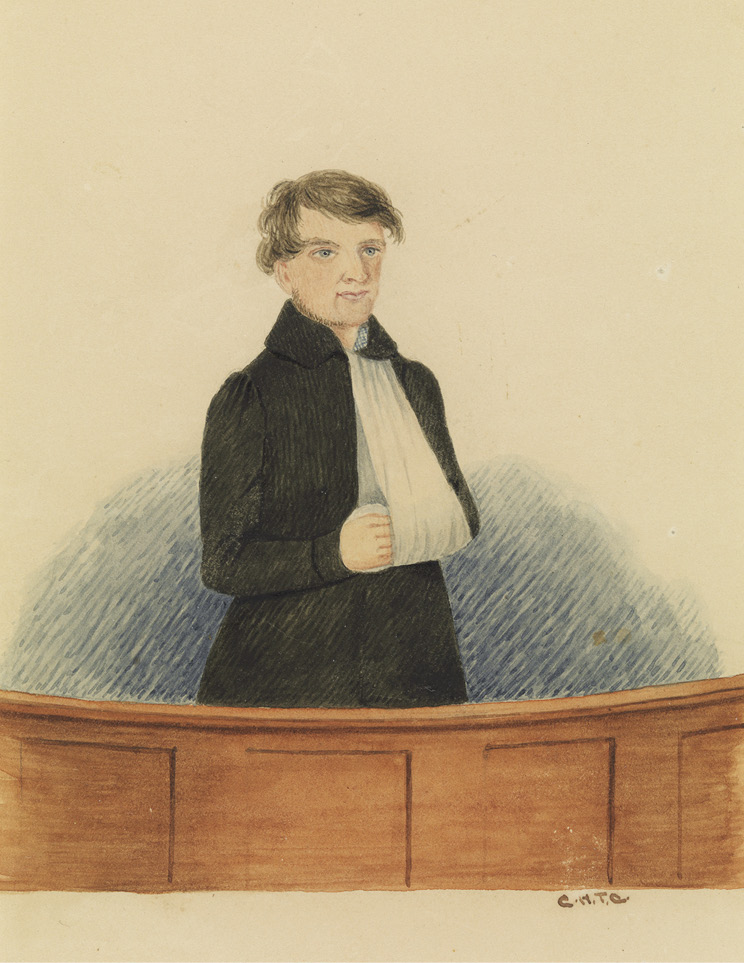
Figure 1: C. H. T. Costantini, Portrait of a Man in the Dock, c. 1843.
Note: Watercolour on card, 17 × 15 cm.
Source: Allport Library and Museum of Fine Arts, Hobart.
Despite several forgeries attributed to Costantini, a convict artist working in colonial Van Diemen’s Land in the mid-nineteenth century, Portrait of a Man in the Dock is demonstrably in his hand. This attribution relies on two key facts: Costantini’s signature in the lower right-hand corner has been verified; and the delicate, detailed brushwork of the image is consistent with the remainder of his other works on paper. However, the sitter’s persona is less specific. While the verso bears the pencilled inscription ‘Martin Cash’, the notorious Irish bushranger (1808–1877), there are indications that this inscription is a later addition. It is more likely that the subject of Costantini’s portrait is, as Australian art historian Paul Paffen suggested in 1997, Lawrence Kavenagh. Cash and Kavenagh were tried together in the Hobart Supreme Court in 1843, a point to which we shall return.
The depiction of the wood-panelled dock in the portrait situates Kavenagh squarely in a court of law. This detail represents an interesting detour from Costantini’s other, more renowned portraits of Vandemonian society, which tend to be set against domestic backdrops of carpets, toys and teacups. The context of Portrait of a Man in the Dock is legal and institutional, not familiar and homely. Here, the dock serves as a symbolically charged architectural barrier between not only the subject and the artist, but also the painting and its viewer. While Costantini deliberately chose to include the front edge of the dock or witness stand, he did not disclose whether Kavenagh stood there in the capacity of a defendant or a witness. Either way, his portrait exudes a sense of sympathy towards Kavenagh, skilfully capturing the gravity of the occasion.
While the dock can be read as an architectural barrier separating the man at court from both his viewers and the artist depicting him, Costantini and Kavenagh had much in common. Both men were put through the convict system in nineteenth-century Van Diemen’s Land. By speculatively intertwining the biographies of the portraiture artist and his sitter, we can gain valuable insights into the convict experience in nineteenth-century Vandemonian life. This understanding is further enriched when comparing Portrait of a Man in the Dock with additional contemporaneous artworks by Costantini that depict aspects of the criminal justice system, which both he and his subject, Kavenagh, experienced.
Convicts are notably underrepresented in the visual art of the colonial period. Curator and art historian Joanna Gilmour notes that convict artists like Joseph Lycett:
were called on to produce so-called accurate and objective images of colonial progress—idyllic, gentrified and ordered landscapes suggestive of industry and plenty; propaganda images advertising virtue and opportunity for investment and advancement; and glorifications of colonialism’s ‘civilising’ effects. Convicts, tellingly, are seldom seen in Lycett’s work and that of his contemporaries.2
This paradox is particularly intriguing given that convict artists constituted arguably the largest cohesive group of artists in early colonial New South Wales and Van Diemen’s Land, as highlighted by Jocelyn Hackforth-Jones in her singular 1977 study of The Convict Artists.3 Noteworthy exceptions, such as John Glover’s My Harvest Home (1835), is among a small handful of exceptions that prove the rule.4 Australian art historian Ian McLean has speculated that perhaps part of the reason why convict artists did not depict convictism in their work is because many convict artists were middle- or upper-class men convicted of forgery, and keen to align themselves with the ruling class.5 Art historian and heritage worker Joan Kerr and Marxist Australian art historian Terry Smith, who have also speculated on the relative absence of convicts in fine art from the period, maintain that the art market was dominated by the middle and upper classes who had no taste for images of criminality hanging on their walls.6 Thus, according to them, the market drove the figure of the convict out of fine art.
By contrast, as Paffen has expertly argued, images of convicts were widely reproduced in mass media designed for the consumption of the poor and working classes. Such imagery, like the broadside Newgate Calendar, functioned as both a form of titillating, dark entertainment and a moral deterrent against crime. Joanna Gilmour’s book and exhibition Sideshow Alley: Infamy, The Macabre, and the Portrait makes a similarly convincing point.7
In this paper, we ask: why did Costantini paint a convict in a court of law at a time in Australian art history when it was exceedingly rare to see convicts as a subject of fine art at all? Second, as a convict artist painting another convict at court, what might this picture reveal about convictism and the British criminal justice system more broadly in Van Diemen’s Land in the mid-nineteenth century? Third, what can a visual biography of Portrait of a Man in the Dock, one that intertwines the stories of its maker and sitter, reveal about Tasmanian convict lives? In answering these questions, we argue that Costantini’s portrait of Kavenagh is a rare, self-reflexive instance of colonial Australian convict art, one in which the convict artist mirrors himself and his experience in his convict subject, thereby creating a unique connection between the artist and sitter—and defying existing dominant categorisations of convict imagery.
Remembering Costantini: Convict artist and society painter
While Costantini may not be a household name among top-tier colonial artists, his contribution to Australian art history is far from insignificant. Unlike his contemporaries who have garnered individual books or sprawling exhibitions to their names, Costantini’s legacy stands more quietly, yet no less powerfully. Heather Curnow curated one notable exhibition featuring his works at the Allport Library and Museum of Fine Arts in 1997. In the exhibition catalogue, Curnow states that ‘only a few official letters, as well as his meticulous and idiosyncratic works of art, remain as evidence of his existence’.8 Featuring 12 portraits, 6 views and 2 decorative paintings, the exhibition offered glimpses into the artist’s careful brushstrokes and captivating subjects, many of whom were ex-convicts or ‘emancipists’. Costantini’s inclusion in the notable exhibition Elegance in Exile at the National Portrait Gallery, curated by Gilmour in 2012, cemented his place in Australian art history, enriching our understanding of his unique life story and artistic contribution.
Costantini was born in Paris to parents of Italian heritage. His life, which traversed continents, has been reconstructed by researchers such as Jocelyn Hackforth-Jones, Joanna Gilmour and Geoffrey Stillwell, whose findings we summarise here. Costantini was twice transported to the penal colonies in Australia. His first brush with the law came in 1822, when he faced the death sentence at the Old Bailey for stealing jewellery. His death sentence was commuted to transportation for life to New South Wales (he arrived in September the following year), where he was assigned to Thomas Bathurst and served two years of his sentence before being pardoned by Governor Brisbane in August 1825.9 He met the French navigator Hyacinthe de Bougainville, with whom he sailed back to France as ship’s surgeon, and whom, it is thought, may have intervened on the convict’s behalf to appeal to Governor Brisbane for his pardon.10
Shortly after his return to England, Costantini was charged with stealing two £5 notes and sentenced to seven years transportation to Van Diemen’s Land. Transported on the Layton, he arrived at Hobart in October 1827.11 He was quickly transferred to the penal settlement at Macquarie Harbour where ‘he was put to work in the hospital as a dispenser of medicines’.12 He spent time at Port Arthur between 1831 and 1832, working as an assistant surgeon and hospital superintendent. While there he frequently incurred ‘the displeasure of the authorities as a result of his misbehaviour’, Hackforth-Jones writes, ‘and accordingly [suffered] the harsh punishments for which that establishment was famed’ (i.e. flogging and solitary confinement).13
Costantini received his certificate of freedom in March 1834, relocated to Launceston and advertised his services as an artist capable of painting portraits as well as ‘gentlemen’s farms, etc’.14 Hereafter, he produced some 60 works (many of which are watercolour on paper like Portrait of a Man in the Dock)—principally portraits of families and their homesteads painted in the 1840s and 1850s, including the Billett family (c. 1852, National Portrait Gallery), the Newitt family (1855, Allport Library and Museum of Fine Arts) and the Martin family (1846, Federation Museum, Corowa). These were commissioned by landowners, many of whom were ex-convict members of the colony’s nascent middle class.15
Australian art historian David Hansen has argued that portraiture was increasingly important to this section of society, its members seeking respectability by commissioning and acquiring artworks depicting their family and property.16 As such, portraits of this genre tend to depict details of the sitter’s face as carefully as they do their material possessions—like a pattern on a rug or dress fabric. But, as Gilmour notes, given that many of Costantini’s portraits were of ex-convicts, they were largely employed ‘either to confirm a rightful claim to high social rank or to conceal the truths by which one might be shunned and excluded from it’ and, as such, ‘portraits and other material goods of that time hint to the tension and anxieties about class and origin that were a feature of colonial life’.17 Costantini’s portraits are an interesting sociological visual record of colonial aspirations and expressions of social mobility.
The convict indent of the Layton records Costantini’s occupation as a surgeon. He is unlikely to have been a fully trained professional artist like his contemporary Thomas Bock, a miniature painter and engraver in his native Birmingham before being transported to Hobart in 1832. Indeed, much of the pleasure of looking at Costantini’s watercolours derives from their almost ‘outsider’ art or self-taught qualities, including his overall attention to detail and lack of a clear focal point. Hackforth-Jones, for instance, notes the ‘tiny brushstrokes [that] record each flower and shrub in the garden at Prosperous House’ (1852) and every single roof tile and pale in the fence of his Police Office (1852).18 She went so far as to describe Costantini’s works as ‘unique examples of primitive art’.19
Where it is more self-explanatory as to who is likely to have commissioned works like Prosperous House Residence of Mr (Kennedy) Murray, Evandale, the provenance and backstory to Portrait of a Man in the Dock is opaque. The portrait depicts a fair-skinned man in a high-collared black pinstripe coat, with a glimpse of a pale blue shirt visible at the collar and on his torso as the coat is unbuttoned. His sandy-brown hair is casually swept to one side, giving the impression that he might have run his hand through it. His beard is meticulously trimmed to form a thin line that follows the contour of his jaw, in keeping with Victorian-era trends. One arm is cradled in a white medical sling that forms a distinctive and striking feature contrasting sharply against the black coat cupped by the free hand, almost in a protective gesture. His features are unique, yet not idealised, and with his contemplative expression fixed in the distance, there is a gravity to the occasion being recorded here.
Lawrence Kavenagh: A life of hardship, defiance and integrity
As mentioned, Costantini’s Portrait of a Man in the Dock was previously considered to depict Martin Cash, born in Wexford, Ireland, in 1808, who later became a well-documented Vandemonian bushranger. Cash’s convict record describes him as having a florid complexion, curly carroty hair, a low forehead and small features, including a small face, nose and chin, with a noticeable large scar over his temple.20 Even a cursory comparative examination of the two existing images of Cash, a portrait by colonial artist Thomas Bock and a later-life photograph, unequivocally rules out Cash as the subject of Costantini’s portrait (see Figures 2 and 3). Bock’s drawing reveals a clean-cut, square jawline, wideset face, and the presence of cloth or bandage that covered Cash’s head when he stood trial alongside Kavenagh in 1843. A report in the Colonial Times noted that:
Cash and Kavenagh were ordered to be placed at the bar … dressed as they were on their trial … Cash having his head still covered with a handkerchief, and Kavenagh having his arm in a sling.21
Bock’s drawing of Cash and the contemporary newspaper report confirm that Costantini’s portrait is of Kavenagh, not Cash.
Cash’s well-documented life history, which featured prominently in newspapers at the time and in literary works, stands in stark contrast to the limited historical references to Kavenagh. Cash’s enduring legacy was firmly established with the publication of his bestselling autobiography in 1870, but Kavenagh’s narrative unfolds quietly against a backdrop of struggle and defiance, with historical records primarily designating him by surname and often in company with others, for example ‘Cash, Kavenagh, and Jones’.22 This disparity in documentation becomes more pronounced as we delve into the details of Kavenagh’s life, starting with his 1828 trial for burglary and robbery, an analysis of which provides a nuanced perspective on his challenging life circumstances.
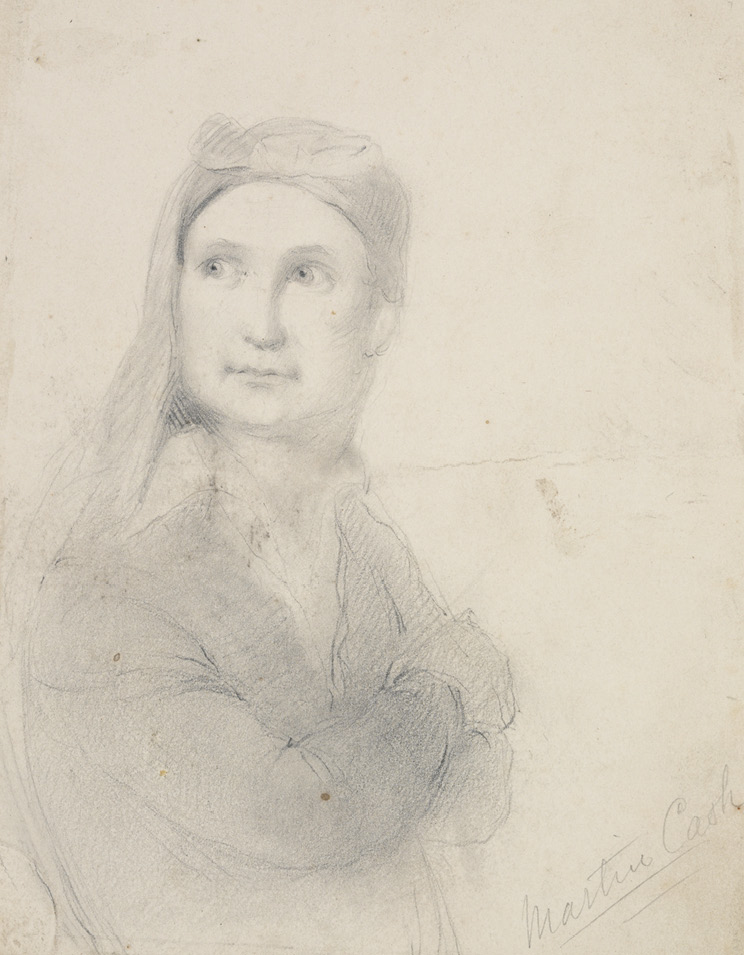
Figure 2: Martin Cash by Thomas Bock.
Source: Thomas Bock, Sketches of Tasmanian Bushrangers, ca. 1823–1843, State Library of New South Wales.
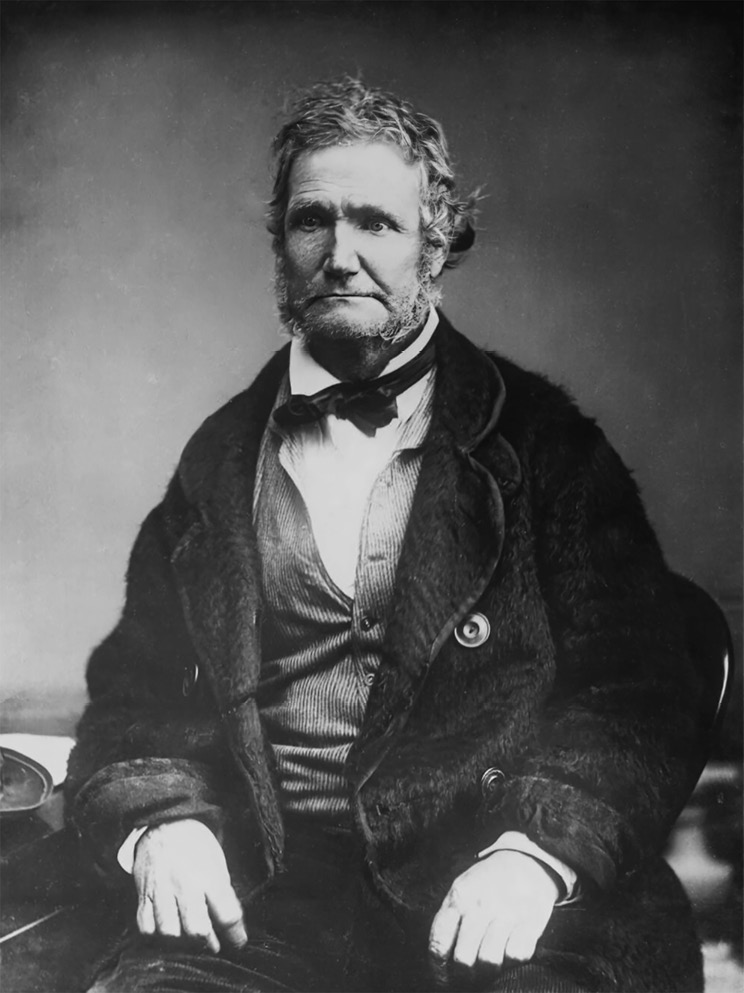
Figure 3: J. W. Beattie, Portrait of Martin Cash, c. 1870.
Note: Photograph, 21.1 × 16 cm.
Source: National Library of Australia, Canberra.
Born in Wicklow between 1808 and 1810, Kavenagh found himself facing transportation for life to the penal colonies in Australia. A contemporary newspaper report sheds light on his trial alongside his sister Catherine Kavenagh and their accomplice, James Cannon, for the burglary and robbery of Reverend Shortt’s residence. The stolen items, detailed in the report, included four tablespoons, two salt spoons, a fish trowel, a hat, shirts and a shift belonging to Mrs Shortt. Testimony from the prosecution witness Mary Watson, a seasoned criminal acquainted with Catherine, illuminates the circumstances of the Kavenagh family, confirming the incarceration of Lawrence’s sister and mother at Wicklow jail.23 In her testimony, Mary outlined the planning of the robbery, the involvement of James Cannon and the subsequent execution of the crime during the early hours. Lawrence, upon arrest, was found with the incriminating items. Following Mary’s and Mrs Shortt’s sister’s testimony, Lawrence and Catherine were convicted, receiving life sentences on 24 August 1828.24
After his sentencing, Kavenagh was transferred from Dublin Court to Newgate Prison, Dublin. Subsequently, he was moved to a prison hulk to await transportation.25 A contemporaneous entry in the Freemans Journal from September 1828 vividly narrates his journey from the land-based prison to the Essex hulk docked at Kingston Harbour:
Yesterday morning, thirty-five male convicts, most of them youthful delinquents, were removed from Newgate [prison] to the Essex hulk in Kingston harbour, preparatory to their being transported to our Australian Settlement. They were conveyed in nine jaunting cars, escorted by a troop of the 7th Hussars. In their progress through the streets, they evinced the most reckless indifference as to their seemingly unhappy situation, ‘devoutly to be wished’ than to be dreaded as a need of punishment for their delinquencies … They were all comfortably clothed in the prison uniform and appeared clean and in good health.26
This historical account paints a poignant picture of the detachment exhibited by these young men about the adversities awaiting them in the subsequent chapters of their lives, including the impending challenges of hulk confinement and transportation. The Essex, Kavenagh’s assigned prison hulk, crammed 300 male prisoners and juveniles into its confines. The vessel had a fascinating history: originally an American frigate protecting commerce during the English–American War of 1812–14, it was captured by the British Royal Navy off Chile in 1812 and later moved to Portsmouth Harbour. In 1824, the Essex was repurposed and sailed to Dublin Bay, where it was moored at Kingston Harbour to begin its new life as a prison hulk in April 1825, a role it would serve until its decommissioning in 1837. Life aboard was grim. The hulk reeked of disease and despair, with prisoners receiving only two meagre meals daily at 3p per day and wearing threadbare clothing that offered little protection from harsh weather. The absence of organised work or recreational activities, combined with poor sanitation and minimal medical care, meant that prisoners endured constant ill health. These conditions were so severe that many prisoners, including Kavenagh, felt relief when departing for their transportation vessels—in his case, the Fergusson.
The Fergusson was built in Calcutta in 1821 and, under the command of Captain John Groves, was assigned to carry 214 male prisoners, including Kavenagh.27 The surgeon superintendent overseeing the Fergusson’s voyage was Charles Cameron, a seasoned and conscientious professional. With two prior voyages on convict ships to Australia (in 1825 on the Midas and again in 1827 on the Princess Charlotte), Cameron brought a wealth of experience to his role. His dedication to the wellbeing of his patients was evident in a letter published in the English paper, the Morning Post, in 1826. The letter, conveying gratitude ‘from the unfortunate female convicts on board the Midas’, commended Cameron for his unwavering attention to the sick, noting that ‘there never could be a Gentleman so constantly attentive to unfortunate women; he was forever below in the hospital with the poor sick … we can never be thankful enough’.28
Cameron and his assistant faced considerable challenges addressing the widespread sickness on board the convict ships. When the prisoners boarded the Fergusson, Cameron immediately recognised their vulnerability, observing their frail state due to malnutrition. He wrote:
When they [the male prisoners] came on board, they were generally in a low state of health—such would arise from deficient nourishment—and on proceeding to sea, bad weather and much sea sickness affected them to such a degree for the first two or three weeks, that most of them could take but little nourishment.29
Unsurprisingly, the health of prisoners had deteriorated on board the Essex, rendering them ill-prepared for the 130-day sea voyage to Australia.
The Fergusson departed Dublin on 16 November 1828, and it proved fortuitous for Kavenagh that Cameron had been assigned the role of surgeon during the arduous voyage. Kavenagh sought medical attention on seven occasions, several of which were for bronchitis.30 Cameron’s attentiveness appears to have fostered trust with Kavenagh during his confinement. In his records, Cameron noted with evident concern: ‘He has no complaint but looks very ill and therefore I keep his name on the list that I may see him regularly.’31 Cameron’s decision to keep Kavenagh on the medical register ensured he would continue to receive care even when not acutely ill. The ongoing medical care provided by Cameron during the long voyage marked a rare moment of institutional compassion in Kavenagh’s life.
On arriving in Sydney on 26 March 1829, Kavenagh became prisoner 860 as part of the standard convict documentation process. His physical description in the official record noted his height (5 feet 11 inches), pale complexion, brown hair and grey eyes. Administrative details listed him as single, Catholic and illiterate, with his occupation recorded initially as a carter and later revised to a labourer. Kavenagh’s distinguishing marks included a missing little finger on his left hand and the presence of the letters ‘AD’ tattooed on his upper right arm. Kavenagh’s above-average height and robust physique made him an asset in a colony that depended heavily on convict labour.
Initially incarcerated at Hyde Park Barracks, Kavenagh experienced harsh disciplinary measures. On 13 February 1832, he received 40 lashes for insolence and disorder. Subsequently, on 15 October 1832, Kavenagh, Dominic McCoy and James McAwliffe absconded from No. 4 Road Gang, Hyde Park Barracks, escaping into the bush. His recapture on 7 February 1833 led to a conviction for robbery under arms at Campbell Town and a sentence of 14 years transportation to Norfolk Island, a cruel penal settlement reserved for recidivists and the like.32
Norfolk Island, situated 1,670 kilometres north-east of Sydney, had a complex penal history. Initially operating as a penal settlement from 1788 to 1814, it was closed by Governor Macquarie in 1813 due to persistent conflicts between convicts and soldiers and its economic failures.33 When it was a destination for reoffending convicts, Governor Darling defined its purpose starkly as ‘a place of extremist punishment, short of death’.34 Kavenagh’s time there was marked by frequent disciplinary actions. His records note that he received punishment on 21 May 1833 for 14 days, but neither the punishment nor the crime are decipherable: ‘[illegible] refusing to [illegible] in getting up the Boards.’ By 1834, his resistance had escalated, and he received seven days in solitary for rioting in gaol and 150 lashes for attempting to escape. In 1841, driven by the harsh conditions and treatment, he successfully stowed away on a boat to Sydney.
Kavenagh was recaptured in 1842 and held at Hyde Park Barracks. On 19 January 1842, he received 36 lashes for cutting his irons and attempting to escape. On 12 April 1842, he was charged in the Supreme Court, Sydney, for ‘shooting with attempt to murder’ the colonial secretary, who had recognised Kavenagh as having returned from Norfolk Island. Found guilty, he was sentenced to transportation to Van Diemen’s Land.35 Kavenagh was transported from Sydney to Port Arthur on board the Marion Webster. Notably, on this vessel was a fellow convict, the notorious bushranger William Westwood, colloquially known as ‘Jackey Jackey’.
On 26 December 1842, Martin Cash, Lawrence Kavenagh and George Jones escaped from their stone quarry gang at Port Arthur and fled into the bush. With little food, they traversed 15 kilometres through dense scrub without being detected by guards. To avoid setting off the vicious dogs used to alert the guards of any escapees attempting to flee across Eaglehawk Neck isthmus between Port Arthur and freedom, they decided to swim naked, their clothes bundled above their heads. When they made it across the bay, they had all lost their clothes and were nude. They robbed a road gang’s hut for clothing and spent the following 20 months bushranging, robbing mail coaches, homesteads and inns. Rewards were offered to anyone who captured or provided information leading to the capture of the armed bushrangers. By January 1843, the reward was 50 sovereigns, a free pardon and passage from the colony; by July, it had increased to ‘one hundred acres of land or one hundred sovereigns’.36 Remarkably, the reward could be claimed by convicts, indicating that Chief Police Magistrate M. Forster was anxious to capture the trio by any means.37
Despite evading capture from authorities, it was an accidental gunshot that ultimately ended Kavenagh’s time as a fugitive. When his weapon discharged accidentally, the bullet travelled from his elbow to his hand, creating a wound that needed urgent medical attention. Rather than risk Cash’s and Jones’s capture by sending them for help, Kavenagh surrendered himself in mid-1843.38 Though he maintained loyalty by refusing to disclose details concerning the whereabouts of Cash and Jones, they were soon apprehended.
On 7 September 1843, Kavenagh stood in the Hobart Supreme Court alongside Cash and Jones, facing charges of robbing the Launceston coach on 3 July 1843. During this court appearance, with the three bushrangers facing potential death sentences, Costantini created his portrait of Kavenagh (just as Bock sketched Cash). The court heard testimony from coachman James Hewitt, who accused Kavenagh of taking his watch and ‘several promissory notes of the value of £1 each’.39 Though illiterate, Kavenagh demonstrated remarkable verbal acuity. When denied legal representation after pleading, he stated, ‘I beg your pardon, your Honor, as this charge affects my life, I should like to have counsel’, before rising to defend himself with an eloquence that startled the courtroom.40 His courtroom speech transcended self-defence, becoming a powerful critique of the penal system that had shaped his path to bushranging:
I have but little your Honor, to say; but what I do say shall be the truth. I fled from Port Arthur where men as treated worse than dogs … I might mention one circumstance; I was compelled to attend to my own religion, under the lash, sad, not content with that, the superintendent took away my prayer-book, ‘all men are not of the same mind nor can be of the same faith’ I would say, where is the conscious Protestant that would not rebel against such hardship?41
Forcing prisoners to worship another faith was a common provocation by guards towards prisoners; deliberately denying them their right to worship caused further degradation. Such treatment was likely also an expression of racism towards Irish convicts, of which there were fewer in Van Diemen’s Land as compared with New South Wales.
In his address to the court, Kavenagh did not deny the charges. However, he ‘explained why he had taken to the bush and … he refrained from violence and was thankful his hands were unstained with blood’.42 The judge ‘implored the jury to give the prisoner the benefit of any doubt’.43 Despite this, Judge Montague sentenced both Cash and Kavenagh to death. Before Kavenagh was to be executed, his death sentence was commuted to life imprisonment, to be served again on Norfolk Island.44 However, the judge noted:
Kavenagh, with good conduct, may look forward to my recommendation to have his period shortened, heinous as his offences have been, but at present, it is quite out of the question my doing.45
The judge addressed Kavenagh directly and commented that he was an ‘artful man who could plausibly string his words together’. For example, when the judge stated that both Cash and Kavenagh had ‘committed almost every offence, except murder, and were hunted about the country like wild beasts’, Kavenagh responded: ‘I beg your Honor’s pardon … I do not consider we have done anything but what we ought to have done, being driven to it by tyranny.’46
From 1840 to 1844, Norfolk Island was under the authority of Alexander Maconochie (1787–1860), a penal reformer who invented the ‘Mark System’ to motivate convicts through incentives and individualised treatment. Maconochie argued that: ‘Penal Science is just moral Surgery. The means it employs must often be painful, but its object should always be benevolent—always the speedy discharge of a cured patient.’47 In January 1844, Maconochie was dismissed from his post at Norfolk Island, thus ending his convict management experiment. The following month, Major Childs assumed command of the Norfolk Island convict prison and introduced a regime of control. The new administration repealed the previous policies, which rewarded hard work and compliance. They dismantled prisoners’ garden plots, reduced rations and increased punishments—particularly floggings. A critical turning point occurred on 30 June 1846, when Superintendent of Colonial Prisoners William Foster confiscated the convicts’ cooking utensils, including pots and kettles, abruptly ending their ability to prepare their meals.48 Although prisoners received a daily ration at Norfolk Island, it was not enough to sustain a healthy life.49 The prisoners were riled when they returned to their quarters to find all their kitchen necessities confiscated. The following day, convict William Westwood, fed up with this treatment, led a prisoner riot that resulted in the deaths of four prison staff including convict constables John Morris, Thomas Saxton and John Dinon, and free overseer Stephen Smith.50 After regaining order, the entire population of 1,100 prisoners was put in chains.51 Kavenagh was present during this riot, but the extent to which he played a role in its execution remains ambiguous.
The riot, which received widespread press coverage, became known as the ‘cooking pot riot’. Upon learning of the riot and its suppression, Lieutenant Governor Sir W. T. Denison dispatched Judge Fielding Browne from Van Diemen’s Land to Norfolk Island to conduct the trials of the accused prisoners. The proceedings began on 23 September 1846, and 14 men were charged with murder and aiding and abetting murder. Twelve were convicted and sentenced to death by hanging. Before their execution on 3 October 1846, Westwood, the ringleader, wrote a letter describing the conditions at Norfolk Island and absolving four of the accused, including Kavenagh, stating they had no part in the killing of John Morris:
I declare that I never spoke to Kavenagh on the morning of the riots, and these other three men had no part in the killing of John Morris as far as I know of.52
Despite Westwood’s plea for leniency for the other four convicts, they, along with the remaining eight convicted men, were hanged at 8 am. The remaining six were hanged at 10 am. The grim spectacle was described as ‘one of the most awful solemnity’ by eyewitnesses.53 In this way, Lawrence Kavenagh died, having experienced the full brutality of the British criminal justice system as a convict transported to and between the penal colonies in Australia.
Visual biography and portraits of convicts
Costantini’s portrait of Kavenagh cannot tell us this detailed history. However, as a visual artefact, it can provide insight into how the imagery of convicts served to shape convict identity in colonial society. The methodological approach known as visual biography helps bring the relationship between visuality and subjectivity into focus. As a method spanning biography and art history, visual biography examines how visual materials reflect and shape personal identities, social relationships and historical narratives. It relies on understanding how and why artists were inspired or commissioned to make portraits, in this case, of individuals, as well as the social context of portraiture and its various forms of signification.
Deployed within the context of Australia’s convict history, the framework of visual biography enables critical examination of how artists’ depictions of incarcerated subjects both reflected and constructed social hierarchies within Australia’s colonial project while simultaneously revealing the complex networks of patronage, institutional authority and artistic agency that shaped these representations. Imagery of convicts in mass media fed into broader forms of surveillance and social control systems by constructing archetypal symbols of criminality and warning free citizens of the punishment for crime. On the other hand, the absence of convicts in fine art simultaneously rendered the reality of life in the penal colony invisible to its patrons. By applying the method of visual biography to nineteenth-century convict portraiture, we can trace the genealogy of representational practices that continue to influence contemporary understandings of incarceration, institutional power and colonial legacy within Australian art history.
In examining convict portraiture through a Foucauldian lens, Paffen argues that these images often served as colonial power and control instruments, systematically documenting and reinforcing penal authority through carefully managed representations of criminality.54 According to Paffen’s broader framework, portraits of convicts were typically meant to serve the colonial system by documenting criminality and reinforcing power structures in which convicts were at the bottom of society and subject to its near-total control. For Paffen, Costantini’s decision to depict Kavenagh in the dock during trial ‘call[s] attention to the arrest of the subject when the voice of subversion already had been silenced and order restored’.55 He likens Costantini’s image to Thomas Bock’s infamous series of posthumous sketches of hanged Tasmanian bushrangers, some of which depict their decapitated heads—a series of images that again depict convicts as having met justice and as no longer posing a threat to society. Indeed, Costantini may well have been intending to capitalise on the bushranging trio’s infamy by producing this watercolour of Kavenagh for reproduction in the mass media, as Thoms Bock (who made a lithograph of bushranger Charles Routley, showing both his profile and a study of his bare skull) and Charles Rodius (who made a lithograph of the murderer John Knatchbull coupled with the horizontal corpse of his victim) had done in turn.56
In our reading, however, Costantini’s watercolour portrait of Kavenagh presents an interesting departure from this norm. Rather than portraying Kavenagh as a criminal type whose image is given as a moral lesson and warning, Costantini gives the convict bushranger a kind of dignity—standing formally, well dressed in a composed manner that more closely resembles the portrait conventions used for respectable society members. The injury that would mark him as a victim of his criminal lifestyle is not overly emphasised or exaggerated. This presentation seems to challenge Paffen’s argument about convict portraiture serving primarily as a tool of colonial authority and criminal documentation. Instead, Costantini’s portrait humanises its subject and resists the typical narrative frameworks Paffen identifies as central to colonial convict portraiture.
Conclusion
The incongruity between Kavenagh’s documented life struggles and Costantini’s sympathetic portrayal hints at the artist’s motivations. Costantini’s portrait of Kavenagh takes on additional significance when considering the artist’s and subject’s shared experience of the British criminal justice system. They both laboured on a chain gang (Costantini at Muster, Oatlands, in 1827; Kavenagh in a road gang at Hyde Park Barracks in 1832); both were incarcerated at Port Arthur (Costantini between 1831 and 1832; Kavenagh in 1842); both received lashes (Costantini received 50 lashes in April 1832 for refusing to obey orders; Kavenagh, 40 lashes for insolence and disorder in 1832, 150 lashes for attempting to escape Norfolk Island in 1834, and 36 lashes for cutting his irons and trying to escape in 1842); and both withstood time in solitary confinement (Costantini did three weeks at Port Arthur at the end of 1831 for misconduct; Kavenagh in 1842). This shared carceral experience, though from different vantage points, may help to explain why Costantini’s portrait departs from the conventional dehumanising, titillating or moralising representations of convicts that Paffen identifies as typical of colonial portraiture. Rather than emphasising criminality or moral failings, Costantini presents Kavanagh with a dignity that perhaps reflects their shared embodied knowledge of convictism.
Today, portraiture is ‘one of the most common genres of artmaking inside prisons and one of the most frequently collected forms of prison art, both inside and outside’.57 It is a means of maintaining the memory of loved ones who suffer the social death of incarceration. For these reasons, African-American writer, curator and abolitionist Nicole R. Fleetwood notes in her landmark book on the topic, Marking Time: Art in the Age of Mass Incarceration, that portraiture ‘is a genre of primary significance to, for, and about incarcerated people’.58 And yet, as previously mentioned, the representation of convicts in fine art during the settler-colonial period was rare, which underscores the significance of Costantini’s c. 1843 portrait capturing Kavenagh in the dock at the Hobart Town Supreme Court.
Costantini’s portrait of Kavenagh may be productively examined alongside his broader body of works, including his trompe l’oeils (one of which is held in the collection of the Art Gallery of South Australia, another in the Ballarat Art Gallery). Roger Blackley, the late New Zealand art historian and curator, described Costantini’s trompe l’oeils as a kind of autobiography: ‘more personal affairs, for they hold both subtle and direct references to his extremely unfortunate life narrative’.59 The tromp l’oeils (meaning trick of the eye) are of interest in so far as all three of them feature banknotes strewn about on table tops replete with other paper-based objects, such as musical scores, postcards, newspapers, cartoons and playing cards. Andrew Morris, contributing to Australiana, convincingly posits that despite Costantini’s transportation for theft and not forgery, compelling evidence exists of his involvement in the forgery trade.60 These paintings serve as a visual biography, wherein Costantini’s duplication of banknotes in tromp l’oeil fashion can be read as a tongue-in-cheek reference to his forgery-related activities. Indeed, careful inspection of Costantini’s tromp l’oeil banknotes reveals the inscription: ‘We Promise not to pay the Bearer.’61 All of which suggests that Costantini held an open, possibly even slightly humorous, relationship to his convict history, which, we are suggesting, may have informed the sensitivity with which he portrayed Kavenagh at trial in Portrait of a Man in the Dock.
Trying to capture in his portrait something beyond the historical and punitive aspects of Kavenagh’s life, Costantini, we suggest, sought to convey elements of human resilience; the yearning for freedom; and the complex interplay between individual agency and the oppressive forces of a brutal penal system, which, as a convict artist, he was highly capable of portraying, in oblique and underhanded ways. In so doing, Costantini’s portrait of Kavenagh transgresses the unspoken ban on representations of convicts in settler-colonial fine art to leave us with a remarkable, self-reflexive image of convictism in nineteenth-century Vandemonian life.
1 This painting is held in the collection of the Allport Library and Museum of Fine Arts, Hobart, record number SD_ILS:86234.
2 Joanna Gilmour, Elegance in Exile: Portrait Drawings from Colonial Australia (National Portrait Gallery, 2012), 27 (emphasis added).
3 Jocelyn Hackforth-Jones, The Convict Artists (Macmillan, 1977), 10.
4 However, it was more common for convicts to appear in sketches, drawings and other works on paper.
5 Ian McLean, ‘Convict Art and Cultural Capital: The Case of Thomas Watling’, paper presented at International Centre for Convict Studies, University of Leicester, 1999.
6 See Joan Kerr, ‘Views, Visages, Invisibility: Themes in the Art of Colonial New South Wales’, in The Artist and the Patron: Aspects of Colonial Art in New South Wales, ed. Patricia R. McDonald (Art Gallery of New South Wales, 1988); Joan Kerr, ‘Somersaults in the Antipodes’, Australian Journal of Art 11, no. 1 (1993): 8–29, doi.org/10.1080/03146464.1993.11432816; Terry Smith, ‘Convicts and Capital: The Visual Economy of Surveillance’, Transformations in Australian Art (Craftsman’s House, 2002).
7 See Joanna Gilmour, Sideshow Alley: Infamy, The Macabre, and the Portrait (National Portrait Gallery, 2016).
8 Heather Curnow, Island Exile: C. H. T. Costantini (Allport Library and Museum of Fine Arts, 1977).
9 Joanna Gilmour, ‘Costantini’s Convictions’, National Portrait Gallery, 23 March 2017, portrait.gov.au/magazines/55/costantinis-convictions-tasmania.
10 Gilmour, ‘Costantini’s Convictions’.
11 Hackforth-Jones, The Convict Artists, 26.
12 Gilmour, ‘Costantini’s Convictions’.
13 Hackforth Jones, The Convict Artists, 26.
14 Hackforth-Jones, The Convict Artists, 26.
15 David Hansen, ‘Art in Van Diemen’s Land’, in A Companion to Australian Art, ed. Christopher Allen (Wiley Blackwell, 2021), 117, doi.org/10.1002/9781118767979.ch5.
16 Gilmour, ‘Costantini’s Convictions’; Hansen, ‘Art in Van Diemen’s Land,’ 117.
17 Gilmour, Elegance in Exile, 60.
18 Gilmour, Elegance in Exile, 60.
19 Hackforth-Jones, The Convict Artists, 26.
20 Tasmanian Archives and Heritage Office, Con 35-1-1.
21 Colonial Times, 19 September 1843, 2.
22 Martin Cash, Martin Cash, the Bushranger of Van Diemen’s Land in 1843: A Personal Narrative of His Exploits in the Bush and His Experiences at Port Arthur and Norfolk Island (J. Walch & Sons, 1870).
23 Dublin Morning Register, 26 August 1828, 3.
24 Catherine was transported on the ship Edward in 1829. Their brother Martin Kavenagh had already been transported via the Castle Forbes and died at sea from diarrhoea on 6 January 1823.
25 Ann McMahon, Floating Prisons: Irish Convict Hulks and Voyages to New South Wales 1823–1837 (Halstead Press, 2017).
26 Freeman’s Journal, September 1828.
27 Charles Bateson, The Convict Ships, 1787–1868 (Brown, Son & Fergusson, 1959), 348.
28 Morning Post, 26 October 1826.
29 Charles Cameron, ‘Copy of a Letter from Mr. Charles Cameron, a Surgeon in His Majesty’s Navy and Late Surgeon of the Fergusson Convict Ship, to the Commissioners for Victualling His Majesty’s Navy, and for the Care of Sick and Wounded Seamen’, Wellcome Collection, wellcomecollection.org/works/dqt2357u.
30 The National Archives of the UK, Kew, Surrey, England; Admiralty and Predecessors; Medical Journals: ADM 101/27/4.
31 Admiralty and Predecessors; Medical Journals: ADM 101/27/4.
32 Campbell Town Quarter Sessions, The Currency Lad, Sydney, 16 February 1833, 3.
33 Historical Records of Australia, series 1, vol, 1, 13.
34 The Australian Encyclopaedia, 4th ed., vol. 7, 162.
35 Convict Records, State Records Authority of New South Wales: Kingswood, New South Wales; Title Pheonix Hulk: Weekly Transportation Entrance Books, 1840–1843; Volume: 4/4537.
36 Courier, 14 July 1843, 4.
37 ‘The Bushrangers’, Courier, 3 March 1843, 2.
38 ‘The Bushrangers’, Launceston Examiner, 2 August 1843, 4.
39 Courier, 15 September 1843, 2.
40 Courier, 15 September 1843, 2.
41 Courier, 15 September 1843, 2.
42 ‘Trial of Kavanagh’, Hobart Town Advertiser, 8 September 1843, 3.
43 ‘Trial of Kavanagh’, Hobart Town Advertiser, 8 September 1843, 3.
44 Colonial Times, 17 October 1843, 3.
45 Colonial Times, 17 October 1843, 3.
46 Colonial Times, 17 October 1843, 3.
47 Alexander Monocochie, Australiana: Thoughts on Convict Management and Other Subjects Connected with the Australian Penal Colonies (J.W Parker, 1839), 20.
48 ‘Norfolk Island’, Britannia and Trades’ Advocate (Hobart Town), 19 November 1846, 3.
49 R. F. Minchin, Bolters for the Bush: Bushranging in Old Van Diemen’s Land (Minchin, 1925), 55–6.
50 Evidence by William Foster in the Report of the Commission held on Norfolk Island, 1 July 1846.
51 ‘Norfolk Island’, Argus (Melbourne), 14 August 1846, 2.
52 ‘Norfolk Island’, Australian, 14 November 1846, 3.
53 ‘Norfolk Island’, Australian, 14 November 1846, 3.
54 Paul Paffen, ‘Forgotten Faces? Portraits and Other Images of the Convict in Van Diemen’s Land’, paper delivered to a Tasmanian Historical Research Association meeting on 14 October 1997. Copy supplied to authors.
55 Paffen, ‘Forgotten Faces’, 63.
56 Gilmour, Sideshow Alley, 153–4.
57 Nicole Fleetwood, Marking Time: Art in the Age of Mass Incarceration (MIT Press, 2022), 120.
58 Fleetwood, Marking Time.
59 Roger Blackley, ‘Australasian trompe l’oeil Drawings’, Art and the British Empire, ed. Tim Barringer, Geoff Quilley and Douglas Fordham (Manchester University Press, 2007), 69.
60 Andrew Morris, ‘Charles Henry Theodore Costantini: Convict, Surgeon, Artist, and Forger’, Australiana 25, no. 3 (2002).
61 Blackley, ‘Australasian trompe l’oeil Drawings’, 70.
Previous



