


 menu
China's New Sources of Economic Growth: Vol. 2
15. The China Interbank Repo Market1
Ross Kendall and Jonathan Lees2
The market for repurchase agreements (‘repo’) is an important source of short-term funding for financial institutions operating in China. It is used by the People’s Bank of China (PBC) to manage domestic liquidity conditions through its open market operations, and it is likely to become more important over time as a channel for the transmission of monetary policy. This chapter outlines the key features of Chinese repo markets, first focusing on the interbank market, and then discussing recent developments and their impact on the bond market. We highlight that lower and less volatile repo rates over the past couple of years have contributed to greater risk-taking in financial markets and that policy settings in China have been dynamic in shaping and responding to these developments.
Introduction
A repo is an agreement between two parties under which the cash borrower sells or pledges a security (usually a fixed-income security) to the cash lender, with the collateral bought back or released from the pledge at a later date. Repos are therefore economically equivalent to secured loans and are an important part of short-term funding markets in many economies.
In China, a repo can be conducted as an exchange-traded transaction on the Shanghai or Shenzhen stock exchanges or ‘over the counter’ in the interbank market. The exchange-traded market has grown rapidly in recent years; however, the interbank market—in which a range of bank and non-bank financial institutions are active—is the more significant market, with higher turnover and outstanding lending balances than the exchange-traded repo market (or the unsecured interbank lending market) (Figures 15.1 and 15.2). The People’s Bank of China (PBC) also uses the interbank market to adjust domestic liquidity conditions via open market operations. There is around RMB5 trillion (US$720 billion) of lending outstanding in China’s interbank repo market, which is around one-third of the size of the US repo market.3
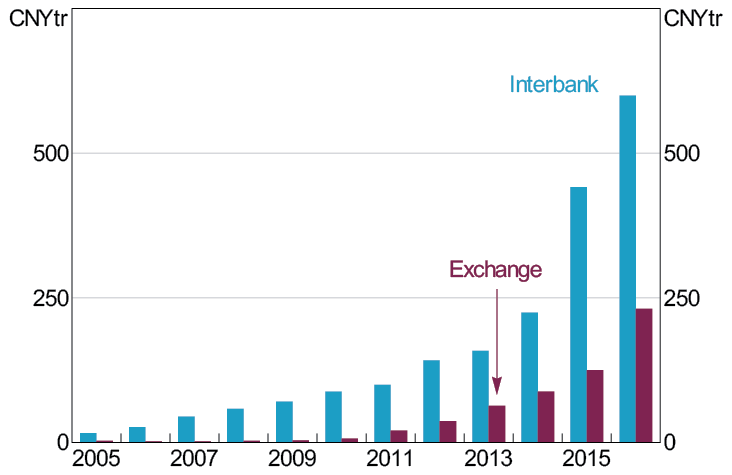
Figure 15.1 Chinese repo turnover (annual, by market)
Sources: Authors’ calculations; WIND Information.
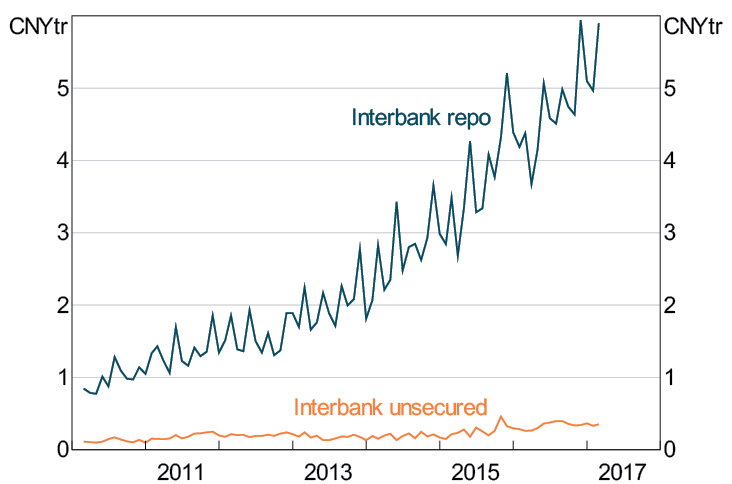
Figure 15.2 Lending balance outstanding (by market)
Sources: CEIC Data; National Interbank Funding Center.
This chapter focuses on the interbank repo market in light of its systemic importance as a major source of short-term funding, the significant role it plays in the PBC’s liquidity management and the fact that the PBC views it as an emerging channel for the transmission of monetary policy in China. We outline the key features of the market through the lens of the major cash lenders and borrowers, and go on to discuss recent developments in the repo market, focusing on the build-up of risks and changes to the PBC’s liquidity management framework.
Ownership of collateral
As in major repo markets around the world, in China’s interbank repo market bonds with low credit risk account for the majority of collateral used. In recent years, Chinese government bonds, together with bonds issued by China’s policy banks, have accounted for nearly 90 per cent of repo collateral (Figure 15.3). PBC bills historically accounted for a large share of repo collateral, but their usage has declined as the stock of outstanding PBC bills has fallen.4 Other instruments (mostly corporate and local government bonds) have accounted for just over 10 per cent of collateral in the interbank repo market in recent years.5

Figure 15.3 Collateral used in repurchase agreements (interbank, pledged collateral, percentage of monthly turnover by value)*
* Six-month rolling average.
Sources: Authors’ calculations; CCDC; CEIC Data.
Repos in the Chinese interbank market are generally conducted on a ‘pledged’ basis rather than on an ‘outright’ basis as is common in other major markets (Figure 15.4).6 Under an outright repo transaction, the ownership of collateral is transferred to the cash lender for the length of the transaction. In contrast, in a pledged repo agreement, ownership of the collateral remains with the borrower but is pledged to the cash lender such that the borrower cannot use it for any other purpose until the cash principal and interest are returned.7

Figure 15.4 Chinese interbank repo market (monthly turnover)
Sources: CEIC Data; National Interbank Funding Center.
As ownership of the collateral is not transferred to the cash lender in a pledged repo transaction, the lender cannot use (or ‘rehypothecate’) the collateral during the term of the transaction. This has several important implications for the structure of the market in China. First, it precludes the inter-dealer broker model prevalent in other major repo markets. In this model, a dealer acts as an intermediary by lending cash to one counterparty in exchange for collateral, and uses that collateral to borrow cash from another counterparty, taking a spread between the two trades as profit. While market participants may act as an intermediary on an opportunistic basis, the process of on-lending funds in the pledged interbank repo market in China requires substantially more collateral than in repo markets where collateral ownership is transferred outright.
Second, pledged repos are less flexible than outright repos. For example, bond dealers and investors commonly use repo markets to fund bond positions. This involves purchasing a bond outright and using it as collateral in a repo transaction to borrow the cash needed to fund the bond purchase. Net cash flows are thus zero but the investor gains exposure to the bond. In an outright repo market, the investor can unwind their bond position during the term of the repo by borrowing an equivalent bond under a second repo transaction and selling it outright.8 This creates a short position that offsets the original long position. However, this is not possible in a pledged repo market as the collateral is not available to be sold. Consequently, to retain the ability to exit their positions when desired, bond investors using pledged repo markets to fund their positions are likely to have a preference to borrow cash for shorter terms relative to equivalent investors funding their positions through outright repo markets. Indeed, in the case of China, the use of overnight repos in the pledged repo market increased dramatically during 2015 alongside an increase in the bond–repo carry trade (discussed below).
Finally, the inability to rehypothecate collateral reduces the scope for market participants to profit from interest rate differentials. This may go part of the way to explaining the steep slope of the Chinese repo curve, particularly the spread between overnight and seven-day repo rates, which is persistently large (Figure 15.5). In an outright repo market, participants could take advantage of an interest rate differential such as this by lending cash at the seven-day rate and using the collateral received to borrow at the lower overnight rate. In a pledged repo market, these market participants would need to post their own collateral, increasing the cost of the trade.
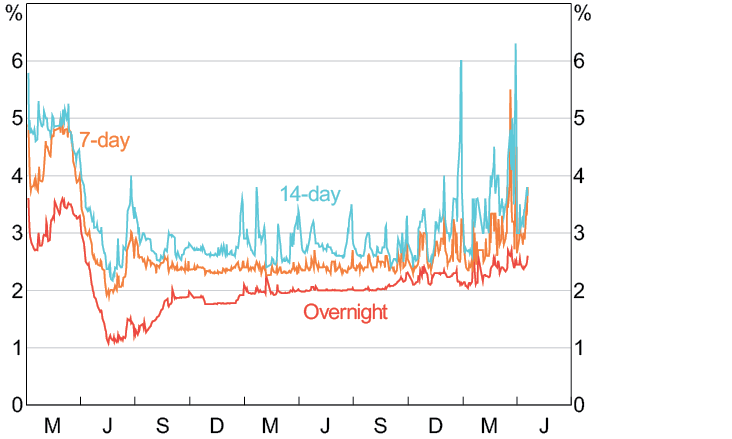
Figure 15.5 Chinese interbank repo rates (by tenor)*
* Fixing repo rates published by the National Interbank Funding Center, calculated as the median rate of trades during the morning of each trading day. M = quarter ending March, J = quarter ending June, S = quarter ending September, D = quarter ending December.
Source: CEIC Data.
Cash lenders
Large Chinese commercial banks have historically been the major suppliers of cash in the interbank pledged repo market (Figure 15.6). In particular, the large state-owned commercial banks account for a substantial share of lending. This reflects their large retail deposit bases and relatively conservative balance sheet management, which have resulted in more funds being available to lend in the repo market.9
In contrast with the large national banks, small and medium-sized banks (labelled ‘other commercial banks and cooperatives’ in Figure 15.6) have been net borrowers in the repo market (discussed below), although they are also responsible for a substantial share of lending. The scale of these institutions’ involvement in both the borrowing and the lending sides of the market may be indicative of on-lending activity, whereby institutions take advantage of opportunities to borrow cash at a lower rate than that at which they can lend. However, it is also likely to reflect the diversity of institutions within this group.
Another significant source of funds in the interbank repo market are China’s policy banks, whose activity is recorded in the ‘special members’ category (Cruz et al. 2014). Policy banks play a quasi-fiscal role in channelling government funding to infrastructure and development projects, and also play a significant role in the financial system. Of the three policy banks, the China Development Bank (CDB) appears to be the most active in the repo market, with net lending by ‘special members’ in the pledged repo market closely aligning with figures on repo lending recorded on the CDB’s balance sheet.
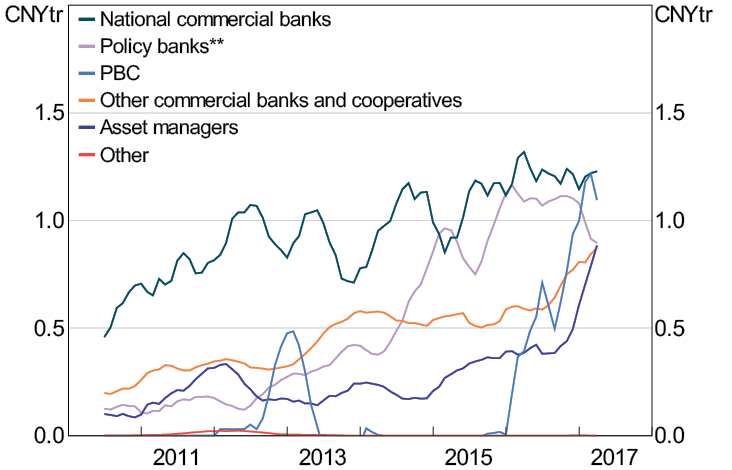
Figure 15.6 Outstanding repo lending balance (interbank, pledged collateral, by type of institution)*
* Six-month rolling average
** Relabelled from ‘special members’ in source data
Sources: Authors’ calculations; CCDC; CEIC Data.
Policy banks’ lending in the repo market has increased rapidly since early 2014, tripling in the space of two years and making them systemically important participants in the market. A large increase in policy banks’ funding over recent years, via both bond issuance (the traditional funding source for policy banks) and the PBC’s Pledged Supplementary Lending Facility (launched in 2014 to provide low-cost funding to policy banks to support development lending), has contributed to an increase in their capacity to lend. It is possible that policy banks’ increased repo activity could have been part of a state-led push to reduce volatility in repo rates (see ‘Recent developments and their implications’ below).
The PBC’s lending in the interbank pledged repo market, via its open market operations, has also increased rapidly over the past couple of years.10 This reflects the PBC’s preference to manage liquidity conditions through more active use of open market operations rather than through changes to reserve requirement ratios, as well as the decline in the PBC’s foreign currency reserves since 2014, which has required offsetting liquidity injections. Like policy bank activity, this increase in the PBC’s activity in the repo market is likely aimed at reducing the volatility of repo rates.
Asset managers use the repo market for liquidity management purposes and have increased their share of lending over recent years as the value of assets under management has grown.11 However, these institutions individually account for only a small share of outstanding lending, and their cash lending in the interbank repo market is considerably smaller than their borrowing (discussed below).
Cash borrowers
Smaller banks (‘other commercial banks and cooperatives’ in Figure 15.7) and asset managers account for most of the borrowing in the interbank pledged repo market, with smaller banks accounting for around half of outstanding borrowing. These banks have smaller retail deposit bases than the large state-owned commercial banks and, as a group, have been expanding their balance sheets rapidly over recent years, resulting in an increased reliance on wholesale funding such as repo (RBA 2016).
In recent years, asset managers have increased their borrowing in the interbank pledged repo market and now account for a significant share of outstanding borrowing. This increase has occurred alongside a sharp increase in the value of these funds’ assets under management, partly reflecting the generally less restrictive regulation of some types of fund management companies compared with banks’ activities. Asset managers are likely to have increased their borrowing in the repo market in recent years to engage in the bond carry trade (discussed below).
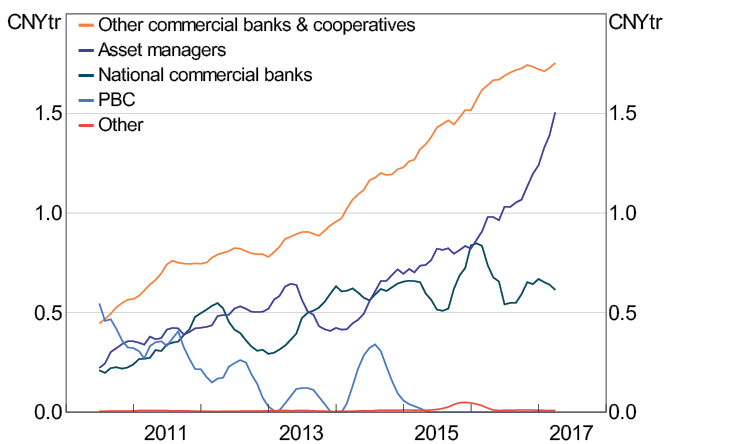
Figure 15.7 Outstanding repo borrowing balance (interbank, pledged collateral, by type of institution)*
* Six-month rolling average
Sources: Authors’ calculations; CCDC; CEIC Data.
The borrowing by financial institutions in the ‘national commercial banks’ category of Figure 15.7 captures borrowing by ‘joint-stock’ banks (which are smaller than the large state-owned banks that are major suppliers of funds), as well as borrowing by the large state-owned banks for the purpose of on-lending. The interest rates on repo agreements in the interbank market are differentiated based on both the quality of collateral offered and the perceived creditworthiness of the borrower (Shevlin and Chang 2015).12 Larger state-owned banks are perceived as having the highest credit quality, so borrow at lower rates than smaller banks, while asset managers typically borrow at higher rates than the smaller banks. Higher-rated institutions such as the national commercial banks can take advantage of their creditworthiness by borrowing at relatively low rates and on-lending at higher rates to smaller (less creditworthy) institutions for profit. Figure 15.8 shows net lending in the pledged interbank repo market by type of institution, thereby abstracting from on-lending activities and differences within groups, and hence showing the ultimate suppliers and users of funds. In net terms, the policy banks and the PBC are larger suppliers of funds than the national commercial banks, while smaller banks and asset managers are net borrowers.
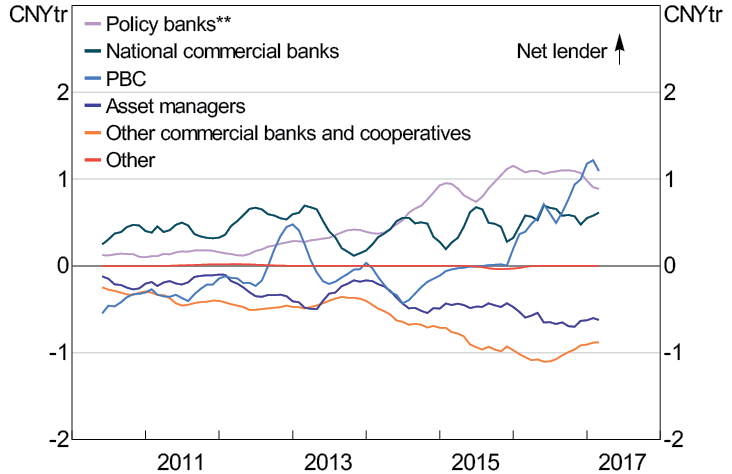
Figure 15.8 Net outstanding repo lending balance (interbank, pledged collateral, by type of institution)*
* Six-month rolling average
** Relabelled from ‘special members’ in source data.
Sources: Authors’ calculations; CCDC; CEIC Data.
Recent developments and their implications
The reduction in the volatility of repo rates
The volatility of Chinese repo rates declined significantly during 2015 and has generally remained low since then, notwithstanding an increase since the second half of 2016 (discussed below; Figure 15.9). One factor contributing to lower volatility was the introduction of reserve averaging for banks in September 2015 (IMF 2016).13 However, the increased involvement of policy banks and the PBC in the repo market indicates a broader policy objective by the Chinese authorities to dampen volatility. A working paper co-authored by the chief economist of the PBC’s research bureau in early 2016 supports this assessment. Specifically, it recommends shifting monetary policy from the current approach (focused on quantitative lending targets, ‘window guidance’ and central guidance of benchmark lending and deposit rates) towards an interest rate corridor approach and improving the transmission from short-term rates (particularly the seven-day repo rate) to other rates in the economy (Ma et al. 2016). In addition, a February 2017 article from PBC Assistant Governor, Zhang Xiaohui, reiterated these goals. It stated that the transmission from short-term rates (especially the seven-day repo rate and the rates on the PBC’s Medium-Term Lending Facility) to bond rates and bank loan rates had improved (Zhang 2017).14
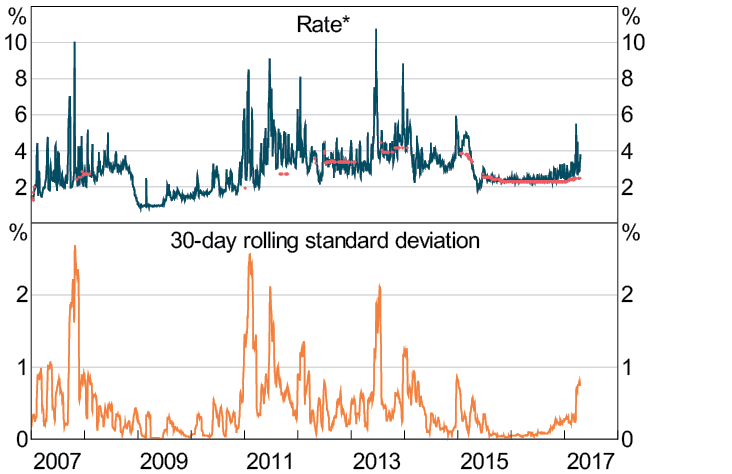
Figure 15.9 Chinese repo rate (seven-day repo fixing rate, daily)
Note: Red dots indicate PBC seven-day open market operation rates on repos (prior to 2012) and reverse repos (since May 2012).
Sources: Authors’ calculations; CEIC Data.
Policy banks increased their lending in the interbank pledged repo market from early 2014, with their share of outstanding loans rising from around 20 per cent to almost 40 per cent by early 2015. In early 2016, the share of policy and central bank lending grew further as the PBC increased its activity in the repo market (Figure 15.10). At the same time, the PBC started managing liquidity more actively, increasing the size of injections and withdrawals and moving from bi-weekly open market operations to daily open market operations (Figure 15.11). This enabled the PBC, like other central banks, to more effectively mitigate short-term fluctuations in liquidity conditions—for example, arising from large tax payments or seasonal demand for cash.
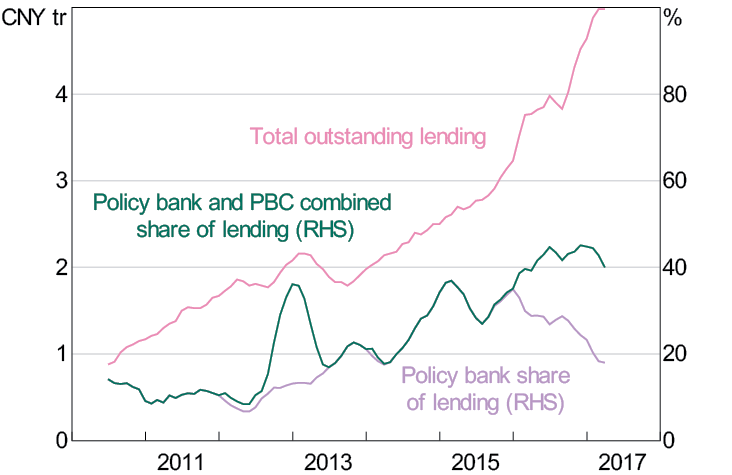
Figure 15.10 Policy bank and PBC repo lending (interbank, pledged collateral)*
* Six-month rolling average.
Sources: Authors’ calculations; CCDC; CEIC Data.
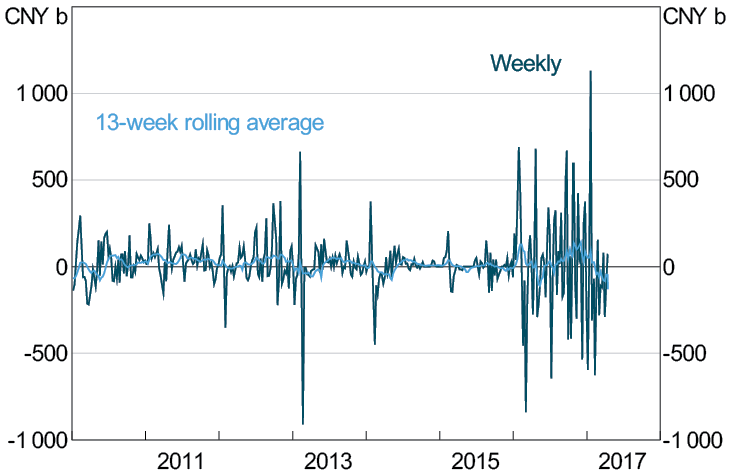
Figure 15.11 PBC liquidity injections and withdrawals (open market operations, net)
Source: Bloomberg.
The bond carry trade
The structural decline in the volatility of repo rates has given rise to a consistent spread between yields on short-term repos and long-term bonds. This spread facilitates the bond ‘carry trade’—a leveraged bond investment in which the investor receives the higher long-term interest rate, but pays the lower shorter-term rate (that is, the investor buys a bond and pledges it in exchange for cash through the repo market). Reports suggest that the low level and low volatility of repo rates have indeed led to an increase in leveraged bond investments (see, for example, Bloomberg News 2016; Dongming 2016; Xinhua Finance Agency 2016) and PBC commentary has noted risks to financial institutions related to maturity mismatch (Zhang 2017).
In the case of investments in long-term bonds funded via short-term repo, the trade is subject to refinancing risk whereby the interest differential earned on the trade is eroded or becomes negative if repo rates increase. The carry trade is also subject to the risk of capital losses, as investors would rarely hold a long-term bond funded via repo to maturity. This risk is magnified by the leveraged nature of the investment, with the result that investors funding positions through the repo market are highly sensitive to moves in bond yields.
The widest and most consistent spread has been between overnight repo and long-term bonds (Figure 15.12). This has likely contributed to the sharp increase in overnight repo turnover that occurred from early 2015 alongside growth in repo borrowing by smaller banks and asset managers (Figure 15.13). On the investment side, liquidity as measured by bid–ask spreads improved steadily over the same period, with the carry trade increasing bond trading volumes in an environment of low and stable interest rates. However, to the extent that carry trade supports bond market liquidity, it can be expected to deteriorate quickly when interest rates rise. There was some evidence of this in the December quarter of 2016, when bid–ask spreads widened alongside increases in repo market volatility and bond yields. More generally, the build-up in leveraged bond investments appears to have increased the sensitivity of the bond market to volatility in repo rates. For example, in 2013, large increases in repo rates had little impact on the bond market, while a relatively minor pick-up in the level and volatility of repo rates in late 2016 contributed to a material increase in yields.
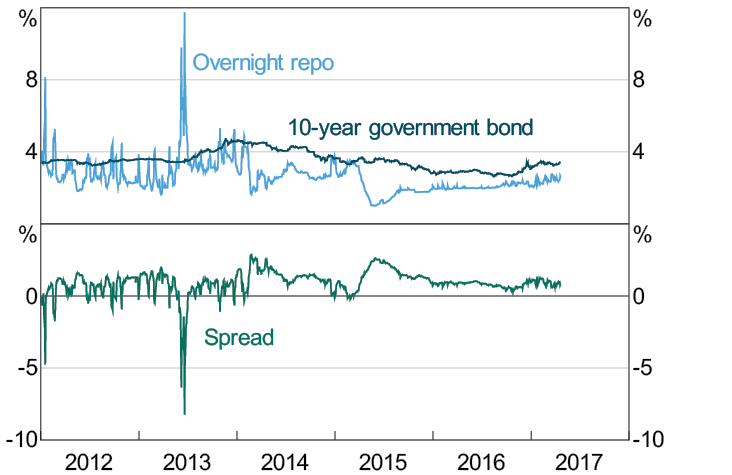
Figure 15.12 Bond and repo rates (daily, on-the-run bond)
Source: Bloomberg.
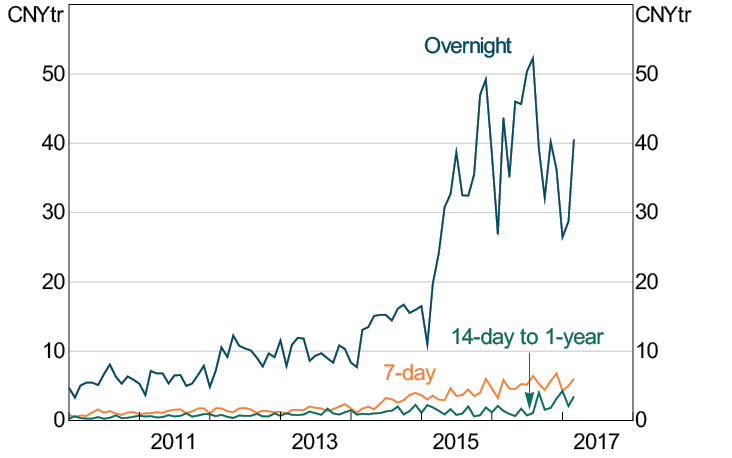
Figure 15.13 Repo turnover (interbank, monthly, pledged collateral, by tenor)
Sources: Authors’ calculations; CEIC Data; National Interbank Funding Center.
Part of the pick-up in the level and volatility of repo rates over the second half of 2016 has reflected the increased share of borrowing by asset managers over this period (in addition to changes to the PBC’s liquidity operations, discussed below). On average, asset managers likely borrow at a higher rate than banks, contributing to a rise in average repo rates as these institutions’ share of turnover increases, and higher volatility to the extent that the rates at which these institutions can borrow are more sensitive to changes in credit risk appetite.15 In December 2016, repo rates rose substantially as the premium paid by asset managers to borrow relative to banks increased sharply in response to concerns regarding the use of informal repo agreements known as ‘dai chi’ by some interbank repo market participants (discussed further below).
The ‘dai chi’ market
Dai chi (which translates as ‘holding something on someone’s behalf’) is the practice of selling a bond in exchange for funds and buying the bond back later at a price and time agreed at the start of the trade. Dai chi agreements are economically equivalent to a repo agreement, but do not take place via the interbank market trading system and are often informal in nature.16 Due to this informality, some transactions undertaken in this market may not be legally enforceable—for example, dai chi agreements have reportedly been struck using instant messaging services.
There are several reasons that market participants may elect to transact in the dai chi market instead of the formal interbank market. Dai chi transactions can be used to remove assets from balance sheets for the period of the loan, circumventing regulatory limits on leverage. Dai chi also allows collateral rehypothecation, facilitating greater flexibility and leverage than pledged repo.
Though few data are available on this informal market, the practice is reportedly widespread. The president of China Central Depository & Clearing (CCDC) has estimated that the value of outstanding dai chi could be as high as RMB12 trillion (US$1.7 trillion), which would make it twice as large as the interbank repo market (Dong 2016; Hong 2017). Without knowing the types of collateral used, the enforceability of contracts or the creditworthiness of the institutions involved, it is difficult to make an assessment of the risks involved with this activity. However, the informality of the dai chi market suggests that risks are likely higher than in the formal repo market. Moreover, there is likely to be some degree of overlap between participants in the formal and informal repo markets, such that risks that manifest in the dai chi market could spill over into the interbank and exchange-traded markets.
For example, in mid-December 2016, Sealand Securities announced that two former directors had forged RMB16.5 billion (US$2.4 billion) in dai chi contracts in transactions with a number of other financial institutions. Sealand’s announcement cast doubt over whether the firm would buy back the bonds being held in relation to the fraudulent transactions, which at the time were carrying mark-to-market losses of around RMB1 billion (US$145 million), or 7 per cent of the firm’s shareholder equity.
The announcement resulted in volatility in interest rate markets. In the formal repo market, cash lenders became reluctant to provide funding to non-bank financial institutions, with the spread between interest rates paid by these institutions and those paid by banks increasing sharply.17 In the bond market, yields rose significantly and bid–ask spreads widened.18 However, this dislocation was short-lived as the China Securities Regulatory Commission was reported to have stepped in to force a resolution, and large Chinese banks reportedly increased their lending in the repo market via ‘X-repo’. X-repo is a repo facility launched by the PBC in 2015 to anonymously match interbank repo lenders and borrowers, with standardised collateral and haircut requirements. Lending through X-repo ensured access to financing for non-bank financial institutions that were unable to borrow via traditional repos due to the spillover of credit concerns from the dai chi market into the interbank market.
Extension to the term of the PBC’s market operations
The increased use of leveraged bond purchases and informal repo markets has increased the level of risk in China’s financial system. In an apparent response to these risks, in August 2016, the PBC started augmenting its standard seven-day open market operations with 14-day and 28-day terms. While there was no official comment on the change in approach at the time, there were widespread reports (see, for example, Reuters 2016) that the PBC was trying to reduce the extent of leveraged bond purchases by encouraging less use of overnight repos and greater use of (more expensive) longer-term repos.
In February, PBC Assistant Governor Zhang noted that the change to the PBC’s open market operations had the practical effect of mitigating financial institutions’ maturity mismatch and liquidity risks (Zhang 2017). Repo turnover declined following the change, with some investors in the bond carry trade likely to have been deterred by the resulting increase in the level and volatility of repo rates (see Figure 15.12).
Conclusion
Repo markets in China have expanded rapidly in recent years. This is consistent with the broader development of China’s financial markets and provides financial market participants the depth and liquidity necessary to effectively manage their short-term assets and liabilities. Moreover, the PBC views the repo market’s development as supporting further moves towards a short-term interest rate targeting monetary policy framework in the future. However, as in other financial markets, the expansion of short-term funding markets can give rise to financial stability risks, especially where these markets are informal in nature. It appears these risks have risen with the growth in China’s repo markets, and the policy landscape is responding to these risks.
References
Bank for International Settlements (BIS) (2017), BIS Quarterly Review, March 2017, Basel: BIS. Available at from: bis.org/publ/qtrpdf/r_qt1703.htm.
Bloomberg News (2016), China’s $1 trillion bond leverage unwinds as Pimco senses panic, Bloomberg.com, 28 April. Available from: bloomberg.com/news/articles/2016-04-27/china-s-1-trillion-bond-leverage-unwinds-as-pimco-senses-panic.
Bloomberg News (2017), PBOC said to inject funds after missed interbank payments, Bloomberg.com, 21 March. Available from: bloomberg.com/news/articles/2017-03-21/pboc-said-to-inject-liquidity-after-interbank-payments-missed-j0jejifd.
Cruz, P. C., Gao, Y. and Song, L. L. (2014), The People’s Republic of China’s financial markets: Are they deep and liquid enough for renminbi internationalization? ADBI Working Paper Series 477, Asian Development Bank Institute, Tokyo.
Dong, J. (2016), 中债登估算代持规模12万亿 建议改进回购交易 [Scale of dai chi market estimated at RMB12 trillion, changes proposed to improve repo market], Caixin.com, 27 December. Available from: finance.caixin.com/2016-12-27/101030995.html.
Dongming, T. X. (2016), The cause of the current bond market turmoil? OCBC China Insights, 19 December, Overseas-Chinese Banking Corporation, Singapore. Available from: ocbc.com/assets/pdf/regional%20focus/china/china%20insights/2016/china%20insights%2019122016.pdf.
Hong, S. (2017), Behind China’s bond selloff, a risky twist on the repo trade, The Wall Street Journal, 17 January. Available from: wsj.com/articles/behind-chinas-bond-selloff-a-risky-twist-on-the-repo-trade-1484654059.
International Monetary Fund (IMF) (2016), The People’s Republic of China: Selected issues, IMF Country Report No. 16/271, International Monetary Fund, Washington, DC.
Long, C. (2017), Dodging a bullet in the interbank market, Gavekal Dragonomics, 19 January. Available from: research.gavekal.com/search-result?search=&fr=&to=&au[]=11781&selectItemau[]=11781&sort=date.
Ma, J., Hong, H., Jia, Y., Zhang, S., Yin, L. H. and An, G. (2016), The role of yield curves in monetary policy transmission, PBC Working Paper No. 2016/1, People’s Bank of China, Beijing.
Moriyasu, K. (2016), China bonds the latest bubble to pop, Nikkei Asian Review, 22 December. Available from: asia.nikkei.com/Markets/Capital-Markets/China-bonds-the-latest-bubble-to-pop?page=1.
Reserve Bank of Australia (RBA) (2016), Box A: Recent growth of small and medium-sized Chinese banks, Financial Stability Review (October): 14–16. Available from: rba.go v.au/publications/fsr/2016/oct/.
Reuters (2016), China central bank urges banks to spread out tenors of loans: Sources, Reuters.com, 25 August. Available from: reuters.com/article/us-china-economy-centralbank-liquidity-idUSKCN110065?il=0.
Shevlin, A. and Chang, A. (2015), China’s repo markets, JP Morgan Liquidity Insights. Available from: am.jpmorgan.com/au/en/asset-management/gim/liq/liquidity-insights/chinas-repo-markets.
Xinhua Finance Agency (2016), Regulators survey risk of RMB5 trln leverage fund in bond market, Xinhua Finance, 21 April. Available from: en.xfafinance.com/html/In_depth/2016/216356.shtml.
Zhang, X. (2017), Review and prospect of monetary policy, China Finance 2017, No. 3, 3 February. Available from: business.sohu.com/20170203/n479832292.shtml.
1 A version of this article was also published in the June 2017 edition of the Reserve Bank of Australia (RBA) Bulletin.
2 The authors are from the International Department of the RBA. The views expressed in this chapter are those of the authors and should not be attributed to the RBA. The content of this chapter was finalised on 21 April 2017.
3 The size of the US repo market is slightly more than US$2 trillion, based on 2016 data on outstanding repurchase agreements from the Federal Reserve Bank of New York Primary Dealer Statistics database.
4 There are currently no PBC bills outstanding, with the last remaining bills having matured in 2016.
5 In the pledged interbank market, collateral must meet the requirements specified by the cash lender, but is otherwise generic. That is, cash lenders are not able to request specific or ‘special’ securities as collateral, as is the case in most major markets.
6 Pledged agreements accounted for 95 per cent of turnover (by value) in 2016.
7 China Central Depository & Clearing (CCDC), a state-owned entity responsible for the registration, custody and settlement of most fixed-income securities in China, is responsible for ensuring that the pledged securities it holds are not used for any other purpose, including being pledged as collateral to another repo, until the transaction has been unwound.
8 In most major markets dealers may also exit a bond position by substituting collateral or they may use open-ended repos in which the date of the second leg is not specified at the commencement of the transaction. These approaches are not possible in the pledged interbank market.
9 Data on repo activity by ‘national commercial banks’ from CCDC cannot be split further between the large state-owned commercial banks and the smaller ‘joint-stock banks’, but data on the source and use of funds in the domestic banking system from the PBC suggest that the ‘four large’ state-owned commercial banks account for the majority of repo lending by this category of bank.
10 PBC repo lending and borrowing figures are calculated from PBC open market operations. Lending to or borrowing from the PBC is not captured in the data for other institutions, or in the aggregate turnover or balances data.
11 For the purpose of this chapter, we group together institutions recorded as fund institutions, insurance institutions, securities companies and non-bank financial institutions as asset managers.
12 All else being equal, the credit quality of the borrower should matter more under a pledged repo system, to the extent that it is more difficult for the lender to acquire the collateral that has been pledged in the event of a default. The only reported instance of default in China’s interbank repo market that we are aware of involved the failure to repay an overnight repo of less than RMB50 million (US$7 million) in March 2017 (Bloomberg News 2017). This reported default has not been officially confirmed.
13 The rule change allows banks to report a required reserve ratio up to 1 per cent lower than the compulsory ratio set by the PBC on any given day, as long as they meet the requirement on average during an assessed period.
14 There have also been numerous reports from market analysts discussing the shift towards an interest rate corridor system, and the International Monetary Fund (IMF 2016) has highlighted this shift and encouraged further progress in its recent communications.
15 Asset managers are likely perceived as having higher credit risk, so are likely to pay a higher rate than banks (Shevlin and Chang 2015). Data from the Monthly Bulletin on Pledged Repo retrieved from chinamoney.com.cn/english (the website of the China Foreign Exchange Trade System, which processes interbank repo transactions) show that the average repo rate for ‘other’ institutions is consistently higher than for any type of Chinese bank (although this does not account for potential differences in the average term of repo funding between different types of institution).
16 The information on the dai chi market is based on Dong (2016); Moriyasu (2016); BIS (2017); Hong (2017); Long (2017).
17 The gap between a measure of the seven-day repo rates that includes borrowing by all types of financial institutions and one that includes only borrowing by deposit-taking institutions spiked to around 100 basis points in late December from a normal range of around 10 to 30 basis points.
18 Trading was also suspended in Chinese government bond futures, which reached their daily down limit.
Previous